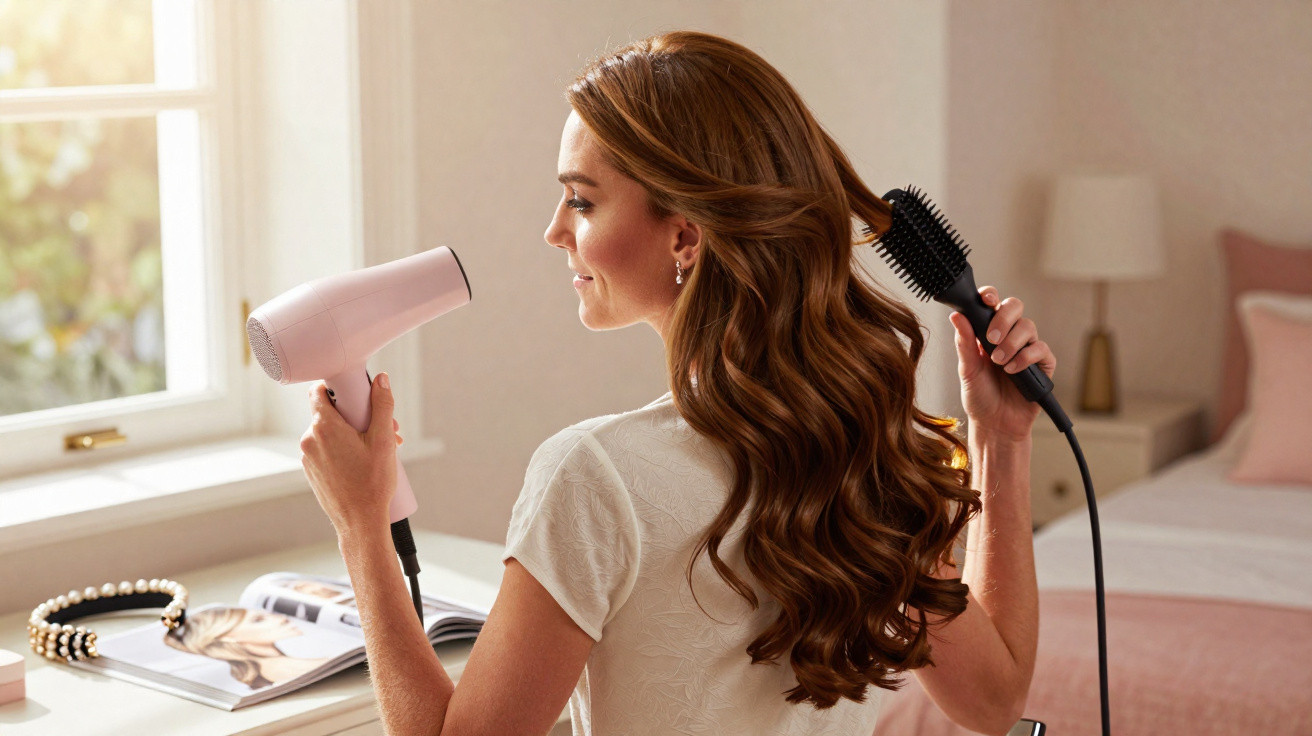
It began, as these stories so often do, with a single photograph. Kate Middleton was pictured leaving on a grey London morning, wearing her familiar navy coat dress and a smile calibrated to seem “warm but not too familiar.” This time, though, it was not the outfit people enlarged on screen. It was her hair.
Glossy and full-bodied, it fell in gentle curves that looked polished without seeming overworked. It felt less like a salon blow-dry and more like something from a duchess’s storybook.
Within weeks, TikTok had given the look a label: “princess hair.” Hairstylists began analysing the layers and blow-drying technique, while Instagram carousels compared royal photographs like CSI evidence. The question abruptly changed from “where did she buy that coat?” to “how do I get that hair without living in a palace?”
Beneath those curls, however, a quieter and more significant shift was taking place.
What “princess hair” really means in 2026
At first, “princess hair” appears straightforward: long, lustrous, carefully brushed hair with softly curled ends. It is the kind of hair that seems to drift rather than simply drop. You can see it on Kate Middleton at a Commonwealth service, Queen Letizia during a state visit, and Princess Sofia of Sweden as she leaves a gala. Different nations, but the same visual language.
The style has an almost traditional gentleness. There are no razor-sharp bobs, wet-look gel finishes or conspicuous extensions demanding attention. Instead, it is about healthy movement, a rounded outline and a crown that looks sleek without being pressed flat against the scalp. It is the opposite of trying too hard, despite requiring a fairly detailed formula to perfect.
A look through royal photograph archives reveals a clear progression. Early Kate wore voluminous, chunky curls typical of the 2000s. Around 2019–2020, the look began to change: the curls became looser, the layers less pronounced, and the colour warmer and more multi-dimensional. By 2023, her signature style was firmly established: long chestnut hair, shaped with a large round brush, neither pin-straight nor fully “curly-curly.”
The approach has spread discreetly. Princess Mary of Denmark has shifted from strict chignons to gentler daytime waves. Queen Rania favours sleek, layered lengths that frame rather than conceal the face. Even non-royal VIPs, including Amal Clooney and Angelina Jolie, have moved towards the same understated, princess-adjacent refinement. It becomes clear that this is not merely one woman’s recognisable look; it is turning into a royal default.
What, then, separates “princess” hair from hair that is simply pretty? It combines four features: length reaching the collarbone or below, subtle rather than choppy layers, a smooth blow-dry with curved ends, and a finish that looks touchable rather than crisp. Colour matters too, with rich multi-tonal brunettes and softly highlighted blondes designed to resemble natural sunlight rather than stark salon-strip lightning.
There is an unspoken condition, too. Princess hair must look timeless in photographs that may resurface 20 years from now. No TikTok fringe trends and no Y2K zig-zag partings. It should be a style that could sit beside a vintage Grace Kelly portrait without looking out of place. That’s the quiet power move underneath the curls.
How to get princess hair at home without a palace glam squad
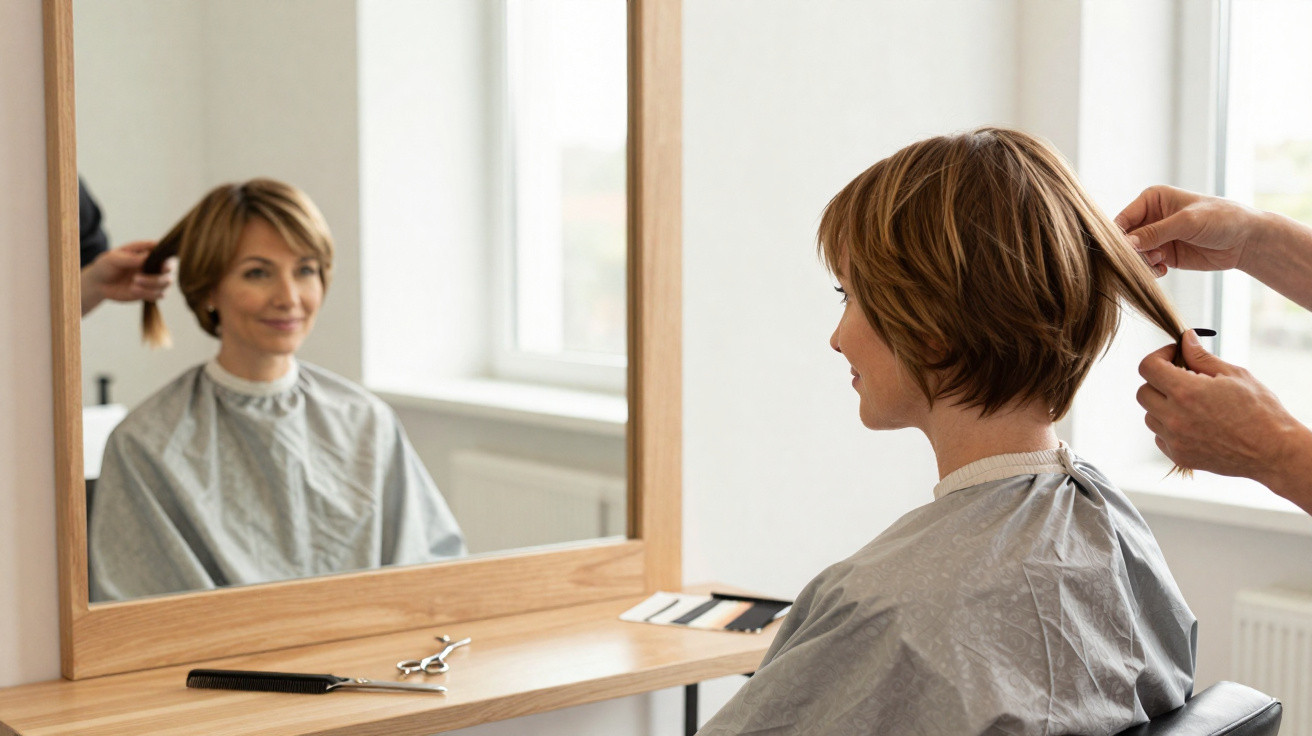
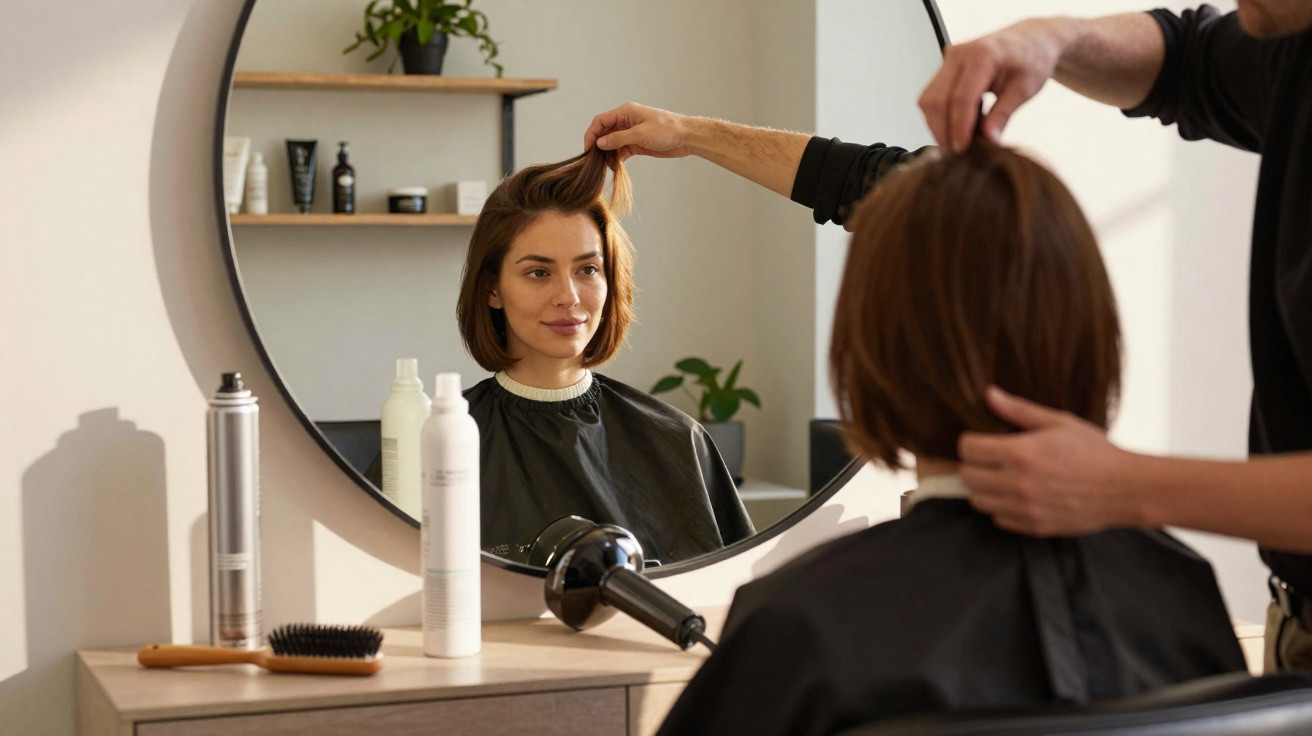
The foundation of princess hair is the cut. Ask your stylist for long layers beginning below the cheekbones, with soft face-framing sections instead of dramatic “money pieces.” The ends need enough bluntness to appear thick, while being lightly softened so the hair curves rather than flicks out. Aim for “expensive blow-dry”, not “high-school layers”.
If you are growing your hair, target a length between the collarbone and mid-back. Anything shorter can look more “TV anchor”, while more length can veer into fairy-tale costume territory. Styling comes next: the essential technique is a classic round-brush blow-dry or a large-barrel curling iron used only from the mid-lengths to the ends. The crown should remain smooth rather than overly bouncy.
This is the point at which everyday life meets royal fantasy. Most people do not wake up to a stylist and a complete Dyson kit five mornings a week. You may have 10 hurried minutes, a hairdryer from 2011 and a child asking where their left shoe has gone. Realistically, no one does this every day.
Instead, take the “princess hair, but lazy edition” approach. Allow the roots to air-dry or rough-dry them, then devote five concentrated minutes to the front sections. Curl these away from the face with a large curling iron, or use a round brush while blow-drying, before adding a light bend to the ends of the remaining hair. People mostly notice what is happening around the face, not at the back of your head. Your secret is safe.
“People think ‘princess hair’ means tons of curling,” explains London hairstylist Maria Ellis, who often gets clients bringing in Kate Middleton reference photos. “In reality, it’s more about prep and finish. Healthy ends, a good blow-dry, and not overloading with product. The hair has to move when she walks. If it doesn’t move, it doesn’t read royal.”
Prepare carefully
Apply a lightweight heat protectant, followed by volumising mousse at the roots only. Rich creams applied from root to tip will eliminate the movement you are trying to create.Pick suitable tools
Choose a 32–38 mm curling iron or a large round brush. Small barrels create tight curls, sending the look straight into pageant territory.Finish like a royal stylist
Brush out the curls with a paddle brush or wide-tooth comb, then smooth a pea-sized amount of serum over the ends alone. Soft-hold hairspray creates the “stays put, still bouncy” effect.Steer clear of the crunchy trap
Rigid, lacquered waves are the opposite of princess hair. If your strands seem as though they could crack when touched, you have taken it too far.Adapt the mood to the occasion
For work, keep the curves restrained and the parting neat. In the evening, enhance the bend at the ends and add a little extra shine.
Why we’re suddenly obsessed with princess hair
You could say it is simply another hairstyle trend, another keyword moving through the algorithm. Yet its timing says something. Following years of “I woke up like this” messy buns and sharp, glass-cutting lobs, there is an unusual comfort in hair that appears purposeful, refined and almost ceremonial. It is rather like putting on proper shoes again after three years in slippers.
There is an emotional dimension that is rarely spoken about. Princess hair carries a subtle fantasy: being regarded with a certain soft admiration, entering a room as the light catches your hair in exactly the right way. It is not for a selfie or for likes, but for the private pleasure of feeling slightly more elevated on an ordinary Tuesday.
The strength of the trend, though, is its flexibility. You do not need Kate’s precise hair length or colour. Naturally curly hair can become “princess” hair through defined, glossy curls and a soft side parting. Coily textures can embrace stretched, layered shapes with curved ends, or blow-outs that retain root volume instead of flattening everything. The formula is refinement, movement and ease, not Eurocentric uniformity.
The contrast is what lingers. Streetwear became baggier, nails more daring, and make-up shifted between bare-faced minimalism and full glamour. Hair quietly responded: “Let’s try graceful for a bit.” That may be why Google searches for Kate Middleton’s hair surge every time she appears in public. People are not only looking for instructions; they are seeking a feeling.
| Key point | Detail | Value for the reader |
|---|---|---|
| Cut and length | Long layers, blunt-soft ends, collarbone to mid-back length | Provides a clear, realistic goal to discuss with a stylist |
| Styling method | Round-brush or large-barrel bends from mid-lengths down, smooth crown | Enables readers to recreate the “princess” effect at home using basic tools |
| Finish and feel | Light products, brushed-out movement, never crunchy or over-set | Helps create a refined yet natural look suited to everyday life |






Comments
No comments yet. Be the first to comment!
Leave a Comment