It is easy to end up with a bathroom shelf full of products and still feel as though your look changes every morning. One day it is a fresh, minimal base, the next a bold lip, then a hairstyle saved from social media - and none of it quite feels like you.
The answer is not buying more. A signature beauty look is usually built from a few repeated choices: a reliable base, one defining make-up detail, hair that suits your routine and a finishing touch you genuinely enjoy using. Claudia Winkleman’s dark hair, full fringe and smoky eyes are a familiar example of how consistency can be more memorable than chasing every trend.
A signature look is not a uniform. It is a dependable starting point that makes getting ready easier.
Begin with the feeling, not one feature
Before deciding that you need a fringe, black eyeliner or a particular lipstick, think about the overall impression you want your routine to give. Your version may be polished, softly romantic, minimalist, colourful, slightly undone or dramatic.
A look is more likely to last when it reflects your taste and your real life. A glossy blow-dry may look brilliant, but it is unlikely to become an everyday habit if you cycle to work through British drizzle or have ten minutes to get ready in the morning.
Write down three words describing how you would like to feel when you look in the mirror. For example:
- Fresh, warm and uncomplicated might mean a sheer base, brushed brows and peachy cheeks.
- Graphic, confident and elegant could point towards precise liner, natural-looking skin and a strong jewellery choice.
- Relaxed, textured and modern may suit air-dried hair, tinted balm and softly blended colour.
Use these words as a filter. A trend that does not fit can still be fun to try, but it need not earn a permanent place in your routine.
Build a smaller, harder-working make-up bag
A well-edited make-up bag is like a useful wardrobe: it contains dependable basics that work together, plus one or two details that make the result feel personal. The aim is not to own as little as possible. It is to know what you reach for and why.
1. Choose your everyday essentials
Start with products that make getting ready straightforward:
- a complexion product with a finish you genuinely like;
- concealer, if you use it, that layers without looking heavy;
- mascara that wears comfortably for you;
- powder or blotting papers for areas that become shiny;
- a brow product suited to the amount of definition you prefer.
Test them in ordinary conditions, not only in flattering bathroom lighting. Notice how they look after central heating, a train journey, rain or a long day at work.
2. Pick a recognisable focal point
Then choose one feature that can become your calling card. It might be softly smoked liner, a brick-red lip, cool-toned blush, feathery brows or a wash of bronze across the lids.
Winkleman’s make-up is a useful example: the eye is deliberately strong while the rest of the face is comparatively understated. The principle is adaptable. When one element is prominent, the rest of your routine can be simpler and quicker.
Repetition does not make a beauty look boring; it is what makes a detail recognisably yours.
Make a stronger eye wearable in daytime
A dramatic eye does not have to mean a full evening look. The useful trick is to control placement and balance, rather than applying dark product across the whole eye area.
1. Start close to the lashes
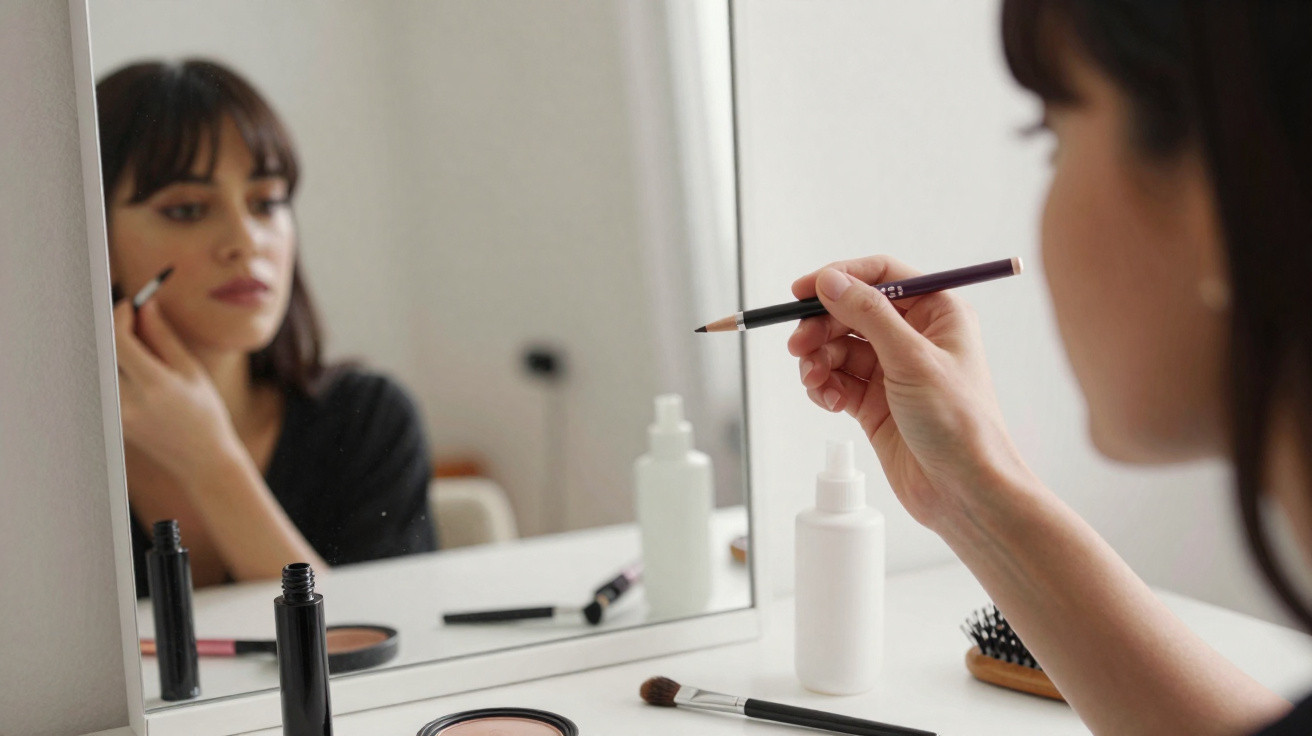
Press a dark pencil into the upper lash line, focusing on the outer two-thirds of the eye. This adds depth without requiring a sharp, oversized wing. Smudge the edge with a small brush before the pencil sets.
2. Keep the shape deliberate
For a smoky effect, blend upwards and outwards with a light hand. Stop before the colour reaches the crease unless you want a more dramatic finish. A clean cotton bud can neaten the outer edge without removing everything.
3. Simplify the rest of the face
Pair stronger eyes with a neutral lip, soft cheek colour and a complexion finish that still resembles skin. This is not a rule - make-up need not be balanced - but it can make a dark eye feel easier to wear at lunchtime or in the office.
If your eyes are sensitive, use products intended for use around the eyes, do not share eye make-up and replace products if their smell, texture or performance noticeably changes. Remove eye make-up gently rather than rubbing at your lashes. Do not apply eye products to broken or irritated skin.
Treat shine as part of the haircut, not just a finishing product
Dark brunette and black hair can appear especially reflective because the colour can read as a smooth, continuous surface. Glossy-looking hair is not exclusive to darker shades, though. Any colour can look brighter when the cut, condition and styling work together.
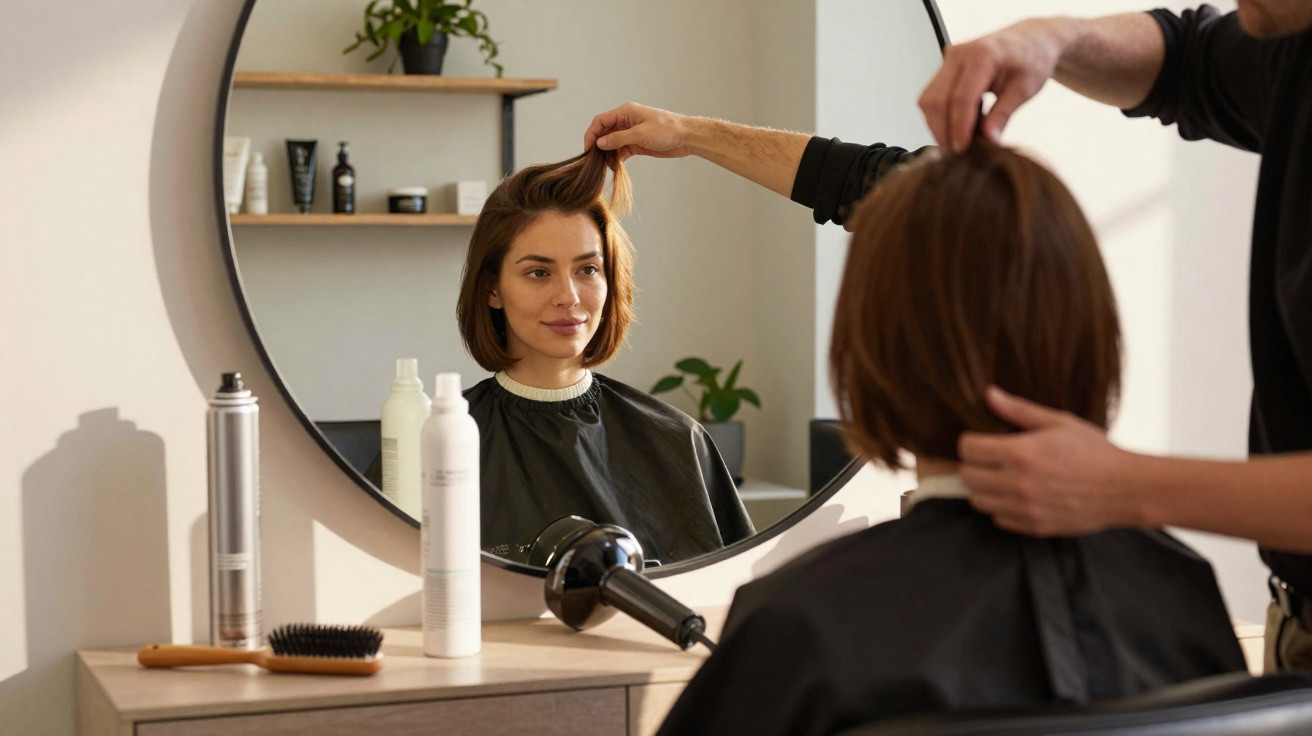
Regular trims can help prevent worn ends making the shape look untidy. Conditioner through the mid-lengths and ends may help hair feel smoother, while heat protectant is sensible whenever you use a hairdryer, straighteners or tongs.
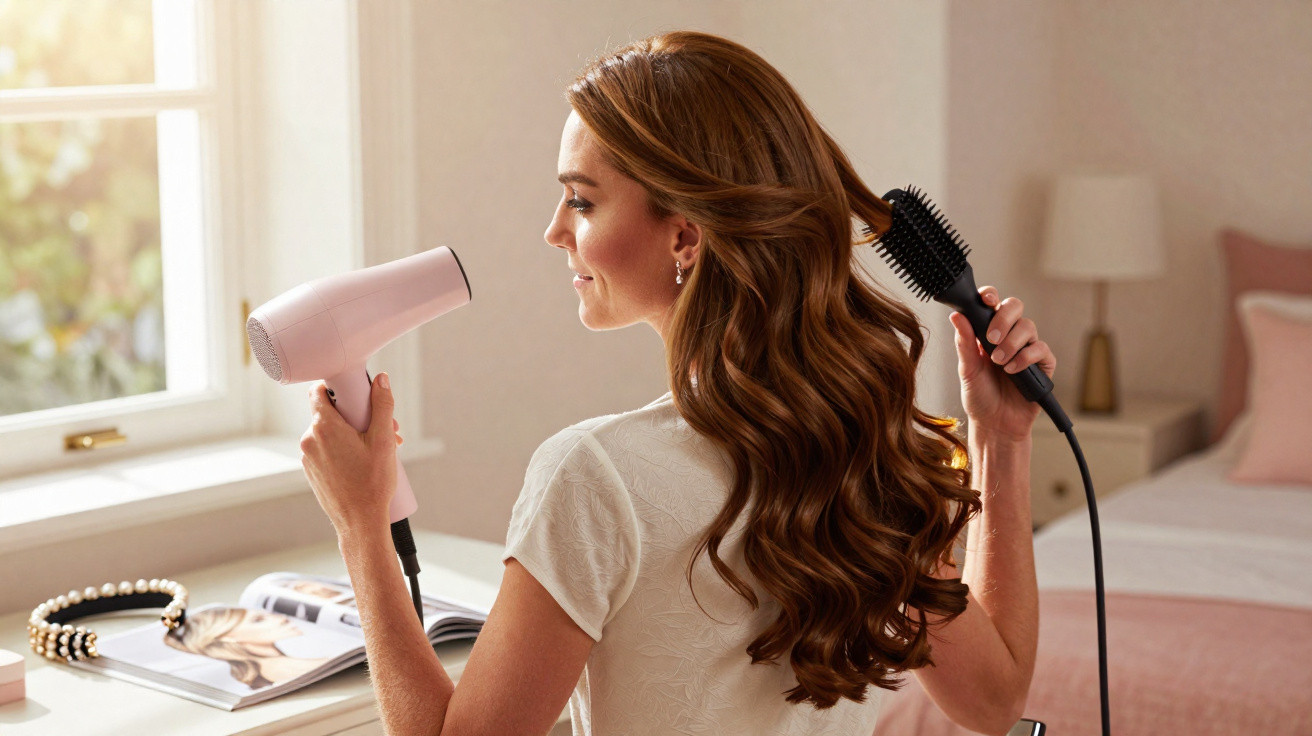
For a polished finish, dry the roots fully and direct airflow down the hair shaft. Use a small amount of lightweight serum or cream through the ends, adding more only if necessary. Too much product can make fine hair look limp rather than glossy.
Colour is a personal choice, but very dark shades may need regular upkeep if natural roots or grey hairs show quickly. Speak to a qualified colourist before a major change, particularly if your hair has been lightened, chemically treated or feels fragile. Follow patch-test instructions exactly when using home colour, and never apply dye to irritated or broken skin.
Consider a fringe as a commitment, not an impulse
A full fringe is one of the quickest ways to change the outline of a haircut. It can make a simple bob, lob or longer cut look more deliberate, which is part of why it is central to Winkleman’s recognisable style.
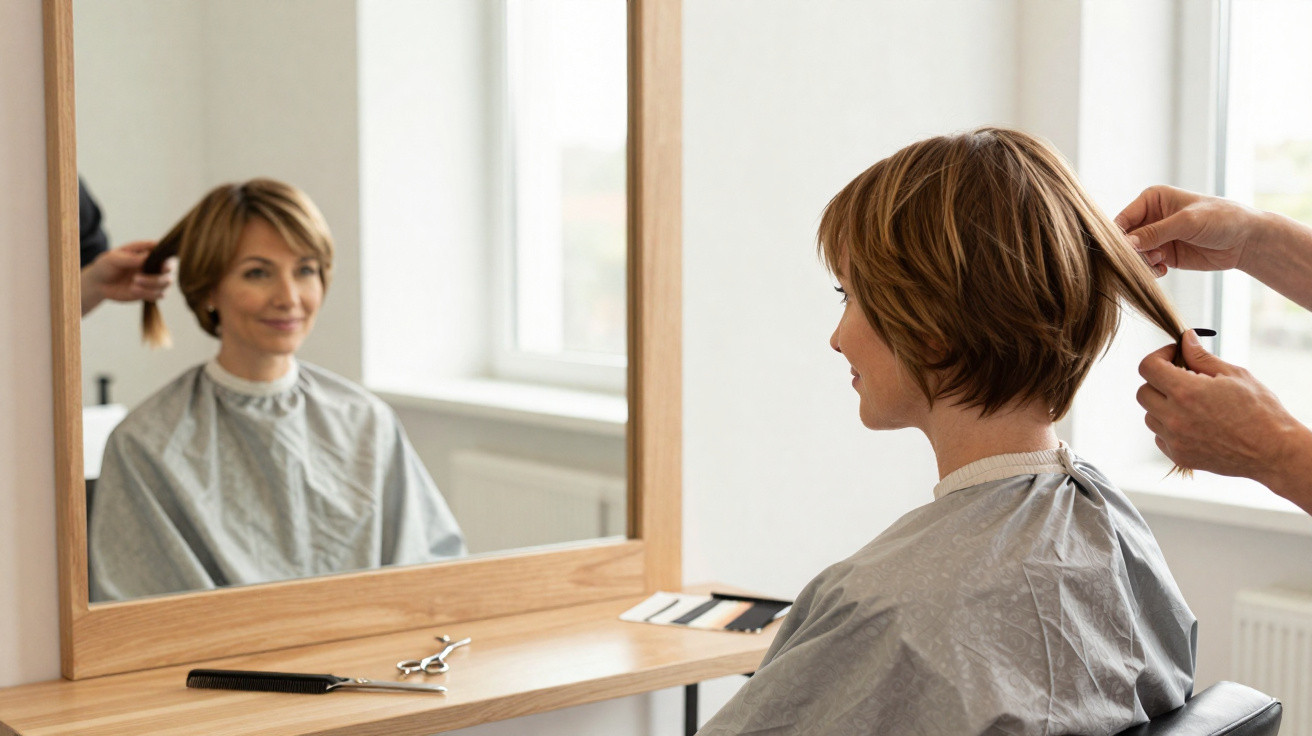
It is worth being realistic, however. Fringes often need more frequent trims than the rest of the haircut, and may need a quick wash or restyle between full wash days. Cowlicks, hair density, curl pattern and whether you wear glasses can all affect how a fringe sits.
Before committing, ask your hairdresser about:
- whether a curtain fringe, bottleneck fringe or softer face-framing layers would suit you better;
- how the cut will behave when air-dried;
- how often it is likely to need trimming;
- the simplest way to style it at home;
- what it will look like while growing out.
Take reference images, but include photographs of your own hair on an average day. A useful consultation adapts an idea to your texture and routine rather than trying to copy somebody else’s hair exactly.
Choose fragrance as a finishing touch
Fragrance can be the quietest part of a signature look. You do not need one perfume for life, but returning to a familiar scent can make getting ready feel more settled and personal.
Try scents on your skin rather than relying only on a paper strip. Wear one at a time and notice how it develops over several hours. A fragrance that is lovely for five minutes in a department store may not be what you want on a packed commuter train.
You could choose one regular scent, rotate between two for different moods, or return to a family of notes such as woods, tea, citrus, iris or soft musk. Apply lightly, particularly in close settings.
If fragrance has previously irritated your skin or affected your breathing, avoid using it and seek advice from a pharmacist or other appropriate healthcare professional if needed. Stop using any cosmetic product that causes discomfort.
Common mistakes when creating a signature look
The most effective personal styles leave room for adjustment. These common traps can make the process frustrating rather than freeing.
- Buying everything at once. Introduce one new element at a time so you can tell whether it works with what you already own.
- Copying the exact look rather than the approach. Borrow the confidence to repeat what you love; do not try to recreate another person’s face or hair.
- Choosing high-maintenance details for a low-maintenance life. Be honest about your mornings, budget and willingness to book regular appointments.
- Ignoring texture and undertone. A shade or haircut can be adapted; it does not need to match an inspiration photograph exactly.
- Confusing routine with rigidity. Keep your core look, but make space for an experimental lipstick, seasonal nail colour or occasional change.
- Introducing several new skincare or cosmetic products at once. Add products gradually, and patch-test where the packaging advises it.
Let the look evolve without losing its identity
The best signature looks have a recognisable thread rather than a fixed list of rules. Yours might be glossy hair, a warm colour palette, defined lashes, a particular fragrance family or an unfussy complexion. That thread can remain even as your haircut, skin or preferences change.
Start with a small edit this week: set aside the products you use most, identify one detail that makes you feel especially like yourself and practise it until it becomes easy. A beauty routine should support your day, not become another decision to make. When the choices are personal and repeatable, the result is likely to feel effortlessly confident.









Comments
No comments yet. Be the first to comment!
Leave a Comment