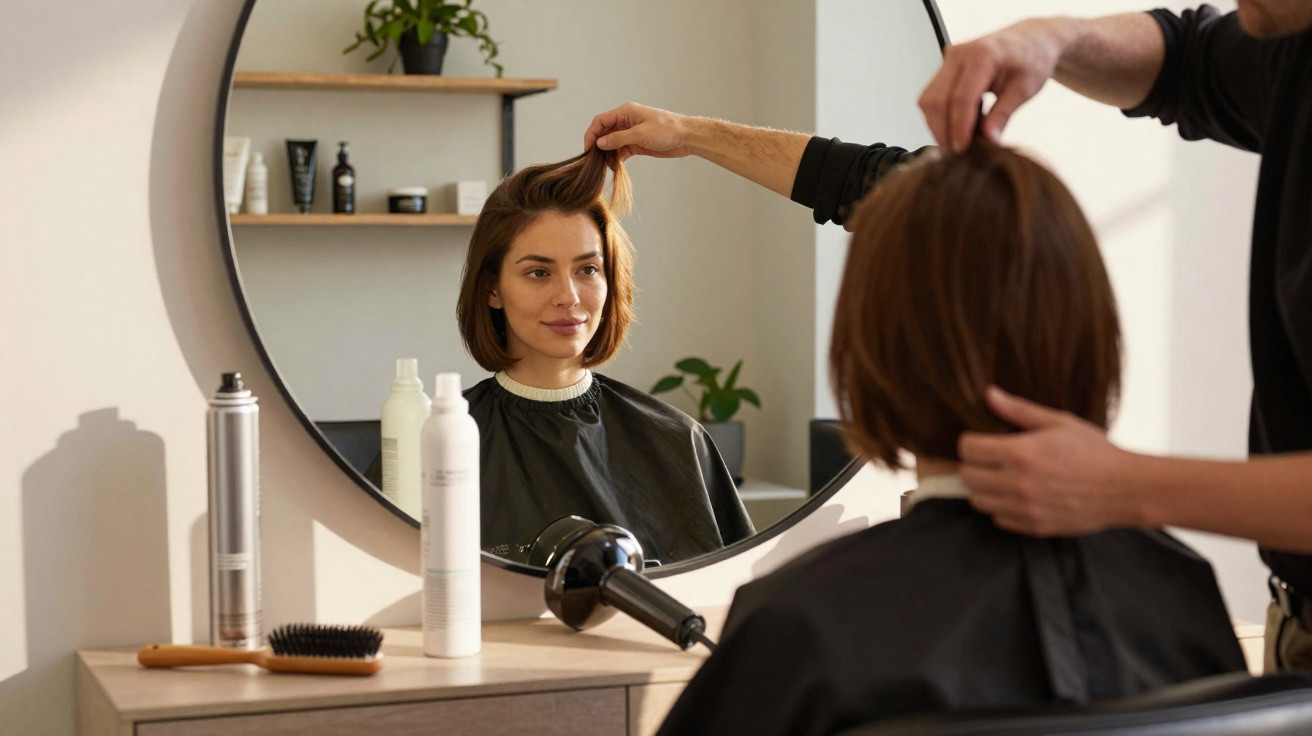
The salon was busy, yet her voice cut through the whirr of hairdryers: “If you tease my hair like that again, I’m walking out.” Everyone looked over. A woman in her forties, with immaculate lipstick and short, fine hair held between her stylist’s fingers, glared at herself in the mirror with unmistakable frustration. Her hair had fallen into the familiar pattern fine hair gets when it is subjected to “volume tricks”: puffed-up roots, drooping ends, shine in patches and a strange dullness elsewhere. Rather than looking freshly cut, she looked as though she had come off worse in a fight with a can of hairspray.
Two seats away, another client gave a quiet nod of recognition. The same situation. The same excessively “boosted” bob. The same artificial, slightly brittle finish.
The stylist continued to insist, “Trust me, this is how you get body.”
She was plainly unconvinced.
You probably would be too.
When “volume tricks” become harmful rather than helpful
Short cuts on fine hair should feel crisp, light and easy. On Instagram, cropped bobs and pixies appear effortlessly styled, as though the hair simply settled that way on waking. Away from the screen, however, many women with fine hair leave the salon with cuts that seem fluffy on the first day but look ruined by the third. They are not fuller or healthier; they are merely stiff, oddly lifeless and already worn out.
That is when the anger sets in. Fine hair is fragile enough, and being told that you “need” harsh volume methods can feel like criticism of the hair that naturally grows from your own head.
One of the most frequent complaints online comes from women persuaded to have intensive backcombing on short styles. A stylist may promise “French-girl texture” and “lasting volume” at the crown. Instead, the client gets a stacked bob that is nearly helmet-like, its roots tangled beneath a sprayed outer shell.
After one wash at home, the hair may suddenly knot like old tinsel. Brush bristles catch, the ends break, and fresh flyaways emerge around the hairline where none existed a week earlier. “My hair looks thicker, but it feels destroyed,” wrote one user in a viral TikTok comment.
What is happening is a conflict between traditional salon habits and the actual needs of fine hair. Stylists seeking immediate lift often rely on four familiar techniques: forceful teasing, blow-drying at extremely high temperatures, weighty powders and firm-hold sprays at the roots. These approaches may sometimes work on coarse or thick hair. On delicate strands, though, they roughen the cuticle, compromise the shaft and leave hair bulky at the top but thin through the ends.
The appearance of fullness may be achieved briefly. The price is that fine hair begins to act like damaged hair: lacklustre, prone to breakage and difficult to style without adding yet more “fixes.”
The 4 “fake volume” tricks women with fine hair are tired of
The first culprit is severe backcombing on a short style. Stylists repeatedly drive a comb down the hair towards the scalp, forming a packed cushion that lifts the outer layer. On the surface, this can resemble glamorous root volume. Beneath it, however, the strands are being bent and knotted against their natural direction.
For fine hair, that friction damages the cuticle. When the technique is repeated at every appointment, those short, uneven broken pieces around the crown do not appear by chance. They are made there.
The second regular offender is blasting short, fine hair with maximum heat and a round brush “for bounce.” Women often describe the same experience: their stylist passes a large brush over the identical section repeatedly, with no controlled nozzle direction and heat almost against the scalp. The hair leaves the salon smooth, rounded and polished. Within two days, the ends feel scorched.
Then there are the powders: fashionable, salt-like dusts scattered at the roots and worked in with the fingers. Initially, the lift can be striking. Afterwards, hair may feel unclean, gritty and difficult to detangle. Some women say they shed more hair at their next wash because removing the product requires so much pulling.
The final part of this volume mixture is the cement: strong-hold sprays used close to the scalp. They lock the shape in position, but they also stick fine hairs together into tiny groups. The divide between “polished” and “plastic wig” becomes narrow. You can actually see where the hair moves as one solid piece instead of as individual strands.
Combined, these four techniques produce a false fullness that does not move, shine or wear well throughout the week. It is little wonder that so many women feel misled. They wanted confidence, but left with a style that works only under salon lights and with a stylist’s hands nearby.
Healthier ways to create real volume in short, fine hair
There is a kinder route to body that does not damage the hair you want to show off. It begins at the basin rather than with a comb. Lightweight volumising shampoos that rinse away cleanly can help fine hair lift from the scalp instead of collapsing under product residue. Using a pea-sized amount of conditioner only on the mid-lengths and ends maintains movement without leaving roots flat and slippery.
After showering, think of it as “build scaffolding,” not “stack cotton candy.” Applying a small amount of mousse or root-lift spray to damp hair, then combing it through evenly, gives subtle support before a brush is used at all.
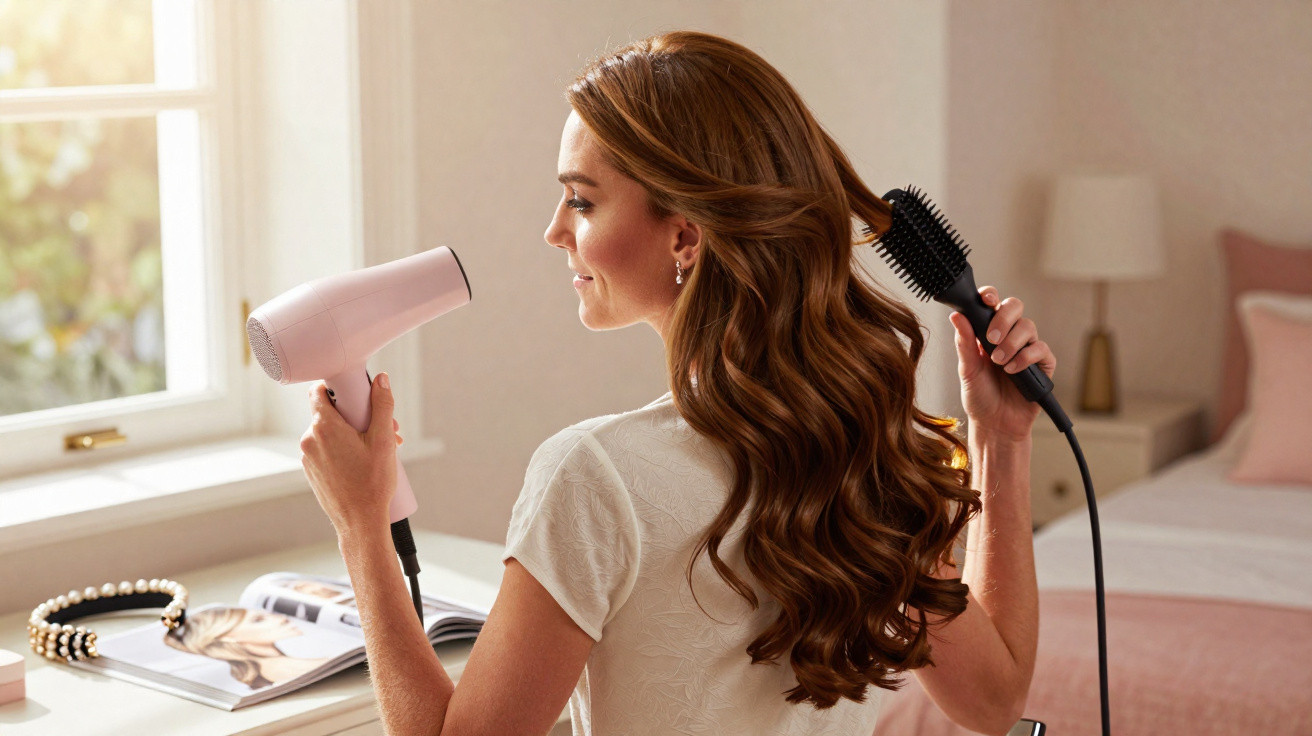
For drying, direction is more important than force. Tilt your head slightly to one side, select a medium heat setting and begin by working at the roots with your fingers. This straightforward approach stops hair being fixed in one direction against the head. A small round brush can then refine the ends, without passing over every section ten times.
Let’s be honest: nobody really does a full salon blowout on themselves every single day. The routine therefore needs to be repeatable without dreaded arm ache or damage. The most effective volume tricks are understated, reliable and gentle.
“Fine hair doesn’t need punishment to look bigger,” says London stylist Carla M., who specializes in short cuts. “You want smart cutting and light products, not war with a teasing comb.”
- Opt for layered or graduated short cuts instead of one-length bobs that tend to collapse.
- Request “soft texture” created with scissors, rather than razors that can shred already fragile ends.
- Choose flexible-hold sprays or foams that brush out easily, rather than “freeze” sprays.
- Reserve powder for special occasions, then wash it out gently that evening.
- Sleep on a silk or satin pillowcase to lessen friction and flattening overnight.
Taken together, these modest changes protect the fibre, allowing hair to become stronger while still appearing fuller in the mirror.
Embracing fine hair without allowing anyone to bully it
A quiet change is taking place in salon chairs everywhere. More women with fine hair arrive equipped with screenshots, questions and firm boundaries. “No heavy teasing.” “No root cement.” “I want movement, not a helmet.” Rather than remaining silent while someone attacks their crown, they are beginning to see volume as a partnership rather than a punishment.
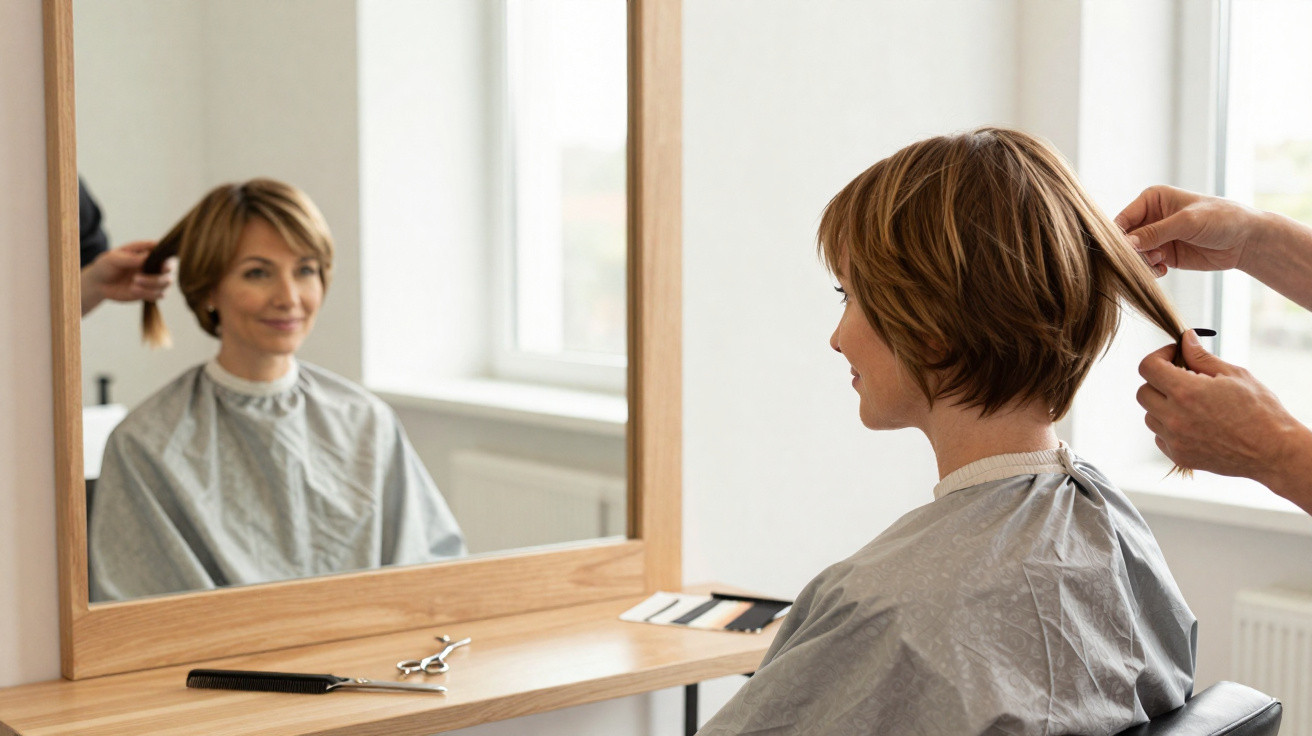
That change transforms the atmosphere of a haircut. A stylist who pays attention will adapt with more internal layers, lighter products and a blow-dry that follows the hair’s natural fall.
You do not need to apologise for wanting your short cut to look and feel genuine. A little crown lift, airy texture at the ends and a fringe that does not divide into sticky pieces when the weather becomes humid are not unreasonable requests. They simply ask for skill instead of shortcuts.
Some readers may still enjoy the fully glamorous, sky-high teased look. Others will quietly put away the powders and return to shampoo, a well-executed cut and fingers at the roots.
The more important question is no longer “How much volume can I fake?” but “How do I want my hair to behave when nobody’s watching?” Think of hair that bends softly in the breeze, tucks behind the ear without a crunching sound and still looks like your own once the product fades.
There is a place between flat and fake. Healthy short cuts for fine hair belong there. It is also where the loudest salon anger can gradually become something else: choice.
| Key point | Detail | Value for the reader |
|---|---|---|
| Avoid aggressive “volume tricks” | Teasing, maximum heat, powders and hard sprays may imitate fullness while quietly harming fine hair | Helps you spot when a stylist’s approach risks breakage and an unnatural finish |
| Prioritise gentle, smart techniques | Light products, controlled heat and layered cuts encourage natural lift without torture | Gives you a practical guide for requesting precisely what your hair needs |
| Set clear boundaries in the salon | Explain which methods are off-limits and how you want your hair to move and feel | Enables you to leave with a style that suits both your texture and lifestyle |










Comments
No comments yet. Be the first to comment!
Leave a Comment