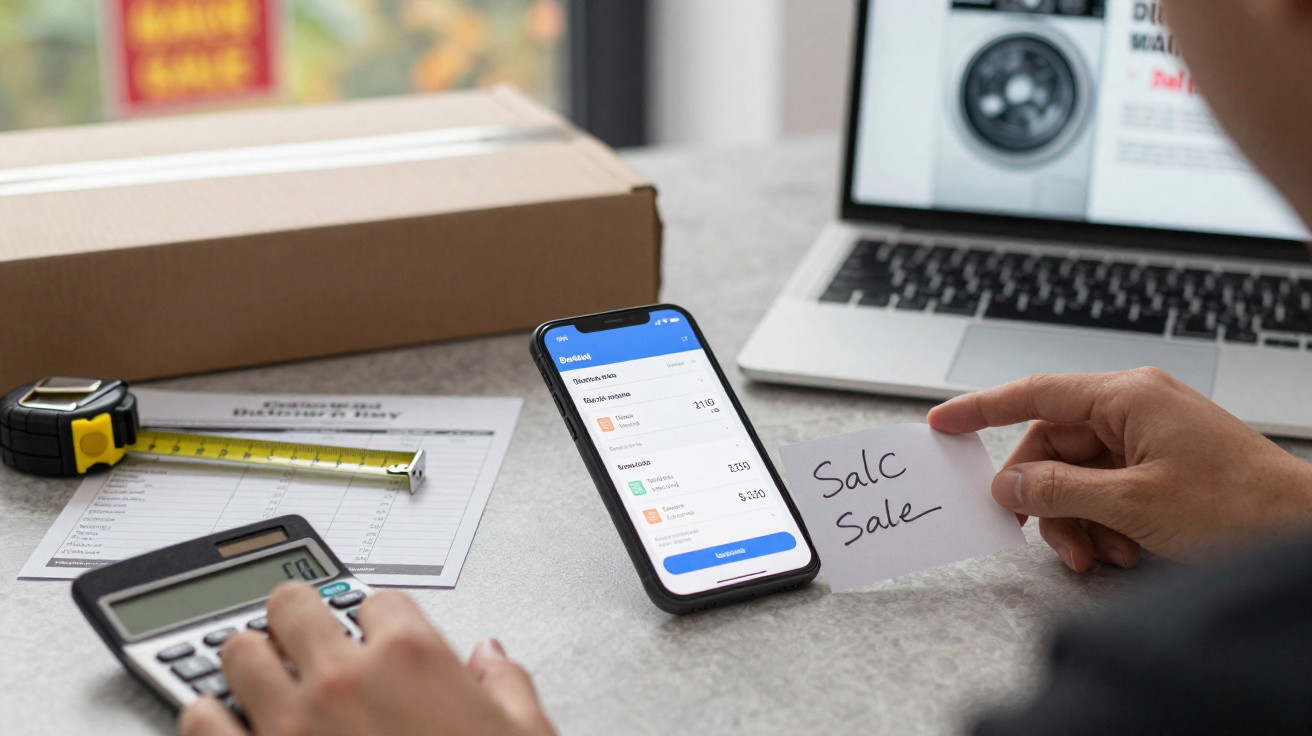
A headline promising “up to 54% off” can make a planned purchase feel suddenly urgent, especially if you have been waiting to replace a laptop, washing machine or phone. But the useful question is not whether the largest percentage looks impressive. It is whether the exact item you need is genuinely cheaper than its usual selling price, available on acceptable terms and within your budget.
Black Friday 2026 falls on Friday 27 November in the UK. Retailers may launch their own early promotions at different times, so check the dates and terms on the retailer’s own website rather than relying on an advert or social-media post. The simplest way to shop well is to make a shortlist and note ordinary prices before a sale begins.
Why “up to” discounts need a closer look
“Up to 54% off” means the highest reduction applies only to selected products. It may be attached to a clearance line, an older model or a limited quantity of stock, while the television, coffee machine or handset you actually want has a much smaller reduction.
That does not automatically make the offer poor. A modest saving on the right product can be better value than a dramatic percentage off something unsuitable.
Before being persuaded by a headline, check:
- the complete model number, capacity, screen size or storage specification;
- whether the item is new, refurbished, returned, open-box or clearance stock;
- the retailer’s stated reference or previous price;
- delivery, installation, recycling or collection charges;
- the warranty offered and who is selling the item;
- whether it is genuinely in stock for delivery to your area.
The best Black Friday purchase is not the item with the biggest claimed saving. It is the item you already needed at a price you can check.
Build a shortlist before the sale starts
The period before a sale is usually better for research than the sale itself. Product pages may disappear when stock sells out, and it is easier to compare specifications without a countdown timer pushing you towards checkout.
Keep your list manageable: two or three possible options for each purchase is normally enough. For large appliances, measure the available space, doorways and access route first. A discounted fridge-freezer is not a bargain if it cannot get through the kitchen door.
1. Record the exact product
Save the following for each option:
- The brand and full model number.
- The colour or finish, where this changes the price.
- The important specification, such as 256GB rather than 128GB storage, or 9kg rather than 8kg washing capacity.
- The current price at two or three established retailers.
- The date on which you checked it.
A screenshot can help, but save the web address as well. Similar-looking names can cover different laptop, television and phone configurations.
2. Set a walk-away price
Decide what you would be content to pay before seeing a sale label. This makes it less likely that a discount will turn a passing want into an unplanned expense.
For a non-urgent purchase, set an ideal price and an absolute maximum. If neither is met, leave it. Discounts appear at other times of year too, including January clearance sales and manufacturer-led promotions.
Compare like for like, not simply retailer names
Price-comparison websites and search results are useful starting points, but always open the listing and check the final basket yourself. A low displayed price may exclude delivery, require membership or apply to stock that cannot be delivered.
For electronics, compare the model number rather than a broad description such as “55-inch smart TV”. Two televisions of the same size can differ in panel type, connections, refresh rate, tuner or included accessories. With appliances, check dimensions, energy labels, installation requirements and what is included.
Marketplace listings need particular care. Check:
- who the actual seller is;
- where the item will be dispatched from;
- the condition described in the listing;
- the returns process and possible return-postage costs;
- seller feedback, where the platform provides it;
- whether any manufacturer warranty applies in the UK.
A retailer’s website can host third-party sellers alongside its own stock. That is not necessarily a reason to avoid it, but it may affect who handles a problem with the order.
Use price history as a guide, not a verdict
Price-history tools can put a sale price into context. If an item has sold at around the same price for months, a large claimed reduction may be less meaningful than it first appears. A price that is notably lower than recent prices may be worth closer consideration.
However, trackers do not cover every retailer, voucher code or short promotion. Product listings can also change. Treat a price graph as one useful check, rather than proof that a deal is good or bad.
Look at the age of the product too. A previous-generation laptop or handset may suit basic everyday use perfectly well, but check that it has the ports, storage, software support and features you need.
Price history can show whether a discount is unusual; the specification tells you whether the product is useful.
Include delivery, returns and old-item removal
The checkout total matters more than the price shown on the product page. This is particularly important for appliances and large televisions, where delivery slots, upstairs access, installation and removal of an old item can add to the cost.
Before paying, read the current terms for:
- standard and express delivery charges;
- restrictions on access, stairs or missed deliveries;
- return periods and exclusions for installed or personalised goods;
- collection fees for bulky returns;
- recycling of old electrical items;
- cancellation rules for pre-orders or made-to-order products.
For most online purchases, UK consumers usually have a 14-day cancellation period from delivery under the Consumer Contracts Regulations, although exceptions apply. Check the seller’s terms and keep your order confirmation, product description and delivery messages.
If a deal involves trade-in, cashback or recycling, read the process carefully. You may need to make a separate claim, post an old device by a deadline or meet condition requirements. Do not assume an advertised saving will be taken off automatically.
Take care with finance, memberships and scams
Interest-free instalments can spread a cost, but they do not reduce the total amount payable. Check the number and timing of payments, whether a credit check is involved and what may happen if you miss a payment. Do not choose finance purely to obtain a small extra discount.
Some early-access offers require a paid membership or subscription. Include that fee in your calculation, particularly if you only expect to use it once. Also check whether a voucher needs a minimum spend, a new account or a particular payment method.
During major sales events, scam messages can imitate retailers, banks and delivery firms. Do not follow an unexpected link in a text or email. Go to the retailer’s website or app yourself, and never share a one-time security code with someone who contacts you unexpectedly.
Common Black Friday mistakes to avoid
Busy sale periods reward preparation rather than panic. Watch out for these common errors:
- Buying a percentage rather than a product. Check the final price against comparable models.
- Missing a configuration difference. Lower storage, a different processor or smaller appliance capacity can explain a lower price.
- Ignoring the complete cost. Include delivery, installation, accessories and any required subscription.
- Assuming “limited stock” means unique value. Other retailers may have the same model or a suitable alternative.
- Using unfamiliar links in messages. Visit the retailer directly instead.
- Waiting too long to inspect a delivery. Check expensive goods promptly and report visible damage using the retailer’s stated process.
- Confusing a retailer with a marketplace seller. Know who is fulfilling the order before you pay.
A calm checklist for launch day
When an early offer appears, use a set order of checks instead of reacting to the first alert.
1. Open your saved shortlist
Start with products you have already researched. This limits browsing for deals you did not need.
2. Verify the model and basket total
Match the model code, specification and condition. Continue far enough through checkout to see delivery charges and any added fees.
3. Compare one or two alternatives
Check a couple of other established retailers and consider comparable models. There is no need to spend hours chasing a tiny difference, but avoid buying without comparison.
4. Read the key terms again
Confirm delivery timing, return arrangements and any finance, trade-in or cashback conditions before payment.
5. Save the evidence
Keep the confirmation email, invoice, product specification and offer terms. They may be useful if you need to query an order later.
Shop the product, not the deadline
Early Black Friday offers can be worthwhile for planned purchases, but an imminent sale should be a prompt to prepare rather than a reason to rush. Choose the product first, check what it normally costs, calculate the full price and buy only if it meets your needs and budget.
That approach is useful whether the advertised maximum reduction is 54%, 14% or no percentage at all.
















Comments
No comments yet. Be the first to comment!
Leave a Comment