Clothes are often treated as disposable: worn, altered, handed on or forgotten at the back of a wardrobe. Yet a wedding dress, a work uniform, a carefully repaired cardigan or a designer gown can tell us a great deal about the people and places behind it.
That is the appeal of the proposed fashion museum at Azrieli Sarona in Tel Aviv. The project has been presented as a space for looking beyond labels and red-carpet glamour, using clothing to explore craft, memory, identity and everyday life. The key idea is simple: fashion is not only about what was fashionable, but about what people wore and why.
What has been announced
The Azrieli Group has previously announced plans for a fashion museum at the Azrieli Sarona development in Tel Aviv, developed with fashion historian and curator Dr Yaara Keydar. Project material described it as Israel’s first dedicated fashion museum.
The proposed museum was expected to include temporary exhibitions alongside a growing collection of garments, accessories, books and archival material. Plans also referred to a space in the former retail area near Azrieli Sarona Tower.
Cultural projects can change considerably between announcement and opening. Exhibition schedules, ticketing, accessibility arrangements and opening dates should therefore be checked through the venue’s official channels before making travel plans.
For visitors travelling from the UK, it is also sensible to consult the Foreign, Commonwealth & Development Office’s current travel advice before booking a trip. Conditions can change quickly, and a museum visit should never be the only factor in a travel decision.
Fashion becomes more interesting when we ask not only who designed an outfit, but who wore it, repaired it, stored it and passed it on.
Why fashion belongs in a museum
Fashion can seem frivolous because it is visible, commercial and tied to changing tastes. But clothing is also a historical record. It can reveal how people worked, travelled, worshipped, celebrated, mourned and presented themselves in public.
A single object can hold several stories at once:
- a hand-finished evening dress can reveal the work of cutters, seamstresses, embroiderers and textile makers;
- a uniform can raise questions about labour, service and social status;
- a bridal outfit can show family traditions, religious customs or changing ideas about ceremony;
- a repaired coat can speak of thrift, attachment and material shortages;
- a performer’s costume can connect fashion to film, music and public image.
This approach will be familiar to many British visitors. Museums including the Victoria and Albert Museum have long treated dress as an important subject for research, display and conservation. A museum in Tel Aviv need not imitate any other institution, however. Its value would lie in giving local histories, makers and wearers space to be considered in their own context.
Israeli design: more than famous names
A fashion collection is strongest when it does not focus solely on celebrated designers. It should also document the people and businesses that make fashion possible: independent makers, family ateliers, pattern cutters, textile workers, stylists, photographers, costume departments and students.
Contemporary Israeli fashion includes designers working across couture, bridalwear, tailoring, ready-to-wear and experimental design. Preserving that work matters because fashion is particularly easy to lose. Clothes are worn out, remodelled, donated, damaged by poor storage or dismissed as too ordinary to keep.
By the time an item appears historically significant, its story may already have disappeared. Labels may have been cut out, photographs misplaced and memories lost. A museum collection can help prevent that, but only when it records the context as well as the garment.
What a useful fashion archive should keep
- The object itself – including labels, linings, fastenings, repairs and alterations.
- Evidence of making – sketches, patterns, toiles, fittings and fabric samples where available.
- The wearer’s account – photographs, dates, occasions and memories, collected with consent.
- Commercial context – shop records, advertising, press coverage and information about how an item was bought, borrowed or commissioned.
- Care information – fibre content, condition reports and conservation notes.
Why ordinary clothes can be the most revealing
Spectacular runway pieces may attract visitors, but an anonymous garment can be just as powerful. A homemade skirt, a carefully packed suitcase or a mended school jumper may reveal more about daily life than a pristine designer look.
For example, clothing made from salvaged materials can point to scarcity or resourcefulness. Altered hems and replaced zips show that garments had lives after their first purchase. An item carried across borders may hold stories of migration, family separation or a determination to preserve a connection with home.
This is why good fashion exhibitions do more than place clothes on mannequins. They explain who made the item, what it was worn for, how it changed over time and why it survived.
The best fashion exhibitions give visitors reasons to look closely, rather than simply telling them what is worth admiring.
What would make the museum worth revisiting
Temporary exhibitions are important, but changing displays should offer more than a new backdrop for photographs. The most useful shows use clothing to explore subjects that matter beyond the fashion industry.
Possible themes could include:
- local bridal traditions and the social life of wedding clothes;
- costume design for theatre, television and film;
- workwear, uniforms and ideas of professionalism;
- clothing made during periods of shortage, migration or upheaval;
- modest dress and changing expectations around public appearance;
- second-hand clothing, repair and resale;
- the relationship between climate, place and fabric choices.
Clear interpretation matters as much as the objects themselves. Captions should explain unfamiliar terms without talking down to visitors. Fabric samples, close-up photography and demonstrations of techniques such as beading, draping or pattern cutting can make a display more accessible.
Conservation: the work visitors rarely see
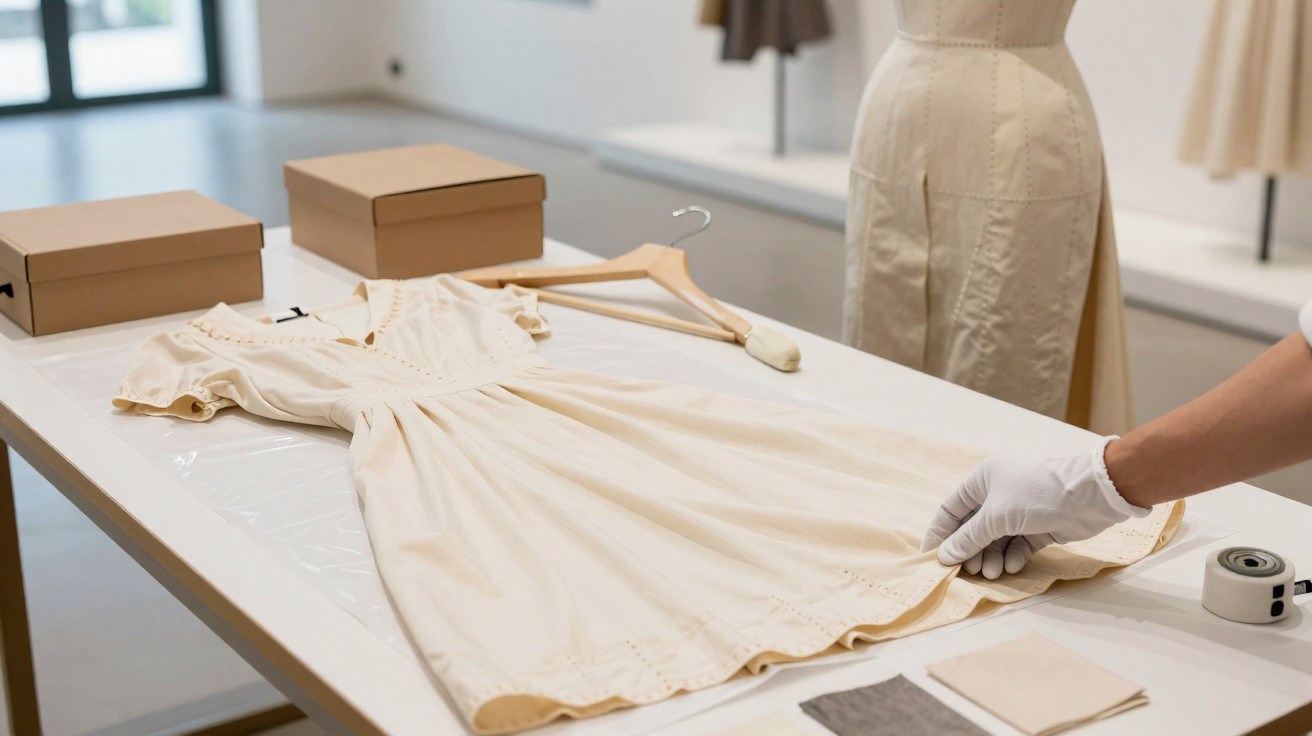
Fashion museums depend on careful conservation. Textiles can be damaged by light, dust, pests, heat, damp and unsuitable storage. Delicate items may need long periods away from display, especially when dyes are unstable or fabrics are weak.
Tel Aviv’s warm climate makes environmental control particularly important for a collection containing historic textiles. Light-sensitive garments cannot safely remain on show indefinitely, even when a gallery appears dim to visitors.
Caring for older clothes at home
If an exhibition prompts you to look through family wardrobes or storage boxes, start cautiously.
- Wash and dry your hands before handling delicate items. Avoid hand cream, which can mark fabric.
- Photograph labels, repairs and distinctive details before moving or attempting to clean anything.
- Do not hang heavy beaded garments, fragile knits or bias-cut dresses, as they can stretch and distort.
- Keep textiles out of damp cellars, lofts, sheds and garages, where temperature and humidity can fluctuate sharply.
- Remove ordinary dry-cleaning bags, which can trap moisture and catch on trims.
- Seek advice from a textile conservator before washing, repairing or trying to remove stains from an important item.
Never use bleach, strong stain removers or heavily fragranced sprays on old textiles. Do not mix cleaning products: bleach must never be combined with acids, ammonia or other household cleaners, as dangerous fumes can be produced.
Common mistakes when reading fashion history
It is easy to enjoy clothing visually while overlooking the detail that gives it meaning. Watch out for these common mistakes:
- Assuming the label tells the whole story. The designer matters, but so do the maker, retailer, wearer and repairer.
- Equating age with financial value. An old garment may be culturally meaningful without being valuable at auction.
- Ignoring alterations. A replaced zip, added panel or shortened hem can be vital evidence of how a piece was used.
- Judging historic clothes by modern sizing. Sizes vary between decades, countries and manufacturers.
- Calling every second-hand item vintage. The term is widely used, but not every pre-owned garment has a recognisable period character.
- Cleaning too enthusiastically. Wear, fading and repairs can be part of an item’s history; harsh treatment can cause irreversible damage.
Start with the clothes already around you
A future fashion museum in Tel Aviv could become a place for discovering designers and major collections, but its deeper value may be in changing how visitors see ordinary clothes.
Choose one item from your own wardrobe or family home and ask a few questions: who made it, where did it come from, what occasions has it seen, and what would someone in fifty years need to know to understand it?
Write down the answer, take a photograph and keep it with the item if it matters to you. Fashion history does not begin in a museum store room. It begins when someone decides that an everyday object, and the life connected to it, is worth remembering.















Comments
No comments yet. Be the first to comment!
Leave a Comment