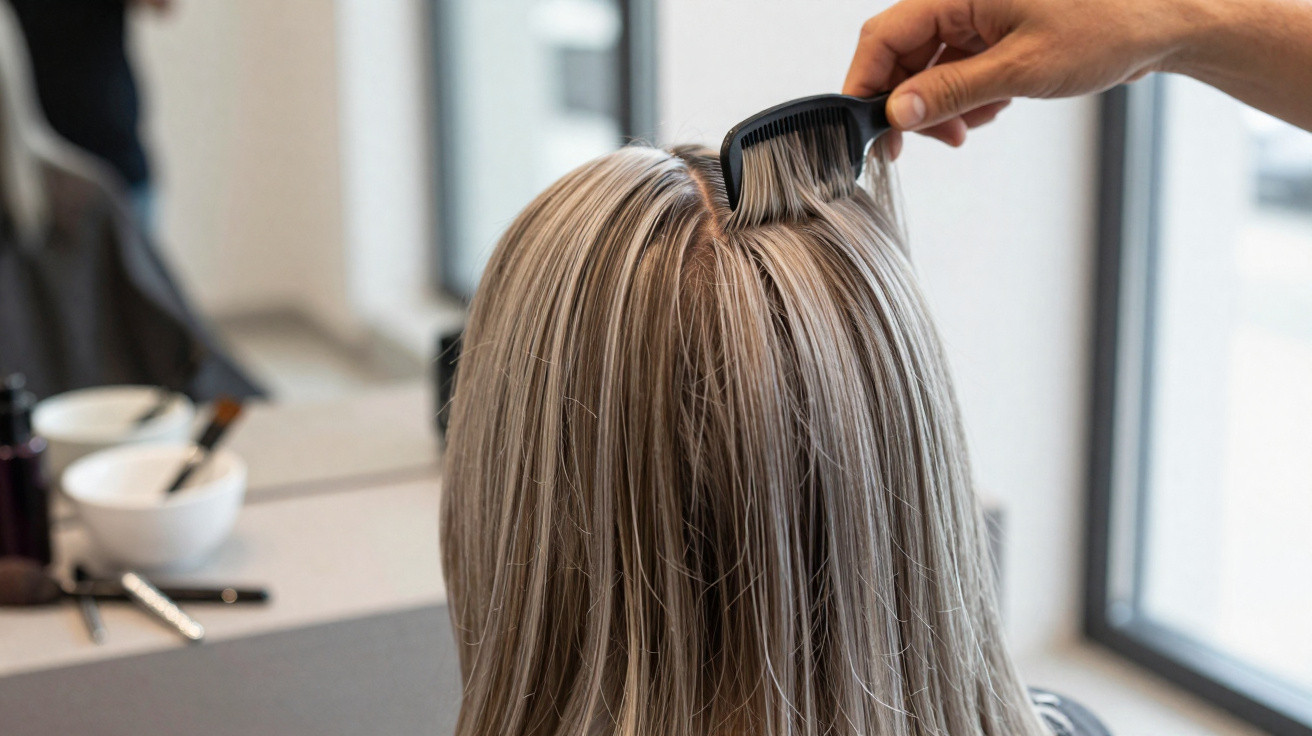
Deciding to grow out grey hair can feel freeing – until a bright line of regrowth appears against years of darker colour. The most helpful approach is to see it as a planned change rather than simply stopping dye and waiting. Strategic cutting and carefully chosen colour work can soften the contrast while your natural grey grows in.
Going grey does not mean giving up on having polished-looking hair. Grey and white strands can behave differently from your previously coloured hair: they may feel drier, look less shiny or show yellow tones more readily. A realistic plan, gentle home care and regular trims can make the in-between stage feel far more manageable.
The goal is not to make every strand match overnight. It is to reduce harsh contrast so the natural grey becomes part of the overall look.
Why stopping colour all at once can be challenging
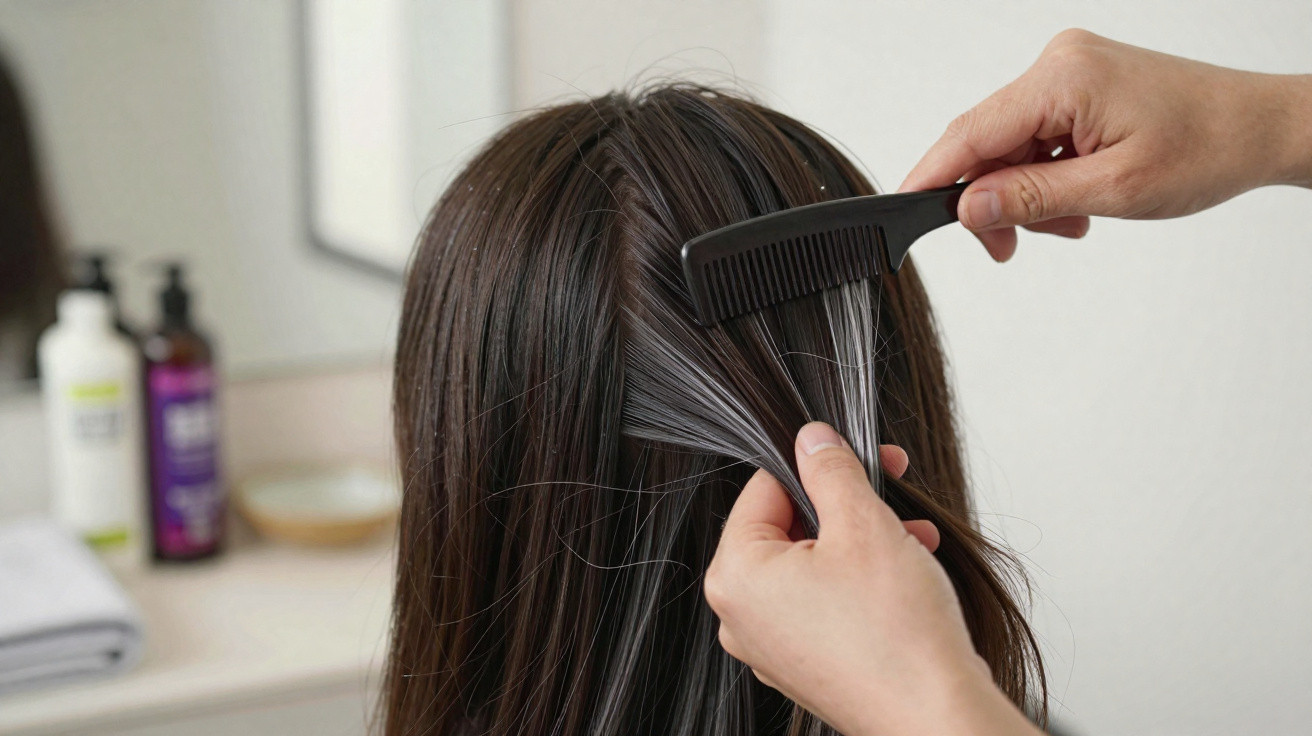
If you have used permanent colour for years, particularly dark brown, black or red shades, new grey growth can create a noticeable horizontal band. As hair grows slowly, that contrast may be visible for some time unless it is blended, cut away or allowed to become part of the style.
The length of the transition depends on several things:
- Your current length and how much of it is coloured
- Where your grey appears, such as around the temples, fringe or parting
- The depth and type of colour already on the lengths
- The condition of the hair, especially the ends
- How much length you are happy to remove over time
A short cut can remove old colour sooner, while long hair may need a slower approach. Neither is the right choice for everyone. The best route is one you can maintain without damaging your hair or feeling pressured into a cut you do not want.
Stopping colour abruptly can work well if the old colour is already close to your natural grey blend. However, it is only one option, and it can be harder to live with when the difference is stark.
Start with a thorough salon consultation
A consultation with an experienced colourist is useful before making a dramatic change. Bring photographs of grey styles you like, but treat them as a starting point rather than a promise: the result will depend on your own colour history, grey pattern, hair texture and condition.
Be open about everything you have put on your hair, including box dye, henna, highlights, colour-depositing conditioners and at-home toners. Previous colour can affect what is possible and how safely a stylist can lighten or blend the lengths.
Ask practical questions such as:
- What is the gentlest route from my current colour to my natural grey?
- Would highlights, lowlights or a root blend suit my regrowth pattern?
- How many appointments might be needed to make the contrast less obvious?
- Would a shorter cut now, or gradual trims, make the process easier?
- What routine will keep my particular hair type in good condition?
If lightener or a new colour formula is proposed, follow the salon’s patch-test guidance. Tell the stylist about previous reactions, scalp irritation or sensitivity. Do not use bleach or strong colour removers at home to speed up the process: they can leave bands of colour, cause breakage and irritate the scalp.
Colour techniques that can soften the grow-out
There is no single grey-transition service. A colourist should tailor the approach to your starting point and the level of maintenance you want.
1. Fine highlights to echo lighter regrowth
Fine highlights can break up a solid block of old colour and introduce lighter tones through the lengths. They are often useful when grey is most visible around the hairline, temples or parting.
The aim is usually a soft mixture of shades, rather than obvious blonde stripes. As your grey grows through, the difference between the roots and coloured sections can appear less abrupt.
2. Lowlights for depth and variation
Natural grey is rarely one flat colour. It may include white, silver and darker strands, so carefully placed lowlights can add dimension and stop the result looking washed out.
This may be useful where old highlights have become very pale or brassy beside cooler grey roots. A colourist can choose muted tones that work with the natural variation already coming through.
3. A demi-permanent root blend
Demi-permanent colour can soften the join between the regrowth and old colour. It generally fades over time, which may make the transition less rigid than repeated full permanent coverage.
A subtle root shadow can also create a gentler graduation from the natural root into lighter mid-lengths. It will not make regrowth disappear, but it can make the overall effect look more deliberate.
4. Gradual lightening of darker lengths
Where the coloured hair is much darker than the incoming grey, a professional may suggest lightening it over several appointments. This can be combined with highlights, toning and conditioning treatments.
Trying to reach a very pale silver shade in one session can compromise already coloured hair. A slower plan is often kinder to the lengths and gives you time to decide how light you genuinely want to go.
A haircut can make a real difference
Colour is only part of the transition. Regular trims remove old dyed ends gradually, while a new shape can make the whole look feel intentional.
A cut around collarbone length can be a practical reset if you are willing to lose some length. Long layers can also reduce the visual weight of a single dark block of colour. A fringe may draw attention towards the eyes, but it should suit your hairline, styling habits and willingness to maintain it.
If you want to keep your hair long, there is no need to cut it all at once. Agree a trim plan with your stylist and remove the coloured ends bit by bit.
Strong, well-shaped hair usually looks better than hair that has been pushed too far in pursuit of a quick colour change.
Care for grey hair as its needs change
Grey hair is not automatically unhealthy, but it can feel coarser, drier or more wiry than it did before. Coloured lengths and naturally grey roots may also need slightly different care while they coexist.
Keep the routine simple:
- Choose a gentle shampoo that suits your scalp and washing frequency.
- Use conditioner on the mid-lengths and ends after each wash.
- Add a moisturising mask when the hair feels rough or difficult to manage.
- Apply heat protectant before blow-drying, straightening or curling.
- Keep heated tools at a moderate temperature and avoid repeated passes over one section.
- Use a small amount of leave-in cream or oil on dry ends if needed.
In the UK, indoor heating in winter, rain and humidity, hard water in some areas and summer sunshine can all affect how hair looks and feels. Rinsing after swimming and wearing a hat in strong sun are simple ways to limit dryness and discolouration.
How to use purple shampoo carefully
White and grey strands can develop yellow or warm tones from sunlight, smoke, product build-up, minerals in water and styling. Purple shampoo uses violet pigment to visually counter yellow tones, but it is not needed every day.
A sensible way to introduce it
- Start once a week, or less often if your grey already looks bright.
- Follow the instructions for that particular product, as pigment strength varies.
- Rinse thoroughly, then use conditioner or a hydrating mask.
- Alternate it with your usual moisturising shampoo.
- Use it less often if the hair starts to look dull, dry, overly cool or faintly lilac.
Purple shampoo can be drying on some hair types. If yellow tones return quickly, ask a hairdresser whether product build-up, hard water or an unsuitable routine may be contributing.
Common mistakes during a grey transition
The awkward stage is normal, but these choices can make it more frustrating:
- Expecting immediate results: a gradual blend may take several appointments and trims.
- Fully covering roots between visits: this can recreate the strong line you are trying to soften.
- Using DIY bleach or colour remover: these products can cause patchiness, breakage and scalp irritation.
- Forgetting the haircut: old colour stays in the ends until it is cut away or grows out.
- Overusing purple shampoo: too much pigment can leave grey hair looking flat or dry.
- Skipping heat protection: damaged ends can undermine even a beautifully blended colour.
- Changing direction at every appointment: a consistent plan gives the stylist a clearer route to work with.
Make the change work for you
Growing out grey does not have to mean aiming for bright white hair. You may prefer a salt-and-pepper finish, soft silver highlights or simply a lower-maintenance colour that works with your regrowth.
Book a consultation, choose a pace that suits your hair and take progress photos in natural daylight. With careful blending, regular trims and enough moisture, the transition can become a considered style choice rather than a long wait for old colour to disappear.














Comments
No comments yet. Be the first to comment!
Leave a Comment