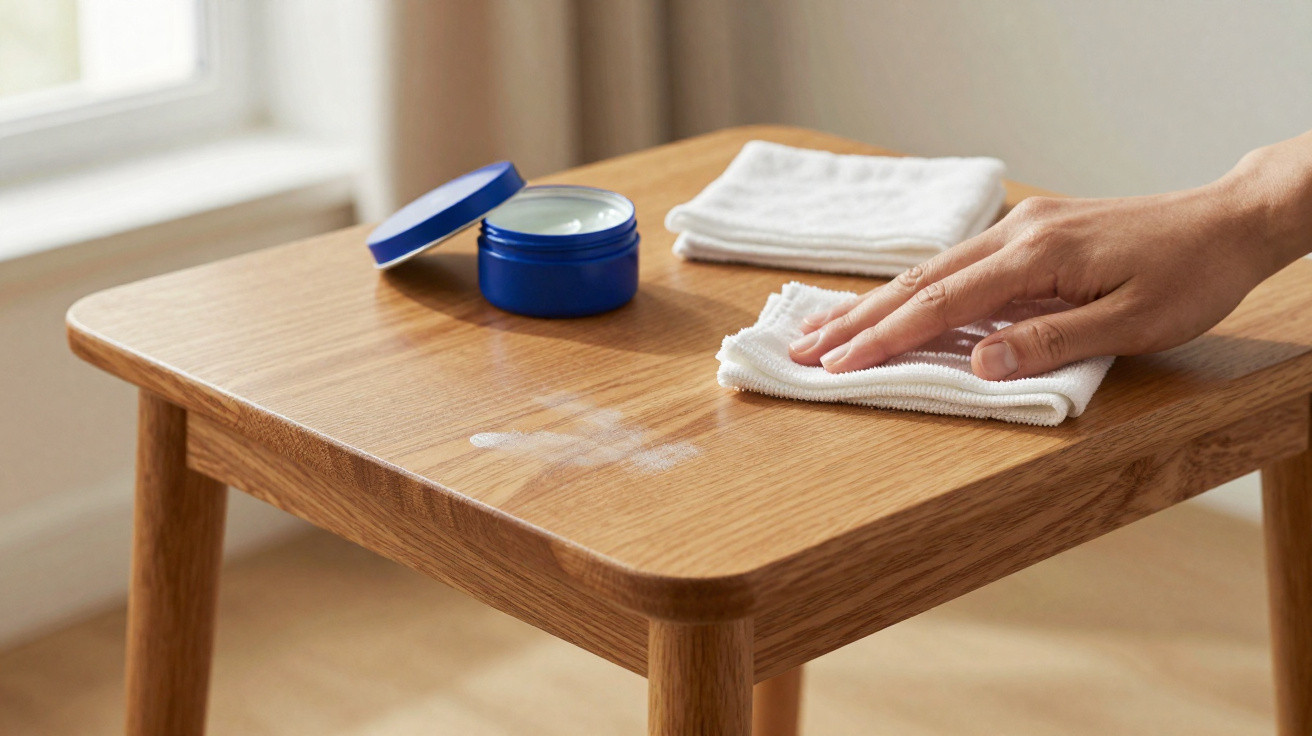
A tin of rich moisturising cream is a bathroom-cabinet staple when elbows, hands and knees feel dry. It is also the subject of a furniture-care tip that regularly circulates online: use a trace on wood to make it look shinier.
The important point is that moisturiser is not wood polish. On some intact sealed finishes, a tiny amount may leave a temporary sheen, but it can also create a greasy film, attract dust or darken damaged areas. If you try it at all, regard it as a cautious patch test on an unimportant item - not a way to clean, nourish or repair furniture.
Why moisturiser can change the look of wood
Many rich skin creams contain emollient ingredients that leave a soft, protective-feeling film on skin. On a smooth, sealed wooden finish, that film can briefly alter the way light reflects from the surface, making it look deeper in colour or slightly glossier.
That does not mean the cream has improved the timber. It is sitting on, or interacting with, the existing finish rather than repairing scratches, restoring lost coating or conditioning the wood in a useful way.
A quick shine is not proof that a surface is clean, protected or restored.
Furniture may be finished with varnish, lacquer, wax, oil, shellac or a modern coating. These surfaces can respond very differently, particularly if they are old, worn, scratched or of unknown origin.
When to avoid this completely
Do not use moisturising cream on furniture if the piece is valuable, sentimental, antique or difficult to replace. It is not worth risking an uncertain finish for a short-lived shine.
It is also best avoided on:
- bare, unfinished or porous timber
- untreated pine, oak and reclaimed wood
- oiled, waxed, matte, chalk-painted or satin finishes
- veneer with damaged or lifting edges
- cracked, crazed, chipped or peeling finishes
- tables used for food preparation or serving
- wooden toys, cot furniture and items handled frequently by children
- furniture with an unknown finish.
Porous wood can absorb oily residue unevenly, leaving darker patches. A moisturiser can be especially obvious on a matte finish, where a shiny mark may remain after the rest has been buffed away. It can also settle into joints, scratches and carved details, where removing it is awkward.
How to patch-test it safely
If you still want to test the idea on an ordinary item with a smooth, fully intact sealed finish, use the smallest possible amount. Choose a hidden area, such as the inside edge of a cupboard door or the underside of a rail.
1. Remove dust first
Dust the area with a clean, dry microfibre cloth. If it needs more cleaning, wipe it very lightly with a barely damp cloth, then dry it immediately.
Do not rub cream over dust, old polish or kitchen grease. It may turn the residue into a sticky film rather than improving the surface.
2. Put the cream on the cloth, not the furniture
Use no more than a pinhead-sized amount on a soft, clean cloth. Work it into the cloth so there is no visible blob of product.
Avoid applying it straight from the tin. That makes it far too easy to use more than the finish can tolerate.
3. Test a very small hidden area
Use light pressure and follow the grain where it is visible. Keep the test area small, and do not scrub. Rubbing hard will not disguise scratches and may damage a delicate finish.
4. Buff away all excess
After a few moments, buff with a second clean, dry microfibre cloth. The surface should not feel tacky, oily or slippery when you have finished.
5. Wait before deciding
Look at the patch in daylight after several hours and again the next day. Stop if you see darkening, streaks, rings, uneven gloss, stickiness or dust adhering to the area.
If the patch looks fine, use very little
A successful test does not make moisturiser a general-purpose furniture polish. At most, it suggests that one small patch of that particular finish did not show an immediate problem.
If there is no visible change after a day, use the tiniest amount on a limited decorative area only, then buff thoroughly. Do not use it on a dining table, worktop or any surface that needs regular hygienic cleaning.
In a typical UK home, indoor air can feel dry when the heating is on, while open windows in warmer months bring in pollen and dust. Oily residue gives that dust something to cling to, so repeated applications can soon make furniture look duller rather than brighter.
If the finish feels greasy after buffing, there is still too much product on it.
Better ways to care for wooden furniture
For routine care, less is usually more. Check the manufacturer’s instructions, care label or original paperwork where you have it, especially for newer furniture with a specific coated finish.
A straightforward routine includes:
- dusting with a soft, dry microfibre cloth
- wiping spills promptly, particularly tea, wine, water and cooking splashes
- using coasters, placemats and heatproof mats
- keeping furniture away from radiators, persistent damp and strong direct sun
- using a cleaner, wax or oil only if it is suitable for that particular finish.
For most sealed surfaces, a lightly damp cloth followed immediately by a dry cloth is enough for occasional grime. Purpose-made wood-care products can be useful, but they should match the finish and be used sparingly. Even suitable waxes, oils and silicone-based polishes can build up if used too often.
What to do if you have left a greasy mark
Start gently. Buff the area with a fresh, dry microfibre cloth, turning the cloth regularly so you are lifting residue rather than spreading it.
If the mark remains and the surface is a robust sealed finish, test a barely damp cloth in a hidden area first. Wipe lightly, then dry straight away. Do not soak the wood or scrub at it.
Avoid strong kitchen degreasers, abrasive pads, solvents and homemade cleaning mixtures. They can damage or strip a finish more seriously than the cream itself.
For antiques, veneer, damaged finishes or marks that will not lift, contact a furniture restorer or reputable local repair service. A professional can assess the finish before attempting treatment.
Common mistakes to avoid
The most common error is simply using too much. A fingertip-full may suit dry skin, but it is excessive for furniture.
Other pitfalls include:
- applying cream directly to the wood
- skipping a patch test because furniture appears varnished
- treating scratches by rubbing harder
- using it on food-serving surfaces
- applying it over dust, wax, polish or spray-cleaner residue
- adding more cream to blend a greasy patch
- assuming a temporary shine means the furniture has been nourished
- repeatedly applying it until a film builds up.
Never mix household cleaning products in an attempt to remove a mark. In particular, never mix bleach with acids such as vinegar, or with ammonia-based products, as dangerous fumes can result. Keep cleaning products away from children and pets, and wash your hands after use.
Keep the blue tin for skin care
The appeal of this trick is understandable: it uses something already at home and may make a sealed surface look brighter for a while. But it is an improvised cosmetic shortcut, not a reliable furniture-care method.
For dry skin, use the cream according to its packaging. For wood, begin with gentle dusting, prompt spill care and a product intended for the specific finish. That approach is much more likely to keep a table, cabinet or sideboard looking good over time.












Comments
No comments yet. Be the first to comment!
Leave a Comment