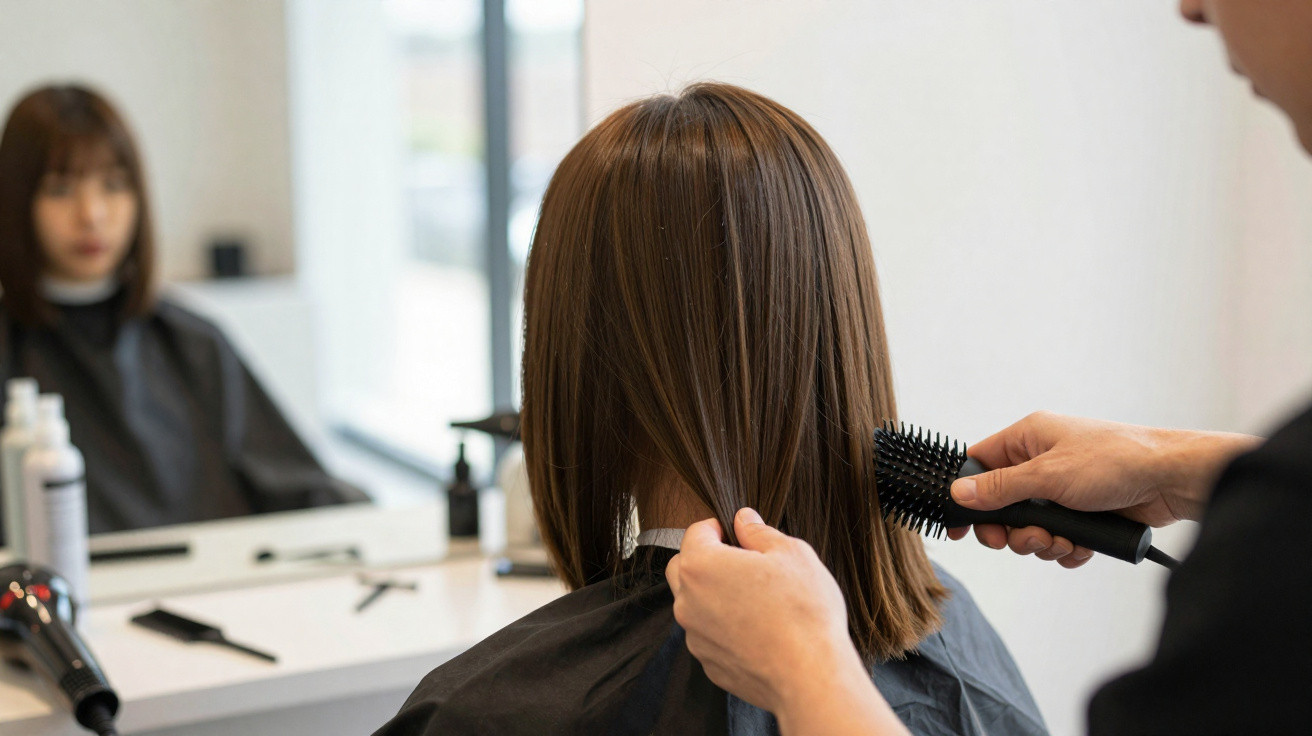
Want a noticeable change but panic at the thought of losing your ponytail? A lob - short for long bob - is a useful middle ground. It has the clean, modern outline that makes a bob appealing, while usually sitting around the collarbone or slightly below it.
That extra length matters on ordinary days. You can still tie it back for work, the gym, rainy walks or the awkward stage between washes. The trick is not simply asking for a lob: choose a length, shape and finish that suit your natural texture and the way you genuinely style your hair.
What makes a lob different from a bob?
A traditional bob often finishes around the jawline or chin. It can look striking, but it may require more frequent trims and more attention each morning if you want to maintain a precise shape.
A lob is the longer version, commonly falling near the collarbone. It is still a definite haircut rather than just long hair with a trim, but it can feel less daunting if you are used to having length.
A well-cut lob can be:
- worn smooth for a neater finish;
- waved for a relaxed look;
- tucked behind the ears;
- clipped up or gathered into a low ponytail;
- styled with a centre or side parting.
A good lob should look intentional from the start, rather than like a bob that has simply grown out.
Why it can be a reassuring first step
The worry about getting a bob is often about losing options rather than the cut itself. Shorter hair can expose cowlicks, alter the way your face is framed and make a rushed morning more difficult if you normally rely on a quick ponytail.
A collarbone-length lob keeps enough hair to feel familiar while removing worn or wispy ends. It can refresh a heavy, one-length style without committing you to a much shorter crop.
It may be particularly appealing if long hair takes ages to dry, catches in scarves and coat collars, or feels flat through the lengths. You will notice a lighter shape, but still have enough length for simple everyday styling.
Choose a lob shape for your hair
There is no single version that works for everyone. Hair density, natural movement and your styling habits are often more useful starting points than trying to copy a particular face shape from a photograph.
1. The blunt lob
A blunt or nearly blunt lob has minimal layering and a strong, even line at the bottom. It can make fine hair look fuller and gives straight hair a polished, structured finish.
If you do not want a severe edge, ask for the ends to be softened slightly. This can also help if your hair naturally turns outwards where it meets the shoulders.
2. The softly layered lob
Long, subtle layers can remove some weight from thick hair and add movement without making the ends look thin. This shape can work well for naturally wavy hair, especially if you usually air-dry with a suitable cream or mousse.
Be cautious about asking for lots of short layers purely for volume. Too much layering can make a lob harder to tie back and leave fine hair looking sparse at the bottom.
3. The textured lob
Textured ends create a softer, less polished outline. It can suit people who like loose waves and a little separation rather than a sharply defined finish.
The amount of texturising needs to be tailored to the hair. Very fine, fragile or heavily lightened hair may look better with a cleaner, fuller edge.
4. A slightly longer front
A gentle angle, with the front a little longer than the back, can create shape while keeping reassuring length around the face. Keep the angle subtle if you want an easy everyday cut that grows out without an obvious ledge.
What to ask for at the salon
Photos are helpful, but they do not show how your hair behaves after you have washed it at home. Take inspiration pictures, but give your stylist a practical brief as well.
Explain:
- whether you usually air-dry or blow-dry;
- whether you need a ponytail most days;
- if your hair frizzes, expands or falls flat in damp weather;
- whether you wear glasses, a fringe or a regular side parting;
- how often you are realistically willing to have it trimmed.
A simple consultation checklist
- Set your shortest comfortable length. If you are nervous, begin around collarbone level. You can always go shorter at a later appointment.
- Discuss your natural parting. Fighting against a parting your hair naturally makes can mean more heat styling every morning.
- Ask how it will sit when dry. Wavy and curly hair can appear shorter once dry, so this should be considered before cutting.
- Mention tying it up. Ask whether the back and front will be long enough for the ponytail or clip style you rely on.
- Talk about the grow-out. A shape that still works after several weeks is often a better choice than one that only looks good on the day of the appointment.
Style a lob without complicating mornings
A lob often looks best when it is not overworked. Use a modest amount of product and build a routine you can manage on an ordinary weekday, not just before an occasion.
For a smooth finish, dry your hair until it is mostly dry, then use a large round brush on the front and top sections. Turn the brush slightly under at the ends for a soft curve rather than a tight curl.
For loose movement, let hair dry most of the way naturally, then add a few bends with tongs or straighteners. Alternate the direction of the bends and leave the very ends straighter for a relaxed finish.
The aim is movement and shape, not identical curls on every section.
If your hair has natural waves, try a lightweight curl cream or mousse, scrunch gently and avoid brushing once it starts to dry. In humid weather, a small amount of anti-frizz serum through the mid-lengths and ends may help keep the finish neater. Start sparingly, as too much product can make the hair look flat.
Everyday looks worth trying
One cut can look very different with small styling changes. Give yourself time to experiment before deciding a new length is not for you.
- Centre parting: clean and balanced, particularly with a blunt edge.
- Soft side parting: can add root lift and change the way the cut frames your face.
- Tucked behind one ear: quick, tidy and useful with statement earrings.
- Low ponytail: leave a few soft face-framing pieces out if you prefer a less formal look.
- Half-up clip: practical for commuting, working from home or washing your face.
- Loose waves: can add movement to very straight hair.
A small change in parting can make more difference than buying another styling tool.
Heat styling and hair-care precautions
Blow-dryers, straighteners and curling tools are useful, but frequent high heat can leave the ends feeling dry or rough. Apply a heat-protection product before using hot tools, follow the product instructions and use the lowest practical temperature.
Do not use straighteners or tongs on damp hair unless the appliance is specifically designed for that use. Keep hot tools away from water, unplug them after use and place them on a heat-resistant surface away from towels, children and pets.
A lob usually benefits from occasional trims to maintain its outline. How often depends on the shape of the cut, your hair condition and whether you are growing it out. If your ends are damaged from colouring or heat styling, a tidy trim may be more useful than adding further layers.
Common mistakes that make a lob harder to love
A lob can be low-maintenance, but it is not entirely maintenance-free. These choices can make it less versatile than expected:
- Going too short straight away. Start a little longer if you are unsure; more can always be removed later.
- Copying a photograph without considering texture. Sleek, thick hair will not behave like fine, curly or highly textured hair.
- Over-thinning dense hair. Removing too much weight can leave the ends looking stringy.
- Ignoring the shoulder flick. Hair that lands exactly on the shoulders may turn outwards; your stylist can adjust the length or internal shape.
- Using heavy oils at the roots. They can flatten the crown and reduce movement.
- Expecting no upkeep. Even a relaxed lob needs a workable drying routine and occasional trims.
Make the change without rushing it
A lob is a practical compromise when you want a lighter, more deliberate haircut but are not ready to give up the security of longer hair. Start at a collarbone-skimming length, explain how you actually wear your hair and choose a shape that works with its natural texture.
Give yourself a week or two to adjust to the new proportions. Try a different parting, a low ponytail and a few soft waves before making up your mind. With a realistic styling routine, a lob can deliver the freshness of a bob while keeping many of the options that make longer hair easy to live with.











Comments
No comments yet. Be the first to comment!
Leave a Comment