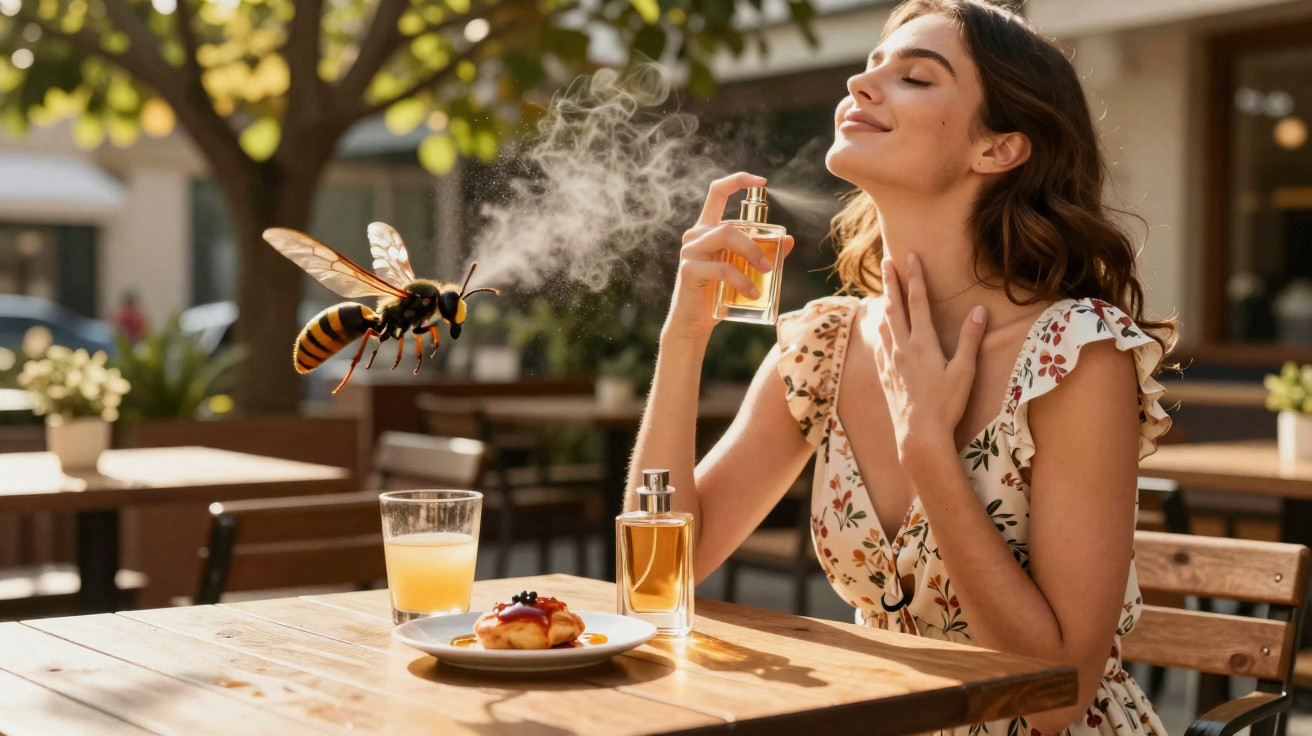
Many people immediately think of sweet cocktails and sticky barbecue plates when they think about stings. Hardly anyone realises that, particularly in spring and summer, one specific type of fragrance can act like an invitation sign for the Asian hornet - straight from your own skin.
Why the Asian hornet reacts so strongly to certain fragrances
The Asian hornet, scientifically known as Vespa velutina, is regarded as an invasive species in Europe. It hunts bees, but is also extremely attracted to anything smelling of sugar: ripe fruit, fermenting juices, nectar and sweet drinks.
Its sense of smell is perfectly adapted to this. Its antennae contain countless sensory cells that can filter out particular scent molecules. Entomologists describe this as a highly specialised “chemical radar” that detects sweet stimuli from a considerable distance.
“To the Asian hornet, some modern summer perfumes smell like a flowering orchard with a free buffet.”
The insects respond especially strongly to so-called esters - fragrance compounds reminiscent of banana, very ripe fruit or liqueur - as well as typical floral scents. These exact groups of molecules are found in many popular personal-care products.
The fragrance you are better off avoiding in spring and summer
Outdoors, the greatest risk comes from very sweet, ‘edible’ fragrances, often described as gourmand or sugary. To an Asian hornet, these compositions effectively resemble a laid table.
Typical fragrance notes that particularly attract Asian hornets
- Vanilla and tonka bean
- Coconut and tropical cocktail accords
- Caramel, candy floss and marshmallow
- Red fruits such as strawberry, raspberry and cherry
- Ripe peach or pear accords
- Exotic fruits including mango, pineapple and passion fruit
These notes occur not only in perfumes, but also in:
- fragranced body lotions and shower gels
- strongly scented sun creams with beachy or coconut fragrances
- sweet body sprays and body splashes
- hairsprays and hair perfumes that leave an intense scent trail
A typical scenario: someone wears a fruity summer edition featuring peach and white flowers. Everything on the picnic table is covered and the glasses are half empty - yet almost every insect heads towards that person. To the hornet, their skin smells like a blend of ripe fruit and floral nectar.
“Most people think first of barbecued meat and cake - but the real attractant is sitting directly on the skin and in the hair.”
Everyday mistakes that practically lure Asian hornets to the table
Many summer habits intensify the effect without people noticing. Common ‘traps’ include:
- Applying generous amounts of vanilla or coconut body spray to the arms, neck and décolletage before a barbecue evening.
- Using a strongly scented sun cream that smells intensely of a tropical beach.
- Sitting directly beside the dessert buffet or the lemonade.
- Reapplying fragrance while food and drinks are still on the table.
Together, these factors create something like a ‘scent bubble’ around the person. For the Asian hornet, the sweet smell can even overpower some of the food aromas, making the skin the strongest scent source nearby.
Summer beauty without becoming an insect magnet: how to wear fragrance wisely
You do not have to go completely fragrance-free throughout the summer because of hornet concerns. What matters is the kind of scent you choose and how you apply it.
Fragrance families that are less risky outdoors
- Citrus notes: bergamot, lemon, grapefruit and mandarin
- Tea fragrances: green tea, white tea and lightly bitter, fresh compositions
- Woody fragrances: cedarwood, sandalwood and vetiver
- Light aquatic notes: subtle marine and water accords without a sweet emphasis
- Herbal accords: rosemary, lavender (not overly sweet) and sage
These fragrances contain far fewer of the sweet molecules to which the Asian hornet responds so strongly. You will not become completely undetectable to it, but the attraction is significantly reduced.
Application tips: where perfume is better placed in summer
A few straightforward adjustments can reduce the risk further:
- Spray beneath clothing: for instance, on the stomach, chest or side of the torso instead of directly on the neck and arms.
- Avoid the hair: do not apply sweet body sprays or hair fragrances to the lengths, as they release aromas for a long time and over a wide area.
- Consider the timing: top up only after eating or once you have left the terrace, rather than in the middle of pre-dinner drinks.
- Choose sun protection carefully: opt for neutral sun cream, or one with only a lightly fresh fragrance.
“Anyone who does not want to give up intense, sweet fragrances should wear them on days when there is no barbecue, no beer on the balcony and no picnic planned.”
How significant is the risk in reality?
Entomological assessments show that sweet, fruity or heavily floral notes increase the likelihood of an Asian hornet becoming curious. In experiments, the insects reacted noticeably more often to matching fragrance blends than to neutral or bitter blends.
Does this mean that every spray of vanilla will definitely make you a target? No. Insect behaviour also depends on the temperature, time of day, proximity to nests and other food sources. However, anyone who regularly spends time outdoors, such as at a weekly garden gathering, is simply adding more risk factors by using sweet personal-care products.
What to do if you are stung
An Asian hornet sting can be painful and may trigger severe reactions in sensitive people. First aid follows the same basic principles as for bee or wasp stings:
- Cool the sting site, for example with a cold pack or cold water.
- Raise the arm or leg if a limb is affected.
- For a sting in the mouth or throat, call 999, as swelling can become life-threatening.
- Seek medical help immediately if breathing difficulties, dizziness, a racing heart or widespread hives occur.
People with a known insect-venom allergy should keep their emergency kit within easy reach, particularly in areas where the Asian hornet is already common.
Why sweet fragrances are particularly deceptive
The phenomenon is entirely down to chemistry. Many fragrance molecules in perfumes closely resemble substances produced by plants in blossoms and fruit. Esters with banana or liqueur notes, floral alcohols, and honey and nectar accords all imitate signals that insects recognise from nature.
The hornet does not distinguish between ‘natural’ and ‘artificial’. Its sensors respond to the molecular structure, not where the molecules come from. To it, a fruity body spray is simply an especially powerful floral scent. As these signals occur at extremely concentrated levels in many personal-care products, they can have a stronger effect on mild summer evenings than the smell of a single fruit tree.
Anyone reorganising their fragrance collection with this in mind does not need to live ascetically. A practical approach is to reserve a favourite sweet fragrance for the office, shopping in town and cooler days, while choosing a light citrus or woody scent for barbecue evenings, balcony parties and outdoor holiday nights. That way, your personal scent signature remains intact without accidentally setting off an insect alert.















Comments
No comments yet. Be the first to comment!
Leave a Comment