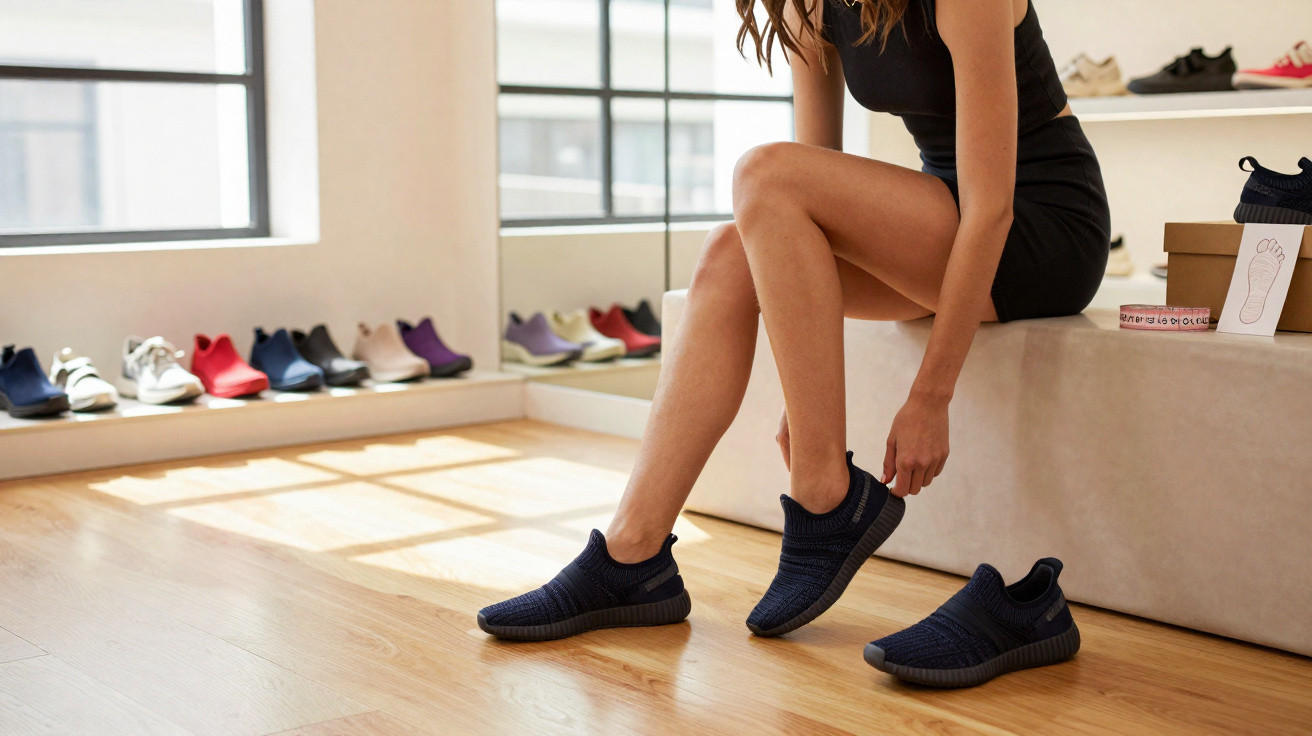
Sneakers that supposedly “transform” the foot in an instant are currently appearing everywhere on Instagram, TikTok and similar platforms. The promise is a slimmer, more elegant-looking foot that elongates the whole silhouette. While the fashion appeal is obvious, the trend raises plenty of orthopaedic questions. How exactly do these shoes work – and when does style begin to come at the expense of health?
The desire for smaller feet is driving a problematic trend
For years, chunky dad sneakers ruled the market: thick soles, wide shapes, plenty of comfort and little understatement. Now the trend is moving in the opposite direction. Social media is full of “before-and-after” clips where only the shoe changes – yet the foot suddenly appears visibly narrower.
Many fashion enthusiasts celebrate the effect. A slim, tapered foot is viewed as elegant, with some even referring to a “Cinderella effect”. In the process, priorities shift: rather than cushioning and support, the streamlined appearance becomes the main focus.
“The new generation of sneakers follows the beauty ideal of an exceptionally dainty foot more closely than it follows the anatomy of the foot.”
This is precisely where the issue lies. The foot’s natural arch, toe alignment and ankle stability can quickly become secondary when manufacturers optimise mainly for appearance.
High-tech knit instead of leather: how mesh and knit make the foot look “smaller”
The striking change is not magic, but the result of modern textile technology. Many on-trend styles rely on:
- Mesh – a thin, net-like fabric
- Knit – a tightly knitted, elastic upper
Both materials wrap around the foot like a second skin. Compared with traditional leather or heavy canvas, they eliminate reinforcements, seams and multiple layers of material. This reduces bulk – visually and, to some extent, physically too.
Anyone wearing these shoes quickly notices that the foot appears far less bulky and its contours are more clearly defined. The overall effect resembles a close-fitting sock with a sole. Originally, these constructions were intended to make running shoes lighter and more breathable. Fashion brands now use them specifically to create everyday sneakers with an especially slim appearance.
Up to 1.5 centimetres “narrower”: the optical illusion behind knit sneakers
A study from Milan examined the phenomenon in greater detail. Its finding was that, with many models featuring an elastic knitted upper, the foot appears around 1 to 1.5 centimetres narrower at its widest point than it does in conventionally constructed sneakers.
Several effects are responsible:
- fewer visible seams and reinforcements along the sides
- a continuous, usually single-colour surface without interruptions
- slight compression from the material around the midfoot and toes
Where pronounced seams and overlays once highlighted the foot’s width, there is now a calm, smooth surface. As a result, the eye perceives the shape as more compact. Dark colours or tonal outfits intensify the effect further.
“A few cleverly applied centimetres less can quickly create the impression in the mirror of a completely different foot.”
How fans style the shoes to make their legs appear longer
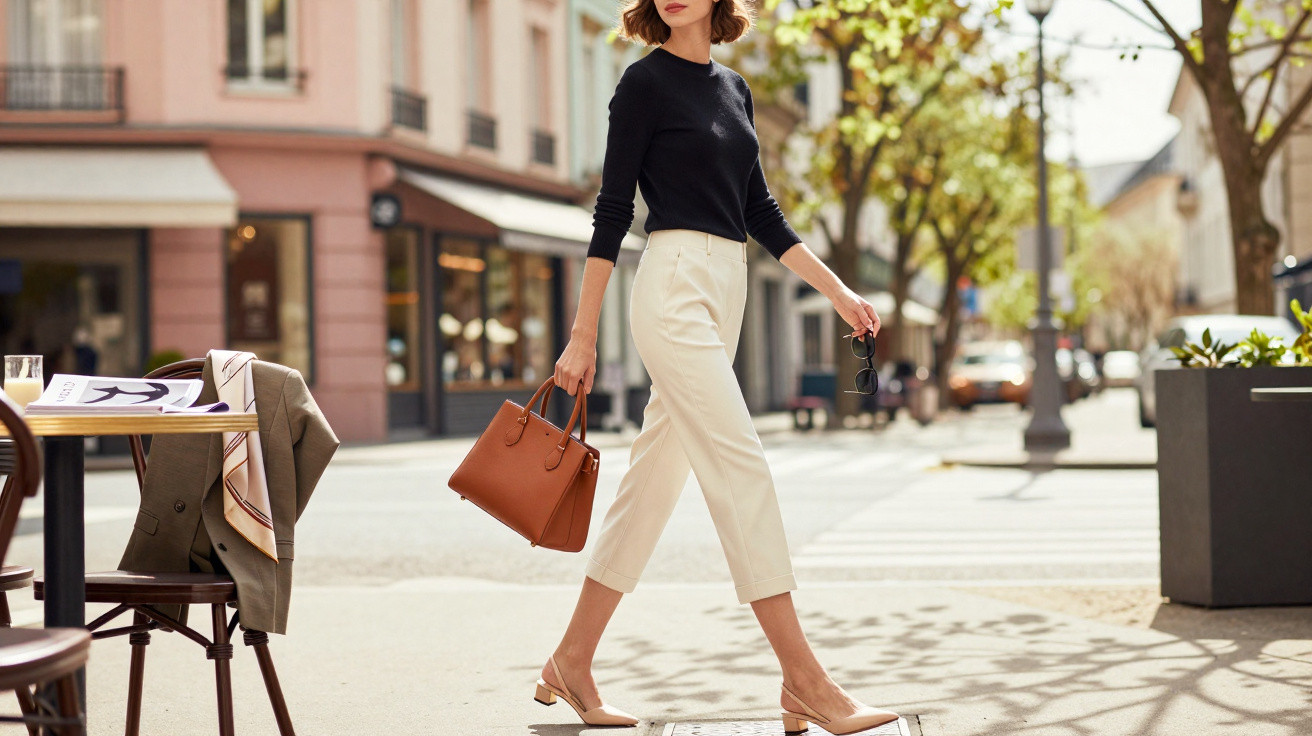
Those wanting to make the most of the optical effect often opt for shorter trousers. Particularly popular choices include:
- ankle-grazer jeans ending above the ankle
- cropped trousers with a tapered leg
- lightweight fabric trousers with turned-up hems
The principle is simple: if the sneakers streamline the toe area, keeping the ankle visible helps continue the line visually. Fabric that is too long and falls onto the shoe can quickly make the whole look appear bulky again.
Very wide trouser legs – such as cargo trousers or flares – can even reverse the effect. The shoe then virtually disappears beneath the fabric, the foot looks shorter and the proportions become unbalanced. Many stylists therefore recommend showing a narrow strip of skin or a thin sock between the trouser hem and the shoe so that the leg appears to flow uninterrupted.
When style creates pressure: the overlooked risks of compression
What looks convincing in the mirror can be tiring for the feet. To achieve the narrow look, many models use extremely close-fitting materials. In some cases, the knitted upper resembles a compression sock, simply with a sole attached underneath.
This can cause several problems:
- Uneven strain: Without side reinforcement, the foot can roll inwards or outwards more easily.
- Tired joints: The ankle and knee have to provide more stabilisation.
- Restricted toe room: The toes cannot spread fully while rolling through each step.
The final point is particularly significant. With every step, the toes need space to control balance and forward movement. If the upper continually squeezes them together, the walking pattern changes. Over time, this increases the risk of deformities such as a misaligned big toe or painful pressure points.
“Anyone forcing their foot into an overly tight textile tube every day often pays the price years later at the orthopaedist.”
Why the toe box determines whether knit sneakers work for you
There is no need to reject all knitted sneakers outright just yet. What matters is the construction at the front of the shoe. Specialists advise choosing models with a stable enclosure around the toes, often called a “toe box” or “boxer toe”.
This design combines two benefits:
- sufficient space and protection for the toes at the front
- a modern, slim knit look around the heel and sides
This preserves freedom of movement while ensuring the shoe still looks lighter and less chunky overall. When trying on a pair, it is worth deliberately checking the following points:
| Checkpoint | How to tell |
|---|---|
| Toe room | All toes can move slightly while standing. |
| Length | There is at least a thumb’s width of space in front of the longest toe. |
| Width | There is no sensation of pressure at the side of the foot. |
| Stability | The heel does not slip and the foot does not roll inwards. |
How to wear the trend without harming your feet
Anyone who likes these fashionable styles can certainly wear them – provided they follow a few basic rules. Orthopaedists recommend, among other things:
- Alternate rather than wearing them constantly: Do not wear knit sneakers seven days a week; combine them with firmer leather shoes or more supportive trainers.
- Plan everyday activities sensibly: For long walks around town or work that involves standing, choose models with solid lateral support instead.
- Take feedback from your body seriously: Numb toes, tingling or burning at the ball of the foot are warning signs.
Anyone who already has minor deformities, such as an emerging bunion, should be especially cautious. In such cases, a fashionable but unsuitable purchase can substantially worsen the condition. A visit to an orthopaedist or a well-trained specialist shoe shop is worthwhile.
What many people do not realise: how shoes alter the foot over time
The human foot is adaptable. That is what makes it strong – and vulnerable at the same time. If it is pressed into particular shapes for years, the bone and connective tissue adjust to that pattern. This is well known with pointed high heels, but even “just” tight sneakers can leave their mark.
People who naturally have narrow feet and wear their shoes relatively loosely usually escape serious consequences. Those with a wider forefoot, fallen arches or splayed feet move into the risk zone more quickly. Compression combined with a lack of stability is an unfavourable combination in these cases.
Barefoot-friendly periods offer a sensible counterbalance: walking without shoes at home, going barefoot on grass or sand, and doing exercises with a spiky massage ball. This trains the small muscles in the foot and gives the toes room again.
A trend with side effects: what to watch out for now
The new sneakers offer a powerful visual effect and are perfectly suited to cropped trousers, minimalist outfits and the desire for “clean” silhouettes. Fashion-conscious people do not necessarily have to put their health at risk – as long as there is room for the toes at the front, the material does not dig in and the shoe is not their only everyday pair.
Anyone who understands their own feet, checks them regularly and responds to warning signs can have fun with the hype rather than letting it dictate their choices. Looking in the mirror is far more rewarding when the foot not only appears slim, but still feels pain-free years later.











Comments
No comments yet. Be the first to comment!
Leave a Comment