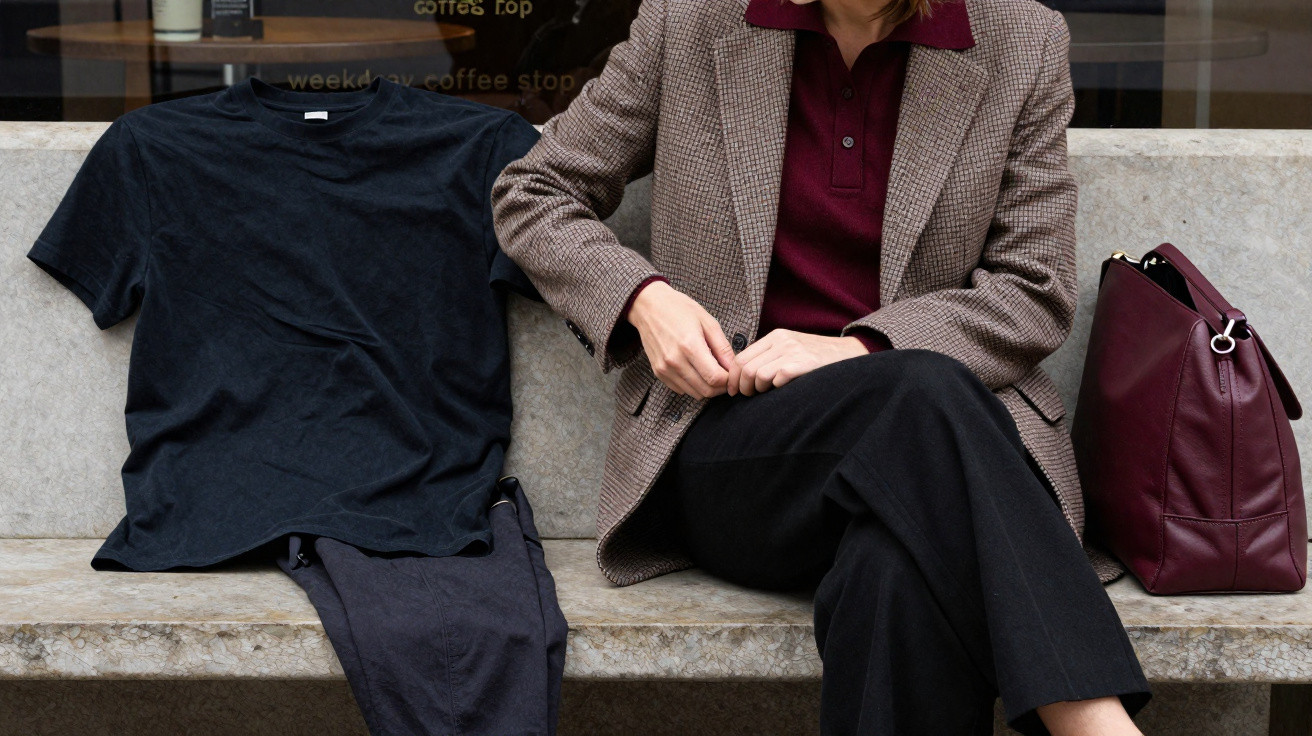
Getting dressed for a day that includes commuting, work, errands and perhaps dinner afterwards can be awkward. Casual clothes may feel underdone, while full tailoring can seem impractical. A useful middle ground is relaxed tailoring: pair one structured layer with comfortable basics, then add a deep-coloured accessory to make the outfit feel deliberate.
A collared polo, subtle checked blazer, dark trousers and burgundy bag offer an adaptable formula for autumn and spring in the UK. The key is contrast rather than matching everything perfectly: the blazer adds shape, the polo softens it, and the bag gives neutral colours a point of interest.
The easiest smart-casual outfits usually combine one tailored item with one relaxed item, rather than making every piece formal.
Why the combination works
A checked blazer brings texture and structure, while a polo shirt has a more relaxed, sporty character. Straight-leg, wide-leg or softly tailored trousers keep the base simple, and clean leather trainers make the look practical for walking.
Burgundy works particularly well as an accent because it sits easily alongside black, grey, camel, cream, dark denim and brown. It has more depth than a bright red bag, but does not require the rest of the outfit to be built around it.
This is also a useful approach to Britain’s changeable temperatures. A blazer can be worn over a polo in the morning, carried indoors, and layered under a coat when the weather turns colder.
Choose a subtle checked blazer
A fine check is generally easier to wear than a large, high-contrast pattern. Look for soft combinations of charcoal, brown, taupe, muted navy, cream or black. These shades are likely to work with clothes already in your wardrobe.
A slightly relaxed blazer can make the outfit feel current, but fit still matters. It should sit reasonably well at the shoulders and leave enough room for a polo or fine knit underneath.
How to check the fit
- Start with the shoulders. The seam should sit close to the natural shoulder edge. An oversized style may extend slightly, but it should not slide down the upper arm.
- Try it with layers. Wear or bring a thin knit when trying on blazers if that is how you plan to use it.
- Check movement. Raise your arms and sit down. Pulling across the upper back or tightness at the biceps may make the jacket frustrating to wear.
- Look at sleeve length. Sleeves should not regularly fall over your hands. Turning them up can work, but only if the fabric is not too bulky.
Charity shops, vintage sellers and high-street tailoring departments can be good places to look for checked jackets. Always read the care label before buying. Some structured jackets are dry-clean only, while others may be suitable for gentle home care.
Make a polo shirt look polished
A polo is a practical alternative to a shirt or plain T-shirt. The collar adds definition around the neckline, while the button placket lets you make the look slightly neater or more relaxed.
Choose a plain polo or one with a very understated pattern. Cream, charcoal, chocolate, burgundy, dark olive and muted rust are all easy partners for a brown- or grey-toned checked blazer. A fine-knit polo has a smoother finish; cotton piqué has a more casual, textured feel.
Try the collar both inside and outside the blazer lapels. If it lies flat outside, it can look purposeful. If it is thick, curled or crowded by the jacket, tuck it inside instead. There is no need to force a styling detail that does not sit comfortably.
Three straightforward colour combinations
- Brown and beige checked blazer, burgundy polo and black trousers
- Grey checked blazer, cream polo and dark indigo jeans
- Charcoal checked blazer, muted olive polo and deep brown trousers
For colder days, add a fine-gauge knit layer. Avoid anything too thick around the neck and arms, as it can make the blazer pull and bunch.
Add burgundy through the bag
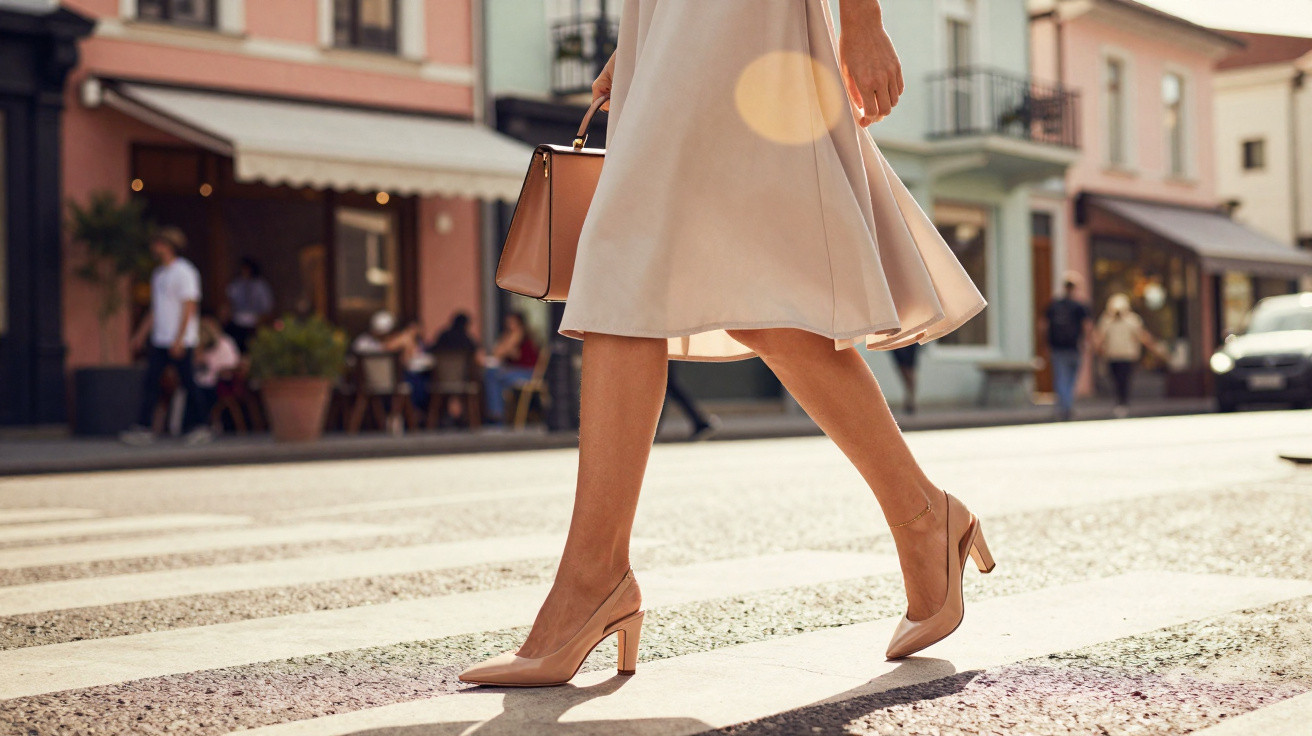
A burgundy handbag is a simple way to introduce colour without committing to a bold coat, trouser or dress. It can lift an otherwise neutral outfit and works across daytime and evening plans.
Pick the shape according to your routine:
- Crossbody bags are useful for commuting, errands and hands-free weekends.
- Structured shoulder bags can give the outfit a sharper finish for meals out or meetings.
- Roomy totes suit workdays, though overfilling them can distort their shape and strain the handles.
The bag does not need to match the polo exactly. Wine, oxblood and dark cherry tones can sit well together, provided the rest of the outfit stays fairly simple. If you want to repeat the colour, use one small detail such as a belt, socks or nail colour rather than adding burgundy everywhere.
Treat burgundy as a neutral with more character: it works comfortably beside denim, black, grey, camel and cream.
Keep the trousers and trainers practical
Dark trousers ground the outfit and keep the checked blazer from becoming the only focus. Wide-leg, barrel-leg and straight-leg cuts can all work, but the hem should suit your footwear and the weather.
Trousers that trail on wet pavements are likely to become dirty and worn quickly, particularly in autumn and winter. Aim for a hem that meets the top of the shoe, or choose a deliberately cropped length.
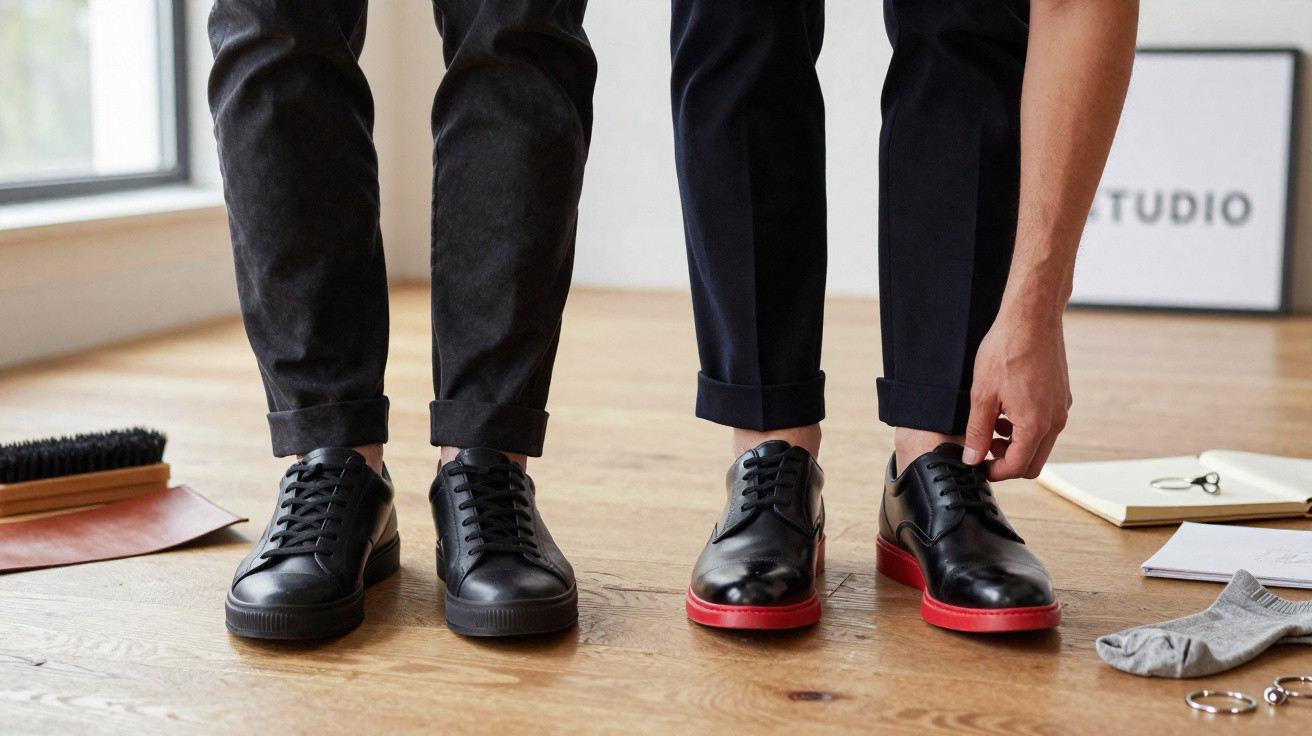
Leather trainers often balance a blazer more easily than technical running shoes. Black, cream, white or dark brown pairs are all useful options, but condition matters more than colour. Wipe surface dirt away with a damp cloth and use a soft brush around the sole. Follow the manufacturer’s care advice for suede, nubuck and coated leather.
Adapt it for British weather
The formula is flexible, not limited to one season. On a cool October day, layer a fine merino or cotton knit beneath the blazer and add a simple long coat. In milder April weather, wear the polo and blazer with straight-leg denim instead of heavier trousers.
For rain, a zipped bag is sensible, especially if you carry a phone, notebook or public-transport pass. Avoid putting suede bags directly against a wet coat, and use an umbrella rather than expecting a blazer to cope with a downpour.
If you walk or cycle regularly, build the outfit around comfort first: trousers with room to move, supportive shoes and a secure crossbody bag. Carry smarter footwear for an occasion if needed rather than wearing shoes that are unsuitable for the journey.
Common mistakes to avoid
The individual pieces are simple, but proportion and fabric care make a difference.
- Wearing several competing patterns. A checked blazer, striped polo and printed bag can feel busy. Let the blazer be the main pattern.
- Choosing oversized in every direction. A relaxed shoulder can work; excessively long sleeves and a jacket that overwhelms the body are less functional.
- Crowding the neckline. A thick polo collar, chunky knit and high lapels can bunch together. Keep one neckline as the feature.
- Ignoring trouser length. A good outfit can look untidy when hems drag on the ground.
- Trying to match every burgundy tone. Slight variation usually looks more natural than exact matching.
- Neglecting garment care. Air a blazer between wears, treat small marks promptly according to its care label, and use a lint roller on dark trousers before leaving home.
Build the look from what you own
The appeal of this combination is its balance: soft tailoring, a visible collar, one deep accent colour and footwear you can walk in. You do not need to buy every element at once.
Start with a neutral jacket, dark trousers and clean trainers. Then add either a collared knit or a burgundy bag. If burgundy does not suit your wardrobe, forest green, navy or burnt orange can provide a similar accent against restrained tailoring.
The best version is the one that works for your actual day. Once the proportions feel comfortable and the colours feel like your own, this can become a reliable outfit for occasions when you want to look put together without feeling overdressed.






Comments
No comments yet. Be the first to comment!
Leave a Comment