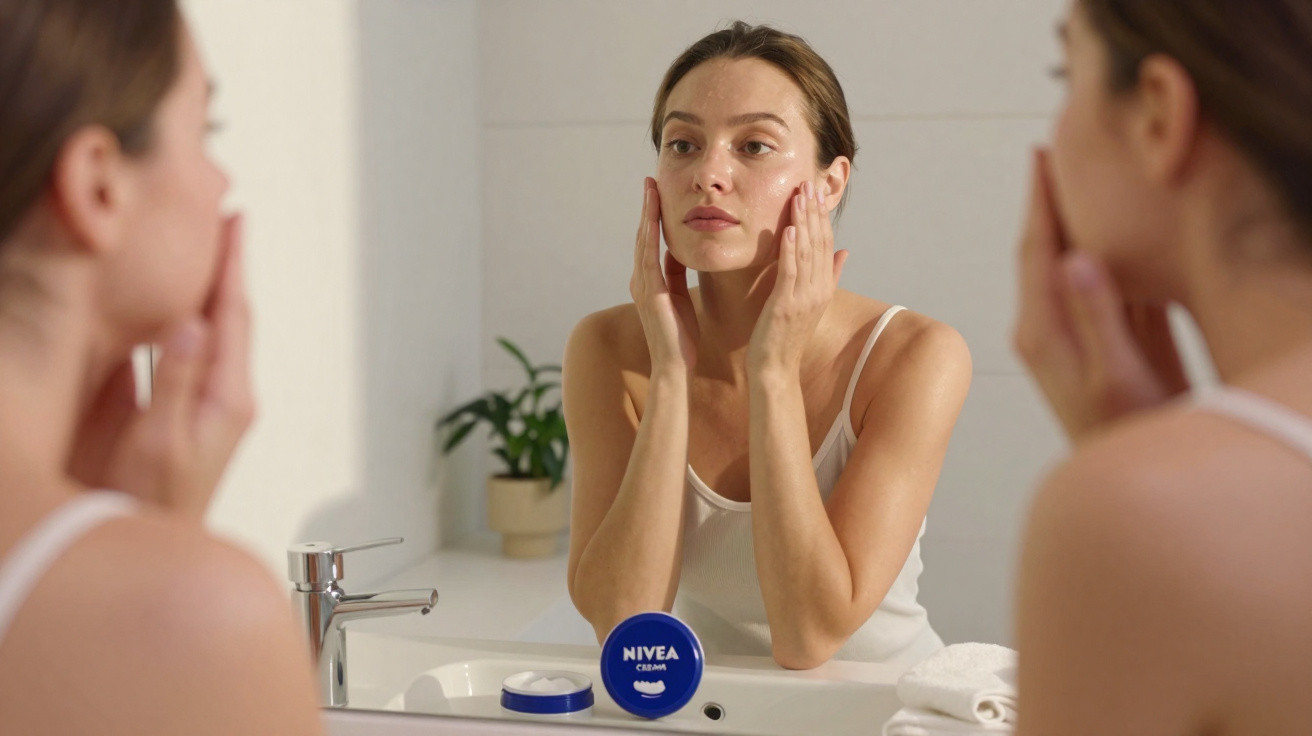
The cult cream in the blue tin has been a bathroom staple for decades, finding its way into handbags and suitcases alike. People use it for all manner of things, from dry elbows to post-sun care. But how does the cream perform when applied to the face in the traditional way – and compared directly on just one half of the face?
The blue tin – a bathroom legend
Nivea in its blue tin is one of the best-known skincare products of all time. Its formula has remained almost unchanged for many years, while its scent evokes childhood memories for many people. The cream is considered exceptionally versatile:
- Care for dry areas on the hands, feet and body
- After-sun care following a day in the sun
- A soothing cream after shaving
- A protective layer against wind and cold
- An emergency helper for chapped lips or rough patches on the knees
Over the years, the blue tin has become something of a “Swiss Army knife” for beauty enthusiasts. Many people swear by it, while others see it as outdated in a market flooded with modern serums, acids and high-tech creams. The obvious question is whether this simple classic still works as facial skincare today.
The experiment: Nivea on one half of the face only
To get an idea of what the cream can really achieve, a straightforward test begins: for one week, only one side of the face is covered with a generous layer of Nivea every evening, almost like an overnight mask. The other half continues with the existing skincare routine as usual.
The pre-bedtime routine is deliberately kept professionally structured:
- A thorough double cleanse, using a cleansing oil or balm followed by a gel or foam cleanser
- Application of a serum, such as one containing hyaluronic acid or niacinamide
- Eye care around the delicate eye area
- A light, familiar moisturiser
- Finally, a thick layer of Nivea on one side of the face, used as an occlusive overnight balm
This makes it easy to see what the additional layer actually delivers – and what it does not.
The first few days: visible differences in the morning
Differences between the two sides of the face become apparent after the first few nights. In the morning, the Nivea side looks fresher, slightly plumper and smoother.
“The moisturised half of the face feels noticeably softer after the night, and fine dehydration lines appear less pronounced.”
The explanation lies in the texture: the cream is very rich and forms a protective film across the skin, slowing moisture loss overnight. The skin is particularly active during this period, with cell renewal and repair processes running at full speed. A protective layer can help reduce the amount of moisture that evaporates through the skin.
In everyday use, one effect stands out in particular: make-up often applies more evenly on the “Nivea side” the following day because dry flakes are less noticeable. The skin does not look dramatically younger, but it is clearly better moisturised.
Slugging with Nivea: a trend method with a drawback
This technique – applying a rich, almost sealing layer as the final skincare step – has long been an online trend. Many know it as “slugging”. In this test, classic Nivea cream is used on the face instead of petroleum jelly.
The experiment suggests that the method works: the skin appears plumper and better protected. People with dry or normal skin usually see benefits quickly. After several days, however, the test subject also experiences the downside: small blemishes develop in the T-zone, meaning the forehead, nose and chin.
“For sensitive or oily skin, daily ‘sealing’ can be too much of a good thing – the pores do not always appreciate it.”
Such an occlusive layer does not only retain moisture in the skin; it can also make it harder for sebum and sweat to escape. For some people, this can encourage clogged pores and small spots, especially in areas that are already slightly oilier.
How often does Nivea make sense as an overnight mask?
The week-long test points to a practical middle ground. Rather than applying a thick layer every evening, occasional use is a better option:
- Once a week as a “moisture boost” for dry skin
- Every 10 to 14 days for combination skin, to help avoid blemishes
- Applied specifically to genuinely dry areas, such as the cheeks, rather than across the whole T-zone
Anyone already prone to under-the-skin bumps should use the Nivea film sparingly on the forehead and chin, or avoid those areas altogether.
Who is classic Nivea cream for on the face?
The cream can have a positive effect when the skin barrier is weakened, for instance by dry centrally heated air, cold weather or excessive use of exfoliants and acids. Its rich texture does not supply high-tech active ingredients, but it acts like a protective coat. It is particularly suitable for:
- Dry to very dry skin types
- Mature skin that quickly feels tight and shows fine dehydration lines
- People who value fragrance and a rich cream texture
Daily application of a thick layer is less suitable for:
- Very oily skin with large pores
- Acne-prone skin
- Very sensitive skin that may react to fragrance
In these cases, light, non-comedogenic fluids or gels are generally the better choice. Nivea can then be used only on dry patches or as protection from cold weather in winter.
How Nivea can complement a skincare routine
What is interesting about the half-face test is not only the direct comparison, but also the realisation that the blue tin rarely meets every skincare need on its own. The cream works better as the final step in a considered routine than as a replacement for a serum and light moisturiser.
A sensible evening routine could look like this:
- Gentle cleansing to remove sebum, dirt and make-up
- A hydrating serum containing hyaluronic acid or glycerine
- A light cream with active ingredients such as niacinamide or ceramides
- Finally, a thin (!) layer of Nivea on dry areas to form a protective film
This approach makes use of the cream’s occlusive effect without placing unnecessary strain on the pores. If preferred, the cream can be used only in winter or during particularly stressful periods as a “protective shield”.
What terms such as moisture loss and skin barrier mean
Terms such as “moisture loss” and “skin barrier” appear in many skincare articles. They may sound technical, but they describe something very ordinary. The skin continually loses water to its surroundings, a process known as transepidermal water loss. When the outermost layer of skin is well structured and contains lipids, less moisture escapes.
Cleansers, centrally heated air, UV radiation and harsh exfoliants can weaken this protective layer. The skin can then quickly feel rough, tight and red. Products such as classic Nivea form a film over the surface and thereby reduce water loss. They do not repair the skin directly, but they make regeneration easier by allowing it to work undisturbed.
Anyone who also invests in suitable active ingredients – such as ceramides, panthenol or certain oils – can strengthen the barrier over the long term. The blue tin is then best used as the “lid” on top.
Practical tips for everyday use of the blue tin
Testing on only one half of the face demonstrates the effect clearly, but no one needs such an extreme comparison in daily life. Anyone who is curious can begin cautiously:
- First test how the skin responds on one or two evenings per week
- Do not apply a thick layer immediately after strong fruit acid or retinol products
- Avoid “sealing” the skin on warm, humid summer nights; use it instead during cool, dry periods
- If spots appear, reduce the frequency or apply it only to the cheeks
The blue tin therefore remains what it has been for decades: a straightforward, dependable cream that can do many things, but not everything. Those who incorporate it wisely into their routine and listen to their skin’s signals can achieve visible effects – without expensive high-tech hype.
















Comments
No comments yet. Be the first to comment!
Leave a Comment