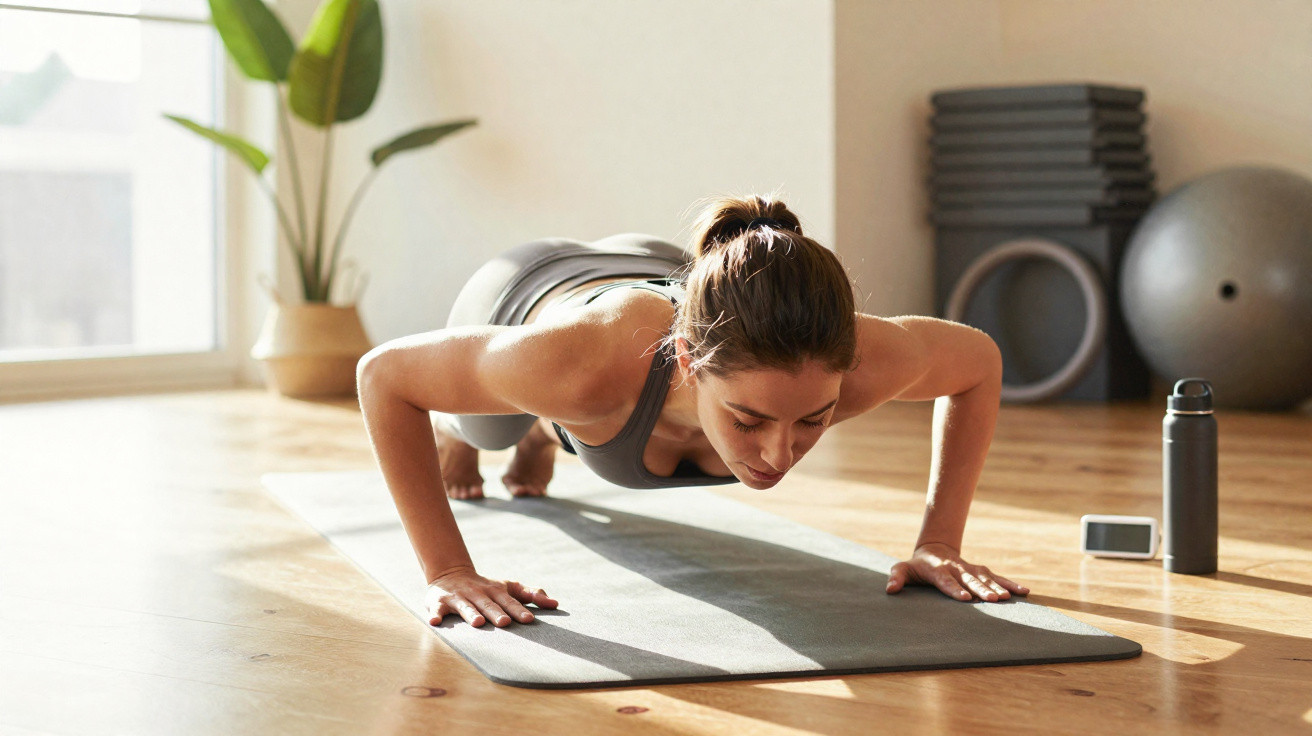
Pilates is beneficial for posture, mobility and body control, but loose upper arms generally respond better to direct triceps strengthening. Among the most effective exercises, the diamond push-up stands out because it strongly recruits the back of the upper arm while also demanding work from the chest, shoulders and core. Results rely on correct technique, gradual progression and consistency rather than unplanned sets.
Why does Pilates help without solving everything on its own?
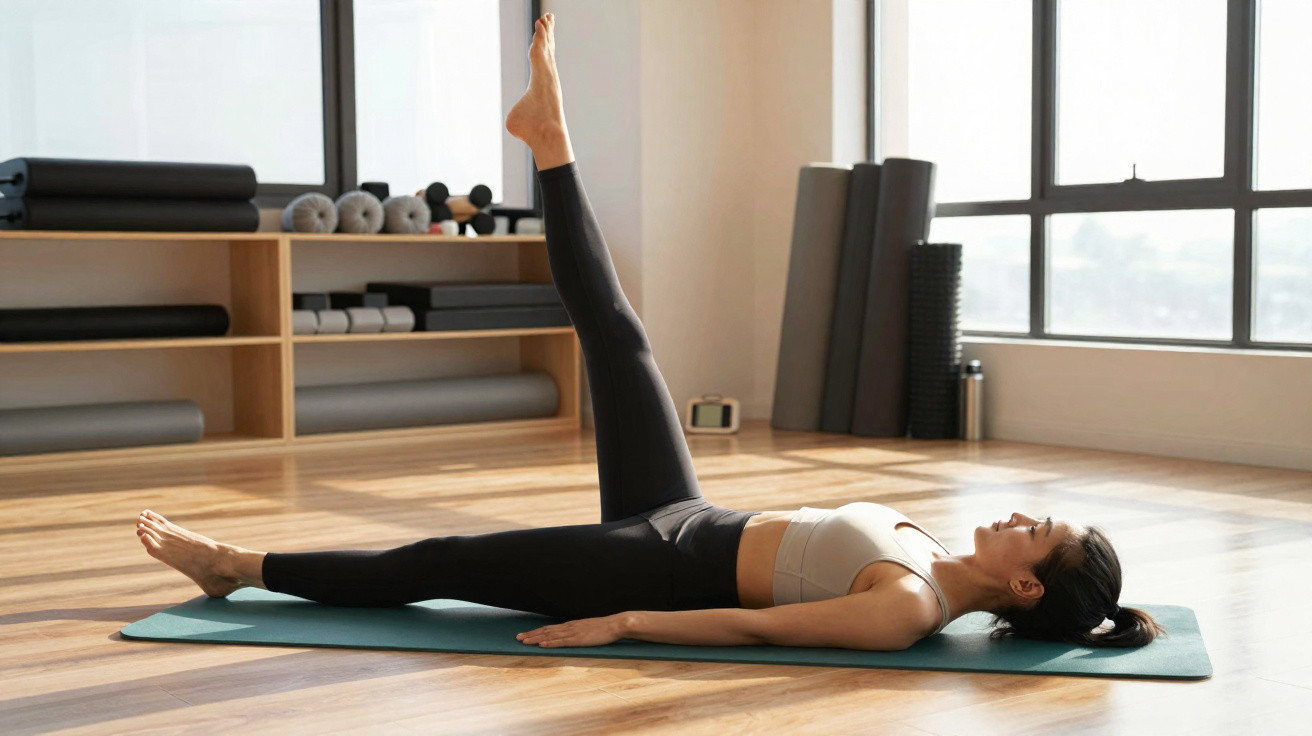
Pilates develops body awareness, shoulder alignment and trunk stability. These benefits support everyday movement and can also make other exercises safer.
However, to improve muscular firmness in the arms, the body needs progressively challenging strength work. The triceps must work against resistance, whether that comes from bodyweight, dumbbells, resistance bands or machines.
Which exercise works the back of the upper arm most?
The diamond push-up is one of the strongest options because placing the hands close together on the floor makes the triceps contribute more to the movement. It also trains the chest and shoulders, although the load on the back of the upper arm is particularly noticeable.
For greater control, follow these guidelines:
- Place your hands on the floor, forming a diamond shape with your thumbs and index fingers.
- Keep your body in a straight line, without allowing your hips to drop.
- Lower yourself with your elbows close to your torso.
- Push through the floor until your arms are extended, without forcefully locking your elbows.
- Begin with a small number of repetitions and build up gradually.
How can beginners adapt the diamond push-up?
The standard version may be challenging at first. Anyone who does not yet have sufficient strength can rest their knees on the floor or perform the movement with their hands on a sturdy bench, reducing the amount of bodyweight involved.
These adaptations retain the emphasis on the triceps without compromising technique. If you experience pain in the wrist, shoulder or elbow, it is best to adjust hand placement, reduce the range of motion or temporarily switch to a resistance-band triceps extension.
Which exercises can complement the workout?
The diamond push-up works best as part of a balanced routine. Arm strength develops more steadily when the programme includes pushing, pulling and shoulder-stability exercises.
Useful combinations include:
- Overhead triceps extensions with a dumbbell or resistance band.
- Bench triceps dips, performed carefully to avoid overloading the shoulders.
- Resistance-band rows to balance the back and support posture.
- Planks with shoulder taps to strengthen the core and shoulder girdle.
- Incline push-ups to develop a foundation before progressing to the diamond version.
How often should you train to notice a difference?
Training the arms two or three times a week is usually enough to provide a stimulus, provided there is rest between sessions. Muscles need recovery time to adapt, build strength and respond more effectively to subsequent workouts.
The most effective approach combines Pilates, strength training and sound technique. The diamond push-up can be the main exercise for the triceps, while Pilates helps maintain the posture, control and stability needed to perform every repetition more precisely.










Comments
No comments yet. Be the first to comment!
Leave a Comment