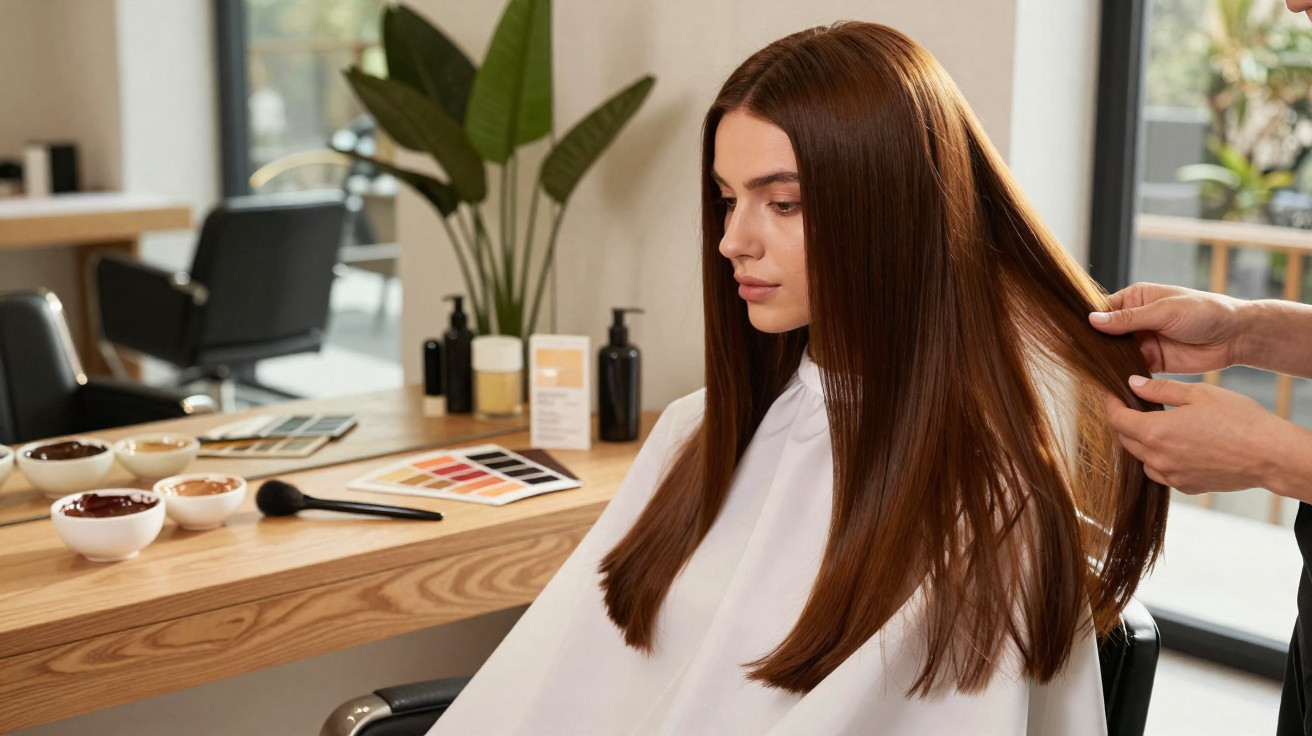
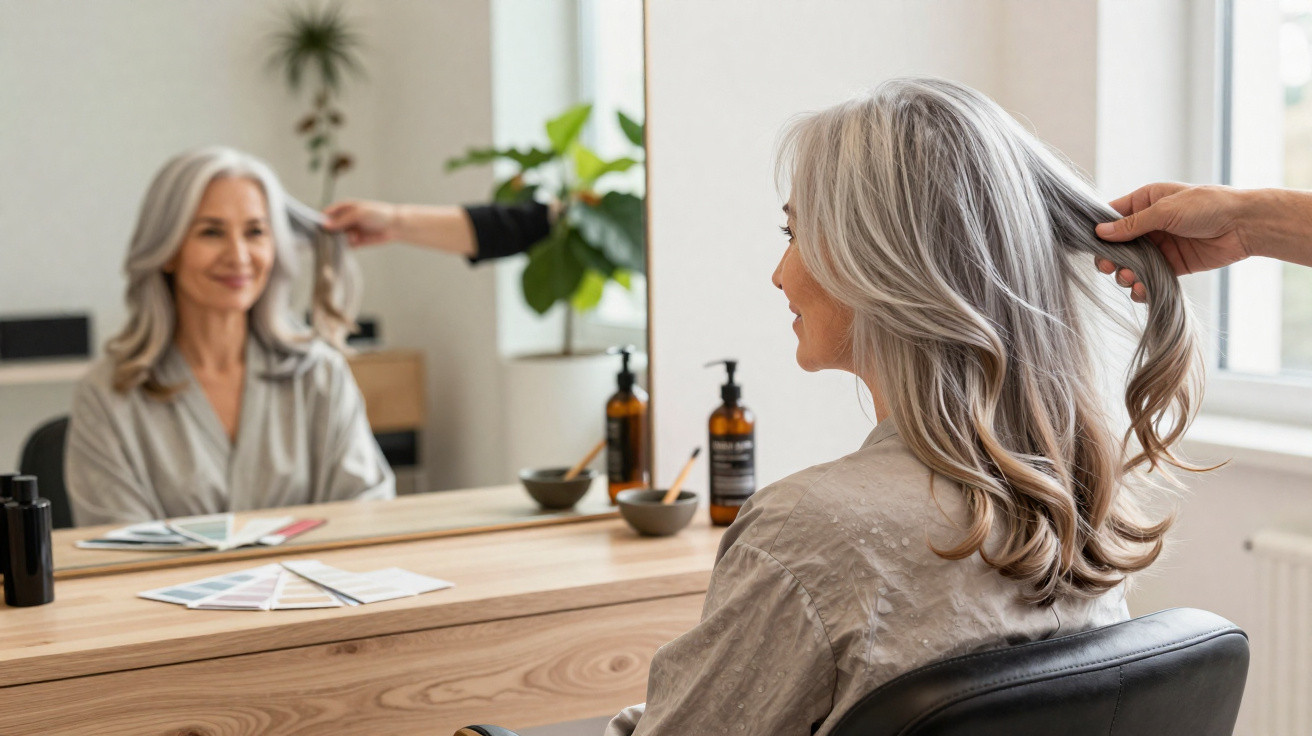
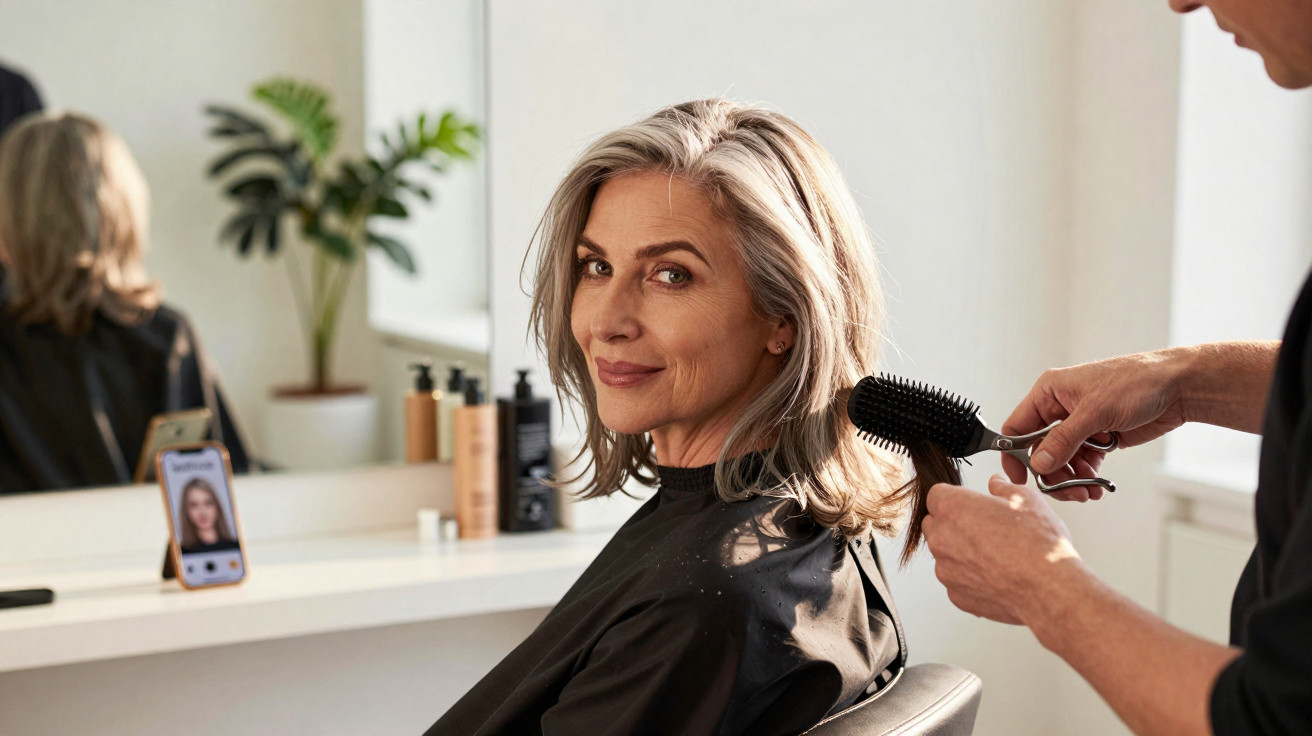
Instagram, TikTok and salons everywhere are suddenly showcasing a look that sounds almost too simple: one hair colour applied from roots to ends. What might seem dull has become a 2026 statement against over-styling, and a favourite for people who want healthy-looking, glossy hair rather than striking streaks.
What is driving the return of monochromatic colouring
The past few years have been dominated by balayage, ombré and carefully placed highlights. Lighter through the lengths, darker at the roots, with an overall ‘sun-kissed’ and natural-looking finish - at least visually. Now, the trend is shifting. In demand is monochromatic colouring: a single all-over shade with no visible graduation.
The principle is one tone, distributed completely evenly. No lighter ends, no face-framing ‘money pieces’, and no painstaking interplay of light and shade. In its place is a crisp, calm block of colour.
“Monochromatic hair colour is not about effects, but impact: healthy, glossy, full.”
This minimal approach fits perfectly with the current beauty movement: make-up is becoming more natural, skincare is taking centre stage, and for hair too, an impression of health now matters more than showstopping technique.
Why single-colour hair suddenly looks more luxurious
One major advantage of all-over colour is its shine. When every strand has the same shade, the hair reflects light far more evenly. The surface appears smoother and the sheen becomes more intense. It is more reminiscent of lustrous silk than fabric threaded with contrasting strands.
Many colourists say clients perceive their new single-colour hair as “more expensive”. The style looks less like a summer beach finish and more like business class - clean, polished and deliberately chosen.
An optical volume boost from one shade
There is another benefit: hair can appear thicker. While lighter strands can make a mane look more lively, they also break up its overall surface. When the entire head is coloured in one tone, we perceive the mass of hair as more cohesive, making it seem fuller.
- Darker all-over shades can make fine hair look stronger.
- Red-toned colours bring out texture more clearly.
- Cool, light shades create a reflective, almost metallic shine.
This visual calm is especially helpful for anyone with fine or slightly frizzy hair. Rather than distracting, the colour enhances what is already there - ideally, a polished and glossy texture.
The most popular shades for spring 2026
The technique itself is not truly new; what is new is how it is being used. Instead of off-the-shelf ‘one-size-fits-all brown’, colourists are working with tones precisely suited to skin tone and lifestyle.
Trend shades appearing everywhere right now
- Monochrome blonde: A soft, creamy blonde without extremely pale ends. Ideal for anyone who wants to go light without the classic highlighted appearance.
- Rich chocolate brown: Deep, glossy and gently warm. It works just as well in the office as it does in evening light on a rooftop terrace.
- Intense black: Especially prominent when paired with sleek styling. The result feels strong and pared back.
- Copper and rust tones: A striking choice for spring that brings out the complexion and eye colour.
The key is ensuring the shade does not look flat. This can be achieved with subtle variation within the same colour family, such as slightly warmer pigments at the ends or minimally darker roots - all within one tonal range and without visible ‘stripes’.
Easier to maintain than balayage? How much upkeep is involved
One of the biggest criticisms of balayage is the maintenance it requires. Even where transitions look soft, many styles need regular touch-ups, particularly with very light blondes or heavily lightened lengths.
With single-colour hair, root regrowth often appears less severe because the contrast is selected more consciously from the outset. Anyone who does not stray too dramatically from their natural hair colour can extend the time between appointments considerably.
“Many salons report clients only returning for a colour top-up after ten to twelve weeks - with balayage, it was often over after six weeks.”
How often do you really need a colour top-up?
| Starting hair colour | Target colour | Recommended interval between appointments |
|---|---|---|
| Medium brown | Rich dark brown | 10–12 weeks |
| Dark blonde | Creamy blonde | 8–10 weeks |
| Dark brown | Black | 12 weeks and more |
| Light brown | Copper | 6–8 weeks |
Naturally, the range depends heavily on how quickly the hair grows and how meticulously you want roots concealed. In general, however, all-over colour offers more flexibility, especially for anyone who does not want constant salon visits.
Who is this new trending hair colour for?
The look is not limited to one particular hair length or texture. What matters is how bold the colour change is and the effect you want to achieve.
Ideal for these hair types
- Fine hair: Benefits from the denser appearance created by a solid expanse of colour.
- Layered hair: Looks calmer, while the shape of the cut becomes clearer.
- Curls and waves: Take on a more graphic, defined appearance when coloured in a single shade.
- People who are highly committed to haircare: Can keep the colour looking fresh for longer with glosses and conditioning treatments.
Anyone who loves extreme colour changes or likes moving seasonally between very light and very dark shades may find the pared-back approach challenging. For the large majority who simply want ‘good hair’, however, this trending colouring technique is an excellent choice.
How to prepare for your salon appointment
Many mistakes happen before the first colour appointment because expectations have not been made clear. A few screenshots of looks you like are therefore invaluable - but choose examples with a similar hair texture and skin undertone.
Discuss three points very specifically with the salon professional:
- How different should your new colour be from your natural hair colour?
- How often are you prepared to have it topped up?
- How do you style your hair day to day - straight, curly or air-dried?
The answers quickly reveal whether, for instance, a very cool blonde is genuinely practical or whether a slightly warmer shade better suits everyday life. Many colourists now recommend tones that can be allowed to grow out a little if necessary, without having to wear hats constantly.
Haircare tips to stop the shine fading after two weeks
The main advantage of all-over colour depends entirely on care. Without colour-protecting ingredients and smoothing products, even the most beautiful block of colour can look dull.
- Use a shampoo for coloured hair that avoids sulphates where possible.
- Schedule a conditioning mask once or twice a week.
- Apply heat protection if you regularly blow-dry or straighten your hair.
- Ask your hairdresser about glosses or clear glazes that revive shine without recolouring.
Anyone with a more sensitive scalp can also begin with plant-based tints to see how the single-colour look feels. The result is slightly softer, but the direction is the same: calm, shine and clarity.
Why the trend will last, even though balayage is not disappearing
No one is taking balayage completely out of the picture, as too many people love its soft transitions. Still, spring 2026 makes one thing clear: the market has changed. Rather than one dominant technique, several styles now sit alongside one another - with monochromatic colouring moving into the foreground as a style-conscious alternative.
For fashion fans, all-over colour works perfectly with minimalist clothing, clean silhouettes and polished make-up. At the same time, accessories, gloss sprays and styling tools allow the look to be refreshed repeatedly without changing the colour itself. It is this combination of simplicity and versatility that makes the trending colouring technique so appealing - and explains why it is suddenly appearing everywhere in the middle of spring.









Comments
No comments yet. Be the first to comment!
Leave a Comment