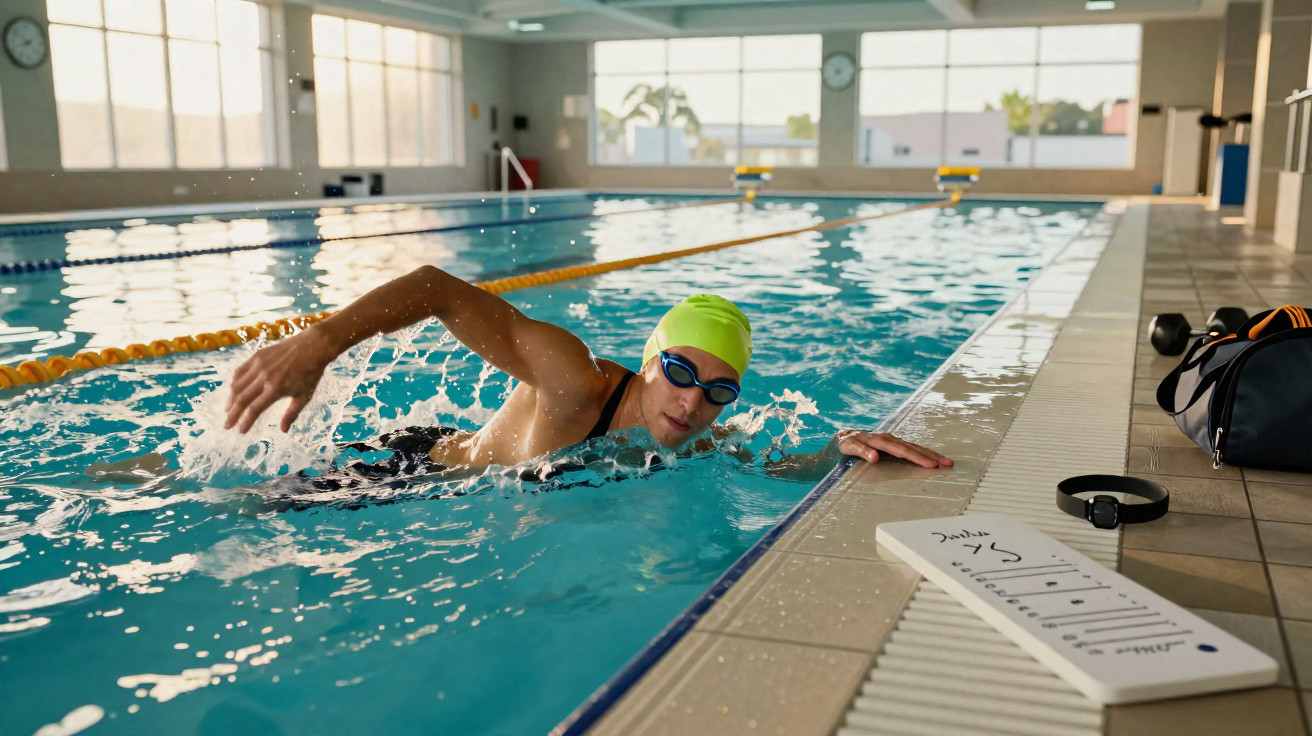
Choosing a swim over a gym visit can improve breathing capacity, muscular endurance and cardiovascular fitness, but the workout needs enough duration, pace and continuity. Swimming for 10 minutes, spending too long at the poolside, then returning only once your body has cooled down will not provide the same aerobic stimulus. For a 45-minute session to be effective, keep your breathing engaged, rests brief and effort suited to your ability.
Why does swimming for a short time not produce the expected results?
Swimming becomes a genuine cardiovascular workout only when the heart and lungs are active for long enough. Very brief sessions, or ones broken up by lengthy rests, may get the body moving but do not maintain the effort needed to build endurance.
Leading health guidance recommends accumulating at least 150 minutes of moderate aerobic activity each week, or 75 minutes of vigorous activity. A 45-minute workout can contribute towards that target, provided it is not simply a collection of isolated swims with no continuity.
What is the ideal pace for beginners?
For beginners, the right pace is one that allows them to swim, breathe and recover without having to give up partway through a set. The effort should make breathing heavier while remaining under control.
The following signs suggest that your pace is appropriate:
- You can cover 25 or 50 metres without becoming completely breathless.
- Breaks last between 20 and 40 seconds, rather than several minutes.
- Your body warms up after the first few minutes.
- Your technique stays organised, without frantic arm strokes.
- At the end, you feel as though you have worked hard rather than completely exhausted.
How can you stay consistent throughout the session?
Consistency does not mean swimming hard from start to finish. It means preventing the workout from becoming a cycle of overly intense effort followed by excessively long recovery. The body responds better to a pace that can be sustained.
Using blocks is a practical approach. Rather than attempting to swim for 45 minutes continuously from the outset, split the workout into short sets with controlled rests. This keeps the heart working while preventing fatigue from causing your technique to fall apart.
How should you structure a 45-minute swimming session without exhausting yourself?
Those new to swimming should make the water work for them, not against them. Swimming places little impact on the joints, but it requires coordination between breathing, arms, legs and core; increasing volume too quickly can therefore lead to shoulder pain or excessive tiredness.
A safe starting structure could look like this:
- 5 minutes of warming up with easy swimming or walking in the water.
- 10 minutes alternating 25 metres of swimming with 30 seconds of rest.
- 15 minutes at a moderate pace, using 50-metre sets and short recovery periods.
- 10 minutes alternating easy and moderate swimming to keep breathing active.
- A final 5 minutes at a very easy pace to loosen the arms, legs and breathing.
When can swimming effectively replace the gym?
Swimming can be an effective substitute for the gym when the main aim is fitness, energy expenditure, endurance and movement with less impact on the joints. For maximum strength and targeted muscle gain, weight training still plays an important part, particularly for the legs, glutes, back and arms.
The best outcome comes from a continuous workout at a sustainable pace, with weekly progression. When the 45 minutes include short rests, controlled strokes and steady breathing, the pool becomes more than leisure time and functions as a real aerobic workout.












Comments
No comments yet. Be the first to comment!
Leave a Comment