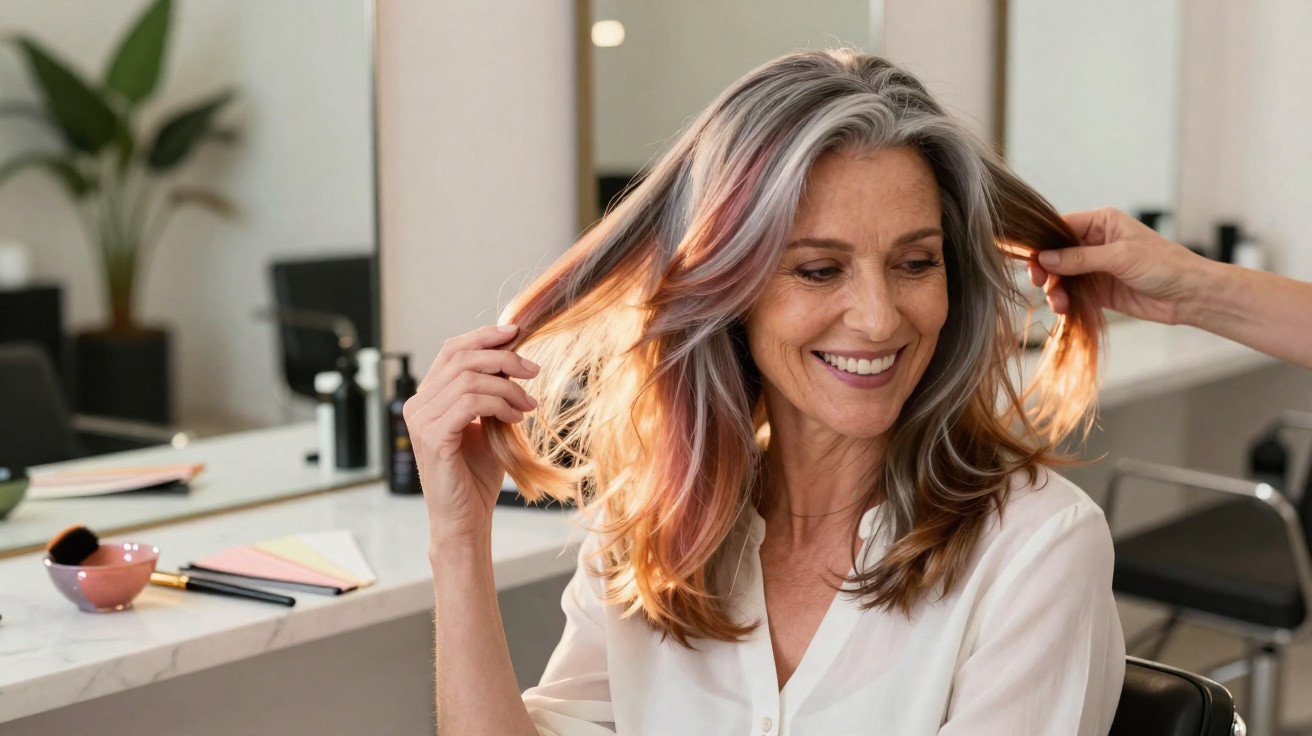
Between the pressure to “age gracefully” and the reluctance to return to demanding all-over dye routines, an understated colouring technique known as “stained glass hair” is steadily becoming popular in high-end salons.
What stained glass hair really means
Stained glass hair is a colouring method intended to blend grey strands rather than conceal them completely.
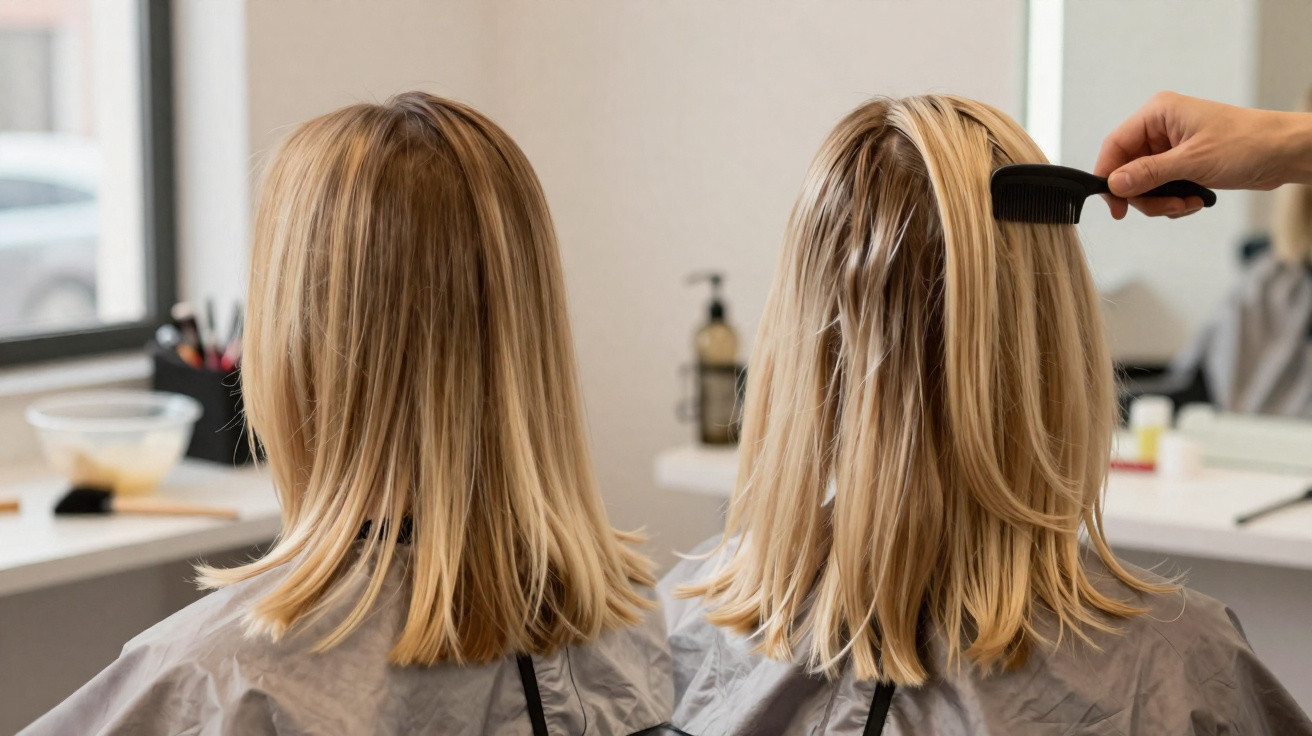
Rather than applying colour across the whole head, a colourist works ultra-fine highlights and lowlights through the hair. The chosen tones remain close to the natural base shade, avoiding stark bands or a pronounced “mèche” appearance.
Think of it as a soft filter for your greys: they’re still there, but they catch the light in a flattering, almost glossy way.
Its name takes inspiration from the earlier “glass hair” trend, in which women sought mirror-like shine with clear glosses and lamination-style treatments. Stained glass hair retains that reflective quality while introducing subtle shifts in colour, much like the tinted panes of a cathedral window.
How stained glass hair blends grey rather than battling it
The effect depends on the scale and subtlety of the colour variations.
Instead of using broad sections of blonde or brunette, colourists select exceptionally fine pieces and arrange them in a considered pattern. Certain strands are gently lightened, others are darkened, while the natural grey remains visible between them.
The aim is not to cover grey, but to confuse the eye so the line between pigmented hair and silver strands becomes harder to spot.
Professionals emphasise that contrast should remain restrained. Lightened sections that are too bright resemble conventional highlights, while overly dark lowlights can make grey appear to be regrowth. Keeping the shades only one or two tones away from the base colour allows the overall result to merge seamlessly.
Why celebrities over 50 are choosing it
Colourists in London, New York and Los Angeles report that their most exacting clients are requesting this technique.
Actresses in their fifties and sixties are moving away from the fixed, uniform shades that previously dominated red carpets. They want hair that appears polished and expensive, while still looking believable for a real person at their real age.
This change reflects developments in skincare and cosmetic treatments, where excessive fillers and perfectly smooth foreheads are being replaced by gentler, more natural adjustments. The underlying message is that signs of ageing can be managed without acting as though they are absent.
Low-maintenance stained glass hair and the “day 45” test
A further benefit of stained glass hair is its appearance several weeks after a salon visit.
Premium colourists frequently assess their work not when a client walks out of the salon, but around a month and a half afterwards. The technique meets the standard if the colour still looks gentle and grey regrowth has not created a severe line.
With translucent, layered colour, many clients can stretch appointments to six or even eight weeks without feeling “undone”.
As the dye is sheer and the placement is diffused, emerging grey hair merges into the existing colour blend instead of appearing beneath an opaque block of pigment. The result is less noticeable roots and fewer urgent salon appointments ahead of a wedding, date or work event.
How stained glass hair contours the face
Stained glass hair does more than disguise grey; it can also alter the way facial features are seen.
Artistic directors at leading salons explain that they position lightness and depth strategically around the jaw and cheekbones. For clients whose features become softer with age, adding slightly more colour near the jawline can define the outline and prevent the face from appearing washed out.
Strategic light around the eyes and temple lifts the expression, while slightly deeper tones near the jaw bring back structure.
Traditional highlights, particularly those placed close to the face, can leave blondes looking pale or flat as they get older. A stained glass approach preserves brightness while incorporating darker pieces in selected areas to create definition.
Placement ideas your colourist may recommend
- Gentle brighter strands around the eyes to make the gaze appear more open.
- Richer lowlights immediately behind the ears to add depth to ponytails or updos.
- Fine cool-toned pieces through the fringe, allowing them to blend naturally with silver strands.
- A combination of warm and cool shades through the mid-lengths to keep long hair from looking weighty.
At-home maintenance: glosses, glazes and “patinas”
When the salon colour starts to fade, a complete recolour is not required on every occasion.
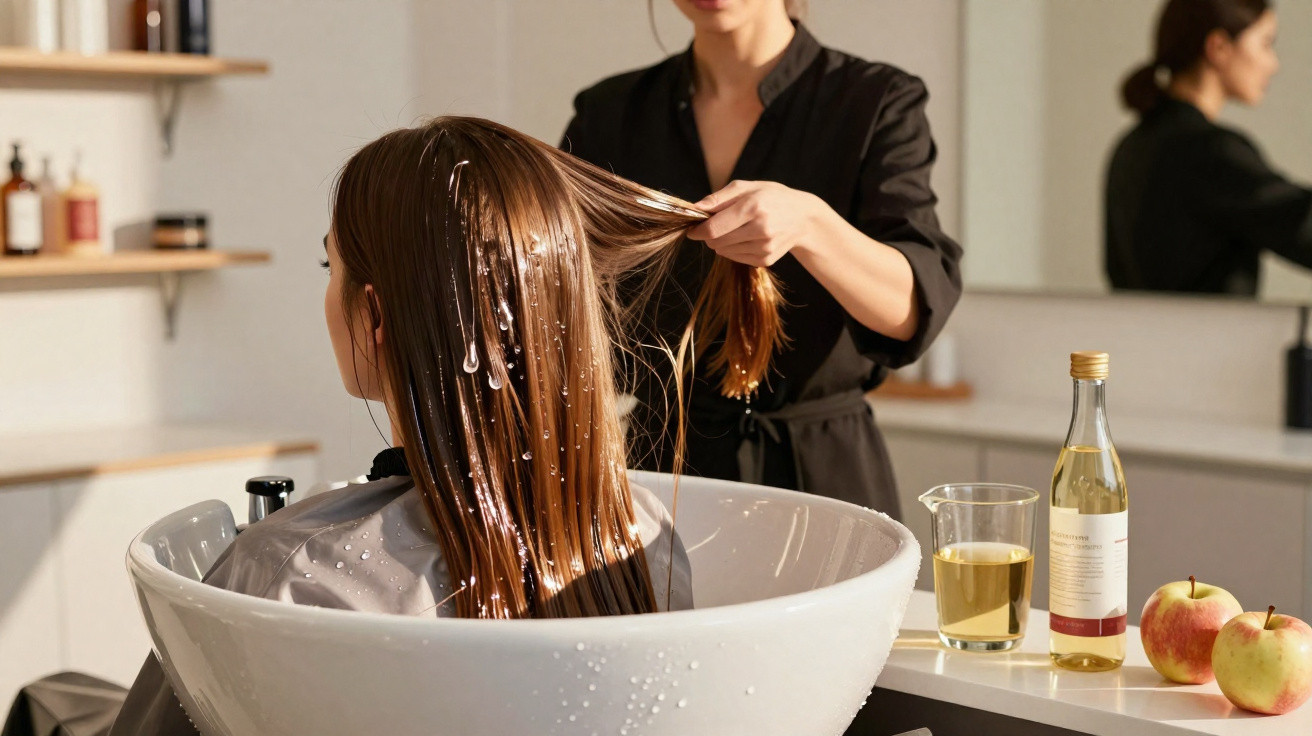
Many professionals suggest home-use glosses or glazes, which are sometimes referred to as “patinas”. These semi-transparent products provide shine and a faint wash of tone instead of dense pigment.
Think of them like a tinted lip oil for your hair: a sheer veil of colour with plenty of glow, not a heavy lipstick.
Beauty companies now draw on skincare and make-up technology, incorporating light-reflecting particles and conditioning polymers. This creates a glossy finish that makes individual hairs seem smoother and less frizzy, immediately helping grey hair look intentional rather than patchy.
| Product type | What it does | How often |
|---|---|---|
| Clear gloss | Gives softness and shine without altering colour | Every 2–4 weeks |
| Tinted glaze | Enhances warmth or coolness and revives faded sections | Every 3–6 weeks |
| Colour-depositing mask | Provides deep conditioning alongside a more noticeable tonal boost | Occasionally, when hair looks dull |
Who stained glass hair suits best
This method can work across many hair colours and skin tones, although it is particularly effective in certain circumstances.
- People with early or scattered grey who do not wish to commit to complete coverage.
- Anyone weary of the distinct root lines created by conventional permanent dye.
- Clients with demanding schedules who would rather make fewer trips to the salon.
- Those seeking an “age-inclusive” appearance instead of a dramatic transformation.
It can be tailored to brunettes, blondes and redheads alike. On darker hair, the difference between the base shade, highlights and lowlights needs careful handling to maintain softness and avoid striped results. For very light blondes, translucent lowlights can prevent the colour as a whole from becoming washed-out beige.
What to discuss with your colourist
A thorough consultation can help avoid disappointment. Ahead of the appointment, think about three important considerations:
- Your tolerance for visible grey: Are you happy for some silver to show, or would you prefer it to be barely visible?
- Maintenance budget and time: How frequently can you realistically, and willingly, attend the salon?
- Preferred tone direction: Do you favour cool, ashy shades, or are warm, golden tones more flattering for your skin?
Take photographs of styles you like, particularly those showing grey rather than covering it entirely. They can help your colourist decide how sheer or pronounced the stained glass effect should be.
Risks, restrictions and realistic expectations
Stained glass hair provides a softer way to approach greying, but it is not a magic eraser.
For hair that is already 80–100% white, the method is more difficult to achieve. A colourist may have to introduce additional lowlights to restore depth, potentially increasing maintenance. In these circumstances, some clients opt to embrace fully silver hair and rely on glosses solely for shine.
From a chemical perspective, even translucent dyes alter the hair fibre. Repeated colouring alongside heated styling tools may cause dryness or breakage. Bond-building treatments and mild shampoos can help reduce this risk. A patch test is still essential for anyone with sensitive skin or previous allergic reactions to hair dye.
Grey hair, identity and modest acts of control
For many, stained glass hair occupies a space between wholehearted acceptance and complete denial of ageing.
It enables someone in their forties or fifties to retain a familiar reflection while recognising that their hair has changed. That limited degree of control can feel significant during a life stage often shaped by changing careers, health and family responsibilities.
When used carefully, the technique is less about concealing an imperfection and more about refining a feature, much as a well-cut blazer frames the shoulders or soft-focus foundation blurs pores. Grey hair remains part of the narrative, simply viewed through a more flattering stained-glass lens.








Comments
No comments yet. Be the first to comment!
Leave a Comment