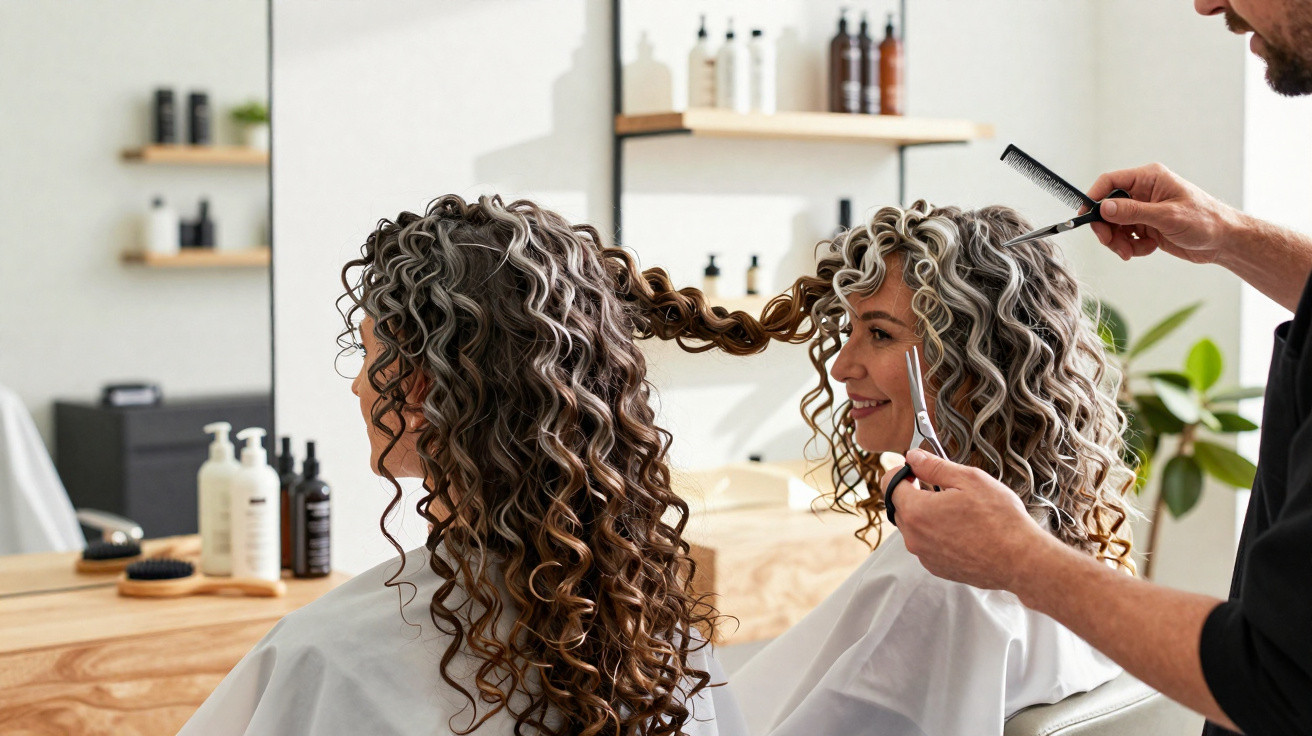
More women and men are confidently embracing their natural salt and pepper hair, but many still choose cuts and styles that make their features appear harder or leave their hair looking lacklustre and fatigued. The line between a polished silver mane and an old-fashioned “granny” appearance is often defined by a handful of highly specific, preventable mistakes.
Why salt and pepper hair changes the rules
Going grey involves more than a shift in colour. As hair loses its pigment, its overall behaviour changes too. Individual strands often become drier, coarser and more prone to breakage. Natural oils do not move as readily along the hair shaft, resulting in reduced shine and increased frizz.
Grey and white hair can also absorb yellow tones caused by pollution, heated styling tools and even nicotine. Rather than looking radiant, the hair may then seem discoloured.
Salt and pepper hair needs a cut that manages texture, volume and shine, not just a flattering length on paper.
Failing to account for these changes by retaining the same cut worn when the hair was fully pigmented is usually the first error. The second is opting for a style that clashes with, rather than suits, your natural texture.
The number one cut mistake: long, grey, and very curly
Stylists regularly identify one particularly difficult combination: naturally curly grey hair worn very long. It may sound romantic and bohemian in theory, but in practice it can easily appear bulky, dry and undefined.
Curly hair is naturally drier than straight hair because the bends in each strand slow the movement of sebum from the scalp through the lengths. When curls turn grey or white, this dryness becomes even more noticeable. The hair can lose its spring and definition, becoming an indistinct, cloudy mass.
Long, grey curls that are never cut back tend to look “moussy” and matte, which can drag the whole face down.
Excessive length can also stretch curls at the roots while causing them to gather at the ends. The result is a triangular silhouette: flat at the crown and broad at the bottom. On a mature face, this may emphasise sagging features and make the face appear more tired.
How to adapt curls for a fresher grey look
This does not mean grey curls are an unsuitable combination. Structure and length are what matter:
- Opt for a mid-length cut falling between the jaw and collarbone, which preserves movement while reducing bulk.
- Include long layers to allow curls to form separately rather than merging into one solid shape.
- Create shape around the face using softer, slightly shorter sections that open up the features and lift the cheekbones.
- Steer clear of blunt ends, as these produce a dense, weighty outline and can make hair look thicker without making it seem healthier.
Removing just a few centimetres can restore bounce to curls. Light is then able to move through the style instead of disappearing into a heavy mass of hair, helping grey tones appear brighter and more luxurious.
The styling trap: ultra-strict, pulled-back looks
Even once you have the right cut, styling can determine whether the overall result works. The second major error with salt and pepper hair is choosing a finish that is overly tight and severe.
Sleek buns, extremely tight ponytails and firm plaits can create a stern effect that seldom flatters mature features. With grey or white hair, the contrast becomes more pronounced because the pale shade highlights every line of tension in the face.
Ultra-pulled styles can sharpen every shadow and wrinkle, making the whole appearance colder and more rigid.
This does not mean any hairstyle must be ruled out completely. The issue is how tightly the hair is drawn back and how flat it sits at the roots. Removing all movement from the front and sides takes away softness and can create that unwanted “old-fashioned headmistress” vibe.
Making classic styles look modern on grey hair
A bun, ponytail or braid can look just as attractive on salt and pepper hair when the finish is adjusted. Small changes can have a significant effect:
| Strict version | Updated grey-friendly version |
|---|---|
| Centre-part bun, hair glued to the head | Low bun with a soft parting and a few loose pieces around the face |
| Ponytail pulled tight at the temples | Ponytail with gentle volume at the crown and a light wave in the lengths |
| Rigid braid with no air between sections | Loosely pulled-out braid with a slightly “undone” finish |
These adjustments retain the practicality and simplicity of classic styles without creating the harsh, severe effect that may age the face.
Lengths that tend to flatter salt and pepper hair
Although there is no single length that suits everyone, several cuts work especially well with grey and white shades:
- Short crop for thick, coarse hair: controls volume while showcasing texture.
- Pixie with longer top for fine hair: adds height and movement while keeping the outline light.
- Long bob (lob) around the collarbone: suitable for anyone wanting length without the heaviness of very long hair.
- Layered bob with soft edges: provides shape without producing a sharp, geometric outline.
The aim is to create balance around the face rather than conceal it. A little elevation at the crown, combined with movement near the jawline, generally refreshes the features more effectively than long curtains of hair surrounding the face.
Managing texture and shine so the cut really works
Even a well-executed cut can seem disappointing when hair looks dry or yellowed. With salt and pepper shades, two elements are particularly important: controlling frizz and keeping the colour clear.
Grey hair looks modern when it is bright and controlled, not when it fights back against every brush stroke.
Light, moisturising products can define curls and waves without weighing them down. Straight hair responds well to serums that smooth the cuticle and create shine, allowing white strands to reflect light rather than appear chalky.
An occasional purple or blue-toned shampoo can counteract yellow reflexes. It brings back a cleaner silver or icy shade, immediately creating a more intentional, stylish effect instead of “I just stopped colouring and hoped for the best”.
How to talk to your stylist about grey hair
Many people sit down in the salon chair and simply say, “Do whatever you like, I’m going grey now.” This can be a risky approach. A brief discussion about your routine and expectations can make a substantial difference.
Useful details to raise include:
- How much time you can realistically devote to styling each morning.
- Whether you wear glasses, as these affect how hair falls around the eyes.
- Your natural texture when the hair is air-dried rather than blow-dried.
- Any areas where the grey is more concentrated, such as the temples, crown or front streaks.
This information enables the stylist to position layers and distribute weight so that the grey pattern appears deliberate and flattering rather than uneven.
Two realistic scenarios that show the difference
Scenario 1: long grey curls that feel heavy
Picture a person with naturally curly, waist-length hair that has gradually become salt and pepper. They continue to keep it long out of habit, while finding that the curls look frizzy, dry and without shape.
If the hair is cut to just below the shoulders, given long layers and shaped with shorter sections around the face, that same person can suddenly have bouncier curls and more defined cheekbones. A modest change in structure and length shifts the result from “tired” to “intentional”.
Scenario 2: white hair tied back every day
Consider another person with short-to-mid-length white hair who works in a formal office. For ease, they wear it in a tight, slicked-back low ponytail every day. Eventually, colleagues begin to say that they look “strict” or “serious”.
Retaining the ponytail but slightly relaxing the front, applying texture spray and allowing several pieces to frame the face can completely alter the impression. The style remains professional, while the overall expression becomes softer.
Key terms that help you at the salon
A few terms can be useful when talking about salt and pepper hair:
- Texture: the way hair feels and behaves, such as fine, coarse, curly or frizzy.
- Density: the overall amount of hair you have; this influences how full a cut will appear.
- Layers: shorter pieces cut within the overall length to produce movement and shape.
- Blunt cut: a straight, solid line at the ends without softening or graduation.
Using this language makes it easier for a stylist to understand that you are seeking softness and movement, not heavy blocks of hair sitting lifelessly on your shoulders.
When treated thoughtfully, salt and pepper hair can become a confident style statement instead of signalling that you have stopped caring about your appearance. The right cut, suitable styling and a refusal to settle for harsh, rigid shapes are usually enough to move from dated to quietly striking.















Comments
No comments yet. Be the first to comment!
Leave a Comment