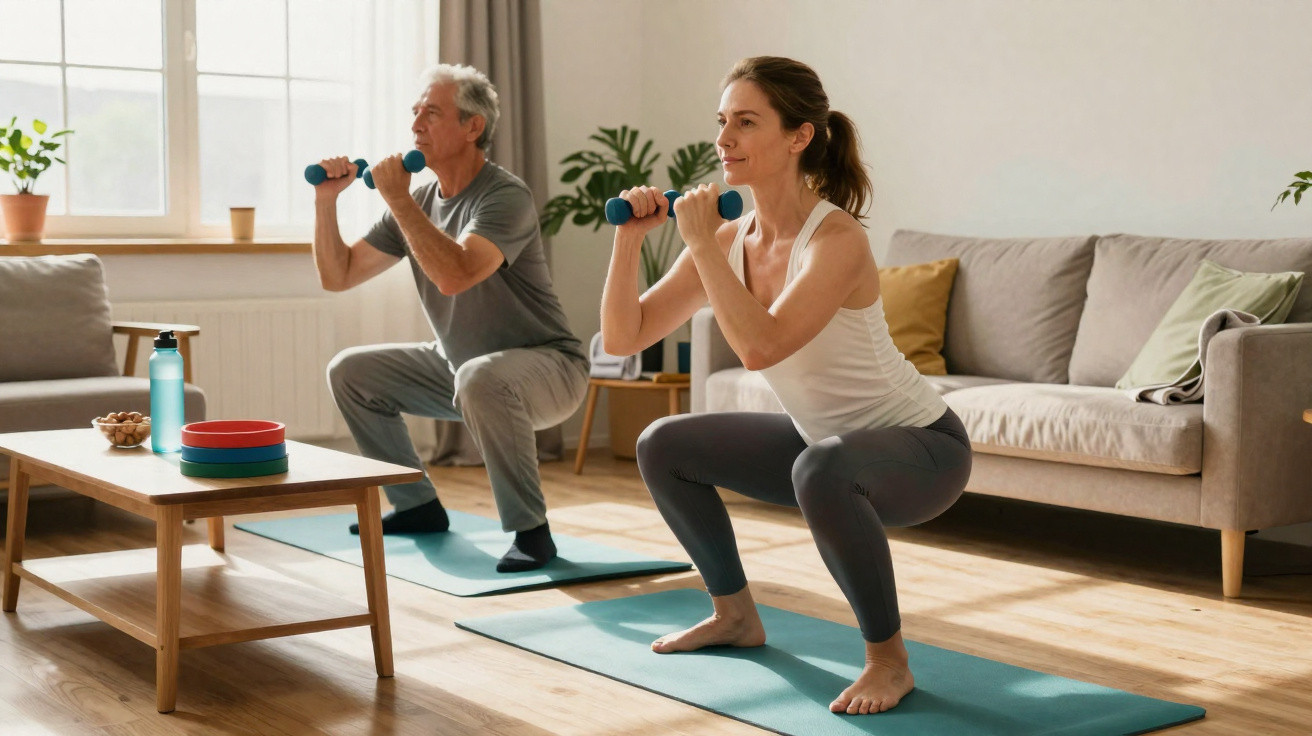
Regularly using your muscles matters far more than following an elaborate, high-tech workout plan if you want to become stronger, healthier and more resilient in daily life. A large review of international research suggests that the crucial factor is not finding the flawless programme, but training consistently in ways that fit your life.
Why simple strength exercises work so well
For years, strength training was seen as a complicated specialist subject. Sets, repetitions, rest periods, split routines and volume: it could seem as though you needed a degree in sports science before picking up your first dumbbell. Rather than encouraging people, this often put them off.
A recent analysis of 137 systematic studies involving more than 30,000 participants now challenges that idea. Its message is clear: muscles respond even to relatively straightforward, practical training stimuli. If you challenge your body several times a week, you can build strength and muscle while improving your health – whether you use dumbbells, resistance bands or your own body weight.
“The best training plan is the one you genuinely stick to week after week – not the one that looks perfect on paper.”
For most people, training every major muscle group roughly twice weekly is enough. What matters is that the exercises become somewhat demanding and that you work with focus while doing them. According to the data, whether you use a barbell in the gym or water bottles in your living room is considerably less important than previously thought.
What happens in your body when you start strength training
The biggest improvement comes at the beginning: people who have never done strength training before and then begin tend to benefit especially strongly. Just a few weeks of simple exercises can produce measurable gains.
- Muscles adapt to the new demands and become stronger.
- Tendons and connective tissue become more robust.
- Metabolism works more efficiently, making blood sugar easier to manage.
- Everyday movements feel easier and more stable.
There is no need for hours-long sessions. Brief workouts lasting 20 to 30 minutes, two or three times per week, already send clear signals to the body. Those who were completely inactive beforehand often quickly notice that climbing stairs is easier, carrying bags feels less difficult and they feel more alert overall.
More than muscle: how strength training protects your health
Many people mainly associate strength training with six-packs, biceps and gym selfies. Yet the large collection of studies indicates that its real jackpot lies in its health benefits – especially when it comes to ageing.
Regular strength training is associated with:
- a lower risk of cardiovascular disease
- improved blood sugar levels and less type 2 diabetes
- greater bone density and fewer fractures
- fewer falls in later life as a result of better balance
- better sleep and higher daily energy levels
Many of these effects do not appear after just one week; instead, they build quietly in the background with every session. Starting today is therefore an investment in the decades ahead: in independence, mobility and quality of life.
No gym? No obstacle!
One of the strongest conclusions from the new recommendations is that muscles do not need an expensive gym membership to develop. Your body will respond to almost any serious challenge you give it.
Simple strength training at home
A handful of basic movements can challenge your entire body – in your living room, in the park or even at the office:
- Squats (with or without a chair for support)
- Press-ups (against a wall, on a table or traditionally on the floor)
- Rows using a resistance band or rucksack
- Lunges forwards or backwards
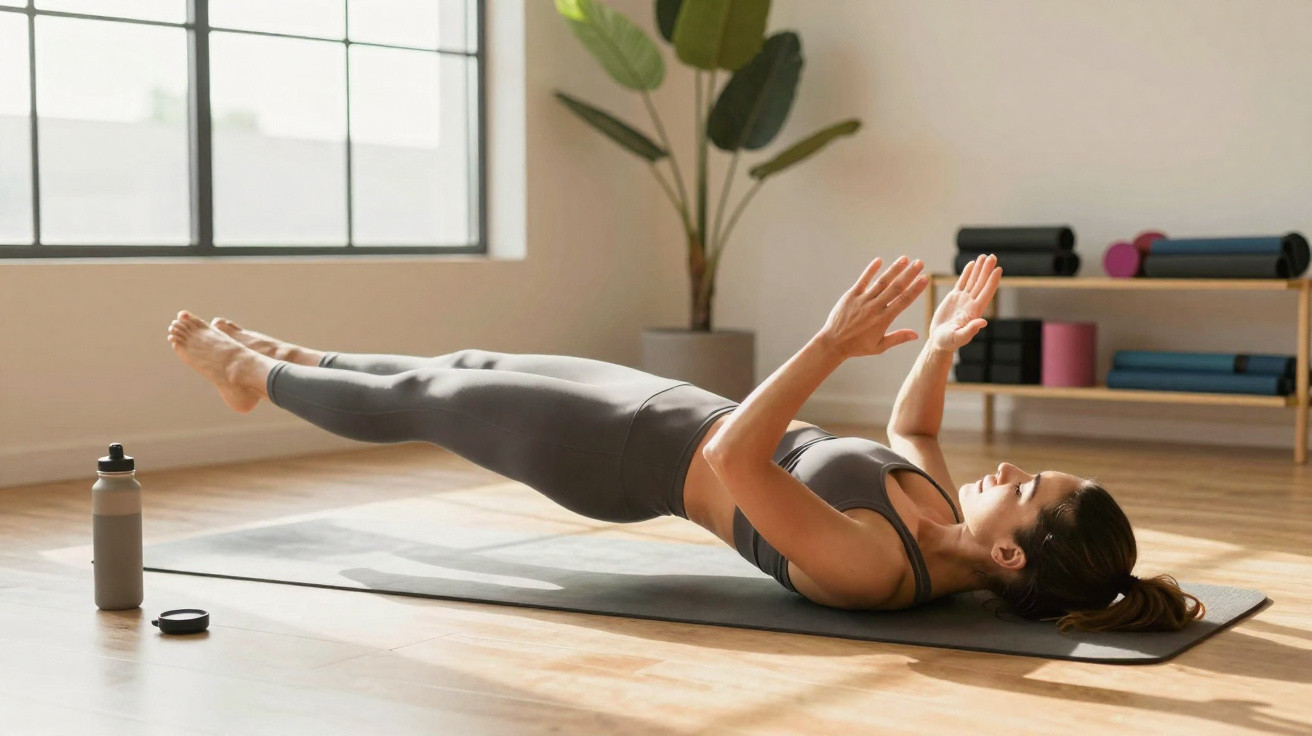
- Plank for the core and back
If you wish, add simple equipment: resistance bands, dumbbells, a sturdy rucksack filled with books, or water bottles for weight. There are very few limits to what you can use.
“The data clearly show that getting started and sticking with it matter more than the ‘perfect’ weight.”
Routine beats perfection: how to truly keep going
The research review also makes clear why so many good intentions fail: programmes are too complex, too long or too rigid. Anyone scheduling three highly demanding workouts each week often ends up back on the sofa after only a few weeks.
A realistic and flexible approach works better. Three key strategies are:
- Start small: Begin with 10 to 15 minutes and only a few exercises. Increase the workload only once this feels established.
- Set fixed time slots: Choose two or three specific appointments each week, such as Monday, Wednesday and Friday straight after work.
- Keep a Plan B ready: On stressful days, a 5- to 10-minute “emergency session” is better than skipping training completely.
This approach fits busy diaries, shift work and family life – in other words, real everyday life. The evidence shows that a slightly shorter routine maintained over the long term is better than even the most brilliant programme if it is unrealistic.
How often and how intensely should you train?
The new recommendation follows a simple framework that beginners can use for guidance:
| Element | Recommendation for beginners |
|---|---|
| Frequency | 2–3 strength-training sessions per week |
| Muscle groups | Legs, glutes, back, chest, shoulders, core |
| Duration | 20–40 minutes per session |
| Intensity | The final repetitions should feel clearly demanding |
| Progress | Every 1–2 weeks, make it slightly harder or add a few repetitions |
One scientifically interesting point is that the precise combination of sets and repetitions is less critical, provided the muscles are challenged regularly and noticeably. You do not need to keep a training diary full of complicated formulas – how it feels is often entirely sufficient. If you realise at the end of a set, “This is getting really hard now”, you are in a sensible range.
Strength training in later life: why an early start pays off
The effect is particularly strong in older people. Without a counter-stimulus, our muscles decline with every year of life. This raises the risk of falls, makes us less steady on our feet and limits everyday activities. The new evidence shows just how much can still be preserved with very simple training.
For older adults, exercises using their own body weight or light weights are often enough, for example:
- standing up from and sitting down on a chair
- wall-supported press-ups
- standing holds for balance and core strength
Those who begin early in life build a “muscle savings account” that can support them for many years. However, starting later is also clearly worthwhile: studies show measurable improvements in mobility, walking speed and confidence in daily life after only a few months.
Common terms explained briefly
Technical terms regularly appear in this discussion and can quickly become confusing. Here are two important expressions in plain language:
- Resistance training: Any activity in which your muscles work against resistance – whether that is dumbbells, resistance bands, machines or your own body weight.
- Muscle hypertrophy: Simply muscle growth. The fibres become thicker because they adapt to repeated loading.
Importantly, extremely heavy weights are not required to trigger these effects. The essential point is that muscles must work regularly and not remain in their comfort zone all the time.
How to combine strength training effectively
Many people wonder where this fits into an already busy exercise routine. A sensible approach combines three pillars:
- Strength training 2–3 times a week for muscles and bones
- Cardio exercise such as brisk walking, cycling or swimming on several days
- Everyday movement through taking the stairs, walking for journeys and short movement breaks from sitting
Anyone who incorporates these three elements into their life reasonably regularly makes the best use of the positive effects of this new knowledge. Behind all the figures and tables, the message remains surprisingly straightforward:
“You do not have to train perfectly. You just have to start – and carry on.”
















Comments
No comments yet. Be the first to comment!
Leave a Comment