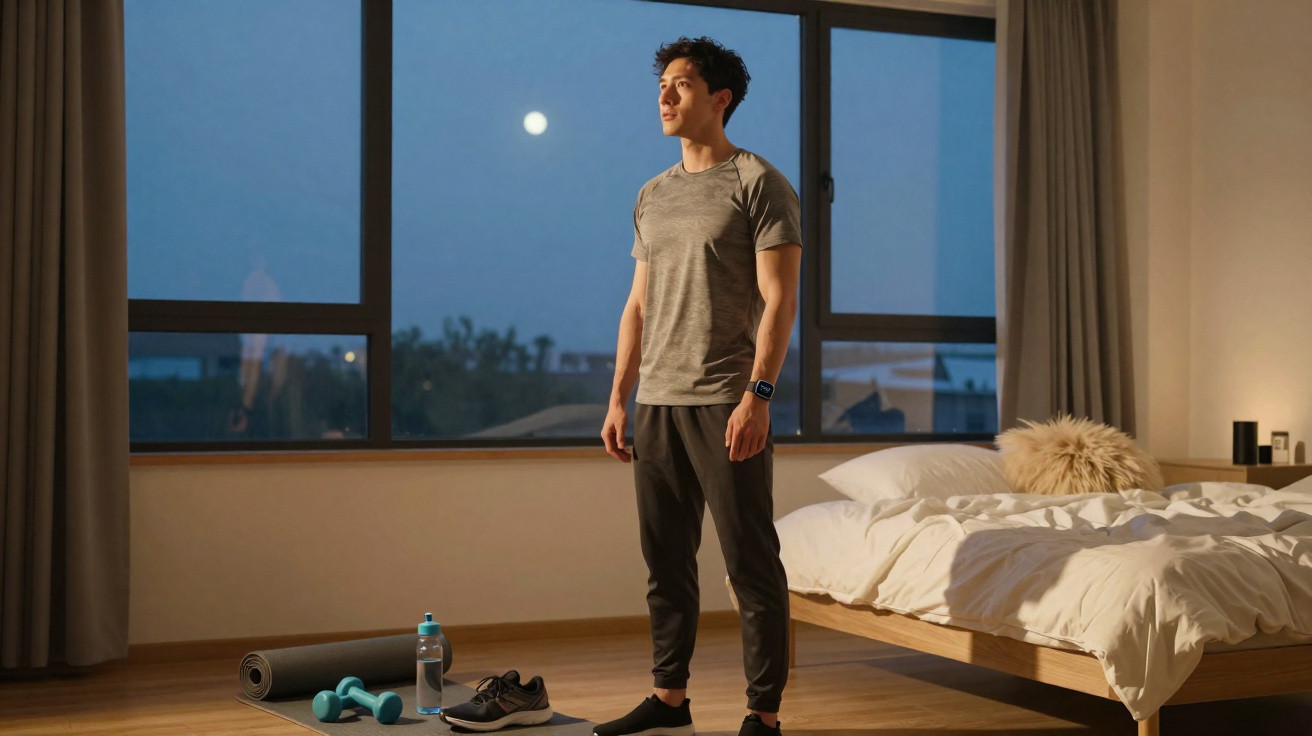
Work, family, commuting – and suddenly it is 8 pm.
For many people, exercise only fits into the late evening. But how much does it really disrupt sleep?
Anyone rushing from one meeting to the next during the day before looking at the clock, exhausted, in the evening will know the dilemma: the body is crying out for movement while the mind wants bed. In between sits the guilty conscience – and the question of whether a late run or a 9 pm workout will ruin the night or perhaps even be beneficial.
Why evening becomes the only time slot for exercise
A tightly scheduled daily routine pushes exercise into the night
Most people now live according to a rhythm dominated by performance and pace. Every part of the day is planned, while breaks feel like a luxury. Those who need to be in the office early, sit in traffic afterwards and still have children, household tasks or appointments later on often end up with just one realistic window: between 8 pm and 10 pm.
This is especially apparent in cities. Gyms are packed in the evening, while parks fill up after sunset. That is not because everyone is a night owl, but because the earlier hours simply leave no gap. Many therefore face a genuine dilemma: remain inactive and risk harming their health over time, or exercise late and risk affecting their sleep.
“For many people, evening exercise is not a free choice but an adjustment to an overloaded life.”
Social norms have shifted: the “active day” no longer ends when work finishes. Emails, messaging apps and appointments stretch further into the evening, so movement is automatically pushed later too. On the one hand, this can be a relief; on the other, it may disrupt the natural sleep rhythm.
Exercise as an outlet after a day of sitting
After eight or nine hours at a desk, tiredness is often mental rather than physical. The mind is full, the neck is tense and thoughts keep circling. This is precisely where exercise can act as a pressure-release valve. Movement creates a clear boundary between work and private life: laptop shut, running shoes on, and out of the mental loop.
Our bodies were not designed for sitting for hours on end. An evening session can reduce inner restlessness and create a “pleasant” sense of tiredness in muscles and joints. Afterwards, many people feel calmer mentally, even if their heart rate was higher shortly beforehand.
“Evening exercise can bring the day to an emotional close – if the intensity and timing are right.”
The question remains, however: at what point does this outlet turn into a stimulating effect that delays sleep?
What happens in the body when we exercise late
The role of body temperature in falling asleep
People sleep better when their core temperature falls slightly. This drop is a key signal telling the body that it is time to wind down. Intense exercise does the opposite: it heats the body, muscles generate warmth and blood circulates more quickly.
If this heat surge occurs too late, it sends a conflicting message to the brain: “Stay active, do not switch off.” The body then needs longer to return to a temperature level that supports sleep. Depending on the intensity, this cooling process can easily take two to three hours.
So anyone completing a punishing running session at 9 pm should not be surprised if their body has still not entered “sleep mode” by 11 pm, even when their eyes feel heavy.
A hormonal mix of adrenaline and melatonin
Exercise also triggers several hormones that promote alertness: adrenaline, noradrenaline and cortisol all boost attention, responsiveness and readiness to perform. Those are useful qualities during the day, but less welcome shortly before sleep.
At the same time, there is melatonin, the sleep hormone. It normally rises as darkness falls and tells the body to slow down. If intense exertion occurs just before this process, stress hormones can override the signals of tiredness. The result is feeling internally “awake” despite actually being tired.
“Late exercise can shift the internal rhythm – not because movement is bad, but because timing and intensity compete with the sleep cycle.”
The result is often difficulty falling asleep, lighter sleep or the feeling of waking up exhausted the next morning despite technically spending enough hours in bed.
Intensity matters: when late exercise harms sleep – and when it helps
Why hard evening training can undermine sleep
Very intensive sessions are particularly unsuitable late in the day. Typical examples include:
- HIIT workouts (high-intensity interval training)
- fast-paced runs or demanding running intervals
- cross-training involving lots of sprints and jumps
- squash and similar fast-paced racket sports
These activities drive heart rate and breathing sharply upwards, place the body under considerable stress and extend the so-called afterburn effect: metabolism remains active for a long time and recovery continues at full speed. Someone finishing a HIIT session at 9:30 pm will rarely be genuinely ready for sleep before 11:30 pm.
There is also a mental aspect. High intensity demands complete concentration and can sometimes trigger a competitive mindset. The mind does not settle down at the press of a button afterwards. This type of training is better suited to early morning or lunchtime, when its stimulating effect is welcome.
Gentler sessions can actually support sleep
A blanket warning against evening exercise would be wrong, however. Much depends on the pace and on how each individual feels. Moderate activity can even make sleep more consistent. The key is staying at a level where you can still hold a conversation without gasping for breath.
Typical beneficial options include:
- brisk walking or gentle power walking
- easy cycling without pressure to perform
- relaxed lengths in a swimming pool
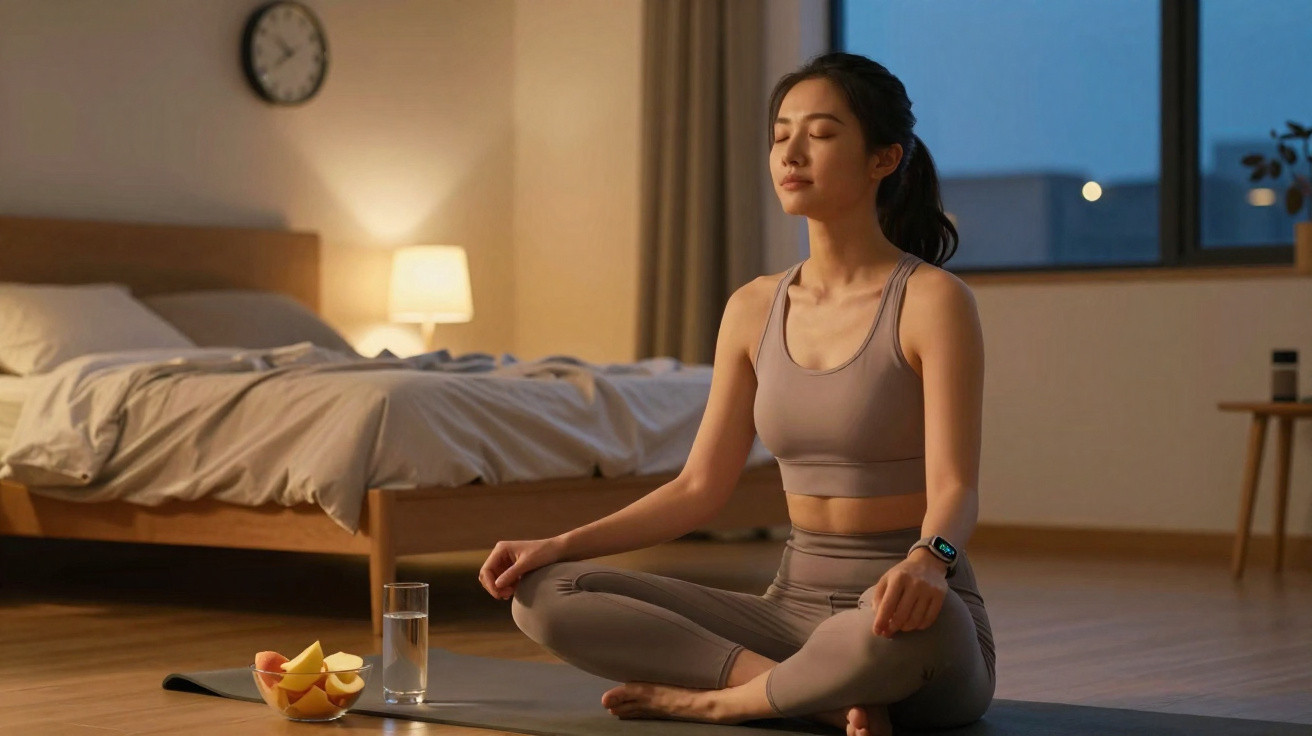
- gentle yoga or stretching routines
These forms of movement do not place excessive strain on the cardiovascular system, yet they still provide physical activity, ease tension and create pleasant tiredness. Body temperature rises only slightly and drops again more quickly.
“People who stay moderately active in the evening often achieve the ideal balance between physical release and sleep-promoting tiredness.”
Many people report that they fall asleep better after a relaxed 30- to 45-minute walk or an enjoyable cycle ride than they do on completely inactive days.
Your own body clock is the key factor
Chronotype: early risers function differently from night owls
People respond differently to late exertion. One person may comfortably run ten kilometres at 8 pm and be sound asleep by 10:30 pm, while another lies awake for hours after a half-hour strength session.
An important factor is the individual chronotype. People who naturally wake early and become tired quickly in the evening are usually more sensitive to late stimulation. Classic night owls, who rarely sleep before midnight anyway, often cope better with exercise at 9 pm.
Rather than using friends or fitness influencers as a benchmark, it helps to look inwards: How do I genuinely feel after exercising at different times? What signals is my body sending? As soon as a clear pattern emerges, it should be taken seriously.
Finding your personal sleep-exercise sweet spot with small tests
Anyone who is unsure can try a simple self-experiment. Over two to three weeks, record the following:
| Day | Training time | Type & intensity | Time taken to fall asleep | How you feel in the morning |
|---|---|---|---|---|
| Example 1 | 19:00–19:45 | easy run | 20 minutes | rested |
| Example 2 | 21:00–21:30 | HIIT | 60 minutes | exhausted |
After only a short time, it becomes clear which combination of time and intensity improves or worsens sleep. Those who notice that late sessions regularly cause trouble falling asleep can make adjustments: bring training forward slightly, reduce the intensity or swap demanding interval training for steady, gentle endurance exercise.
“Sometimes finishing exercise 30 minutes earlier is enough to make the night noticeably more restorative.”
Practical tips for evening exercise
How to make late training more sleep-friendly
People who depend on the evening for organisational reasons can achieve a great deal with a few adjustments:
- Finish training at least two to three hours before your planned bedtime.
- Limit intensive sessions to once or twice a week and schedule them earlier where possible.
- Choose gentle endurance activity, stretching or mobility work later in the evening.
- Deliberately wind down after training: have a lukewarm shower, dim the lights and limit screen time.
- Avoid planning heavy, high-fat meals immediately after a late workout.
Small post-exercise rituals can also help: light stretching, a few deep breaths or perhaps a brief breathing exercise. This signals to the nervous system that the exertion is over and the recovery phase is beginning.
Risks and alternatives when sleep is already a problem
Anyone who generally struggles to fall asleep or stay asleep should monitor late exercise particularly carefully. In such cases, it is worth consistently moving activity to the morning or early evening and keeping the final two hours before bed as low in stimulation as possible.
Suitable alternatives to a demanding session include:
- longer walks after dinner
- relaxation-focused yoga
- fascia training or gentle gym exercises
These activities do not excessively stimulate the circulation, but they ease tension and prepare the body for recovery.
Ultimately, the issue is not whether evening exercise is inherently good or bad. Intensity, the gap before bedtime and your own body clock are what matter. Anyone who keeps these three factors in mind can stay fit as a “night-time exerciser” without lying in bed awake every night.












Comments
No comments yet. Be the first to comment!
Leave a Comment