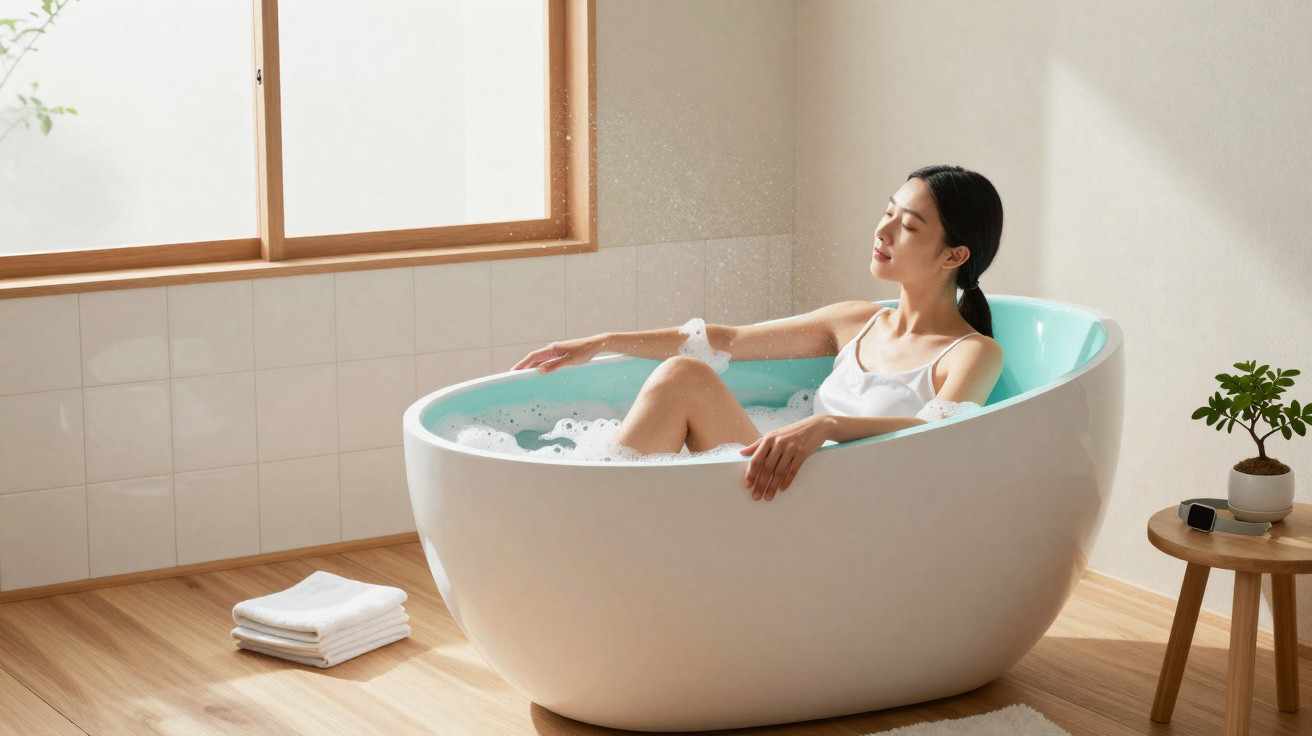
In Osaka, engineers are developing an invention that sounds like science fiction: a “washing machine for people” combining personal cleansing, wellness and a health check in one 15-minute ritual. Although it may seem like an eccentric concept, it fits remarkably well with an established trend: moving away from the traditional daily shower towards smarter, gentler and more convenient cleansing habits.
Why people are showering less
Across many countries, the daily shower has gradually lost its status as an unquestioned routine. There are several practical reasons for this:
- Skin health: Dermatologists caution that excessive soap use and hot water can damage the skin barrier.
- Environmental protection: One shower uses between 40 and 80 litres of water – per person.
- Energy crisis and costs: Hot water has become expensive, so many households are deliberately cutting back.
- Changing views on hygiene: Being clean does not necessarily mean taking a full shower every day.
It is into precisely this environment that a Japanese invention has arrived, aiming to rethink hygiene – and potentially making conventional showers even less frequent.
Osaka’s washing machine for people: what it can do
In Osaka, the company Science Co. has created a futuristic capsule officially named “Mirai Ningen Sentakuki”, which roughly translates as “washing machine for the people of the future”. The device is intended to wash and dry the whole body in around 15 minutes.
The machine resembles an enclosed booth in which one person sits. Its operation appears straightforward, but the technology behind it is not.
How a wash cycle works inside the capsule
- The user takes a seat inside the enclosed capsule.
- The booth fills with water in a controlled way.
- A microbubble system begins operating and cleans the skin.
- Special sensors measure heart rate and other physical data.
- An AI adjusts the temperature, water jets, lighting mood and sounds.
- Once washing is complete, an integrated drying system begins.
“In around 15 minutes, the capsule is intended to cleanse and relax the entire body while also assessing health data – rather like a mini-spa with a built-in check-up.”
How microbubbles could replace the conventional shower
At the core of the washing machine for people is a system using extremely fine bubbles. These microbubbles originally came from wellness treatments and certain spa services. The particles are so small that they are intended to penetrate skin pores especially effectively and loosen dirt without vigorous scrubbing.
For people with sensitive or dry skin, this could offer an advantage: less friction, fewer harsh shampoos and a gentler cleansing experience. Rather than standing beneath a powerful stream of water, the user sits comfortably in the capsule while the system operates quietly.
Personalised hygiene through AI
The capsule contains biometric sensors that measure, among other things:
- heart rate
- possible signs of stress or exhaustion
- other bodily responses during the washing process
This information is sent directly to an AI system. The artificial intelligence alters several settings in real time:
- water temperature
- the pressure of water jets or airflow
- the colour and brightness of the internal lighting
- background audio, such as calming sounds
This turns “washing” into a tailored wellness programme. Someone under stress receives a warmer, more soothing session, while a person wanting to feel more alert receives a fresher, more stimulating setting.
Hygiene, wellness and health monitoring in one device
With the capsule, Science Co. is pursuing an ambitious objective: bringing together three areas that have traditionally been separate.
| Area | Capsule function |
|---|---|
| Cleansing | Microbubbles and water gently remove dirt and sebum. |
| Relaxation | Lighting, soundscapes and temperature create a spa-like atmosphere. |
| Health tracking | Sensors provide data on heart rate, stress level and wellbeing. |
During a session, the system continuously gathers information. In future, this could make trends visible, such as whether someone is consistently under considerable strain or whether their pulse changes over a number of weeks. For now, this is more a possible scenario than a market-ready diagnostic solution, but the direction is clear: personal care is intended to become smarter.
How old this “future” really is
The idea may appear new, but its origins date back decades. A first prototype of a type of washing machine for people was already shown at the World Expo in Osaka during the 1970s. At that time, the sensors, computing power and AI needed to turn it into a genuine everyday product did not exist.
Today, much more advanced technology is available: compact sensors, powerful algorithms and materials capable of making such booths possible in the first place. The current version builds on that earlier vision, but is far more precise, quieter and more comfortable.
Fewer showers, more capsule? How realistic is it?
It remains uncertain whether devices like this will eventually be installed in ordinary homes or will be used mainly in hotels, wellness centres or clinics. The technology nevertheless indicates a possible direction of travel: away from the simple shower head and towards a care station that does more than merely put water on the skin.
At a time when many people want to lower their water and energy use, an efficient 15-minute wash using controlled quantities of water and heat could be appealing. Demand may be particularly strong in densely populated cities, where flats are smaller and interest in technology is high, rather than in rural areas.
Opportunities and unanswered questions
For all its futuristic appeal, the concept also raises questions:
- Data protection: Where do the health data go, and who analyses them?
- Maintenance: How hygienic does the inside of the capsule remain with frequent use?
- Cost: Could an average household afford such a device?
- Acceptance: Would people really sit in an enclosed booth to wash?
At the same time, dermatologists and doctors need to establish which skin types are best suited to microbubbles and where the limits lie, for instance for people with chronic skin conditions.
How our understanding of “clean” is changing
The excitement surrounding this washing machine for people reflects a broader cultural shift. Hygiene is no longer only about fragrance and appearance. Many people are asking: how can I care for my body so that my skin, hair and health benefit over the long term?
This is being debated more intensely than it was a few years ago. Some people are showering less often, choosing mild products or washing only specific areas of the body each day. The capsule from Osaka now adds a technological option to this mix: an automated, data-driven care ritual.
Those with little time, high expectations of convenience and familiarity with AI are likely to be among the first to try such a system. For others, reaching for the shower head will remain the more familiar and emotionally pleasing choice – water on the skin and the scent of a favourite shower gel feel like “real” cleansing to many people.
Practical effects on everyday life and health
If capsules of this kind become widespread one day, they could change more than showering habits. Possible examples include gym packages that include a wash cycle after training, or rehabilitation clinics prescribing several treatments each week – including automated stress measurement.
For people with limited mobility, such as older people or female patients after operations, a safe seated position inside a capsule with an automated process could be a genuine benefit. There would be no risk of slipping in the shower, no prolonged standing and less care required from relatives or care staff.
At the same time, new dependencies could emerge: those who become accustomed to it may be reluctant to return to a simple shower, much as with smartwatches that track step counts and heart rate. Hygiene would then become a data-driven ritual extending far beyond a bar of soap.








Comments
No comments yet. Be the first to comment!
Leave a Comment