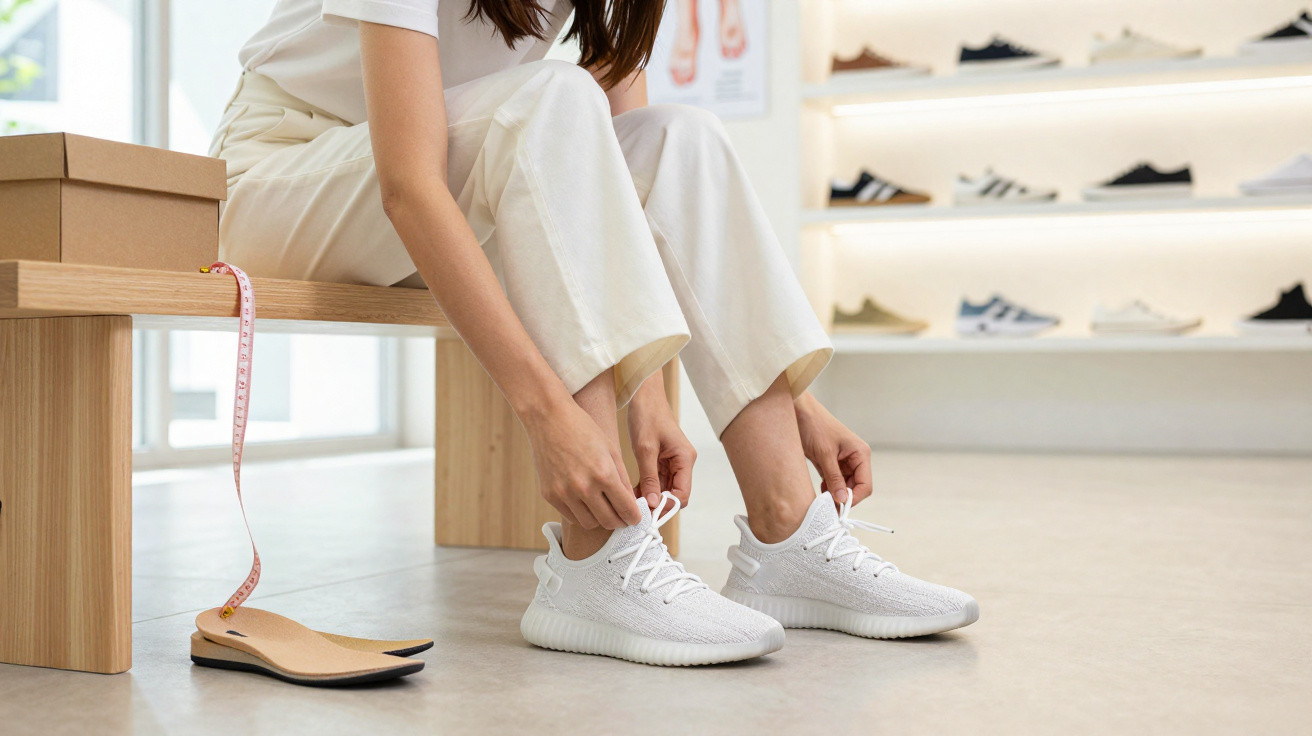
Countless clips are currently appearing on TikTok, Instagram and similar platforms in which trainers seem to “transform” the foot visually: broad beforehand, slim and elegant afterwards. Resembling a cross between a sports shoe and a sock, these styles fit closely around the foot and make it look almost filtered away on video. At a time when boots are going back into wardrobes and lighter footwear is in demand, the effect is tempting many fashion fans – but medical professionals and orthopaedic specialists take a far more critical view.
How a new trainer trend is making our feet look “slimmer”
For months, social media has been dominated by a fresh aesthetic: away from chunky, thick-soled “Dad Shoes” and towards slim, futuristic-looking trainers. Users compare their feet side by side: first in a wide, conventional trainer, then in the new close-fitting version – and the contrast appears striking.
The concept is that a foot should not merely sit comfortably in a shoe, but look as small and refined as possible. A narrow toe area, a sleek outline and a visibly longer-looking leg – the promise sounds like a fashion miracle. This expectation puts manufacturers under pressure to create ever more delicate designs, even where this may compromise the foot’s natural shape.
The trend is not simply about stylish trainers, but about the “ideal” small foot – with all the consequences that brings for posture and joints.
High-tech knit instead of leather: why these trainers fit so differently
The defining difference is the material. Many of these on-trend trainers use contemporary knitted and mesh textiles such as “mesh” and “knit”. These fabrics form the shoe’s entire upper, wrapping around the foot like a snug, elastic sock.
Unlike traditional leather or structured canvas styles, this material adds very little bulk. Padding, thick tongues and rigid reinforcements are absent. The result is footwear that pulls over the foot like a second skin. Sports brands originally developed these constructions to make running shoes lighter and more breathable. They are now moving into the lifestyle market, where their main purpose is to look good.
The mirror effect is obvious: less material, fewer seams and fewer visual interruptions. The foot appears narrower because the upper follows its contours precisely rather than artificially widening it.
Up to 1.5 centimetres “lost”: an optical illusion with a measurable effect
Fashion fans call them “magic shoes” – and measurements do indeed suggest that the perceived width of the foot changes. University studies report an optical slimming effect of around one to one and a half centimetres at the widest point.
This is chiefly due to two factors:
- Smooth surface: Without side seams or added components, the foot looks like one continuous, narrower shape.
- Monochrome colour blocks: Single-colour models make the form appear calmer and more elongated, with no contrasts to interrupt it.
There is also a light compression effect: the fabric gently presses the foot inwards, especially at the sides. In videos and photographs, this creates precisely the result promised by the trend: a slim, almost elegant-looking foot, even in trainer sizes that would otherwise look broad.
Style trick: how trousers and trainers can make the leg look longer
Those styling this look deliberately can amplify the effect. What happens above the shoe is crucial. Shorter trouser lengths that expose the ankle are considered particularly flattering.
The combination dominating social media
- ankle-length “cropped” trousers or 7/8-length jeans
- slim or straight-cut legs, with no excess fabric sitting over the shoe
- either visible skin at the ankle or very fine, close-fitting socks
This creates an uninterrupted line from the leg to the toe of the shoe. The toe looks narrow, the ankle delicate and the whole leg longer. By contrast, allowing wide cargo trousers or flared jeans to fall over delicate trainers ruins this very effect – the foot “disappears” and the proportions can quickly look unbalanced.
When the “sock shoe” fits too tightly: where the risks begin
However appealing the look may be, there is a clear downside for health. Many of these trainers fit extremely tightly in order to retain their slender line. Their construction is almost reminiscent of compression stockings – but without medical fitting.
Orthopaedic specialists warn about several issues:
- Insufficient lateral support: Without stability at the sides, the foot can roll inwards or outwards more easily. Over time, this puts strain on the ankle and knee.
- Restricted toe room: Toes need space to spread with every step. If they are constantly compressed, deformities may develop.
- Pressure peaks in the forefoot: Tight knitted materials can affect circulation and irritate nerves – numbness in the evening is a warning sign.
Anyone with noticeably numb or tingling toes in the evening is wearing their on-trend trainers too tightly – the body is already sending warning signals.
Persistent compression can encourage the development of hallux valgus, a painful misalignment of the big toe. Inflamed tendons, irritated joint capsules and lasting foot pain are also possible consequences.
Why the “boxer toe” can protect your toes
The good news is that not every shoe of this type is automatically harmful. Paying attention to one detail makes a major difference: the design of the toe box, often referred to in specialist terminology as the “boxer toe”. This means the reinforced section at the front of the shoe, which provides room and protection for the toes.
What shoppers should look for
- Firm toe cap: The front section should not give way entirely like a sock, but should retain a defined shape.
- Enough width: Toes should not overlap or press against one another inside the shoe.
- Space at the front: Roughly a thumb’s width between the longest toe and the front of the shoe is a useful guide.
Ideally, the shoe combines a stable toe box with a flexible knitted structure across the instep. This preserves the modern look without forcing toes into a tight tube.
Variety is essential: how to wear the trend without harm
Anyone aiming to keep their feet healthy in the long term should regard these trainers as a style choice for occasional days, rather than an everyday solution. Experts recommend rotating footwear regularly rather than reaching for the same tightly fitting styles every day.
A practical approach for day-to-day wear:
- Wear fashionable knitted trainers with a slim silhouette one or two days each week.
- For the rest of the week, choose well-fitting, more stable trainers made from leather or robust textile construction.
- During every fitting, pay attention to how your feet feel: areas that pinch are a reason to reject the shoes, not something to “get used to”.
Anyone who already has knee, hip or back problems would be best advised to have their choice of footwear assessed by an orthopaedic specialist. Even minor changes in foot alignment can have significant effects further up the body.
When fashion and medicine work together: what healthy on-trend trainers could look like
Many manufacturers have recognised that appearance alone will not succeed in the long run if customers experience pain. Initial collections are therefore attempting to combine slim looks with wider toe boxes, stronger heel support and more stable insoles.
Conceivable – and in some cases already available – are models that:
- present a fashionably narrow outer profile while offering more room inside,
- accommodate interchangeable insoles for different foot shapes,
- feature targeted reinforcement at key points: the heel, midfoot and toes.
For consumers, buying shoes nevertheless remains a balancing act: the mirror shows the silhouette, while the body provides feedback on comfort and tolerance. Those who listen to both can embrace the trend without damaging their feet in the long term.
One final point, often underestimated, is that feet change over the years. Width, arch and musculature – none of these remain static. Anyone investing in extremely narrow on-trend trainers now should bear in mind that their own foot may no longer fit the same mould in a few years’ time. Better choices are models that leave room and adapt to this development.















Comments
No comments yet. Be the first to comment!
Leave a Comment