
Fine hair, softer jawlines and deeper lines: reaching 50 can alter our faces more than we anticipate.
For many women, midlife is the point when a dependable haircut suddenly feels flat, harsh or simply “off”. Yet the right style can gently lift the features, brighten the eye area and make the face appear younger – with no surgery, filters or dramatic colour transformation required.
Why your haircut matters even more after 50
From about the age of 50, hair commonly becomes finer and less dense. Meanwhile, the facial oval begins to soften, the cheekbones can appear differently defined, and lines around the eyes and mouth become more noticeable.
A haircut that looked wonderful at 35 may begin to pull the face down by 55. The aim is not to “hide” age, but to create balance as proportions change.
A flattering cut after 50 refines the jawline, adds lift around the temples and draws the eye towards the eyes and cheekbones.
Stylists quoted by US publication Shefinds share the same essential recommendation: choose a slightly shorter length, introduce movement and work with, rather than against, your natural texture. Heavy, poker-straight lengths can make the face look older. Airy fringes, soft layers and carefully shaped cuts achieve the reverse.
The most rejuvenating haircuts after 50
Long layered bob with curtain fringe
The long bob, also known as a “lob”, continues to be a popular choice for women over 50 because it is so forgiving. Combined with thoughtful layers and a curtain fringe, it can work almost like soft-focus lighting.
- The length falls between the collarbone and shoulders, helping to lengthen the neck.
- Layers through the cheeks and jawline add a gentle sense of lift.
- A curtain fringe grazes the brows before sweeping outwards, drawing attention to the eyes.
Hairdressers advise keeping the ends lightly textured rather than sharply blunt. Strong blunt edges may make features look harder, whereas a feathered finish allows the hair to move and bounce as you walk.
A curtain fringe that falls to cheek level can make the face appear slimmer and gently veil forehead lines without looking heavy.
This style works well on straight or gently wavy hair. For finer hair, a small number of invisible face-framing layers can suggest greater fullness without making the ends excessively thin.
The “mob”: medium bob with smart structure
Positioned between the chin and collarbone, the “mob”, or medium bob, is longer than a traditional bob while remaining short enough to look polished and contemporary.
Why it appeals to stylists for women aged 50+:
- It can be angled to complement and follow the jawline.
- Delicate layers at the crown and temples add volume where hair frequently becomes thinner.
- It has enough length to tuck behind the ears, an easy trick that immediately lifts the profile.
Textured front layers can soften marionette lines while directing focus towards the eyes and cheekbones. Hairdressers often finish a mob with a subtle bend instead of a complete curl. This slight wave interrupts rigid facial lines and can soften the appearance of hollow cheeks.
The bixie: between pixie and bob
Sitting somewhere between a pixie cut and a short bob, the “bixie” has become a favourite for women who want a noticeable change without committing to an ultra-short style.
What defines a bixie:
| Feature | Effect on the face |
|---|---|
| Shorter back and sides | Reveals the neck and sharpens the jawline |
| Longer, layered top | Adds height and volume, lifting the face visually |
| Soft fringe or side-swept front | Frames the eyes and softens forehead lines |
Stylists value this haircut for its versatility. It can be worn in a relaxed, tousled way for a messier finish, or smoothed down for a more defined effect. Either option includes enough movement to prevent the cut from looking stiff or dated.
Shorter cuts with texture tend to project energy and confidence, two qualities people often read as “younger” at a glance.
Layering: the quiet anti-ageing trick
Layers may seem daunting to anyone who remembers the choppy, over-thinned styles of the 90s. Today’s technique, however, is more strategic, understated and focused on the face.
When executed properly, layers can:
- Break up weighty sections of hair that pull the face downwards.
- Add light movement that follows the curve of the cheekbones.
- Make fine hair appear denser while creating lift at the roots.
- Soften the appearance of lines by introducing texture around them.
With long hair, layering begins around the cheekbones and collarbones rather than at the crown, helping the ends remain full. For short styles, layers are shaped around the nape and temples to keep the silhouette light instead of square.
Short and mid-length cuts in motion
Short and mid-length styles with visible movement are particularly effective once the skin has lost some elasticity. Very straight, rigid hair may emphasise sagging, while gentle texture creates contrast and suggests lift.
Stylists regularly suggest:
- A lightly layered bob with ends turned subtly outwards for a “mini facelift” effect.
- A pixie with a longer, tousled top for a simple, modern silhouette.
- A lob featuring natural waves or soft bends made with a wide-barrel tong.
The goal is not a big blow-dry that collapses by lunchtime, but lived-in movement that survives rain, wind and busy days.
Many women over 50 favour styles requiring little heat styling as well. Haircuts that settle naturally with a little mousse and air-drying can protect more fragile hair while being practical to maintain.
Choosing the right anti-ageing cut for your face and lifestyle
No single haircut is right for every woman over 50. The most rejuvenating option will depend on face shape, hair texture and the amount of styling you are prepared to do.
A few useful guidelines include:
- Round faces: Consider a longer bob or mob that falls below the chin, with vertical layers and a curtain fringe to visually lengthen the face.
- Square or strong jawlines: Request soft, wispy layers around the cheeks and jaw, avoiding razor-sharp blunt cuts that draw attention to angles.
- Long faces: A shorter bob with side volume and a fringe can help bring the proportions into balance.
- Fine hair: Choose layered bobs, mobs or bixies with gentle texturising, and avoid very long lengths that become thin at the ends.
- Thick or wavy hair: Internal layers can take away bulk while creating a controlled, flattering outline.
At your appointment, say that you would like “soft anti-ageing structure”, rather than merely asking for “layers”. This encourages the stylist to consider face-lifting and framing effects, not just cutting into the hair to create volume.
Practical tips to make an age-defying cut last
Even the most flattering haircut can soon look tired if the hair is brittle or dehydrated. After 50, hormonal changes can affect sebum production and leave the lengths drier.
A handful of straightforward habits can support both the hairstyle and hair condition:
- Apply a lightweight volumising spray at the roots rather than using heavy serums over the top.
- Use nourishing masks mostly from the mid-lengths to the ends, so the crown is not weighed down.
- Reduce daily heat styling; when you do use heat, select a lower temperature and apply heat protectant.
- Book trims every 6–8 weeks for short haircuts and every 8–10 for bobs and lobs, keeping the shape crisp.
Healthy, slightly shiny hair instantly looks younger, regardless of length or colour.
Understanding a few key terms before your salon visit
Salon terminology can seem like another language, making it more difficult to explain what you want. A brief recap can help:
- Curtain fringe: A centre- or off-centre fringe that separates and sweeps towards the temples, with longer sides than the middle.
- Texturising: Techniques that remove weight and build movement without creating visibly “chunky” layers.
- Lob: A long bob, usually falling between the shoulders and collarbones.
- Face-framing layers: Progressively shorter sections around the face, intended to emphasise the eyes and cheekbones.
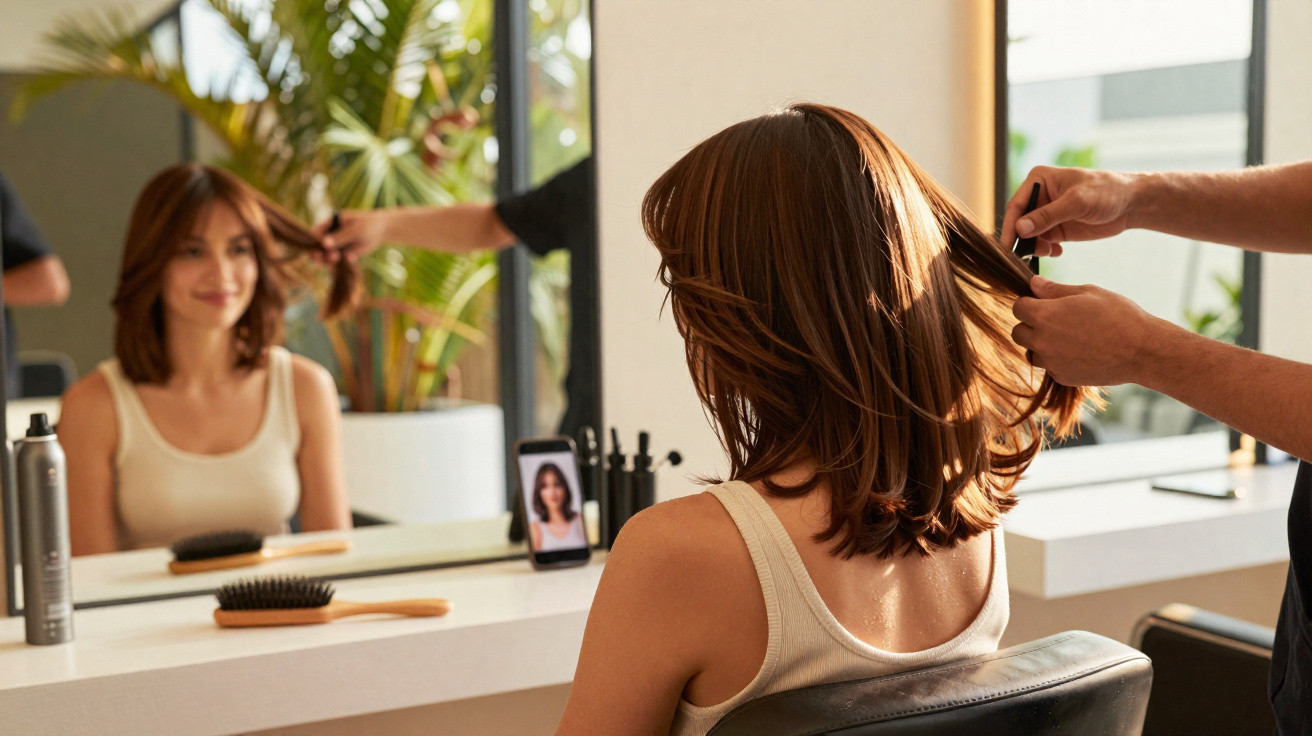
Bringing one or two reference pictures showing your preferred length and fringe can be useful, but do not ask your hairdresser to replicate another woman’s look exactly. Instead, describe the details that appeal to you in the image: softness around the face, volume at the crown or effortless texture.
Considering your everyday routine beforehand can also prevent disappointment. A person who travels often or swims regularly may favour a wash-and-go bixie or mob, whereas a wavy lob may suit someone who enjoys spending ten minutes each morning with a brush and tong. Ultimately, the most “youthful” haircut is the one you can wear comfortably and with a little enjoyment, every day.














Comments
No comments yet. Be the first to comment!
Leave a Comment