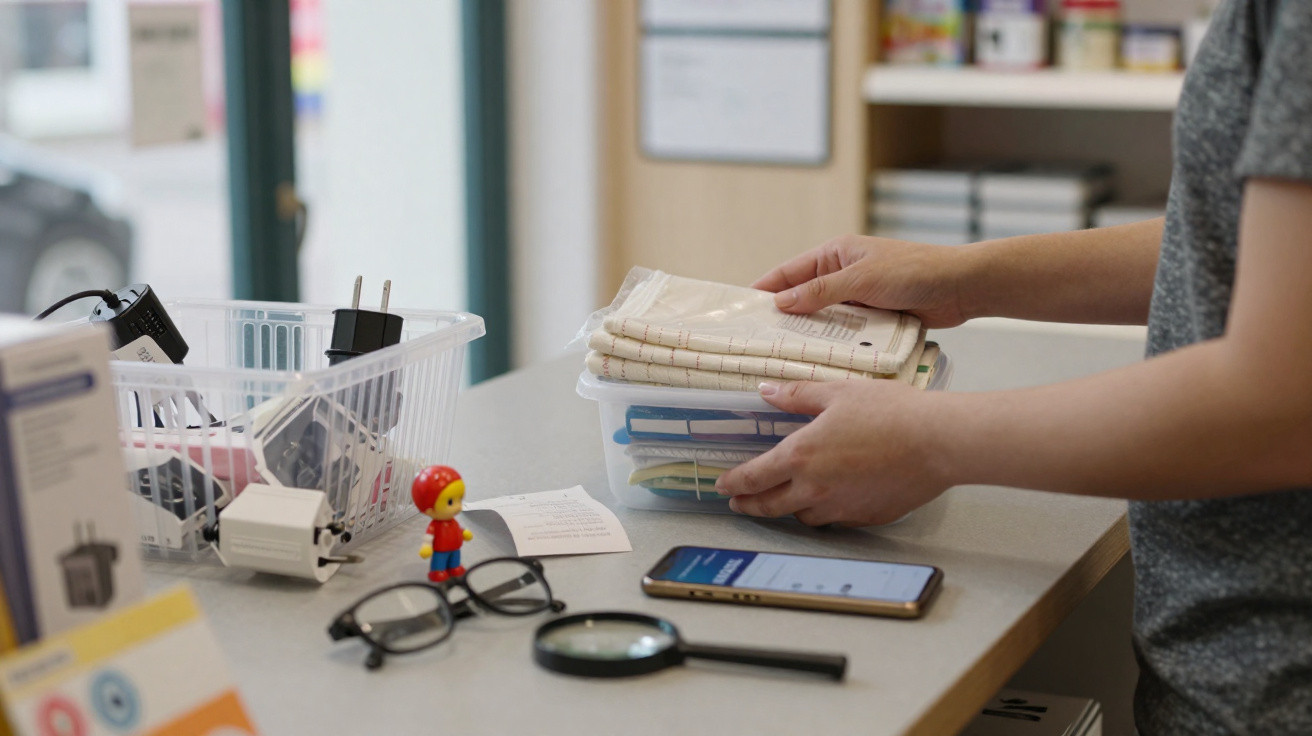
A bargain shop can be useful when you need birthday bits, storage tubs or a phone cable in a hurry. Yet a very low price should prompt a closer look when an item plugs in, gets hot, goes on the skin, contains chemicals or is meant for a child.
That is the practical lesson from court proceedings involving Australian discount retailer Panda Mart. Consumer Affairs Victoria has sought orders over alleged product-safety and compliance problems at its stores. The case has not, by itself, proved that every product sold by the retailer is unsafe. But it is a timely reminder to pause when packaging, instructions or the product itself leave you unsure.
What the Panda Mart court action is about
Consumer Affairs Victoria has asked the Supreme Court of Victoria for orders that could restrict Panda Mart from trading unless it meets relevant product-safety requirements.
The regulator says it identified products that it alleges did not comply with consumer product-safety rules, following earlier intervention involving the retailer. These remain allegations unless and until they are established by a court. Panda Mart is entitled to respond through the legal process.
For shoppers, the useful point is not to treat an open shop as a guarantee that every item has been individually assessed for safety or suitability.
A safety concern is not only about an item looking flimsy. Missing instructions, unclear warnings and unsuitable electrical parts can matter just as much.
Why some bargain buys deserve more scrutiny
A pack of paper plates or a basic storage basket is usually easier to judge than a charger, a child’s toy or a face cream. The consequences of a fault are different.
Take extra care with products involving:
- electricity, charging, heat or batteries;
- small detachable parts, magnets or button batteries;
- children’s feeding, sleeping or bathing equipment;
- cosmetics, perfumes and products applied to skin;
- food contact, including reusable cups, bottles and cooking tools;
- cleaning liquids, aerosols, glues and other chemicals;
- protective equipment, such as helmets, floatation aids and safety gates.
An item may look similar to one from a familiar high-street retailer but differ in its materials, build quality, instructions or intended use. Sparse, contradictory or hard-to-understand packaging is a good reason to leave a higher-risk product on the shelf.
A quick check before you pay
You do not need specialist knowledge to make a more careful choice. Give potentially higher-risk purchases a minute of attention before heading to the till.
1. Check what the product is for
Read the label rather than relying on the picture. Look for a clear product description, instructions, relevant warnings and an age recommendation for children’s items.
For cosmetics, you should be able to find an ingredients list and directions for use. For electrical goods, there should be enough information to identify the product and use it safely. If essential details are absent or incomprehensible, do not guess.
2. Inspect the item and its packaging
Avoid products that are leaking, open, badly crushed or appear to have been resealed. Check electrical goods for loose parts, damaged cables, sharp edges and poorly fitting components.
For toys and children’s products, consider whether parts could come loose. A device powered by button batteries should have a battery compartment that is secure and cannot be easily opened by a child.
3. Think about what could happen if it fails
A cheap laundry basket failing is inconvenient. A charger overheating beside a bed is potentially much more serious. The greater the possible harm from breakage, heat, choking or chemical exposure, the more reassurance you should expect before buying.
4. Keep the receipt and label details
Keep your receipt until you have tried the item. A photograph of the packaging, barcode and model or batch number can make it far easier to identify a product if there is a recall or a problem later.
If you are shopping in the UK
The Panda Mart proceedings concern Victoria, Australia. They do not decide whether a retailer or product sold in the UK meets UK requirements. The shopping habits they highlight, however, apply anywhere.
If you think a consumer product may be unsafe in the UK, Citizens Advice can provide consumer guidance and pass appropriate reports to local authority Trading Standards. You can also search product recalls and safety alerts published on GOV.UK.
For mains-powered products, check that the plug and power supply are appropriate for use in the UK. Do not force an incompatible plug into a socket or rely on a flimsy travel adaptor as a permanent solution. If you are unsure whether a charger, cable or adaptor is suitable, choose a product with clear instructions from a retailer that can provide support.
If an electrical item becomes unusually hot, smells of burning, sparks or crackles, stop using it. Switch off the power at the mains only if it is safe to do so, then unplug it. Do not keep charging or using it to see whether the fault happens again.
Match your caution to the risk: the more harm a fault could cause, the more information and reassurance you should expect.
What to do if you already own an item that worries you
Do not panic simply because a retailer has been named in regulatory action. Start with the exact item you own, its condition and how it is being used.
- Stop using it if it is damaged, overheating, leaking, has loose parts or is missing essential safety information.
- Check recall notices using the product name, model number and retailer details where possible.
- Keep evidence such as the receipt, packaging and photographs of the product, labels and any fault.
- Contact the retailer to ask about a return, refund or safety information.
- Report a serious concern through Citizens Advice if you are in the UK, or the relevant consumer authority where you bought it.
Keep damaged electrical goods away from children, pets, water and flammable materials while you arrange safe disposal. Do not put leaking batteries, unknown chemicals or damaged electrical equipment in your ordinary household bin: check your local council’s guidance or a suitable recycling point instead.
Common mistakes bargain hunters make
The biggest mistake is assuming that a low price means a purchase is low-stakes. Price alone does not tell you whether a charger is suitable, a toy is right for a toddler or a skin product has been properly labelled.
Other avoidable errors include:
- assuming a familiar-looking safety symbol settles every question without reading the packaging;
- buying electrical products without checking the plug, instructions and intended power supply;
- giving a toy to a child younger than the stated age range;
- decanting cleaning products into unlabelled bottles;
- throwing away the receipt and packaging immediately;
- relying on social-media videos rather than checking official recall information.
Never mix household cleaning chemicals. In particular, bleach must not be mixed with acidic products, such as descalers or toilet cleaners, or with ammonia-containing cleaners, as dangerous gases can be released.
Getting value without taking unnecessary risks
Discount shopping can still make sense. Save money on straightforward, low-risk goods that you can inspect easily, such as gift wrap, storage items or basic stationery. For electrical goods, child-related products, cosmetics and chemicals, spend more time comparing the information, checking the returns policy and deciding whether the product is genuinely suitable.
The Panda Mart case is a reminder that consumer protection depends on enforcement, clear information and shoppers asking sensible questions. If you cannot tell what an item is, who it is for or how to use it safely, walking away may be the best bargain of all.














Comments
No comments yet. Be the first to comment!
Leave a Comment