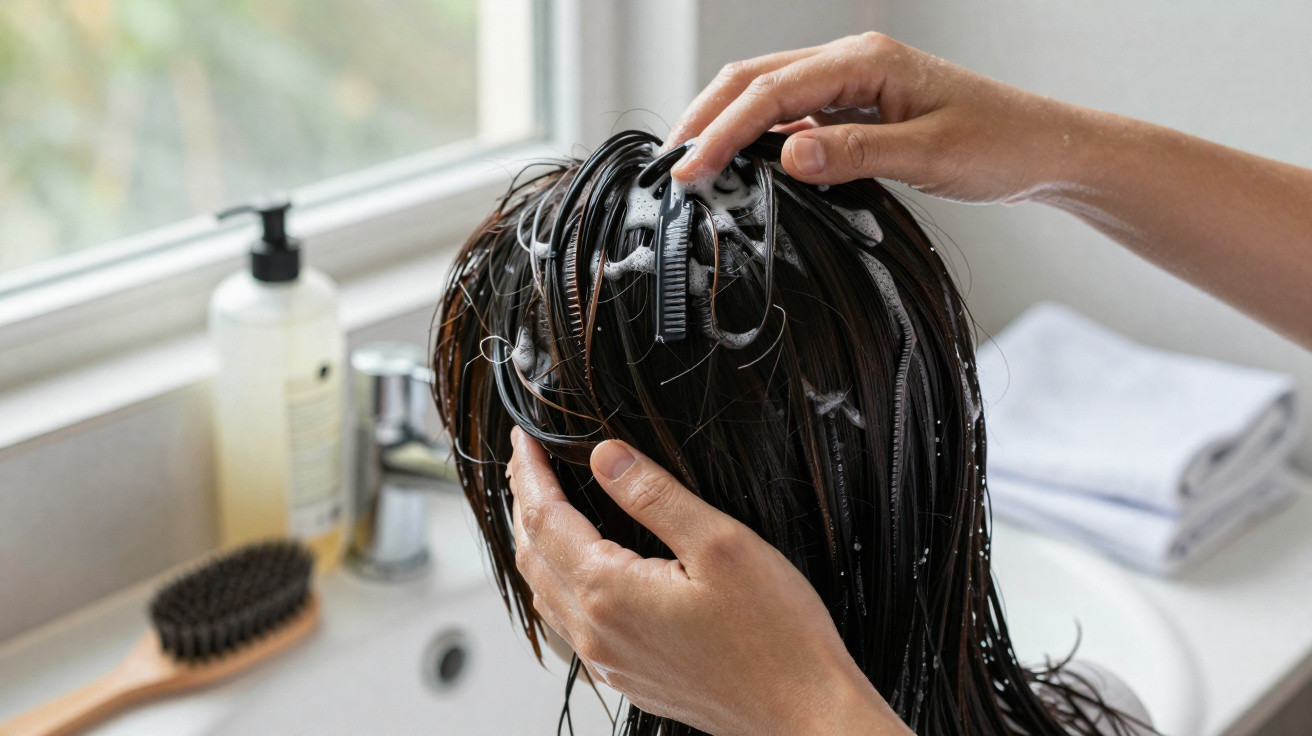
Dull, frizzy hair is not always a sign that you need another styling product. Often, the problem starts in the shower: water is too hot, shampoo is worked through the ends and conditioner is rinsed away before it can do its job. The useful trick in a slower, head-spa-inspired wash routine is to treat the scalp and lengths differently.
There is no single hair-washing method used by everyone in China, and a salon head-spa treatment cannot be fully copied in a UK bathroom. But a few sensible principles are worth borrowing: detangle before washing, cleanse the scalp gently, condition the lengths and reduce friction afterwards. These small changes can help hair look smoother and feel softer.
The scalp-first principle
Head-spa treatments can combine cleansing, massage, conditioning and relaxation. At home, the aim is not to recreate every salon step, but to give each product a clear purpose.
Your scalp produces oil, while the older lengths and ends are more likely to feel dry or rough. Shampoo is therefore usually best concentrated at the roots, with conditioner mainly through the mid-lengths and ends.
Shine is usually light reflecting from a smooth, clean hair surface. It does not require hair to feel squeaky or stripped.
This distinction can be particularly helpful in a British autumn or winter, when central heating, hats and damp weather can leave roots looking flat while ends become fluffy.
Detangle before you get in the shower
Before wetting your hair, gently remove knots with a wide-tooth comb, your fingers or a soft-bristled brush. Start at the ends and work upwards in small sections. Wet hair can be more prone to stretching and snapping when pulled roughly.
Dry brushing is optional. It may not suit tightly curled, coily or highly textured hair, especially if it disrupts the curl pattern. In that case, use fingers or a wide-tooth comb in the way that works best for your hair.
1. Keep scalp brushing light
- Use clean, soft and flexible bristles.
- Avoid repeatedly brushing the same area.
- Do not try to scrub away flakes.
- Stop if your scalp feels sore, itchy or tender.
- Skip brushing if you have broken skin, an irritated scalp, or a flare-up of eczema or psoriasis.
Use lukewarm rather than hot water
Very hot water can be comforting on a cold morning, but it may leave the scalp and lengths feeling dry or uncomfortable. Lukewarm water is usually enough to wet the hair thoroughly and help shampoo spread more easily.
Take a moment to saturate the roots properly, particularly if you have thick hair, dense curls or a lot of product in your hair. This can reduce the temptation to use too much shampoo or scrub aggressively for more lather.
There is no need for an icy rinse. Cooler water may feel refreshing and can make hair appear temporarily sleeker, but it does not literally “seal” the hair cuticle. Choose a temperature that feels comfortable.
Cleanse the scalp carefully
Put a small amount of shampoo into your palms first, then distribute it across the scalp in sections: the hairline, crown, behind the ears and nape. Add a little water if needed to help it move.
2. Massage with fingertips, not nails
- Use the pads of your fingertips rather than your nails.
- Make small, gentle circles across the scalp for about a minute.
- Let the lather run through the lengths as you rinse instead of piling hair up and scrubbing it.
- Rinse thoroughly, lifting hair at the nape and behind the ears.
A second shampoo can be useful after heavy use of dry shampoo, wax, hairspray or other styling products, or after a particularly sweaty day. It is not automatically necessary, though. If your scalp feels dry or your hair is bleached, curly or prone to dryness, one careful wash may be enough.
The goal is a fresh, comfortable scalp and soft lengths - not a tight, squeaky-clean feeling.
Be cautious with scalp treatments
Some head-spa-inspired routines use botanical ingredients, including ginger, tea, ginseng or rice-based preparations. A properly formulated scalp product may be pleasant to use, but natural ingredients are not automatically suitable for every scalp.
If you use a scalp serum, rinse or treatment, choose one intended for scalp use and follow the label instructions. Patch-test a new product first, especially if you react to fragrance, essential oils or hair dye.
Avoid applying homemade ginger juice, undiluted essential oils or strongly fragranced herbal mixtures directly to the scalp. They can sting or cause irritation, and oily mixtures can be difficult to remove from the roots. No topical product can guarantee faster hair growth, prevent greying or stop hair loss.
Speak to a pharmacist, GP or dermatologist if you have persistent scaling, pain, unexplained irritation or sudden changes in shedding.
Condition the lengths - and keep warmth sensible
Smooth conditioner through the mid-lengths and ends, where hair is generally oldest and most likely to need help with softness and slip. Use your fingers or a wide-tooth comb to distribute it gently.
If your hair is fine, avoid applying a heavy conditioner close to the scalp, as this can make roots feel weighed down. If your hair is curly, coily or very dry, a richer conditioner and patient finger-detangling may be more useful.
Leave the conditioner on for the time stated on the packaging. Keeping it on far longer is not necessarily better, particularly with protein-containing treatments, which some people find leave their hair feeling stiff when used too often.
A normal warm bathroom is enough while conditioner sits. There is no need for a plastic cap, a very hot towel or a homemade steam treatment. Heat does not “open” hair follicles; gentle handling and suitable conditioning are what help hair look smoother.
Rinse thoroughly and dry without rubbing
Rinse conditioner well so that hair feels soft rather than heavily coated. If you enjoy a slightly cooler final rinse, keep it comfortable.
Then focus on reducing friction:
- Press out excess water with a microfibre towel or soft cotton T-shirt.
- Do not rub the hair roughly with a towel.
- Apply leave-in conditioner or heat protectant to damp lengths if you use heated tools.
- Detangle slowly from the ends upwards.
- If blow-drying, use a moderate temperature and direct airflow down the hair shaft.
- Use a tiny amount of lightweight oil or shine serum on dry ends only, if needed.
For many people, less friction and less excessive heat make a bigger visible difference than adding more products.
Common mistakes that dull the result
A slower wash only helps when it remains gentle. Watch for these common errors:
- Using very hot water: this can leave scalp and ends feeling dry.
- Scratching with nails: this may irritate the scalp.
- Shampooing twice by default: reserve it for genuine build-up or when your hair needs it.
- Conditioning the roots heavily: this can make fine hair look limp or coated.
- Treating essential oils as harmless: even natural oils can trigger irritation.
- Rinsing poorly: leftover product can make hair look flat more quickly.
- Rough towel-drying before high heat styling: this creates unnecessary friction and stress on the lengths.
Make it work on an ordinary wash day
Try the routine on your next full wash day: detangle gently, wet hair with lukewarm water, spend an unhurried minute cleansing the scalp, condition the parts that need softness, then rinse and dry without rubbing.
You do not need a complicated ritual or a shelf full of specialist products. The useful lesson from a head-spa-inspired wash is simply to give your scalp and your lengths different care. That can make your routine feel calmer and give hair a better chance of looking smooth, soft and naturally reflective.













Comments
No comments yet. Be the first to comment!
Leave a Comment