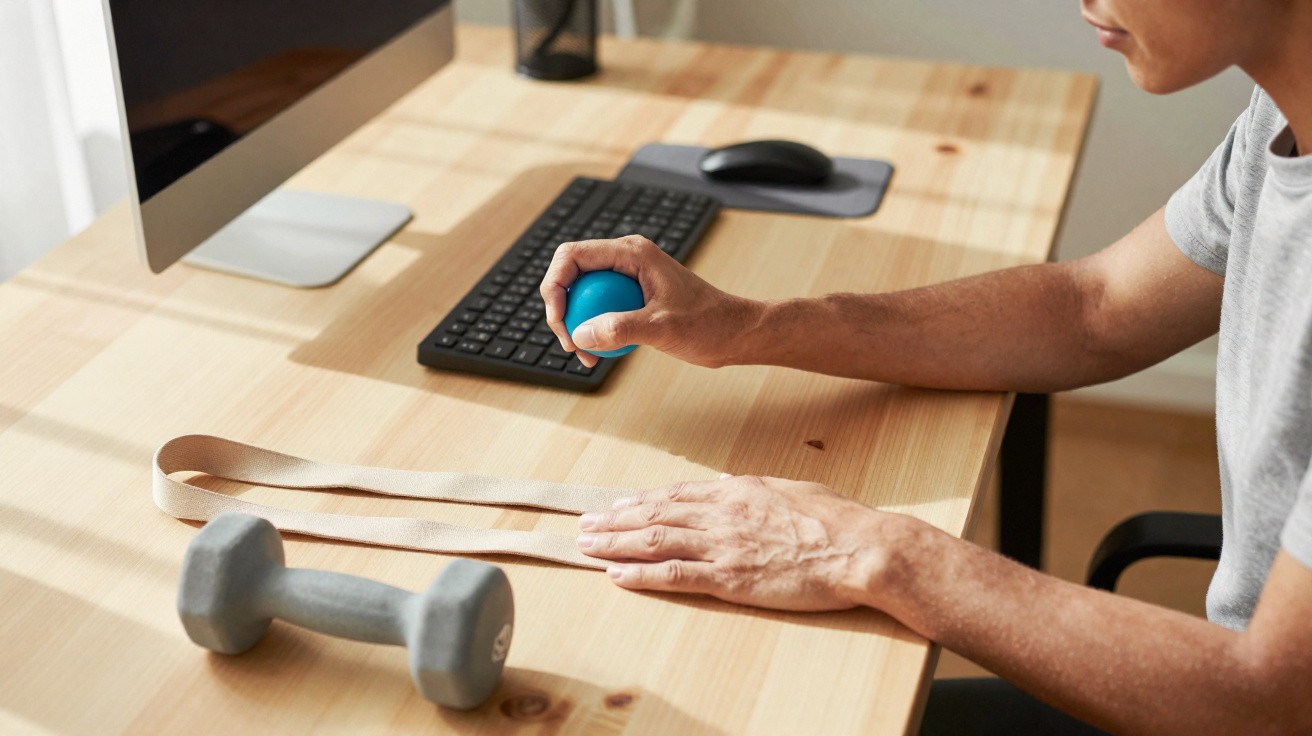
If you spend every day at a laptop, type extensively on a smartphone or do physical work, your hands and wrists are often put under one-sided strain. Over time, this may lead to pain, numbness and a loss of strength. Building grip strength in a targeted way not only helps prevent irritating symptoms – it is now even regarded as an indicator of overall health.
Why grip strength reveals so much about your health
A firm handshake does more than appear confident; it can also reveal a surprising amount about the body. Rehabilitation and occupational therapy teams have long used grip strength as a health marker. Studies indicate that people with weak hands relative to their age and build face a greater risk of chronic conditions such as cardiovascular disease or diabetes.
“A weakening grip often suggests that muscle is also declining elsewhere in the body – long before it becomes obvious in everyday life.”
Several factors commonly contribute to diminishing strength at the same time:
- Ageing: Muscle mass naturally decreases unless you actively counteract it.
- Lack of movement: If you rarely grip or hold things, both fine coordination and strength decline.
- Overuse: Repeated movements, such as using a mouse or doing assembly work, can irritate tendons and nerves.
- Medical conditions: Arthritis, carpal tunnel syndrome or diabetes can significantly impair hand function.
- Medication: Certain active ingredients affect muscles, nerve conduction or circulation.
Many people only notice the issue when ordinary tasks suddenly become difficult: a milk carton slips away, a key is hard to turn, or a coffee mug feels unexpectedly heavy.
Everyday checks: when your hands are sending a warning
You do not need a laboratory to make a rough assessment of your grip strength. Over a few days, look out for these situations:
- Bottles or screw-top jars are noticeably harder to open than they used to be.
- After extended typing or mouse use, your hand feels “tired” or numb.
- You experience brief pain when carrying shopping bags, tools or suitcases.
- Objects slip from your hand even though you feel you are gripping them properly.
If any of these sound familiar, it is worth taking action before long-term symptoms develop. The positive news is that simple exercises at home can improve, or even prevent, many problems.
How targeted hand training helps prevent pain
Strong hands and stable wrists work more efficiently. In other words, tendons, ligaments and joints have to “fight” less to achieve the same result. This lowers the likelihood of common problems such as carpal tunnel syndrome, “tennis elbow” or painful inflammatory conditions caused by overuse.
“Training your grip regularly reduces the strain on your fingers, wrists and even elbows – and helps you remain independent in daily life for longer.”
Different groups can benefit:
- Office workers: less mouse-related hand discomfort and less tension in the forearm.
- Tradespeople: greater endurance when using tools and a lower risk of injury.
- Musicians: improved control and precision, with less tendency towards tendon sheath inflammation.
- Older people: more secure gripping, a lower risk of falls and greater independence when dressing, cooking and opening packaging.
- Athletes: steadier wrists for strength training, climbing or racquet sports.
Stable wrists keep the hand correctly positioned, distribute forces more effectively and make every fine-motor task easier – from fastening a blouse to hitting a tennis ball.
The most important exercises for stronger grip strength
To get started, a few minutes two to three times a week are enough. Consistency matters more than duration. Start at a low intensity and build up gradually.
1. Squeezing a stress ball – a classic exercise for basic grip
You need: a soft stress ball or foam ball.
- Hold the ball in one hand.
- Squeeze it firmly enough to feel tension, but not pain.
- Maintain the squeeze for around five seconds.
- Release slowly and briefly shake out your hand.
- Complete 10 to 15 repetitions with each hand.
This exercise strengthens the whole forearm musculature and improves basic gripping power.
2. Wrist curls with light dumbbells
You need: a light dumbbell or a bottle filled with water.
- Rest your forearm on a table with the palm facing upwards and your wrist extending just beyond the edge.
- Hold the dumbbell loosely, then lower your hand downwards.
- Use only your wrist to lift the weight towards your body.
- Pause briefly at the top before lowering it in a controlled manner.
- Do 8 to 12 repetitions on each side, for 2 sets.
Turning your palm down trains the opposing side. This helps create balanced muscle development.
3. Finger extensors with a rubber band
Most people use their flexor muscles for gripping far more than their extensor muscles for opening the hand. Rubber bands help balance this out.
- Place a wide rubber band around all the fingers and thumb of one hand.
- Slowly press the fingers outwards against one another until the band is taut.
- Hold for 2 to 3 seconds.
- Return to the closed position with control.
- Perform 10 to 15 repetitions per hand.
This movement stabilises the knuckle joints and improves control, for example when writing, typing or playing music.
4. Mobility for fingers and wrists
Strength alone offers little benefit if your joints are stiff. Two simple mobility exercises can help:
- Wrist circles: Hold your arms in front of your body, loosely make fists and draw small circles – 10 clockwise, then 10 anticlockwise.
- Finger lifts: Place your palm face down on a table, lift each finger individually and place it back down. Do 8 to 10 repetitions per finger.
Maintaining mobility reduces the feeling of “rustiness” in the hands, especially after longer breaks or when getting up.
How to build a sensible weekly routine
To avoid injury, your hands need time to adapt. A straightforward structure could look like this:
| Day | Activity |
|---|---|
| Monday | Stress ball, finger extensors, wrist curls (1–2 sets each) |
| Tuesday | Rest day, with only gentle mobility work and stretching |
| Wednesday | The same exercises, with slightly increased repetitions |
| Thursday | Rest day or mobility training only |
| Friday | Third session, focusing on clean technique rather than heavier weight |
Anyone training more intensely or doing heavy physical work should keep the load moderate and watch for warning signs such as sharp pain or persistent swelling.
Avoiding injuries: what to watch for during training
The biggest risk is being too ambitious at the beginning. Gripping too hard straight away or using dumbbells that are too heavy irritates tendons and joints.
“Mild tension is desirable; sharp pain is a clear signal to stop.”
These basic rules can help:
- Always begin with a few mobility movements; never start “cold”.
- Reduce the load immediately if numbness or tingling occurs.
- Stick to rest days so that tissue has time to adapt.
- Check your grip and body position from time to time, particularly when using dumbbells.
The little finger deserves particular attention. Specialists point out that a surprisingly large share of grip strength comes from this seemingly “weakest” side of the hand. Injuries or misalignments there are often noticed late, yet they can cause a substantial loss of strength.
When it is better to see a doctor or therapist
Mild fatigue after exercise is normal; pain that persists for hours is not. It is advisable to book an appointment with a GP, clinic or therapist if you notice any of the following signs:
- persistent pain while resting or at night
- tingling and numbness in the thumb, index or middle finger
- a visibly weakening palm or thinning fingers (muscle loss)
- sudden, pronounced weakness when gripping
When addressed early, problems can often improve considerably through adjusted activity, splints, physiotherapy or occupational therapy before surgery becomes an issue.
What many people underestimate: hands are connected to the whole body
Looking at hands in isolation does not go far enough. Stable shoulders, strong upper arms and an active core make every carrying task easier. Many people notice this while shopping: with an upright posture and engaged abdominal muscles, the same shopping basket suddenly feels lighter.
A few additional ways to combine grip strength with overall fitness include:
- Short plank variations performed on the hands rather than the forearms.
- Deliberately carrying shopping bags as a “farmer’s walk”: tighten your abdominal muscles, keep your shoulders low and breathe evenly.
- Occasionally carrying a water-filled bottle in each hand during walks.
Grip strength is not a minor concern reserved for professional athletes; it is an underestimated building block of an independent daily life. Giving your hands a few minutes of training each week is an investment in far more than opening the next screw-top jar – it supports mobility, safety and quality of life throughout the body.













Comments
No comments yet. Be the first to comment!
Leave a Comment