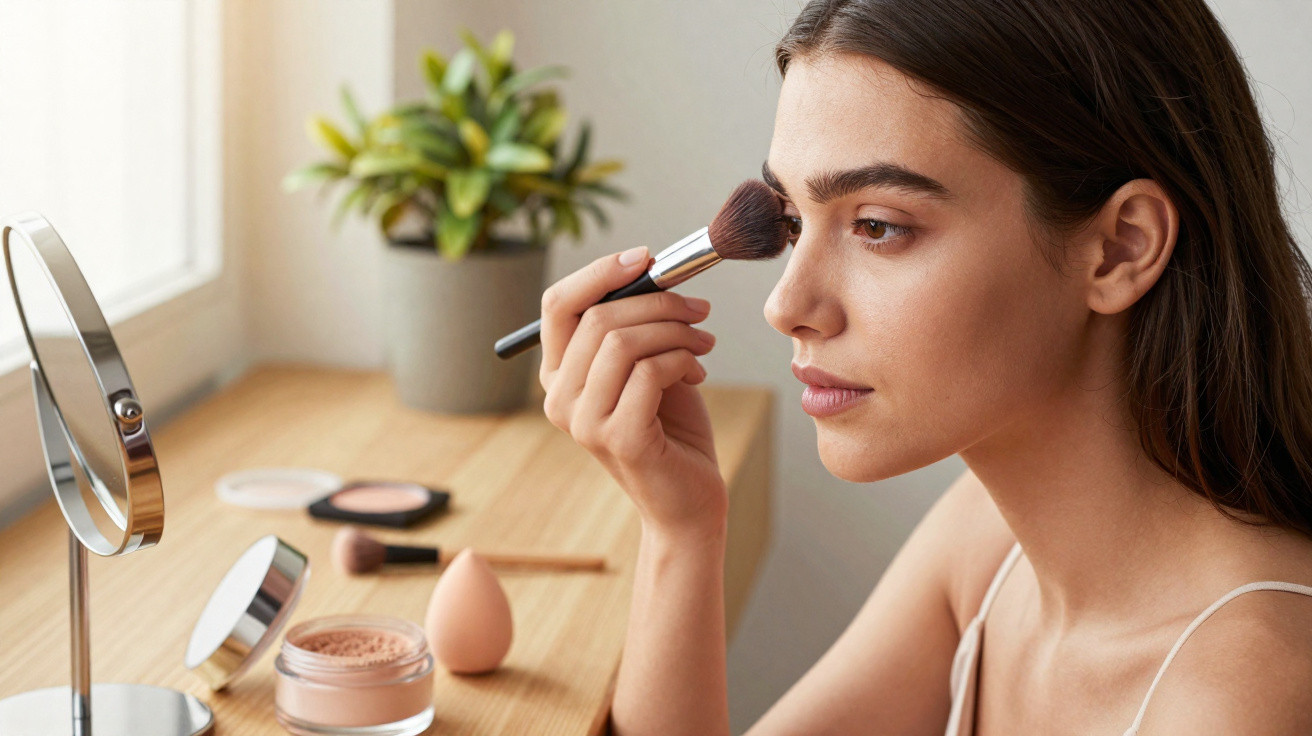
Anyone who looks in the mirror in the morning and sees nothing but tired eyes, a shiny T-zone and a dull complexion may quickly reach for heavy make-up. Yet this can often make skin look older and mask-like. A high-street product from essence now promises the opposite: a fresh-looking face, blurred pores and a smoother eye area – for less than £5.
Why this new powder is attracting so much attention
The essence brand has been known for years for its strong value for money. This new powder fits that reputation perfectly: it costs around £4.50, comes in compact packaging, has a delicate scent and delivers an effect that reminds many users of a subtle lifting effect.
“This setting powder formula settles over the skin like an ultra-fine soft-focus filter, without looking powdery or heavy.”
Its texture feels silky and almost weightless. Once applied, it creates an exceptionally fine veil that evens out the complexion without clogging up facial expression. The softly peach-toned version is especially striking: it gives the face an awake, fresh appearance without pulling too pink or too yellow.
What a setting powder actually does
Many people know pressed or loose powder only as a way to mattify the forehead. A modern setting powder can do far more than that. It is applied after foundation and concealer, with the aim of setting make-up, extending its wear and refining the look of the skin.
Good setting powders can:
- visually smooth the complexion
- blur pores and fine lines
- control shine without leaving the skin looking flat
- help concealer beneath the eyes last longer
- make the complexion appear more even both in photos and everyday life
Especially in the age of phone photos and video calls, many people turn to these powders because they diffuse light more favourably, creating a calmer, “cleaner” skin finish.
The effect: a matte T-zone with lasting radiance
What is particularly interesting about the essence powder formula described here is that it mattifies the skin, reducing shine on the forehead, nose and chin, while still allowing light through. As a result, the complexion does not look completely flat and matte, but retains a lively appearance.
“Matte but not dull – the skin stays fresh, and the complexion looks like it has been softened by daylight.”
In day-to-day use, this is most noticeable in two ways:
- The complexion becomes shiny less quickly, particularly on combination or oily skin.
- Make-up is less likely to shift, even when you sweat or move constantly between air conditioning and heating at the office.
Even under different lighting conditions – in the bathroom, daylight or office lighting – the finish remains even. Skin looks smoother without the product itself being obvious.
How to apply the powder properly
The problem with many powders is not the formula but the application. Using too much can quickly leave the face looking chalky or older. A few simple techniques can prevent this.
With a brush: ideal for all-day wear
Pick up a small amount of powder with a soft, fluffy brush and tap any excess onto the back of your hand or the edge of the compact. Then:
- sweep it over the T-zone first: forehead, nose and chin
- gently blend any remaining product out towards the cheeks
- use only a very small amount around the eyes
For an especially natural result, focus solely on shiny areas and leave the cheeks almost untouched. This allows them to retain more luminosity.
With a sponge: for the strongest blurring effect
For a visible soft-focus effect – for example, where pores or fine lines are more noticeable – a make-up sponge is a good choice. Lightly press the sponge into the powder, tap it once, then gently press it onto the areas you want to target:
- around the nose, where pores often appear larger
- across the centre of the forehead
- beneath the eyes to set concealer
Very little product is genuinely enough under the eyes. The aim is to smooth fine lines, not fill them with powder. Overdoing it can emphasise dehydration lines.
How to choose the right setting powder for your skin
| Skin type / desired result | Recommended powder type |
|---|---|
| Combination to oily skin | A more mattifying setting powder with a fine texture |
| Dry skin | A lightweight, radiant formula that is not overly mattifying |
| “Soft-focus pores” | A powder with a blurring effect and an extremely fine grain |
| Dull complexion | Slightly peach-toned or brightening shades |
Transparent powders often suit a wide range of skin tones, but on very deep skin they can sometimes leave a grey cast. Those with deeper or very fair skin should always test a quick swatch on the chin or cheek before applying the product to the whole face.
The key detail: a peach tone for an “awake” effect
One standout feature of this essence powder version is its peach shade. This subtly warm hue can make the complexion look fresher without resembling a conventional blusher.
“Peach works like a gentle filter: it takes tiredness out of the face and makes shadows appear less harsh.”
Beneath the eyes, the tone helps disguise mild dark circles, while on the cheeks it adds understated warmth. This makes the product particularly appealing to people with little time in the morning who do not want to apply several layers of make-up.
How often can you reapply powder without looking “cakey”?
One common mistake is adding fresh layers of powder repeatedly throughout the day. Even a good product can then quickly become mask-like. A better approach is to:
- gently blot shine with a tissue before reapplying powder
- use only the smallest amount, especially on the T-zone
- be very restrained beneath the eyes, blending with a damp sponge instead of applying more powder
If your skin tends to be dry, you can selectively repowder only the centre of the face during the day and leave the cheeks completely alone. This helps preserve a fresh glow.
When should you use powder, and when is setting spray better?
Setting powder and setting spray pursue similar goals, but work in different ways. Powder primarily controls shine and gives the skin a visually smoothing effect. Setting spray sets the whole make-up look with a light film and can make the complexion look fresher without mattifying it.
Many people combine the two: first, they apply a light layer of powder to the key areas, then use one spritz of setting spray for a more natural finish. This removes the last hint of “dryness” from the powder look and helps the layers meld more seamlessly with the skin.
Who will benefit most from this £4 powder?
This essence product is particularly appealing for three groups:
- students or apprentices on a tight budget who still want a more professional finish
- working people whose make-up needs to last from morning until evening
- people with visible pores or mild dark circles who want to look fresher without heavy make-up
Anyone spending a lot of time in the office, on the train or in a lecture theatre can benefit from the improved staying power. Those who only wear make-up occasionally can use the powder on days when their complexion simply “isn’t playing along”, without immediately reaching for full-coverage foundation.
Because the product is available on the high street and sits at the lower end of the price range, it is well suited to experimenting. Different application techniques, pairing it with a light tinted moisturiser or using it with concealer alone – plenty of options can be tested in everyday life until you find your own “well-rested” look.












Comments
No comments yet. Be the first to comment!
Leave a Comment