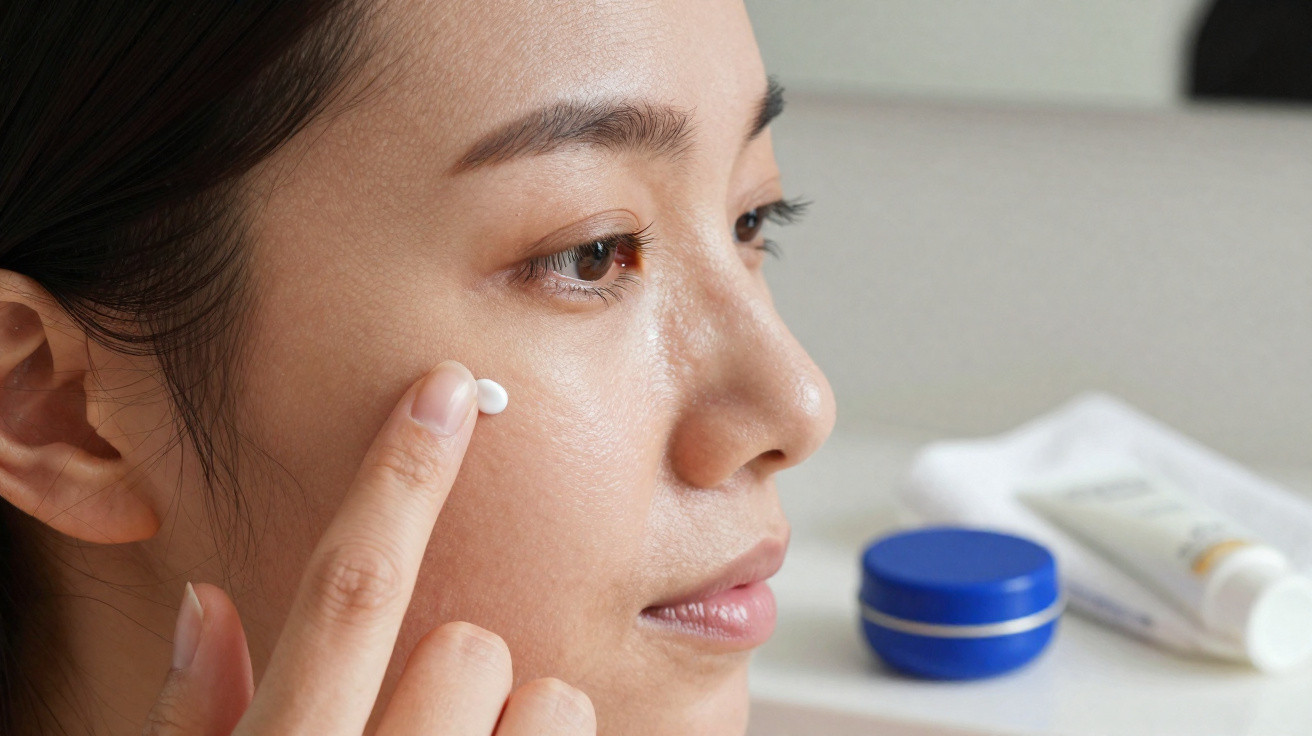
Crow’s feet can look more noticeable after a poor night’s sleep, a windy walk or a week of central heating leaving skin dry and tight. A rich moisturiser such as Nivea Creme can make dry, fine lines look temporarily softer by improving surface hydration - but it cannot eliminate established wrinkles.
The helpful approach is simple: use a very small amount on the outer eye area only, keep it well away from the eyelids and lash line, and make daily sunscreen the priority. Heavy application and vigorous massage are more likely to irritate the area than improve it.
What crow’s feet are
Crow’s feet are the fine lines that spread from the outer corners of the eyes. They are a normal result of facial expression, including smiling, laughing and squinting, as well as natural changes in the skin over time.
The skin around the eyes is delicate and can look crepey when it is dry. Cold weather, indoor heating, harsh cleansing, rubbing the eyes and tiredness may all make fine lines appear more pronounced.
Moisturiser cannot rebuild the skin or erase wrinkles. It can, however, support the outer skin barrier and reduce moisture loss. When dry skin is more comfortable and supple, very fine dehydration lines may reflect light less noticeably.
A rich cream can be a useful comfort step for dry skin, but it is not a wrinkle-removing treatment.
What Nivea Creme can and cannot do
Nivea Creme in the blue tin is a rich, occlusive moisturiser. Its ingredient list includes humectant and skin-conditioning ingredients, alongside ingredients that help form a protective layer on the skin. Check the packaging for the current list, as formulas may be updated.
For some people with dry skin, it can make the outer eye area feel less tight, particularly during colder months or when indoor heating is on. Its richness will not suit everyone, though, especially if you are prone to congestion, milia or irritation around the eyes.
Set realistic expectations:
- It may help with: dryness, tightness and the temporary appearance of very fine dehydration lines.
- It will not: remove crow’s feet, tighten the eye area or reverse sun damage.
- It may not suit: oily, congestion-prone or highly sensitive skin.
Stop using it around the eyes if you develop stinging, redness, itching, watering eyes, swelling or small persistent bumps.
How to apply it carefully
The key is using less product than you may expect. Cream can move into the eyes as it warms on the skin, particularly overnight.
1. Cleanse without scrubbing
In the evening, remove make-up and sunscreen with a gentle cleanser. Avoid rubbing with a flannel or towel; instead, pat skin dry.
If you use a retinoid, exfoliating acid or other treatment, follow its directions carefully. Do not take treatments close to the eye area unless they are specifically designed and labelled for use there.
2. Use a tiny amount
Take a pinhead-sized amount for both outer eye areas. Warm it briefly between clean ring fingers so that the cream spreads as a very thin layer.
Apply only where crow’s feet appear: on the outer orbital bone, beyond the outer corner of each eye. There is no need to apply moisturiser all the way around the eye.
3. Press rather than pull
Gently press or tap the cream into the skin. Do not drag the skin towards the temples or massage back and forth in the hope of improving circulation.
A long massage is unnecessary. Repeated rubbing can irritate sensitive skin and often leads to using more cream than needed.
4. Keep away from the eye itself
Do not apply cream to the lash line, inner corners of the eyes or mobile eyelids. Product may migrate and cause blurred vision or discomfort.
Wash your hands afterwards. If cream gets into an eye, rinse it out with plenty of clean lukewarm water. If irritation does not settle, speak to a pharmacist, optician or healthcare professional.
Morning or evening: when is best?
Evening is often the easiest time to use a richer cream, particularly if your skin feels dry after cleansing. It also avoids the risk of make-up sliding over a more emollient texture.
If you use it in the morning, apply only a very small amount and allow it to settle before sunscreen. The most useful daytime habit for protecting against UV-related skin ageing is broad-spectrum SPF 30 or higher.
Apply sunscreen across the face and outer eye area if the product is suitable for this use, taking care not to get it into your eyes. Sunglasses are also useful in bright weather, including low winter sunshine, as they can reduce squinting and offer a physical barrier from wind.
Hydration can improve how dry skin looks today; regular sun protection helps protect skin over time.
A straightforward routine for dry eye-area skin
You do not need a crowded shelf of products. A routine that your skin tolerates consistently is generally more useful than introducing several strong products at once.
- Morning: cleanse only if needed, moisturise dry areas lightly, then apply broad-spectrum SPF 30 or higher.
- During the day: wear sunglasses in bright conditions and avoid rubbing itchy or tired eyes.
- Evening: remove sunscreen and make-up gently, then use moisturiser sparingly on dry areas.
- For targeted concerns: choose a product intended for fine lines and introduce one new active at a time.
Retinoids can be irritating, especially around the eyes. Use them only as directed and do not combine a new retinoid with several exfoliating acids in the same routine. If you are pregnant or breastfeeding, have eczema around the eyes, or have an ongoing skin condition, ask a pharmacist, GP or dermatologist for individual advice before starting active skincare.
Common mistakes to avoid
Most problems come from treating a moisturiser as though a thicker layer will bring better results.
- Applying it as an eye mask. A heavy layer is more likely to migrate, cause puffiness or irritate the eyes.
- Taking it up to the lashes. Keep application to the outer orbital bone.
- Rubbing firmly. Gentle pressing is enough.
- Adding vitamin E capsules, essential oils or kitchen ingredients. These can irritate the skin and are especially risky near the eyes.
- Skipping sunscreen. Moisturiser and SPF serve different purposes.
- Expecting lines to disappear. Any plumper look from hydration is temporary.
Never use undiluted essential oils near the eyes. Do not mix skincare with household cleaning products or other non-cosmetic substances. Seek urgent medical advice if you have severe swelling, significant pain, changes to vision or a serious allergic reaction.
Make a rich cream work for you
Nivea Creme can be a practical moisturiser if your skin enjoys a rich texture. For crow’s feet, keep the application minimal: a tiny amount, pressed onto the outer corners only, away from the eye itself.
Judge it by whether your skin feels comfortable and looks less dry, rather than expecting erased lines. For a sensible long-term routine, moisturise for comfort, wear sunscreen consistently and introduce targeted products cautiously if you want more than surface hydration.















Comments
No comments yet. Be the first to comment!
Leave a Comment