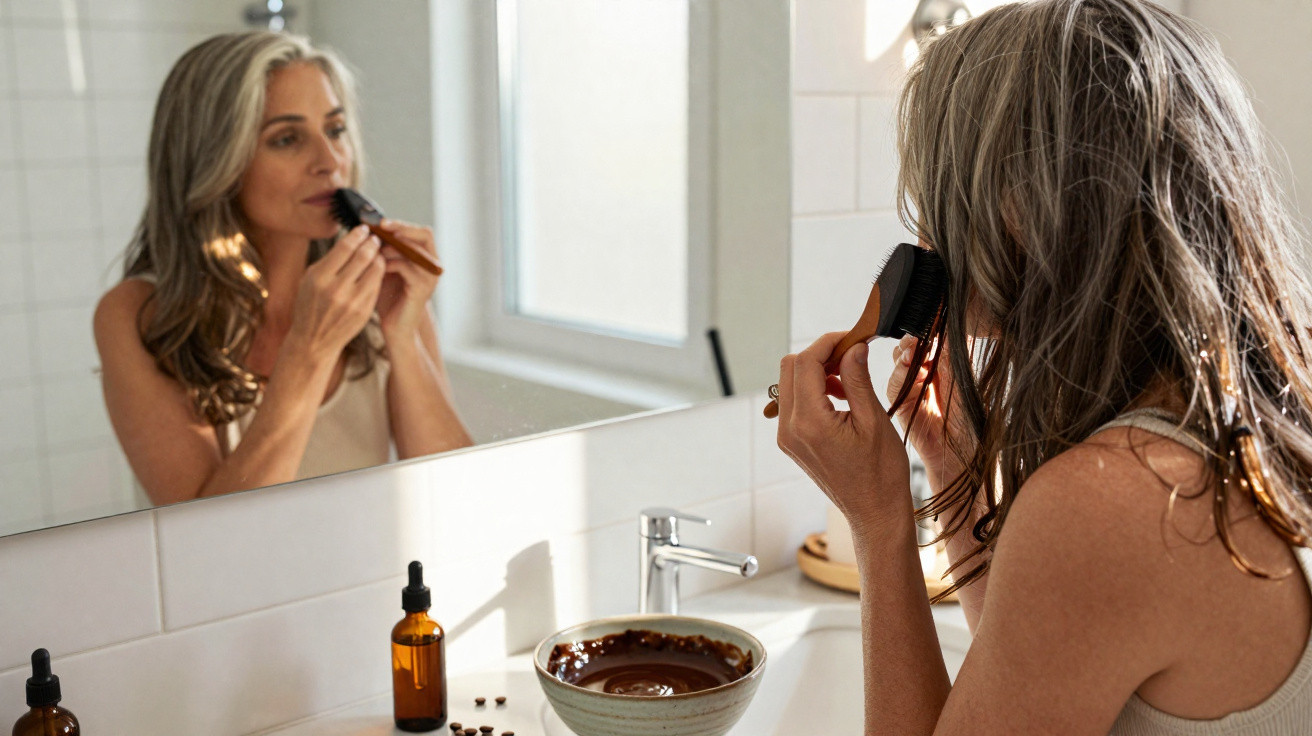
When silver strands become more numerous, full-coverage colour is not everyone’s first choice.
Many people simply want gentler contrast and hair that looks fresher in texture.
For an increasing number of people, the question has shifted from “How do I cover my greys?” to “How can I make them sit better with the rest of my hair?” Between completely concealing grey and fully embracing it, one straightforward kitchen-inspired treatment keeps resurfacing: strong coffee mixed with a plant oil, used to create a subtle, temporary veil over white hair.
What a coffee–oil mask really does to white hair
The formula is almost disarmingly simple. Make a very strong coffee, allow it to cool, then combine it with a vegetable oil such as coconut, jojoba, olive or argan. Used as a mask, the blend coats the hair fibre and lightly adheres to the cuticle.
This is not a permanent dye. It is a thin, tinted film that softens the glare of white hair for a few washes.
Coffee’s dark compounds remain on the outside of the hair, lending a soft brownish tint. They do not alter the melanin within the cortex. Meanwhile, the oil coats the fibre, lays down raised cuticle scales and increases shine, making the hair look fuller and a little darker.
On salt-and-pepper hair, this can soften the divide between white strands and natural brown or chestnut hair. On hair that is very white, it tends to produce more of a beige or taupe cast than a genuinely brunette result. People with very light blond or bleached hair sometimes notice “tea stains”: faintly yellow-toned or uneven beige reflections.
Who sees the most visible effect?
- Natural brown or chestnut with scattered greys: The result is often visible, particularly around the temples.
- Salt-and-pepper, medium density: The effect is a gentle blend, with white strands appearing less bright in indoor lighting.
- Mostly white or silver: A delicate warm veil develops, acting more like a filter than a real colour transformation.
- Light blond, highlighted or bleached: There is a chance of dull, tea-like staining and uneven tones.
Porous lengths absorb more pigment than untouched roots. Damaged ends and previously coloured sections can therefore appear a little darker than fresh regrowth. The result gradually disappears over two to five shampoos, depending on washing frequency and the amount of styling product used.
Why white hair affects people differently
Biologically, white hair is known as canities: melanocyte cells in the hair bulb no longer supply pigment to the fibre, so new hairs emerge clear. Genetics has a major influence, although oxidative stress, some deficiencies and medical conditions may speed up the process. Once a follicle has turned white, it seldom returns to its former state. Reports of partial repigmentation do exist, usually in connection with reduced stress or medical treatment, but they are marginal.
The social aspect is less straightforward. Grey hair may suggest experience, self-assurance and authority. Depending on gender and workplace culture, however, it may also be interpreted as a sign of tiredness or being “past your peak”. This contradiction has helped create a small market for “grey blending” services, including soft highlights, demi-permanent toners and temporary sprays designed to alter light reflection rather than conceal every white strand.
The search for “depth” is less about hiding age and more about keeping hair from looking flat, sparse or overly shiny at the roots.
For anyone uneasy about chemical dyes, at-home rituals involving coffee, tea or herbal powders fit neatly into this middle ground. They can feel milder, reversible and less demanding: if the colour is disappointing, it washes away.
Coffee chemistry: how a drink becomes a soft tint
Roasted coffee beans contain melanoidins, which are large brown molecules produced during Maillard reactions, as well as several polyphenols including caffeic acid. These compounds are drawn to proteins. Human hair consists mainly of keratin, a protein with charged sites across its surface. When hair is soaked in strong coffee, some colour molecules bind to the outer layer of the fibre.
This action remains surface-level. Brewed coffee has a mildly acidic pH, which can help smooth the cuticle scales. A more even surface reflects light more consistently, making hair appear shinier and marginally darker even where the pigment layer itself is slight.
From a marketing perspective, caffeine is the headline ingredient, but it is likely to have very little influence in this context. Laboratory research indicates that it may stimulate hair follicles when it remains in contact for sufficient time and at certain concentrations. In a rinse-off mask left on for 15 minutes, that effect is unlikely to become visibly apparent.
Why plant oils alter the appearance of greys
Oils bring a separate set of physical effects. Coconut, argan, jojoba and grapeseed oil all create a thin layer around the hair fibre. Some, including coconut oil, may partly penetrate between protein chains and limit protein loss during washing. Others work mainly at the surface by softening and lubricating the cuticle.
By filling tiny gaps and smoothing rough cuticles, oil changes how light scatters around each hair, which tricks the eye into seeing more density.
Hair that is glossy and well coated reflects light in a broad sheen rather than in countless sharp flashes. This is particularly relevant to white hair, which can look “too bright” because every strand behaves like a small fibre-optic cable. A fine layer of oil disperses this glare, producing a more velvety appearance that is closer to the reflection seen in pigmented hair.
| Oil | Best for | Main visible effect |
|---|---|---|
| Coconut | Thick, porous, wavy or curly hair | Stronger coating, potential strengthening over time |
| Jojoba | Fine hair, oily scalps | Light shine, low risk of heaviness |
| Argan | Medium to thick, dry lengths | Softness and smooth, glossy finish |
| Grapeseed | People worried about build-up | Very fluid feel, subtle shine |
How coffee–oil masks fit current beauty habits
The growing appeal of kitchen beauty reflects broader movements in the hair-care market. Consumers have become more wary of harsh oxidative dyes, particularly following reports of contact allergies and scalp irritation associated with certain ingredients. At the same time, spending on hair colour remains substantial. Many salon clients alternate professional appointments with at-home touch-ups to make appointments last longer.
Coffee occupies a particularly appealing cultural position. It is recognisable, sensory and inexpensive. Repurposing leftover grounds or using a cooled espresso shot also satisfies the desire to upcycle. Some cosmetic laboratories already include coffee extracts in body scrubs and facial serums for their antioxidant properties. For hair, the DIY route keeps the ritual straightforward: no polished marketing, no miracle claims, only a slight tonal adjustment for roughly the cost of a drink.
Step-by-step: a cautious approach to coffee–oil masks
Choosing the ingredients
For colour, a darker and more concentrated coffee produces a stronger deposit. Many people choose moka pot coffee, espresso or a long infusion of used grounds strained through a fine filter. Instant coffee may also work, although it often foams and can sometimes leave more residue.
Choosing an oil according to hair texture also matters:
- Coconut or olive oil suits thick, dry curls that benefit from weight and protection.
- Jojoba or grapeseed oil is better for fine hair that becomes flat easily.
- Argan offers a balanced increase in softness and shine.
Some users add a spoonful of unsweetened cocoa powder for a deeper, more chocolate-toned effect. Others mix in a pinch of xanthan gum or cornflour to make the blend thicker and prevent it running down the neck.
Application, timing and clean-up
Most routines begin with freshly washed, towel-dried hair. The mixture is worked through the lengths, concentrating on the most noticeable white areas: the hairline, temples and parting. A shower cap or recycled plastic wrap can retain warmth and prevent drips.
Leaving the mask for 10 to 20 minutes usually gives enough time for pigments to cling, without turning the hair heavy or sticky.
The hair should be rinsed thoroughly until the water is nearly clear. Depending on hair type, a very mild shampoo may then be needed to remove excess oil, especially for fine or straight hair. It is sensible to use dark towels and pillowcases the first time, as a small amount of transfer can occur while the hair is damp.
How often the treatment is used depends on lifestyle and patience. Applying it once or twice weekly generally maintains a gentle veil of colour. Because the layers accumulate gradually, some users reduce use to once every 10 days after reaching the level of depth they prefer.
Limits, risks and when to think twice
Sensitive scalps may react poorly to coffee’s acidity or to fine particles that remain behind. A patch test in the crook of the elbow, rinsed after 15 minutes, can provide an initial indication of possible irritation. Anyone with seborrhoeic dermatitis or eczema should consult a dermatologist before introducing a strongly brewed product into their scalp routine.
Results can be unpredictable on heavily highlighted or bleached hair. Highly porous areas may take up pigment unevenly, resulting in patchy beige sections or muddy-looking tones. Testing the mixture on a fine strand at the back of the head can prevent an unwelcome full-head result.
Very fine hair can also be difficult to manage with oil-based treatments. Reducing the oil proportion, applying the mask only from the mid-lengths to the ends, or choosing a lighter oil such as grapeseed may lower the chance of limp roots.
How professionals and users see the trend
Colourists generally take a cautious view. At home, they cannot control coffee concentration, how evenly the oil is distributed or the degree of hair porosity. This makes both the final shade and its staying power difficult to forecast. A coffee coating also cannot counter unwanted warm or cool undertones in the way that salon toners can.
On the medical side, hair specialists such as trichologists generally remind patients that no kitchen mixture can reverse greying. This treatment changes optics rather than physiology. Their focus remains scalp health, breakage and realistic expectations.
For many users, the attraction lies less in the outcome and more in the gesture: cheap, reversible, and under their own control.
Online testimonials frequently refer to a “brown filter” that reduces the contrast between fresh white roots and older lengths. The financial argument appears repeatedly. Spending a few pence per session seems low-risk compared with a salon appointment or a box dye that may take weeks to fade.
Some people combine a coffee mask with neutral herbal powders, such as cassia or colourless henna, to strengthen the coating effect without making the hair too dark. This pairing may give fine hair more body and leave a glossier surface, naturally making white strands less noticeable.
What this coffee–oil remedy reveals about changing attitudes to grey
The rise of coffee–oil treatments reveals much about how ageing is now negotiated. Many people are willing to accept their natural colour change, while still wanting to adjust light and texture so grey hair appears deliberate rather than neglected. Slightly tinted, better-conditioned strands communicate care rather than denial.
Sustainability also runs through the appeal of this approach. Using an ingredient already found in the kitchen, repurposing used grounds as a beauty product and avoiding additional plastic bottles all attract consumers seeking to reduce waste. The scent of coffee, the warmth of the mixture and the unhurried application can turn hair care into a small, almost meditative ritual.
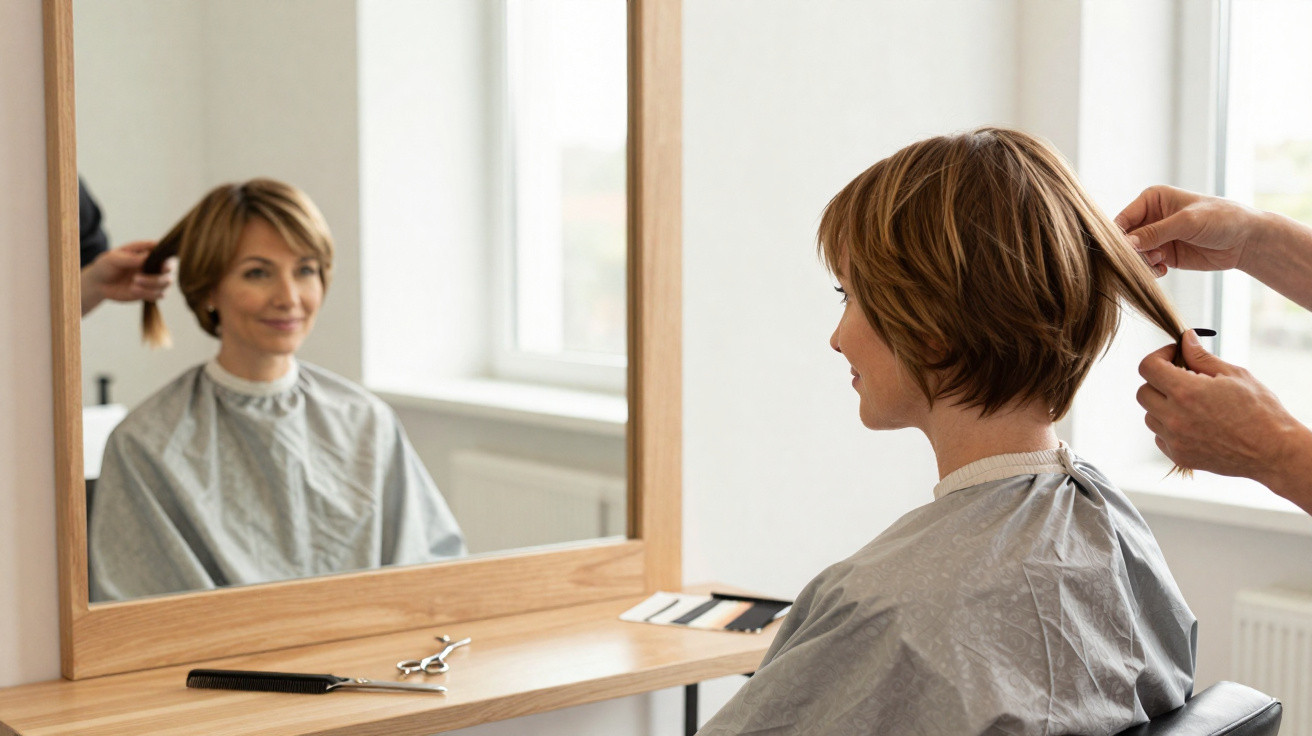
For people considering longer-term options, coffee masks can exist alongside other choices: demi-permanent salon toners that softly reduce brightness, carefully placed lowlights that restore dimension, or targeted care around the front hairline. Every option involves compromises relating to cost, maintenance and effect on the hair fibre.
One helpful way to approach the issue is through “contrast management” rather than “anti-grey”. Should your hair work with your eyebrows, beard or skin undertone? Might a marginally cooler or warmer filter suit your face better than a darker colour? Experimenting with a temporary, low-commitment option such as coffee offers a safe way to discover which depth and tone feel right before choosing anything more permanent.















Comments
No comments yet. Be the first to comment!
Leave a Comment