
For most people, reaching for a brush, gel or straighteners in front of the mirror each morning is about appearance, work or the latest trend. Yet energy experts and hairdressers familiar with symbolism believe that every hairstyle also conveys a psychological message. Certain cuts appear time and again when people want to protect themselves, work through inner conflicts or feel ready to face the world openly.
Hair as a reflection of the psyche
Across many cultures, hair has been seen as an expression of vitality, identity and inner attitude. From the biblical Samson to the punks of the 1980s, the way we wear our hair can signal belonging, rebellion or a fresh start. Contemporary symbolism researchers take this idea a step further, suggesting that particular areas of the head represent particular emotional themes.
“Anyone who consciously or unconsciously styles their hair in the same way again and again creates a visible pattern of their inner dynamics.”
Naturally, this is no substitute for therapy. No one should draw a “diagnosis” from a fringe or centre parting. It becomes interesting when a style persists stubbornly and perhaps coincides with familiar beliefs such as “I have to be strong”, “I must not show myself” or “I want to keep everything under control”.
The following five hairstyle patterns are considered particularly revealing when it comes to blocks, fears and unconscious strategies.
1. An open forehead: the urge to present yourself clearly
Hair brushed back, a tightly tied-back ponytail, a bun or a sleek style: an uncovered forehead can look like a stage for facial expressions and eye contact. People who favour this look usually send a clear message: “I face life.”
- Typical message: I do not want to hide anything.
- Psychological background: A need for control and clarity.
- Strength: Assertiveness and determination.
- Possible drawback: Showing weakness can be difficult.
People who wear their forehead uncovered often take responsibility, address confrontations directly and are less afraid of criticism. They want to be seen and would rather actively shape how others perceive them.
At times, an old defence mechanism may sit behind this choice. Someone accustomed to having to be strong may unconsciously choose a look that says: “I have everything under control.” Uncertainty, vulnerability and doubt are more likely to be kept inside.
2. Centre parting: the search for inner balance
A precisely drawn centre parting appears orderly, calm and symmetrical. Symbolically, this line can represent an attempt to reconcile opposites within oneself: reason and emotion, activity and rest, adaptation and autonomy.
“A centre parting can act like an invisible line intended to balance inner tensions.”
Those who continually opt for this style often seek harmony, both inwardly and outwardly. However, the wish to remain “in the middle” can also mean: no chaos, no loss of control.
One detail symbolism experts like to consider is whether the parting shifts slightly to the left or right.
| Position of the parting | Possible interpretation |
|---|---|
| clearly centred | a strong desire for balance, neutrality and fairness |
| slightly to the left | emotions and softer aspects are more likely to be protected |
| slightly to the right | assertiveness and the “doer” side feel charged with tension |
These subtle differences can often be noticed in everyday life through the way a person makes decisions. Do they hesitate, want to consider every perspective, or struggle to say no? If so, the centre parting may reflect precisely this inner balancing act.
3. Fringe: a gentle shield across the forehead
Whether it is a micro fringe, curtain bangs or a thick blunt cut, a fringe lies across the forehead like a small curtain. In the language of symbolism, it represents the wish to hide a little without disappearing altogether.
The forehead is regarded as the area of conscious thought, planning and clear direction. When it is covered, this may point to inner thoughts such as “I feel overwhelmed quickly” or “I do not want people to see everything on my face”.
- Thick, heavy fringe: a strong need for protection, withdrawal and high sensitivity
- Light, wispy fringe: playful hiding and a cautious opening towards the outside world
“A fringe works like a filter: closeness is possible, but not without limits and not uninvited.”
Highly sensitive people in particular often unconsciously choose a style that lets them gather themselves behind a few strands of hair. Anyone who recognises this pattern in themselves might ask: in which situations do I push my fringe into my face especially often? Usually, these are exactly the moments when too much is being demanded or someone has come too close too quickly.
4. An exposed nape: the desire for authenticity
In many traditions, the nape is considered a particularly sensitive area. It represents what lies “behind” roles and façades: the unguarded self. Short hairstyles, undercuts or pinned-up hair that reveals the nape can therefore send a powerful message: “I do not want to hide any more.”
People who part with long hair and expose the nape often experience it as a turning point: a separation, a change of job or a new phase of life. The visible nape then marks the courage to shed old layers. At the same time, it creates a sense of vulnerability, both in a positive and a difficult sense.
It becomes particularly telling when someone strives for authenticity internally but still fears rejection. In that case, in-between solutions often appear: partly shaved sections or asymmetrical cuts that reveal more or less depending on the moment. The head then shows quite clearly that the person is in transition.
5. Exposed or covered temples: closeness or retreat
The temples sit at the sides of the head, where impressions from outside seem to “flow in”. Symbolically, they represent openness to contact, exchange and curiosity, but also overstimulation from too many impressions.
Exposed temples, for example through closely cut sides or sections slicked firmly back, can suggest:
- I am approachable.
- I am open to conversation.
- I trust myself to deal with the outside world.
Covered temples, where hair falls down the sides of the face, often tell a different story: caution, inner distance and concern about revealing too much. Two side strands can then act like small curtains behind which someone protects their genuine reactions.
“Open temples invite others in, covered temples hold them back – the head shows how close other people are allowed to come.”
Anyone who notices that side strands always slip into their face when a conversation becomes uncomfortable can understand it as a subtle signal from the body. In that moment, the head is saying: “Stop, this is too much right now.”
How to use these hairstyle signals constructively
Symbolic interpretations of hairstyles are not a fixed system. People often change their hair precisely when something shifts inside: a new relationship, a break-up, burnout or a career leap. The hairdresser’s chair can therefore become a discreet place for coaching.
Useful questions for the next time you look in the mirror include:
- What does my current hairstyle protect me from?
- What do I show very clearly, and what do I consistently hold back?
- How would I wear my hair if I were not afraid of being judged?
These questions alone can set inner processes in motion. Someone who has hidden behind a heavy fringe for years may sense that a lighter cut would feel good. Conversely, a person with hair slicked strictly back may realise that a softer look allows them to treat themselves more kindly.
Risks and opportunities of a “hairstyle as armour”
Every hairstyle has two sides. A strong, defined style can support self-confidence, or become a mask behind which no one dares to be vulnerable any longer. A protective fringe can ease the pressure for sensitive people, or keep them in their comfort zone when difficult conversations are due.
It becomes problematic when a haircut is the only strategy for dealing with inner stress: constantly restyling during every crisis, radical colour changes as an outlet for ignored feelings, or shaved sections after every argument. Then it is worth taking a second look: which issues may belong in a conversation with friends, a coach or a therapist rather than solely under the scissors?
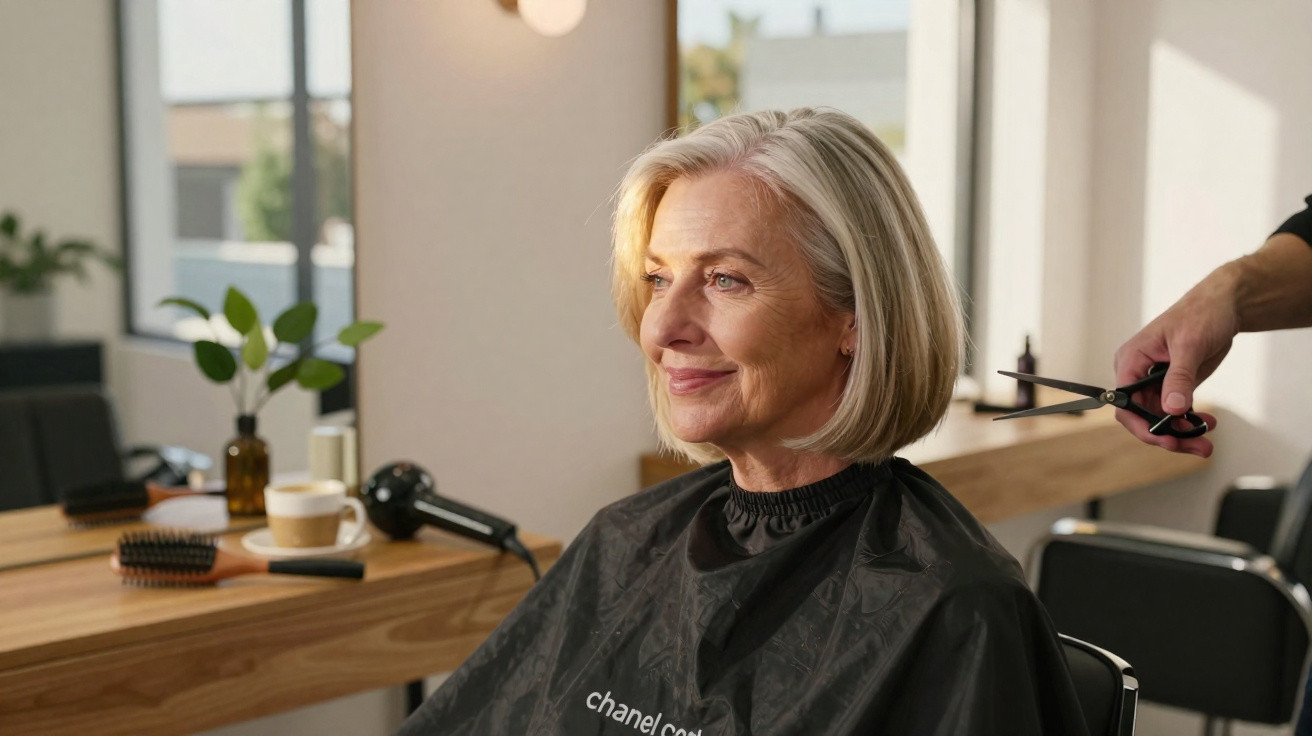
On the positive side, deliberate changes to the hair can provide a powerful starting signal. People who shorten long, heavy hair often feel lighter straight away. Those who uncover their forehead may feel more present in meetings. Those who expose their temples may approach other people noticeably more openly.
“The head is constantly sending signals – those who understand them can use hairstyles as a gentle amplifier for inner development.”
Ultimately, this is not about finding the “right” or “wrong” hairstyle. The more interesting question is whether your current cut suits the person you are now, and the person you would like to become. Sometimes a new chapter does not begin with a grand life plan, but with an appointment at the hairdresser and the courage to let a few centimetres of blockage fall to the floor.












Comments
No comments yet. Be the first to comment!
Leave a Comment