Your sandals were immaculate when you first bought them: a smooth footbed, spotless straps and that weightless feel unique to new footwear. Then summer arrived. After a month of warm weather, several trips to the beach and a few walks around town, dark foot-shaped marks have appeared on the sole, outlining your toes and heel like a lingering shadow. When you put them on, you can almost sense the old perspiration, even though nobody else can.
You consider putting them through the wash, but remember the previous pair that emerged misshapen and ruined. So they remain by the front door, reserved “just for quick errands”, while you quietly hope there is a way to make them look fresh without paying for replacements.
What if that persistent imprint is not permanent after all?
Why Sandals Hold on to Your Footprint Like a Tattoo
Once you have spotted it, it seems to be everywhere: on the bus, in the park and in the office on casual Friday. Sandals with a dark ghost of a foot visible on the insole. It almost tells its own tale. The darker the imprint, the more kilometres they have covered. The more faded the colour, the more fully the shoes have shared your summer.
The issue is that these marks do more than make sandals appear tired. They subtly affect how you feel when you put them on. Rather than thinking “fresh, ready to go”, your mind registers “old, worn out, a bit gross”. It is not quite enough to make you throw them away, but it is enough to take away some of the enjoyment of wearing them.
One reader told me about her favourite beige sandals, which she wore “with every dress, every barbecue, every coffee on a terrace”. By August, the footbed held a dark, perfectly defined impression of her foot, as though it had been drawn in charcoal. She scrubbed it with washing-up liquid and an old toothbrush. The water became grey, her fingers went wrinkly, yet the footprint barely shifted.
She considered purchasing the same style again, only to discover that the price had increased. The sandals were then banished to the back of the wardrobe: not worn enough to throw out, but not clean enough to enjoy. Whenever she opened the door, they seemed to look back at her reproachfully.
There is a straightforward explanation for why these marks remain. Most sandal insoles act like sponges for three things: sweat, skin and dust. With heat and friction added, they form a sort of natural “ink” that works its way into the material, particularly faux leather, suede-effect insoles and soft foam. Once it has settled into the pores, an ordinary wipe merely cleans the surface. The concealed layer remains, making the footprint deeper week by week.
The encouraging part is that, just as the stain gradually worked its way in, the right method can draw it back out.
The Simple Sandal Trick That Lifts Footprints Out
Here is the approach shoe shops rarely mention: treat sandals as you would a greasy frying pan, rather than a delicate fashion item. For most insoles, the most effective combination is surprisingly simple: mild washing-up liquid, bicarbonate of soda and a soft brush or cloth. Used together, they break down sweat residue, loosen grime and lightly clean the pores without damaging the material.
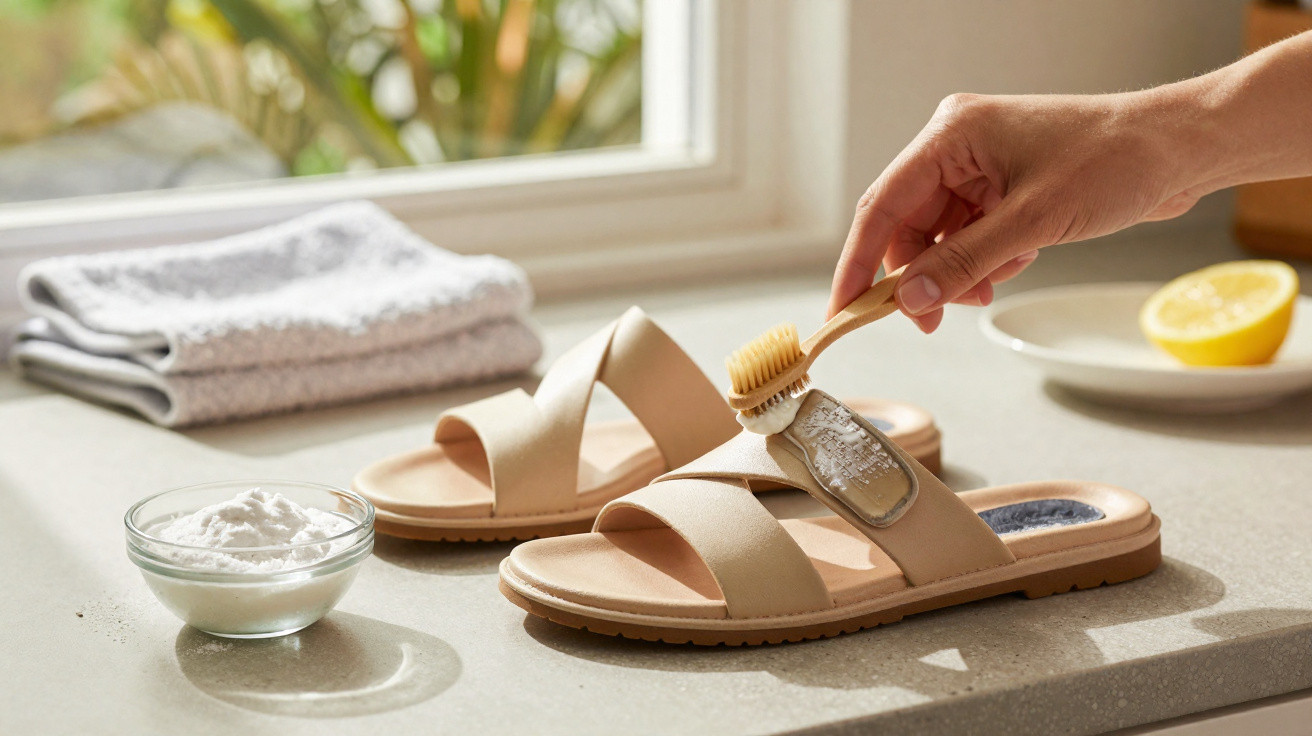
First, prepare a small bowl of warm water with a few drops of washing-up liquid. Moisten a cloth, wring it out thoroughly and wipe the insole to lift surface dirt. Next, dust a light layer of bicarbonate of soda over the footprint, then use a soft toothbrush to work it in with small circular movements. The paste will turn grey, showing that the footprint is starting to release.
Many people stop before they have gone far enough. They scrub once, notice that the sandal looks “a bit better”, and leave it there. After two more walks, the shadow has returned. It helps to approach it in layers instead. Remove the dirty paste, rinse the brush and repeat using fresh bicarbonate of soda and soapy water. Keep each session short and gentle. Do not soak the sandals or scrub harshly.
Realistically, nobody does this every day, and there is no need to. A thorough clean when the mark first shows up, followed by a quick refresh every few weeks, will usually stop the ghost-print from developing again. Your sandals will wear in gracefully rather than becoming a sticky, dark patch.
“The first time I did it, I thought I’d ruined them,” laughs Marie, 32. “The paste looked awful, like I was vandalizing my own shoes. Then I wiped everything off and… the footprint had literally faded. They looked almost new. I actually wore them to a wedding after that.”
Keep the method manageable with this simple routine:
- 1. A quick wipe after busy days
Use a damp cloth and give them two wipes. Sand, dust and sun cream will not have time to settle in. - 2. A deep clean once a month
Use soapy water + bicarbonate of soda + a soft brush. Work in brief, gentle, repeated motions. - 3. Dry them like bread, not laundry
Leave them to air-dry in the shade. Never put them on a radiator or in direct sunshine, as this can cause cracking and warping.
The aim is not to remove every trace of use, only the dirt that acts as though it is a permanent tattoo.
From Embarrassing Marks to Quiet Pride
There is something almost personal about these footprints. They map every hot pavement you crossed, every garden where you stood chatting for too long and every half-awake supermarket trip. When a mark changes from a “light shadow” into a “dark patch”, it stops feeling like a memory and starts feeling embarrassing. That is when many people quietly put their sandals away.
Knowing that you can undo it changes things. Your relationship with your possessions becomes gentler. You are no longer caught in the repeated cycle of “brand new, overused, discard”. Instead, there is room for objects to be refreshed, valued and kept in regular use without seeming shabby.
The next time you look down at your sandals with a grimace, you may reach for a bowl and brush rather than your bank card. You might even show the result to a friend. Or you may simply slip your feet into a clean, nearly new footbed and enjoy that small, private feeling of satisfaction that nobody else sees but you notice immediately.
Repeated quietly, these small habits alter how our summers look and feel, as well as the way our sandals grow older alongside us.
| Key point | Detail | Value for the reader |
|---|---|---|
| Washing-up liquid + bicarbonate of soda combination | Breaks down sweat and dirt embedded in the insole surface | Helps sandals look almost new without purchasing another pair |
| Gentle, repeated cleaning | Several light passes rather than one forceful scrub | Preserves the material while reducing the footprint mark |
| Light ongoing care | A quick wipe after heavy use and a monthly deep clean | Prevents deep, irreversible staining and extends sandal life |

















Comments
No comments yet. Be the first to comment!
Leave a Comment