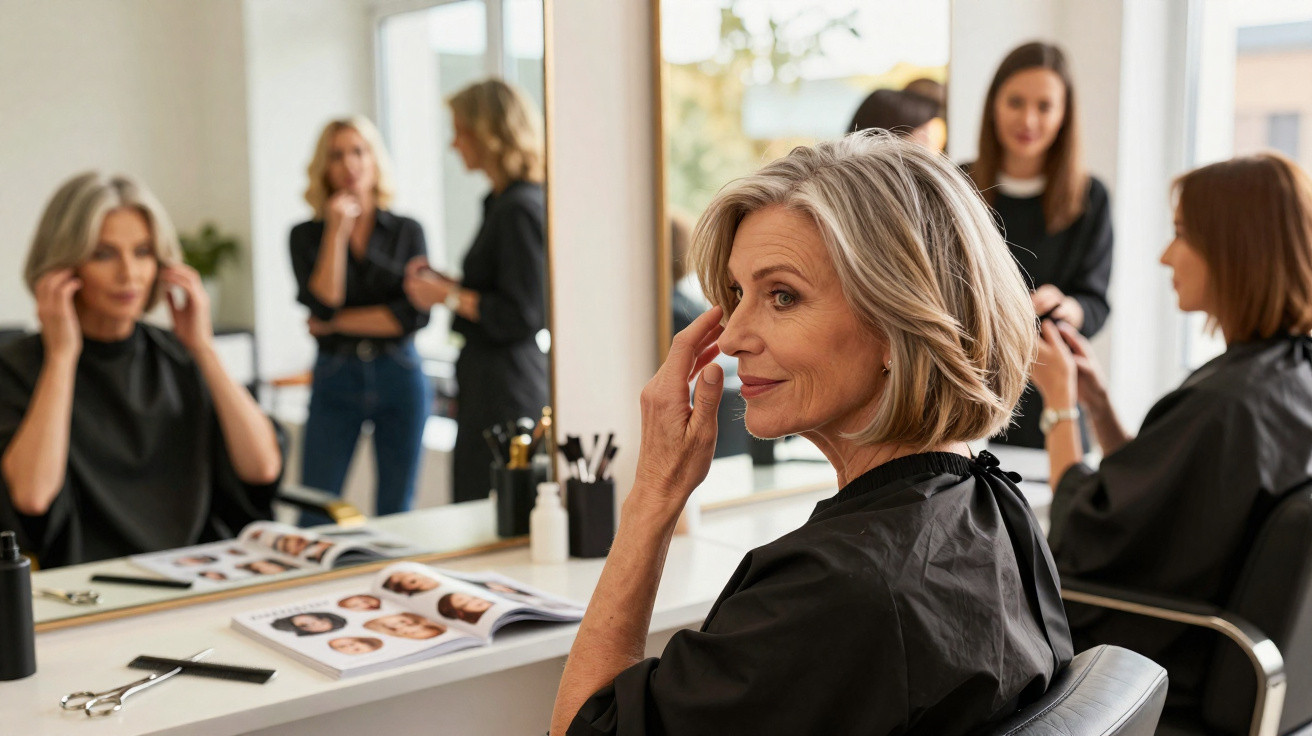
The salon carried the faint scent of coffee and hairspray, an odd combination of familiarity and transformation. In the 10 a.m. appointment slot, between pensioners and students, there was often a discreet influx of women in their 50s. They arrived with loosely tied ponytails, overstretched scrunchies and one familiar admission: “I just want something easy that still looks like I tried.”
The hairdresser would agree, run a comb through strands turning silver and, time after time, recommend the same option. Not a dramatic crop. Not a teenager’s fringe. Instead, a straightforward, softly layered mid-length cut sitting just above the shoulders.
They would pause briefly before agreeing.
Then, when they looked in the mirror, their expressions revealed something no TikTok tutorial can teach.
The mid-length layered cut that quietly took over
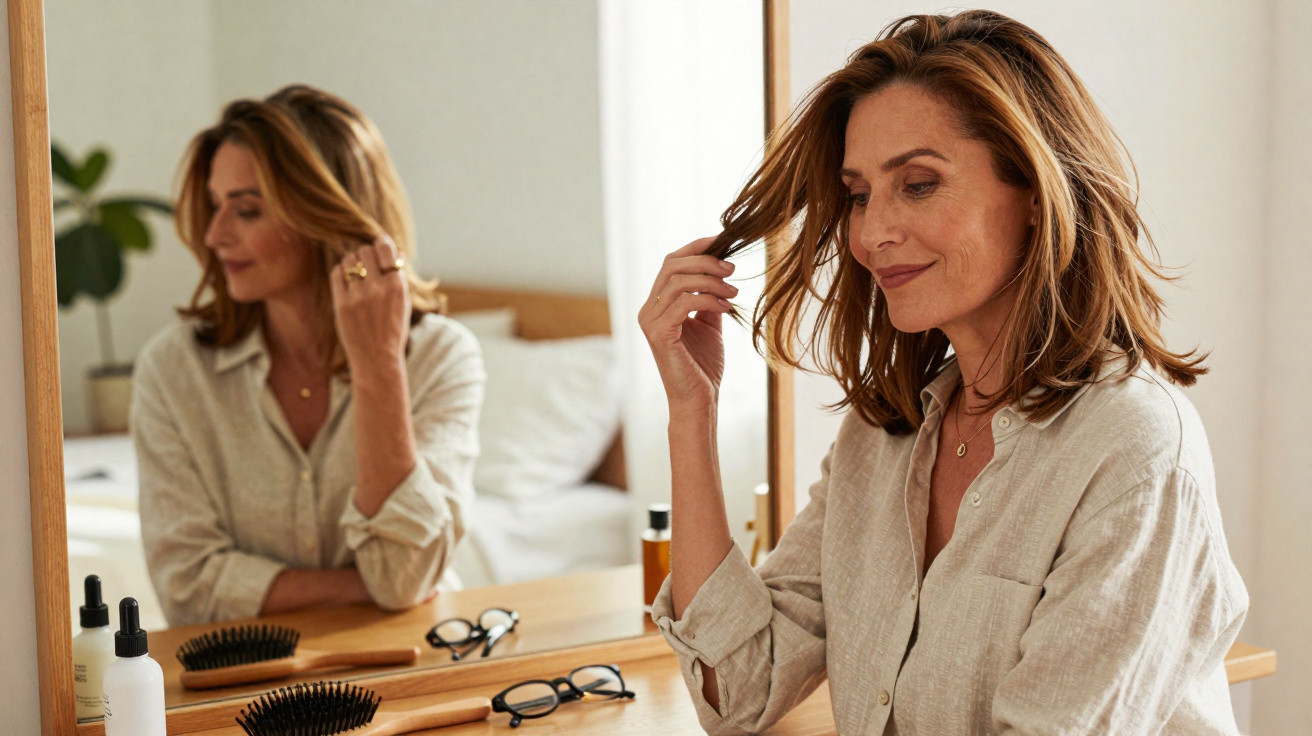
Watch people in a bustling café for a week and you will begin to notice it: the same adaptable haircut worn by women in their 50s. It skims the shoulders, has gentle layers and moves in a way that appears almost effortless. It is neither a bob, nor long hair, nor a severe pixie cut.
It occupies the ideal middle ground: hair touches the collarbone, retains enough weight to feel feminine and has sufficient lightness to move when you turn your head. You can tuck it behind the ears, secure it in a low clip or simply leave it to fall as it wants.
It does not demand attention.
It simply works, quietly.
Consider Anne, 54, who held on to her mid-back length for years because the idea that “long hair = youth” had been instilled in her since the 90s. Her mornings involved a struggle with a hairdryer, round brush and two serums, before ending in the same flat ponytail whenever time ran out. Exhausted, she eventually entered a salon and said, “I’m tired of fighting with my hair.”
She left with layers grazing her shoulders, several soft pieces framing her face and a slightly lighter colour that caught the light. The following morning, she sent a selfie to her closest friend: her hair had air-dried in 15 minutes, had a little movement and required no battle with the mirror.
Her accompanying message was brief: “I feel like me again, but less effort.”
There is sound reasoning behind this understated shift. By 50, hair texture often changes: hormonal shifts affect strand diameter, new growth can be coarser, the ends become drier and volume no longer sits in its former place. Very long hair can pull facial features downwards, whereas very short styles often need continual maintenance to remain polished.
A layered shape at mid-length removes excess heaviness from the ends without baring every millimetre of the neck. It adds height at the crown, softens the jaw and allows natural waves or mild frizz to become texture rather than a “problem”. It’s a cut that makes peace with what hair actually does at 50, instead of trying to rewind it to 25.
How this cut makes everyday styling ridiculously simple
The everyday appeal of this haircut comes down to one simple principle: the cut handles most of the work. With the length sitting around the shoulders, you can air-dry your hair to 80%, then finish the job with your fingers and a quick blast from the hairdryer. There is no need for a full salon-style routine before work.
The layers tend to be long and soft rather than heavily chopped. As a result, a small amount of mousse or cream encourages the hair to settle into shape instead of expanding into a triangle. Tuck one side behind an ear and leave the other loose, and the effect still appears deliberate.
You are not arranging each individual strand.
You are merely directing the shape that is already in place.
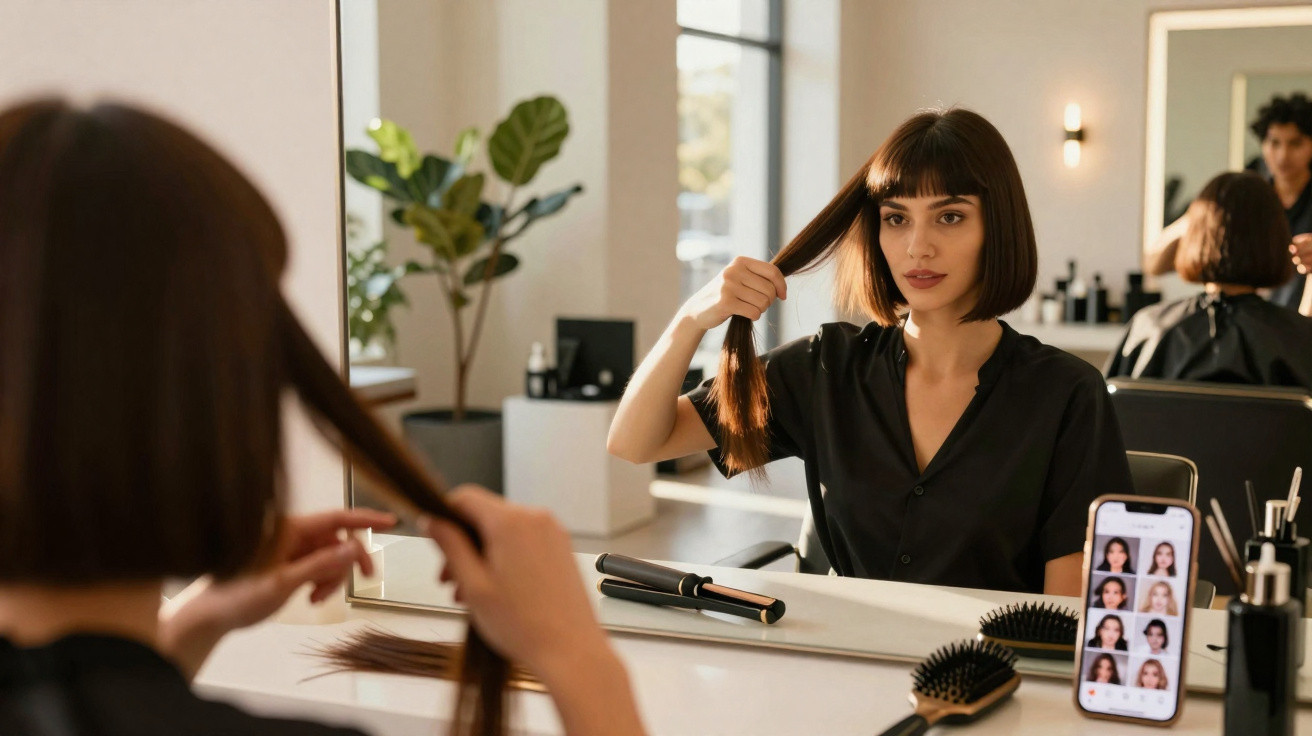
The complaint many women in their 50s share is this: “My hair either looks too ‘done’ or like I didn’t try at all.” On weekday mornings, this cut discreetly addresses that issue. You can half-dry it without much effort, use a quick puff of warm air at the roots for lift, wind the front sections around your fingers and head out.
On mornings when time disappears completely, a low, relaxed bun with a few layered sections left loose at the front looks like an intentional style rather than a last-minute solution. In truth, nobody manages an elaborate routine with several tools and products every day.
This shape is forgiving when you miss steps.
That is its true luxury.
There is a psychological change, too. When a haircut frames the face naturally, you no longer feel obliged to “perform” with your hair every morning. There are fewer tools, fewer products and fewer worries about wind or humidity. The layers create movement, meaning that even hair that is slightly untidy has character rather than appearing neglected.
Many women call the style “low-maintenance but high-confidence”. You can wear it a little sleeker for a meeting, then sweep it back beneath sunglasses on a Sunday walk, and it still feels like the same woman. The hair is no longer the entire statement.
It is the underline rather than the headline.
The small details that make this haircut really work at 50+
The key is not simply “shoulder length”. It lies in the small, exact decisions made around the face. A skilled hairdresser will consider your jawline, cheekbones and even your glasses, then position the shortest layer at the most flattering point. For some people, this is at cheekbone level; for others, it falls just below the chin to soften the jaw.
Request long, seamlessly blended layers instead of harsh chopping. Around the face, a gentle curtain effect can be helpful if you are self-conscious about lines around the mouth or a slightly fuller jaw. A small amount of internal layering at the back adds lift without creating a shag.
One or two invisible techniques.
That is often enough.
A frequent mistake is cutting the shape too “graphic”. Extremely straight outlines and rigid blunt ends can make features appear harsher as hair becomes finer or greyer. Another error is adding excessive layers in the hope of gaining volume, which can leave the ends thin-looking and fragile. If you have ever left the salon feeling as though there is barely anything left to tie back, you will recognise that sinking sensation.
Treat this stage with compassion for yourself. By 50, hair has been through pregnancies, stress, heated styling tools, hair-colour experiments and probably at least one fringe you regretted. Expecting it to act like untouched hair at 20 is a battle you cannot win.
This cut is at its best when it respects what your hair can genuinely manage on a Tuesday morning.
“I stopped chasing ‘young hair’ and started asking for ‘happy hair’,” says Laura, 57. “That mid-length cut with soft layers gave me exactly that. I spend ten minutes max on it, and I look like I slept, even when I didn’t.”
- Keep the length around the collarbone to balance femininity with practicality.
- Request soft, face-framing layers that blend together rather than sharp, chunky steps.
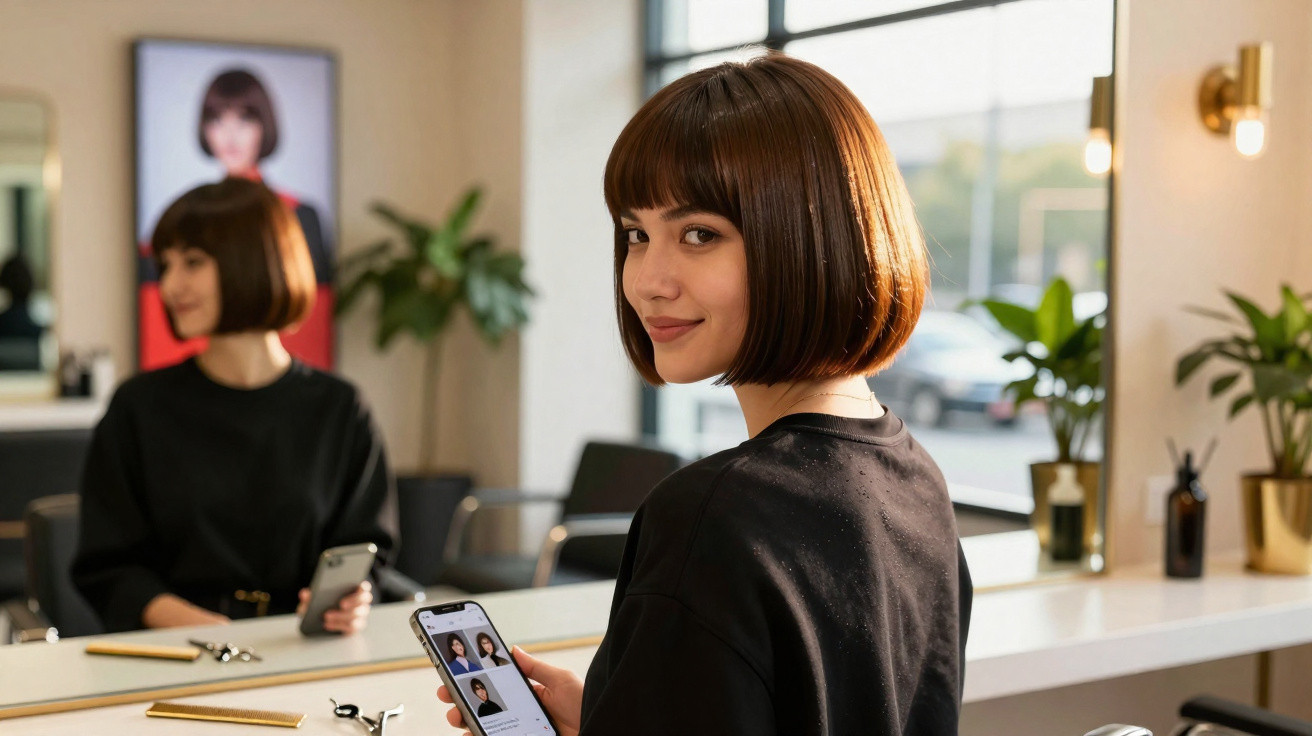
- Take photos of women your own age, rather than teenagers, to help guide the discussion.
- Choose styling products that add flexibility (a light cream or airy mousse) rather than stiffness.
- Book gentle trims every 8–10 weeks to preserve the shape, without obsessing over every millimetre.
More than a trend: a new way to relate to the mirror
Look around and this haircut seems less like a short-lived trend than a quiet arrangement women in their 50s have made with themselves. It acknowledges that mornings are too valuable to give entirely to heated tools, and that elegance need not require 45 minutes with a round brush.
There is a subtle act of rebellion in the style as well. For decades, the message was: “Either keep it long to look young, or cut it all off and be ‘practical’.” This layered, mid-length look rejects that either-or choice. It suggests that you can be comfortable, current and sensual without choosing an extreme length in either direction.
We all know the moment: you catch your reflection in a shop window and wonder, “When did my hair stop matching who I feel I am?” This haircut cannot erase that question by magic, but it can make it gentler. It offers a version of you that seems awake, approachable and a little lighter, both physically and emotionally.
It encourages you to stop battling your hair’s texture and begin working with it. Waves, cowlicks and silver strands all have a place within this shape.
That is likely why so many women return to it year after year, quietly refreshing the same cut as though renewing a small promise to themselves.
| Key point | Detail | Value for the reader |
|---|---|---|
| - | Shoulder-skimming, softly layered cuts adapt to changing hair texture at 50+ | Helps you select a style that works with, rather than against, your hair as it is now |
| - | Face-framing layers and gentle movement flatter the jawline and cheekbones | Creates a lifting, soft-focus effect without demanding heavy styling |
| - | A low-effort routine using air-drying and minimal products can still look polished | Saves time and energy in everyday styling while maintaining confidence |







Comments
No comments yet. Be the first to comment!
Leave a Comment