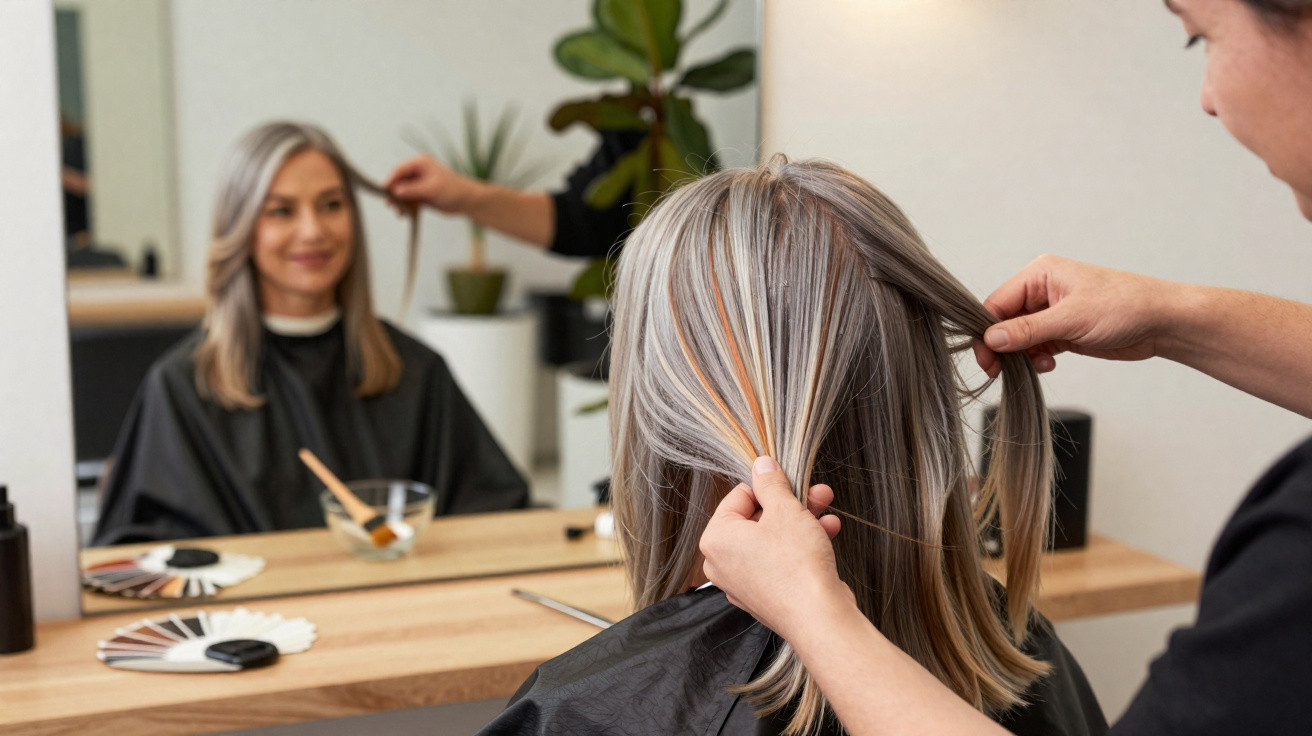
Grey strands are beginning to show, your old colour is still holding on, and the uncomfortable salt-and-pepper in-between stage seems to last for months.
The “High-Low” balayage trend offers a smart middle ground, turning this transitional period into a purposeful, flattering style rather than a phase to put up with.
What does “High-Low” balayage mean for salt-and-pepper hair?
Classic balayage is usually associated with beach-inspired blondes and sunlit-looking hair. High-Low balayage relies on the same freehand painting method, yet has a different purpose: using light and dark together to make grey hair appear intentional.
Salt-and-pepper hair is essentially a varied mosaic. While some strands have completely lost their pigment, others retain their natural colour, with many falling between the two. This combination may seem patchy or lacklustre, particularly at the temples and along the parting.
High-Low balayage adds both lighter and darker pieces so grey hair blends into the rest, creating depth instead of harsh contrast.
Colourists hand-paint two kinds of sections:
- Lighter pieces that reflect emerging grey and illuminate the face
- Darker lowlights that draw on your original shade and create dimension
Rather than producing one flat, even colour, the finish is a multi-tonal, layered blend. Your natural grey remains visible, but in a more carefully considered form.
Why High-Low balayage is flattering on greying hair
When pigment diminishes, hair can appear finer and less shiny. Applying one block colour may amplify that impression, whereas High-Low balayage works in the reverse way.
Introducing contrast and depth can make hair look thicker and more textured. Instead of the eye focusing on one white streak, it sees a gentle arrangement of tones flowing through the lengths.
The aim is not to hide your age, but to make every stage of greying look deliberate, polished and current.
It is particularly suited to anyone exhausted by frequent root touch-ups but not yet prepared to embrace fully natural grey hair. It provides a gradual alternative: lower maintenance than full-head colour, while offering more direction than leaving it untouched.
Selecting cool or warm tones: what really works?
Colourist Rachel Bodt, who helped popularise the technique in the US, says tone matters as much as placement. The colours introduced should either complement the coolness of your greys or soften it subtly.
| Goal | Tones to favour | Effect on salt-and-pepper hair |
|---|---|---|
| Highlight grey, make it more noticeable | Cool tones (ashy, pearl, silver) | Greys appear crisper and more metallic |
| Create a soft, natural finish | Soft warm tones (beige, soft gold, sand) | Greys blend into the surrounding hair |
| Soften strong roots from previous colouring | Neutral brondes, mushroom browns | Regrowth looks gentler, with a less obvious line |
For cool or pink-based skin tones, icy highlights with smoky lowlights will often be most flattering. Those with warm or olive undertones may find that a touch of beige or soft gold prevents the complexion from appearing washed out.
The same High-Low concept can look edgy and silver on one person, or soft and sunlit on another, depending on tonal choice.
What happens during a High-Low balayage appointment?
The consultation: the key stage
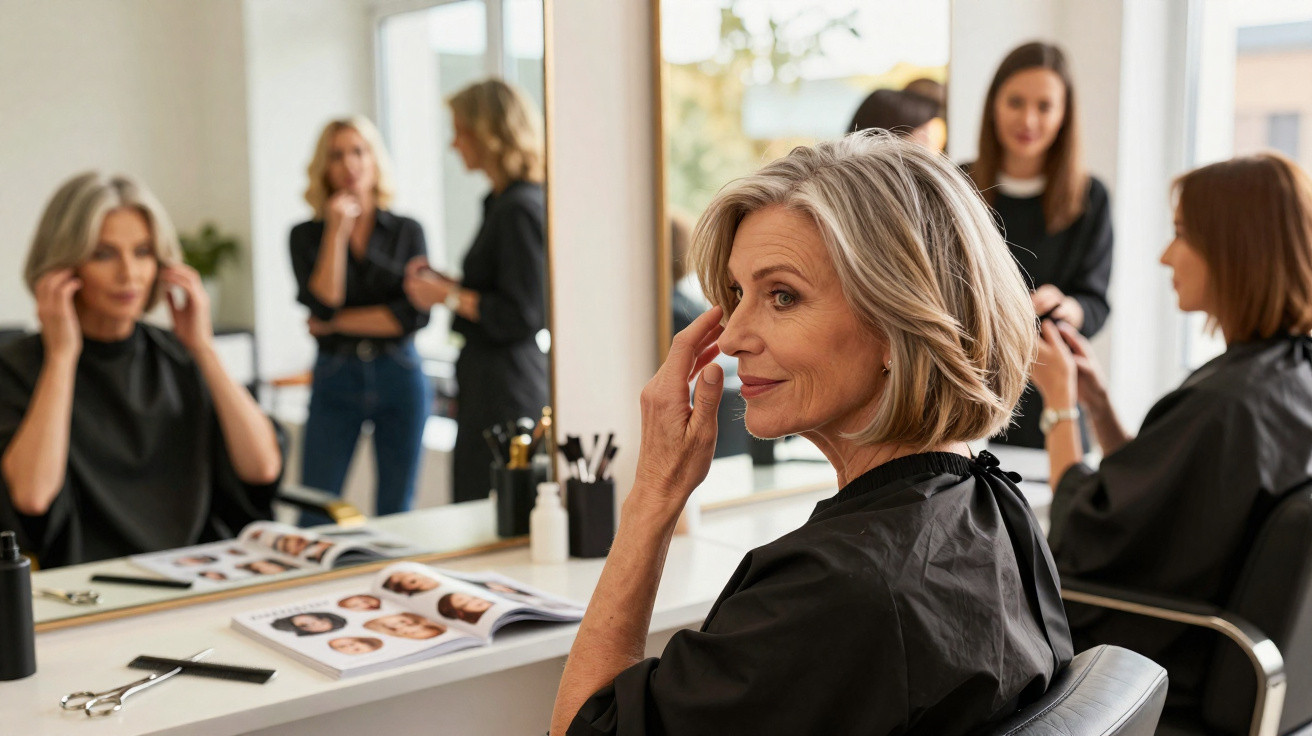
A skilled colourist will begin by assessing three areas: your natural base shade, the placement of your greys and your skin undertone. They will also discuss the amount of upkeep you are comfortable with: are appointments every eight weeks manageable, or would you rather visit once or twice yearly?
They can then determine:
- The number of lighter sections needed around the face and parting
- Where lowlights should go to reinforce your base shade
- Which grey areas should remain entirely uncoloured
The painting stage
Rather than wrapping every strand in foil, the colourist paints in panels and ribbons. Several lighter strokes are placed around the face, particularly in areas where grey is most visible. Darker tones can be painted below or between white sections to separate them and introduce depth.
Often, the most silver strands are kept exactly as they are, functioning as natural highlights. Any added colour is used only to balance and enhance them.
Who is this trend most suitable for?
High-Low balayage works best at a particular point in the greying process: when hair is distinctly salt-and-pepper but not completely white. For some people this starts in their thirties, while for others it occurs much later.
It is especially effective if:
- Grey is clearly visible at the front or along the parting
- You are fed up with root retouches every 3–4 weeks
- You like the idea of grey but still want brightness and polish
- You have a public-facing role and would prefer a refined transition
The technique adapts easily across hair types, from wavy bobs to long, straight lengths, as long as some natural texture or movement is present.
Very short styles can benefit too, although the result will be more subtle and diffused, resembling a light veil of tone rather than distinct ribbons.
Maintenance: how frequently and how much?
Compared with complete colour coverage, one of High-Low balayage’s major attractions is its relatively easy maintenance.
As the grey is not fully concealed, regrowth attracts less attention. Its hand-painted application also avoids creating a hard line as the hair grows out.
- Salon visits: approximately every 3–6 months for refinements
- Toning glosses: every 6–8 weeks if you wish to revive shine or manage warmth
- At-home care: using purple or blue shampoo once a week can help prevent brassiness in lighter pieces
Moisture is essential. Grey hair is often drier and more porous, and adding lightener creates hair that needs regular masks, leave-in products and heat protection.
Salon terms you may hear
Hair professionals often use wording that can feel imprecise or overly technical. Understanding a few common expressions may make the consultation easier.
- Lowlights: darker sections painted into the hair to restore depth and recreate natural shadow
- Toner / gloss: a translucent colour used after lightening to adjust the shade without dense coverage
- Cool tone: a shade containing blue, green or violet undertones; it helps counteract orange or yellow
- Warm tone: a shade containing gold, copper or red undertones; it brings radiance but may become brassy when overused
Knowing these terms lets you ask for “cool lowlights to support my grey” or “a beige gloss, not too yellow”, instead of leaving it entirely vague.
Real-life transitions: from full colour to High-Low balayage
Consider someone who has coloured dark brown hair every month. Beneath the dye, around 40% of their hair has become white, especially near the hairline. Giving up colour all at once can feel dramatic, but High-Low balayage provides a route away from it.
A colourist may carefully lift sections of overly dark lengths, introduce smoky lowlights and let the natural root grey blend through. With each appointment over a year, the amount of artificial pigment can be lowered. The salt-and-pepper effect then becomes a nuanced grey mix rather than a severe root band.
In another example, someone may already have grown out their natural hair but feel that its tone is flat and becoming yellow. A handful of cool silver strokes alongside soft charcoal lowlights can instantly define the appearance, much like pairing a well-tailored blazer with a T-shirt and jeans.
Risks, limitations and when to reconsider
High-Low balayage remains a chemical treatment. Further lightening may lead to breakage on extremely fragile, over-processed or thinning hair. A strand test and an honest discussion about hair condition are essential.
Personal preference is another consideration. Some expect a filter-like outcome: immediate, flawless and requiring no upkeep. High-Low balayage is more grounded than that. It enhances the hair you have, rather than recreating the hair you had at 25.
The technique works best when the goal is enhancement and acceptance, not pretending the grey never arrived.
For anyone prepared to view salt-and-pepper hair as a styling advantage rather than an issue, High-Low balayage presents a modern, intelligent way to make the transition appear deliberate, flattering and unexpectedly chic.









Comments
No comments yet. Be the first to comment!
Leave a Comment