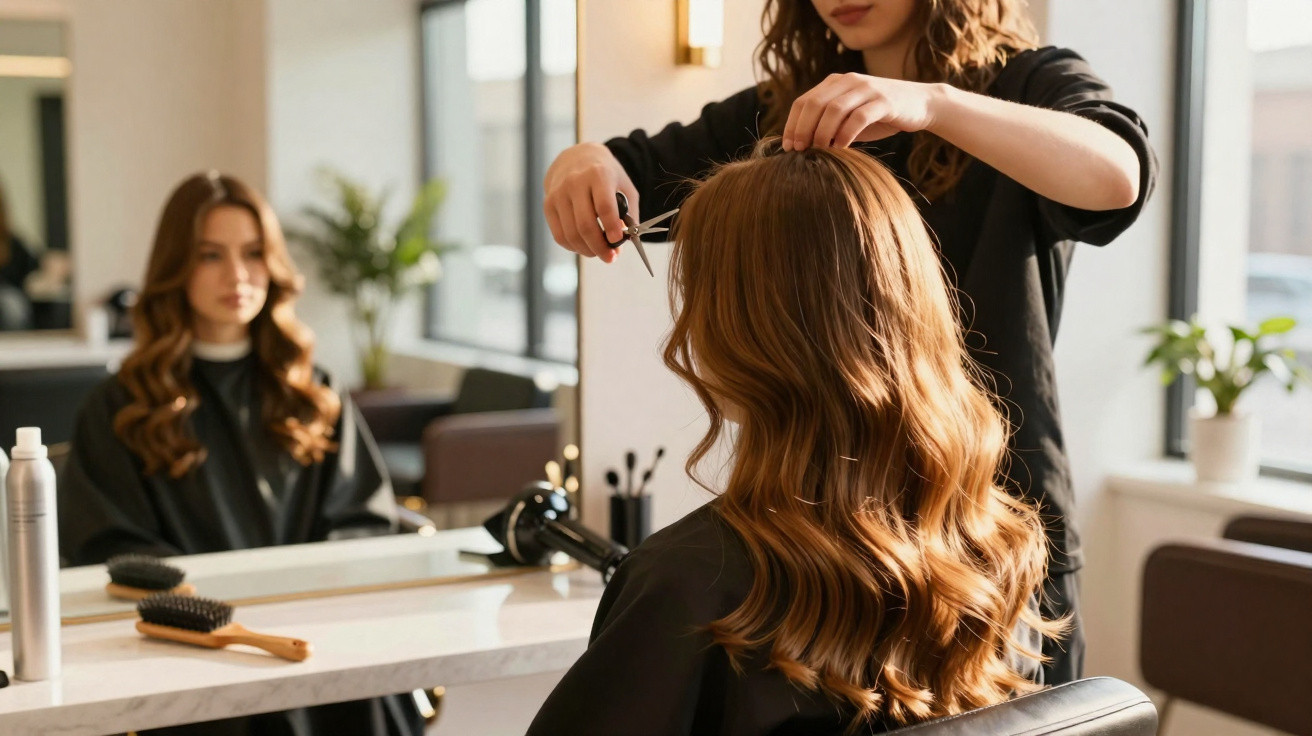
In many salons, an invisible cutting technique is currently gaining attention for creating fullness without taking away length.
Many people reach for stronger mousses, hairspray or XXL round brushes, then wonder why their hair falls flat again after the midday slump. The cause is rarely a lack of product; more often, it is a lack of structure. Professional stylists therefore rely on skilful scissor work close to the roots, supporting hair from within and adding lift – even to fine or very fine textures.
Why fine hair falls flat in spring
Humid air, changing temperatures and increased scalp perspiration can make roots collapse more quickly. Haircare that felt beneficial in winter can suddenly become too heavy: rich masks and oils weigh down the lengths. Dermatological data also show that each individual fibre becomes finer over time, while perceived density noticeably declines around the menopause. The logical solution is less cosmetic product and more mechanics – in other words, a cut that balances the hair’s own weight.
“Volume begins with the scissors, not the bottle: internal support layers lift the roots without thinning out the ends.”
Haircuts that genuinely provide support
What matters is a shape that builds body rather than removing it. Hairdressers regard three fundamental cuts as a reliable starting point, each tailored to the face shape, growth patterns and natural fall of the hair:
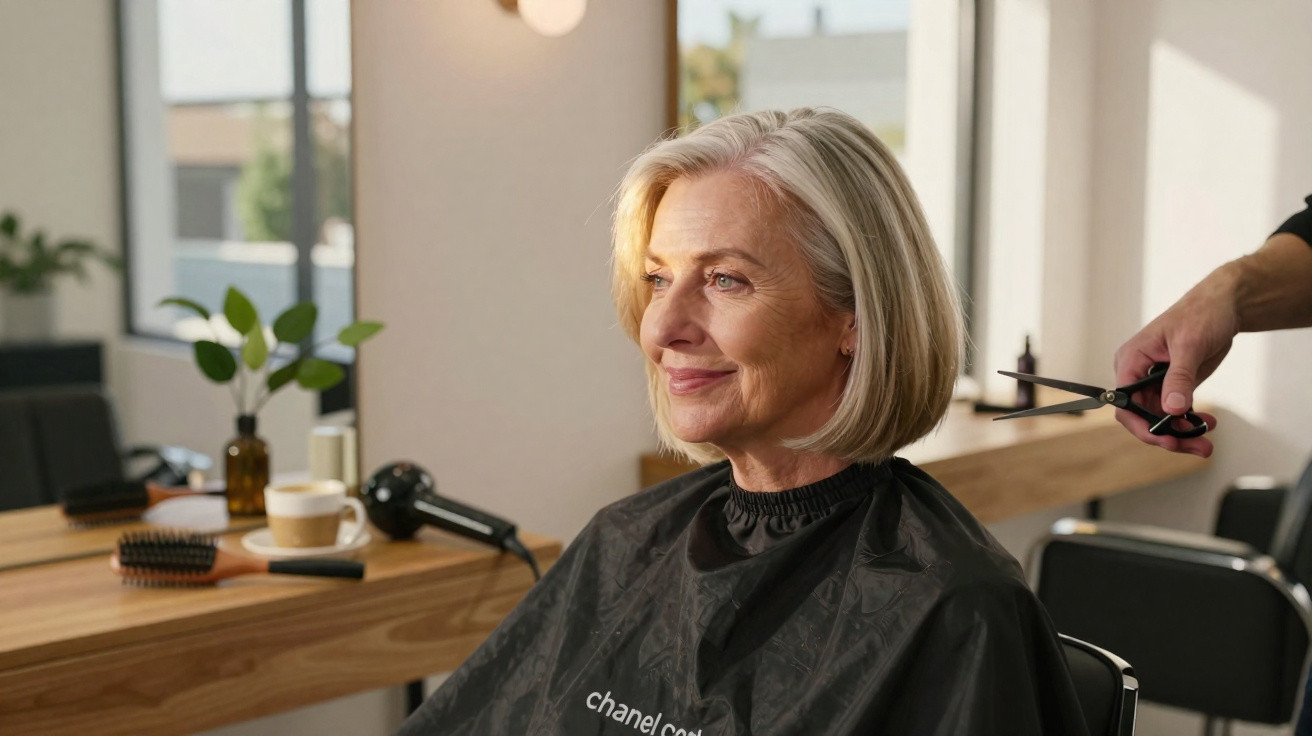
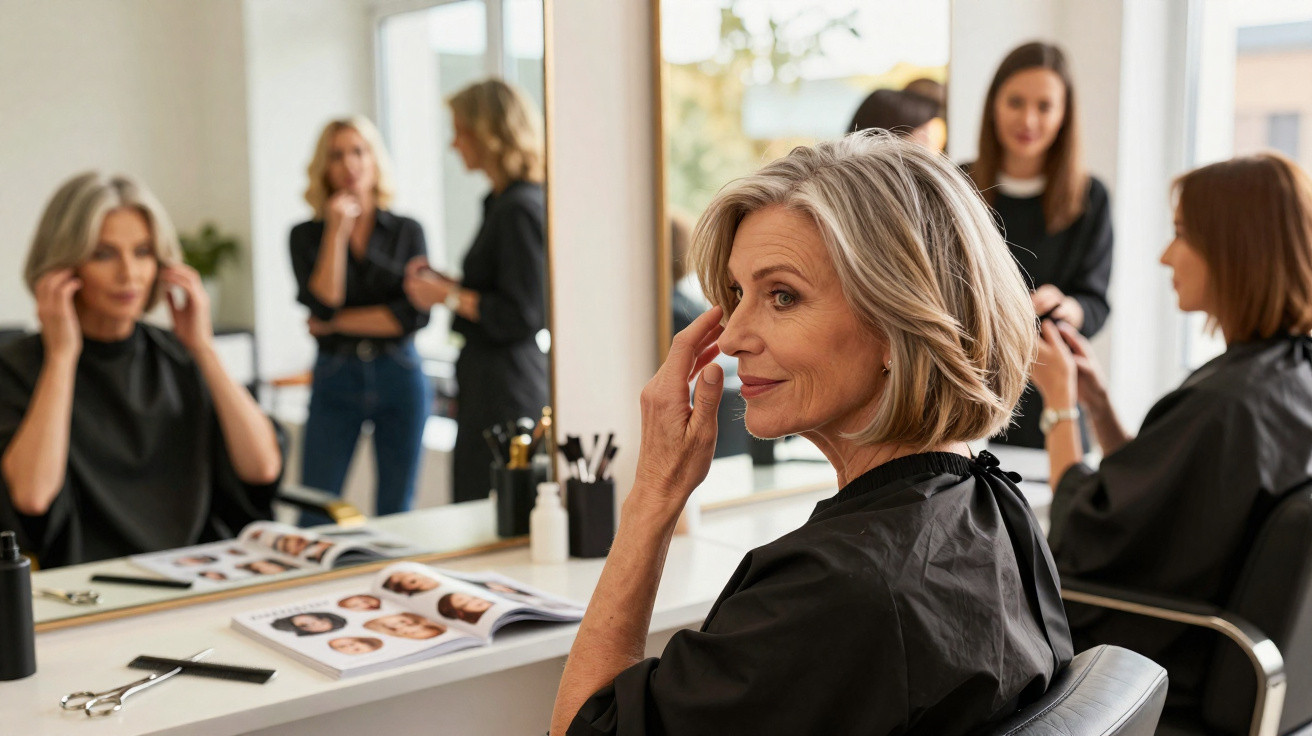
- Short bob: cut just above chin level with a clean outline. It gives fine hair instant definition and fullness.
- Lightly layered medium-length cut: adds movement through the lengths without making the ends finer.
- Pixie or bixie: short, textured styles that create spectacular lift despite a fine base.
Very long, unstructured lengths and excessively thinned layers are best avoided. Both remove weight in the wrong place, leaving the style looking tired and wispy.
Root-support layers: the invisible method with a major effect
The concept is remarkably straightforward, yet demanding in terms of technique: tiny sections close to the head are trimmed with millimetre precision inside the hairstyle. These micro-sections remain hidden near the scalp and act like small supports. They gently push the longer hair above them upwards. This creates a stable internal framework that does not immediately collapse in humidity or during movement.
How the cut is carried out
- Assessing growth patterns, direction of fall and density – particularly across the crown.
- Sectioning off concealed internal areas, usually at the crown and behind the outline.
- Creating very short, even support layers close to the roots.
- Blending them into the outer shape without any visible lines.
When done correctly, the support layers cannot be seen – but their lasting lift can be felt. The effect works particularly well with a short bob, medium lengths with gentle movement, and textured short cuts.
Who is the method suitable for?
- Ideal for: fine to normal, straight or slightly wavy hair that lies flat at the roots.
- With care: parting areas that have become very thin – these require especially precise work.
- Also possible: curly hair, provided the support layers are adapted to its natural spring.
The hairdresser’s experience is important. Specifically request an internal layered cut with invisible root supports, and make clear that you want the ends to remain full.
Colour, care and styling: keeping your new fullness
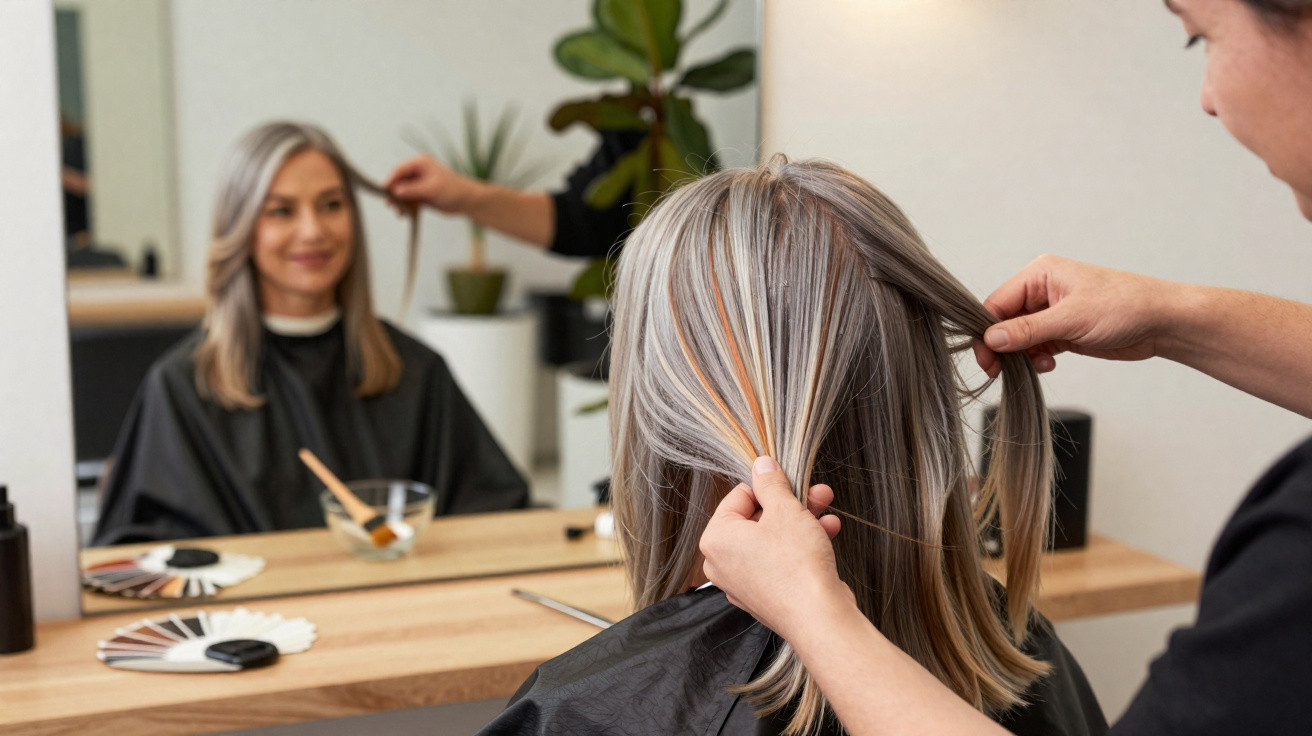
Colour can create the impression of greater density. Delicate, multi-dimensional highlights, a glossy tone-on-tone refresh and soft brightening accents around the face all add depth. A flat, single-colour look – whether very dark or very light – tends to make hair appear flatter. The salon term to use is balayage with subtle transitions rather than harsh contrasts.
An everyday volume routine
- Scalp care: Use a gentle deep-cleansing shampoo once a week to remove styling residue and oil build-up.
- Reverse washing: Apply conditioner to the lengths first, leave it on briefly, then shampoo the roots. This nourishes without weighing the hair down.
- Blow-drying technique: Dry with your head forward until the hair is around 80 per cent dry. Then change your parting and shape it using lukewarm air. Finish with a cool blast to set it.
- Light texture products: Apply volume mousse or a root spray sparingly to damp hair. Use waxes, oils and heavy serums only on the ends – and only in minimal amounts.
- Choosing tools: Brushes combining natural and synthetic bristles provide grip; use ultra-fine straighteners only briefly, and do not forget heat protection.
- Sleep trick: A loose high ponytail or a silk pillowcase reduces friction and crease marks.
| Measure | Result | Suitable for |
|---|---|---|
| Root-support layers (internal layered cut) | Lasting lift at the crown, stronger internal structure | Fine to normal hair, bob to short styles |
| Short bob | Compact fullness, clear shape | Straight to slightly wavy hair |
| Pixie/bixie | Maximum volume, textured lightness | Fine hair that needs lift |
| Balayage with subtle nuances | Visual depth, a fuller-looking effect | All colour types seeking dimension |
What creates the volume effect
Fine hair has a smaller diameter. As a result, each fibre has less contact surface and there is less friction between strands, so they slide together more easily. Internal support layers increase friction in targeted areas and shorten selected inner hairs, giving the sections above something to rest on. The outcome looks more natural than heavy backcombing, lasts longer than the movement created by a classic blow-dry, and protects the ends from losing substance.
Common mistakes – and how to avoid them
- Too many care products: More fullness does not come from a tub. A better approach is light texture, a clean scalp and a precise cut.
- Excessive thinning: Thinning scissors should be used sparingly on fine hair. The outline needs to stay dense.
- Unplanned blow-drying heat: High heat softens the hair instead of making it hold. Choose a medium temperature, work in a clear direction and finish with cool air.
- A colour block: One shade all over makes every movement disappear. Fine tonal variations add depth.
How to book the service correctly
State exactly what you want when booking at the salon: “Please give me an internal layered cut with invisible root-support layers. The lengths and ends should remain full.” Take photos of bobs or medium-length styles with soft movement and noticeably more root lift. Ask for at-home care advice as well, including product types, quantities and blow-drying direction. A follow-up appointment after six to eight weeks helps maintain the supporting structure.
One practical example: a client in her early 50s with fine hair that fell flat replaced heavy silicone masks with a lighter routine, had root-support layers cut in and chose a subtle, multi-dimensional balayage. Her feedback after four weeks was: less styling time, noticeably more lift, and ends that felt denser. That is precisely the strength of this method – it works with the physics of the hair, not against it.
One further note for sensitive scalps: anyone prone to irritation should choose mild deep-cleansing formulas containing sugar-based surfactants and use dry shampoo sparingly. Combining clean roots, lightweight styling and an internal layered cut reliably produces the effect that many people have been trying to achieve with mousse and spray for years – only in a more stable, natural and practical way.











Comments
No comments yet. Be the first to comment!
Leave a Comment