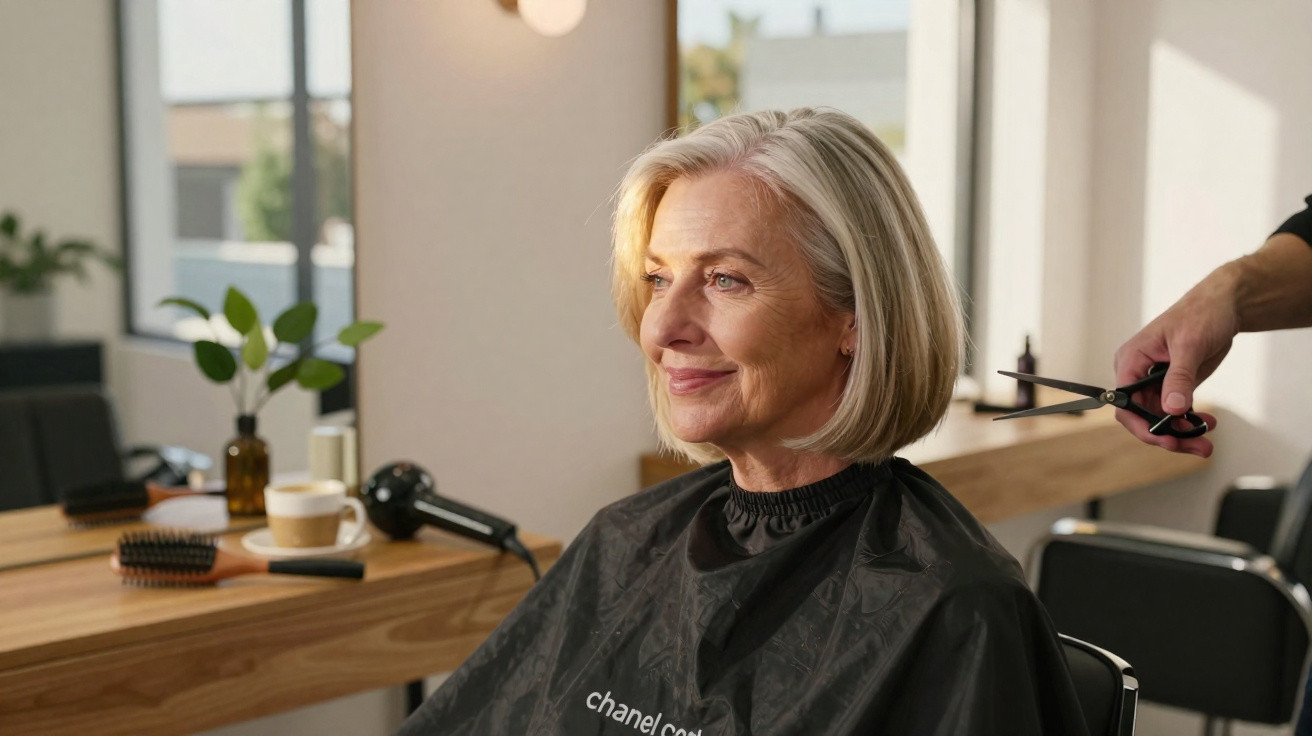
Jowls may soften, cheekbones can need more definition and the neck may suit a lighter-looking shape. Many people react by cutting their hair short or holding on tightly to length, but either choice can work against them. The better option may be a considered middle ground: an elegant style that draws the eye upwards and makes you appear instantly more awake.
I once saw a woman in her late sixties take a seat by the window in a small city salon. She repeatedly touched along her jawline, almost as though her fingertips were tracking time. The stylist listened with her head slightly inclined, smiled, and raised a section of hair beneath the cheekbone. “Right here,” she said, “we’ll make the face float.” The cape rustled and the hairdryer buzzed; when she finally turned the mirror, a subtle yet unmistakable change had taken place. Her facial outline appeared lighter while still retaining its character. Nothing about the room had become noisier, but she seemed more visible. It was a minor adjustment with a major effect: a discreet advantage.
The contour bob stylists recommend after 60
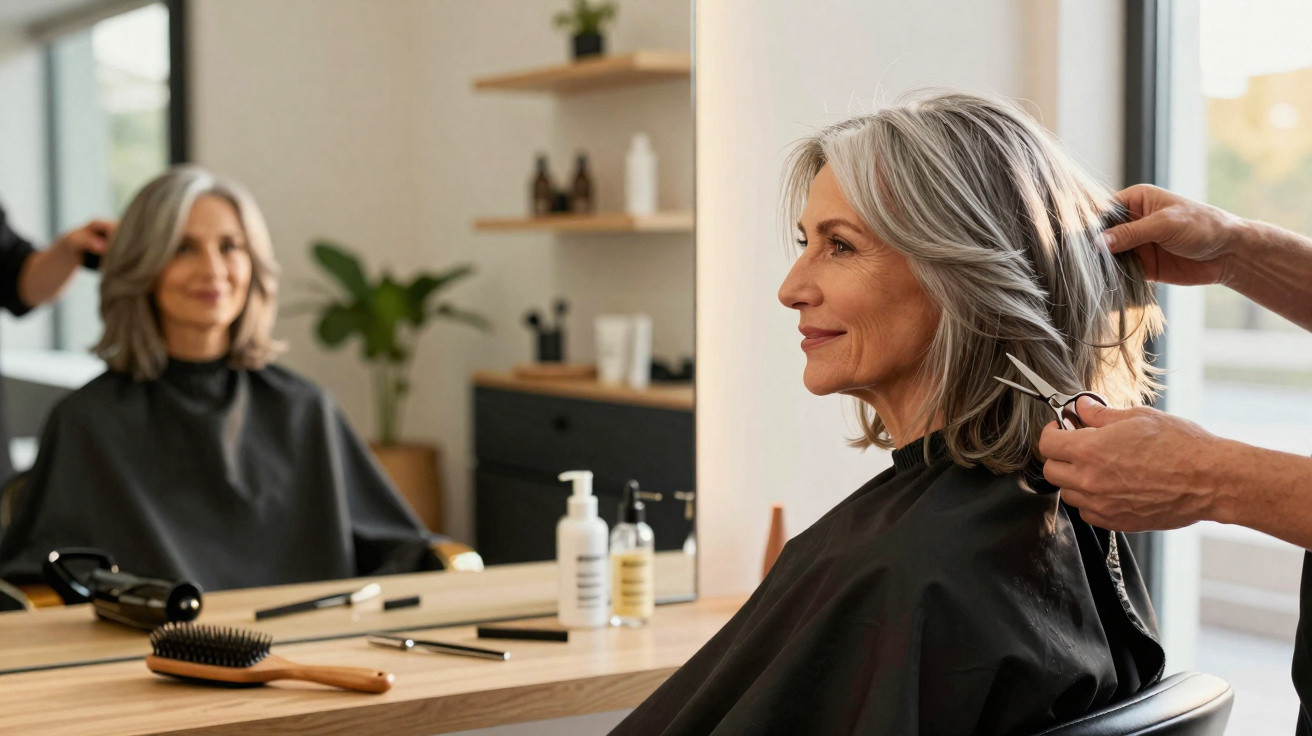
Falling somewhere between the jaw and collarbone, the contour bob features gentle graduation at the nape alongside understated face-framing layers that start near the cheekbone. It is neither severely blunt nor a shaggy cut. Picture a neat outer edge containing “invisible” internal layers that create lift. An airy fringe can brush the brows or sweep across to one side. The most flattering length lands where your face naturally lifts. That is its strength: finish the line at a naturally rising point, such as the cheekbone or collarbone, rather than at mid-neck, where weight can pull the look downwards.
Ruth, 67, said she wanted to look “less tired, not younger.” She arrived with long hair secured in the same clip she wore each day. We discussed how her cheekbones vanished whenever all of her hair was drawn low. Using a comb, her stylist assessed the shape of her face, positioned the bob’s longest point so that it just met the collarbone, and cut gentle diagonal layers towards the cheek. Once Ruth loosened her hair at the end of the appointment, her jawline appeared tidier and her eyes seemed brighter. There was no filter involved. Most of us know that feeling: one small change can feel like a significant permission.
The lifting effect comes down to geometry. Horizontal lines create width, whereas diagonal lines guide the eye upwards. With forward-diagonal layers and a soft stack at the back, the contour bob builds vertical movement. Its internal layers take away excess heaviness without making the surface frizzy, leaving the outer shape sleek. A delicate fringe reduces the visual distance between forehead and eyes, creating a fresher impression. Revealing a little of the neck encourages more open posture, which in turn looks alert and self-assured. Light equals lift; weight equals drag. That principle is evident in every strand.
How to request and style a contour bob with ease
When you are in the salon chair, ask for “a collarbone-grazing contour bob with soft graduation at the nape, invisible internal layers for lift, and face-framing that starts at the cheekbone.” Request that the ends are point-cut for softness rather than a blunt finish. If you like a fringe, choose a wispy curtain bang that skims the lashes and can part in the centre, or opt for a lightweight side-swept version. Take along a photograph, then discuss the point at which your face naturally lifts when you smile and place the length there. Let’s be honest: nobody does that every single day.
At home, prioritise lift before polish. Work a golf-ball-sized amount of volumising mousse into the roots, followed by a nickel-sized amount of heat protectant through the ends. Use your fingers to dry the roots upwards, then refine the style with a medium round brush, rolling the sections away from the face at cheekbone height. To add waves, change your parting while drying for more lift; alternatively, diffuse until the hair is 80% dry and allow the remainder to air-dry for softness. Have grey or silver hair? Choose a lightweight serum or cream that provides slip instead of heavy oils. Those with fine hair should avoid dense pomades, as these weigh the shape down.
Although this cut is forgiving in everyday life, a few common mistakes can reduce its lift. Dense, heavy fringes can form a curtain that pulls the face down. A cut ending at mid-neck breaks up the silhouette at an unflattering point. Too much texture through the ends makes the outline fuzzy and removes its refined finish. If your hair is particularly dense, ask for weight to be removed internally instead of adding chunky surface layers.
“Lift doesn’t come from cutting everything short,” says London stylist Mara Ellis. “It comes from stopping the length at a lifting point and carving softness where the eye wants to travel.”
- Use these words: “collarbone contour bob, soft nape graduation, invisible layers, cheekbone face frame.”
- Pick your fringe: an airy curtain fringe for softness or a side-swept fringe for immediate lift.
- Dry the roots upwards and turn the ends under or away from the face; finish with a cool shot for polish.
- Follow this product rule: foam for lift, cream for slip, then shine mist last.
- Have it trimmed every 8–10 weeks to preserve that floating outline.
What the contour bob communicates - and why its appeal goes beyond hair
The contour bob is not about trying to look thirty. Instead, it works with the face you have now. Its slight stack at the back gives the crown a buoyant appearance. The softened outer line prevents the severity that can make facial lines appear more pronounced. A length that skims the collarbone forms a delicate connection between the neck and jaw, which conveys elegance. You are not concealing anything; you are refining it. You’re not chasing youth-you’re framing it. Hair becomes a form of punctuation: it says enough while allowing expression to remain visible.
| Key point | Detail | Benefit for the reader |
|---|---|---|
| Contour bob length | Jaw to collarbone, with softened ends | Instant lift without harsh lines |
| Face-framing layers | Begin at the cheekbone and angle forwards diagonally | Guides the eye upwards and shapes facial features |
| Styling routine | Root lift, light polish and few products | Little effort with a high daily payoff |













Comments
No comments yet. Be the first to comment!
Leave a Comment