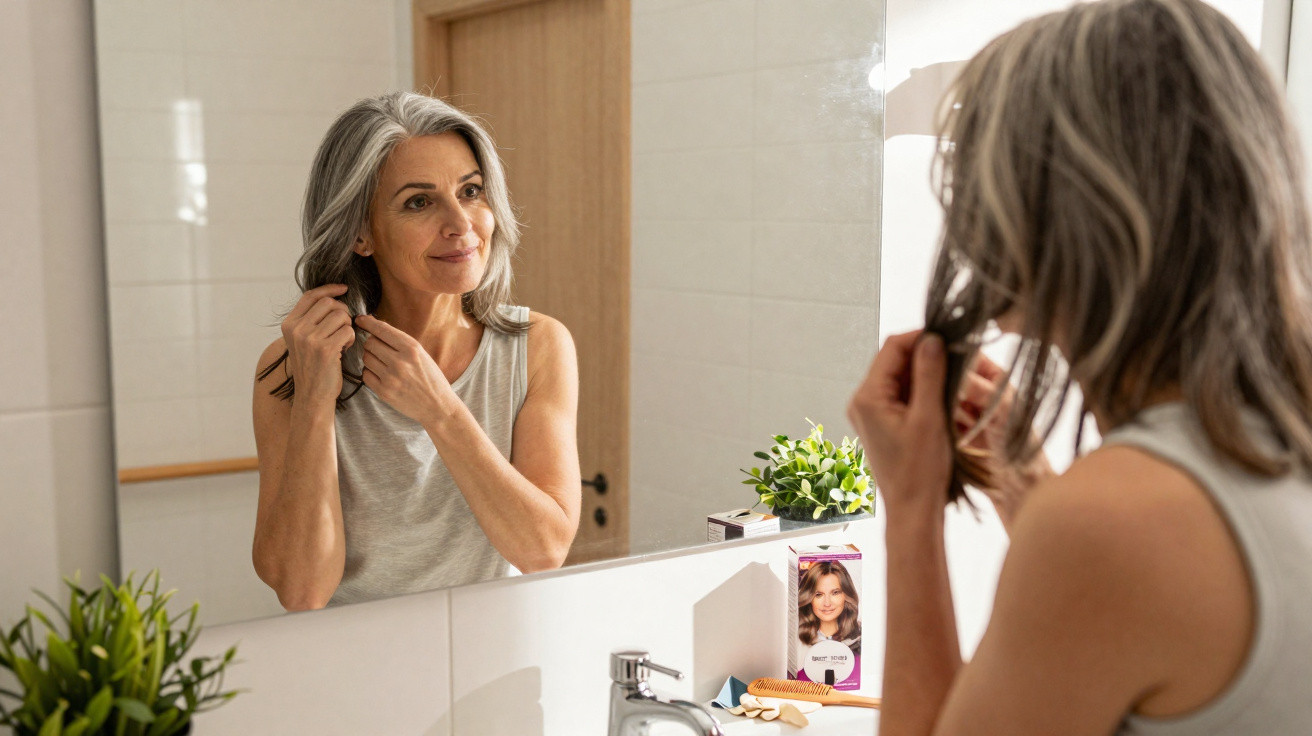
The woman sitting in the salon chair is weeping, almost silently.
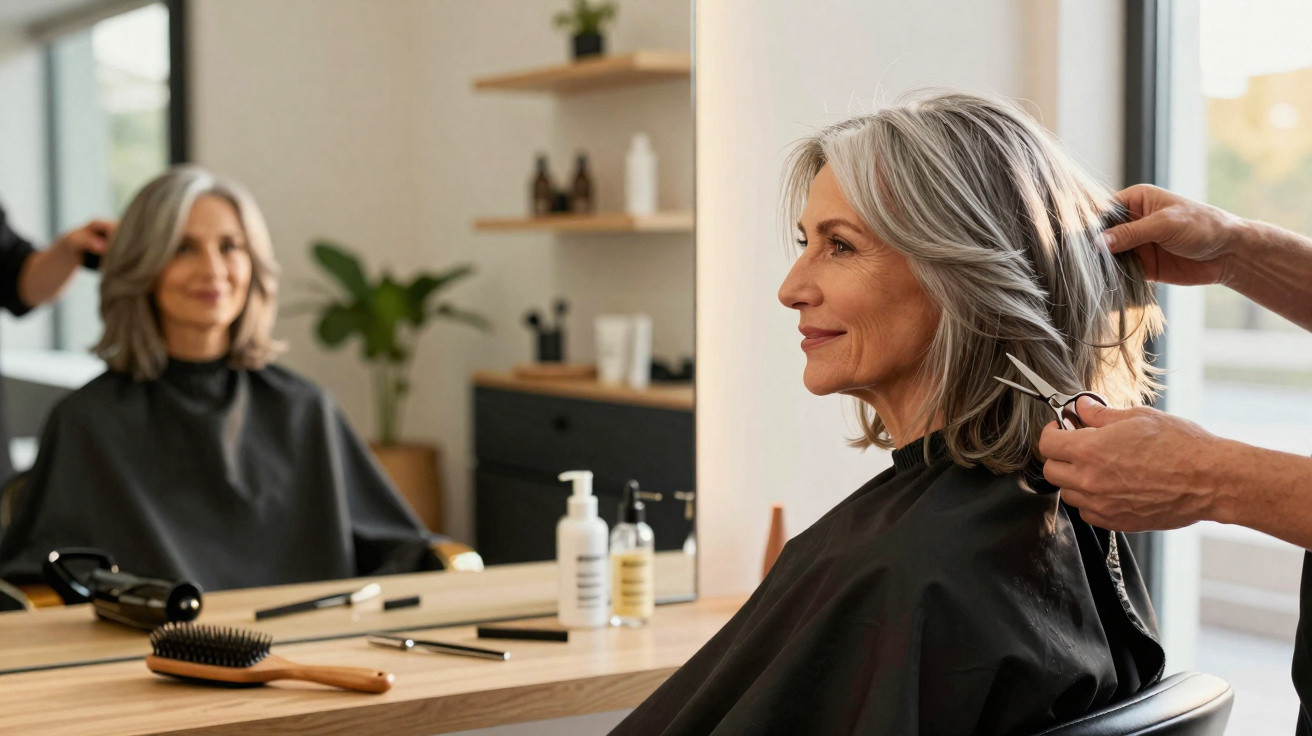
Reflected in the mirror, her hairdresser lifts a cool silver section and says, with something close to an apology: “Your roots again.” Foils whisper, mixing bowls knock together, and the acrid scent of dye catches slightly at the back of the throat. A couple of chairs along, a woman with a crisp grey bob looks at her phone while her colourist cools her tea. Without appearing to try, she seems entirely at home in the room.
Beyond the salon, Instagram and polished advertising campaigns are suddenly full of silver hair. It is no longer presented as something that needs correcting, but as a symbol of honesty. Younger influencers are deliberately dyeing their hair grey. Grandmothers are no longer covering theirs. Between those two groups, millions of women look into their bathroom mirrors and begin to wonder whether the dye bottles beneath the sink now seem a little… guilty.
Something has shifted.
The grey hair revolution no one saw coming
Look through your feed this evening and see how many posts about “grey hair” appear before you reach the end. You will probably not need to scroll far. The phrase once murmured as “I really need to do my roots” is now shared as “Day 180 of my silver journey”, gathering 20,000 likes. Strands formerly concealed beneath chestnut and caramel colour are now taking centre stage.
Brands have responded. Haircare shelves that once shouted “anti-age” are now filled with purple shampoos declaring “for silver queens” and “born to be grey”. The message has been reworked: grey hair is no longer a loss, but an aesthetic, a decision and a declaration that says, “I’m not editing myself for your comfort.” By comparison, coloured hair can begin to resemble a filter left switched on by mistake.
A few years back, Facebook groups about going grey were small, discreet spaces that resembled support groups. Today their names are bold and near-defiant: “Silver Sisters”, “Grombre”, “Going Grey Gracefully”. Many now have hundreds of thousands of members posting uncomfortable grow-out pictures, progress timelines and candid admissions. It can look like a collective departure from the colourist’s chair. One US study found that salon hair colouring fell sharply following lockdowns, while worldwide searches for “embrace grey hair” soared.
Celebrities followed. When Andie MacDowell appeared at Cannes with a dramatic, cloud-like mane of silver hair, the internet went wild. When stars’ natural grey roots showed during video calls in 2020, the effect felt unexpectedly personal. They did not “fix it” between takes. Instead, they allowed us to see the boundary between performance and person. All at once, the line visible on our own heads seemed less like neglect and more like truth.
Those silver strands are also part of a deeper cultural shift. Women were once encouraged to disguise ageing as if it were a leak in the ceiling. Dye was the filler: unseen maintenance carried out every few weeks to keep the surface smooth. Now the narrative is being rewritten in real time. Grey hair is described as “authentic”, “raw” and “unfiltered”. But if grey is authentic, what does that imply about coloured hair?
That is where shame starts to enter, softly. Some women who continue colouring their hair admit online that, compared with others, they feel “fake” or “cowardly”. Choosing brown or copper can start to feel like a moral failing rather than a straightforward preference. This is the darker side of a trend that claims moral superiority: once one option is presented as brave and honest, the alternative can begin to look like dishonesty.
How to navigate the new “good vs bad hair” narrative
If you feel caught between opposing pressures, you are certainly not the only one. On one side sit years of magazines and family remarks suggesting that grey hair means “letting yourself go”. On the other is a newer message that dye represents self-denial, even betrayal of your true self. Being pulled both ways is draining. The first useful step is both unexciting and radical: switch off the noise for a moment.
Try a simple, deeply human exercise. The next time you think, “I should cover my roots,” pause and ask yourself: Who am I doing this for? Do not answer in vague terms; picture real people. Is it your manager, your partner, your mum or your younger self? There is no correct response, only a truthful one. Once you know it, the decision to use dye or not can feel less like a judgement on your character and more like what it is: a grooming choice.
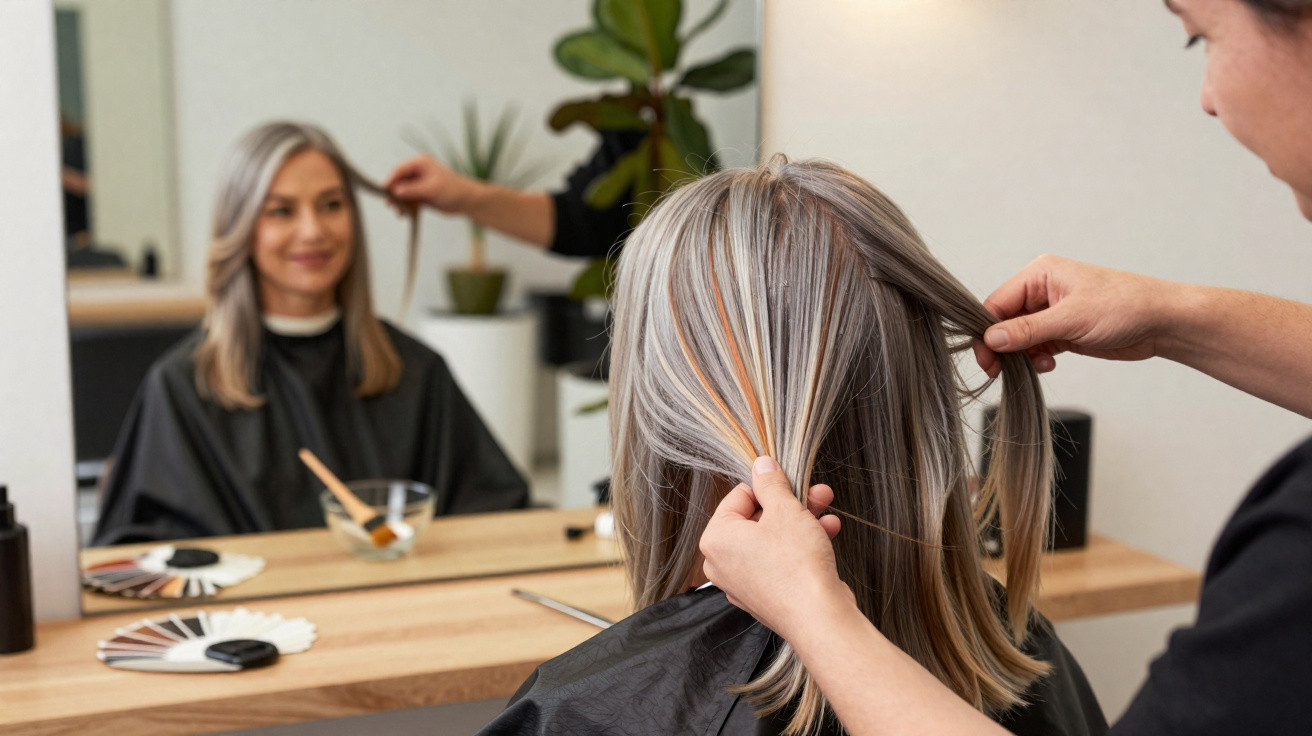
Then there are the practicalities. Choosing to go grey does not require you to shave your head or live with a harsh line across your scalp. Colourists are becoming more skilled at creating “soft exits”, using highlights, lowlights or a lighter shade near your natural grey to blur regrowth rather than make it look severe. If you prefer to continue colouring, you can alter your routine so it feels less like concealment. Consider softer shades, more dimension or a root shadow that leaves some of your natural colour visible at the base. The point is not to erase yourself; it is to recognise yourself in the mirror.
A subtle cruelty has entered some of the conversation around going grey. Expressions such as “finally free”, “no more fake hair” and “no more hiding who I am” may sound empowering initially. Listen again, however, and there is an implied criticism of everyone who still buys box dye. It is the wellness equivalent of the old pressure, simply with new villains. Once, failing to colour your hair made you “lazy”; now, colouring it can make you “inauthentic”.
One woman in her late fifties told me, laughing a little but sounding tired:
“I grew my hair out during lockdown and the compliments were constant - ‘you’re so brave’, ‘you’re so real’. When I decided to dye it copper again, people looked… disappointed. Like I’d betrayed the cause. It’s my hair, not a political party.”
Beneath this new version of the debate, the old anxiety remains: am I ageing “right”? Can I still enjoy lipstick, lip gloss and, yes, chestnut brown while also expecting to be taken seriously when I say that I embrace who I am?
- Grey hair is not automatically feminist.
- Coloured hair is not automatically fake.
- Your reasons matter more than the trend cycle.
Owning your choice, whether you toss the dye or keep it
The most settled women I spoke with had one trait in common: each had consciously chosen the story she wanted her hair to tell, then committed to it. Not permanently, but long enough to understand how it genuinely felt. If you want to embrace grey, give yourself a defined period - six months, perhaps, or a whole year. This is not about punishing yourself; it is about getting through the awkward middle phase, when everything can look dreadful in bathroom lighting.
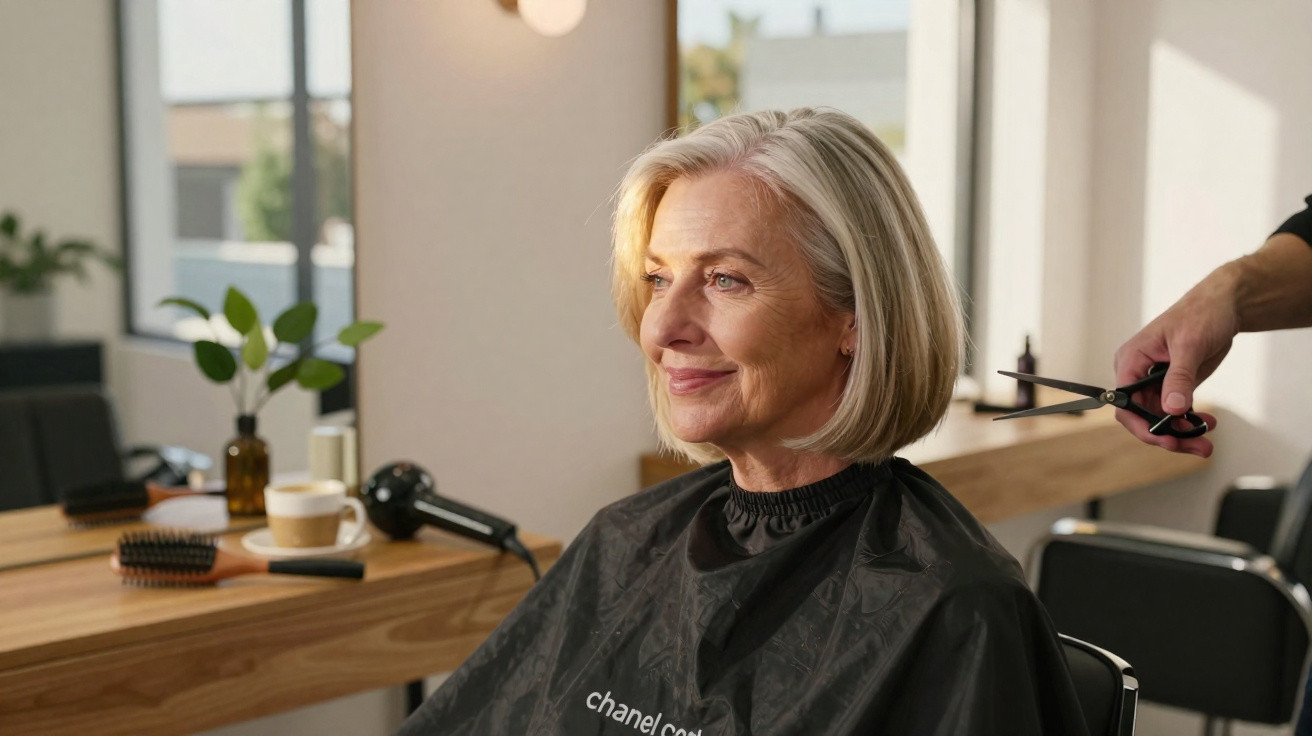
Treat that period as an opportunity to experiment rather than merely endure it. Explore cuts that suit the changing texture and colour: a sharper bob, gentle layers or even a striking pixie cut that makes silver hair an exclamation mark. Use purple shampoo once a week to prevent yellow tones, alongside a richer conditioner because grey strands often become drier. Let’s be honest: nobody really does that every day. Even so, occasional extra care can move the feeling from “I look old” to “I look like I intended this.”
Should you decide to keep colouring, the work takes a different form - and it is internal. Pay attention to occasions when judgement stings, whether it is open or subtle. Perhaps it is the colleague who says, “Oh, I thought you’d stopped dying, you looked so free!” Or the influencer who suggests that hair colour means self-hatred. Rather than absorbing it, put a name to it: this is someone else projecting their journey onto my head. That small recognition can be surprisingly protective. It removes their story from your roots and returns it to its rightful place: with them.
As one London stylist told me with a shrug:
“The most beautiful hair in my chair is always the hair that matches the woman’s decision. You can feel the difference when she’s owning it instead of apologizing for it.”
In practical terms, if you love your colour, simplify your routine so it feels like self-care rather than panic. Extend the time between appointments by choosing subtle balayage instead of complete root coverage every three weeks. Where possible, opt for gentler, ammonia-free formulas. And remember that one unflattering grow-out photo says nothing definitive about you. On an ordinary Tuesday beneath unforgiving office lights, nobody is inspecting your demarcation line as closely as you are. We have all experienced the fluorescent lift light that makes us question our entire life.
- Establish your own “hair values” before you scroll through social media.
- Select a stylist who respects both grey hair and colour, rather than promoting one agenda.
- Discuss the pressure with friends - voicing it can make it feel less powerful.
The quiet rebellion hiding in your bathroom mirror
Tonight, stand in front of the mirror and view your hair as though it belonged to someone you love. Not someone you measure yourself against or criticise in Zoom thumbnails, but a friend. Would you call her “fake” because she enjoys a deeper brown shade? Would you say she is “letting herself go” because she loves the way her silver streaks catch the sunlight? Almost certainly not. You would ask something much simpler and kinder: “Does it feel like you?”
The new grey hair trend is a compelling social experiment unfolding in real time. It reveals the unspoken rules around femininity, youth and “presentability” that none of us elected. Yet it also risks converting one freedom into another obligation. Grey versus coloured. Honest versus fake. Brave versus vain. Hair should not carry such moral weight. It is dead keratin, not a confession.
A quiet rebellion is open to everyone: make your choice deliberately, then decline to apologise for it. Dye your hair glossy, deep black at 70 because it makes you feel like a film star on market day. Allow it to turn completely white at 35 because you are tired of concealing your stress streaks. Pair grey temples with pink ends simply because it delights the teenager still inside you. Share these choices with your daughters, nieces and even sons, not as the “right” example but as living evidence that ageing has no uniform.
Trends will continue to swing. Algorithms will keep promoting silver selfies and “I finally threw away my hair dye” confessions. What endures is far quieter and cannot easily be shared: that small, private exhale when the person in the mirror reflects the story you hold in your mind.
| Key point | Detail | Why it matters to the reader |
|---|---|---|
| The grey hair trend reverses the old script | Grey is now sold as stylish and authentic, while coloured hair is pushed towards the “fake” category. | It explains why your usual colour decisions may suddenly seem open to judgement. |
| Shame is moving rather than vanishing | Women were once shamed for showing grey; now some feel shamed for using dye at all. | It reassures you that uncertainty or guilt around hair is a social pattern, not a personal failing. |
| Your motives matter more than the trend | Working out who you are really styling your hair for makes every choice calmer. | It offers a practical way to decide - and continue with - what feels right on your head. |










Comments
No comments yet. Be the first to comment!
Leave a Comment