
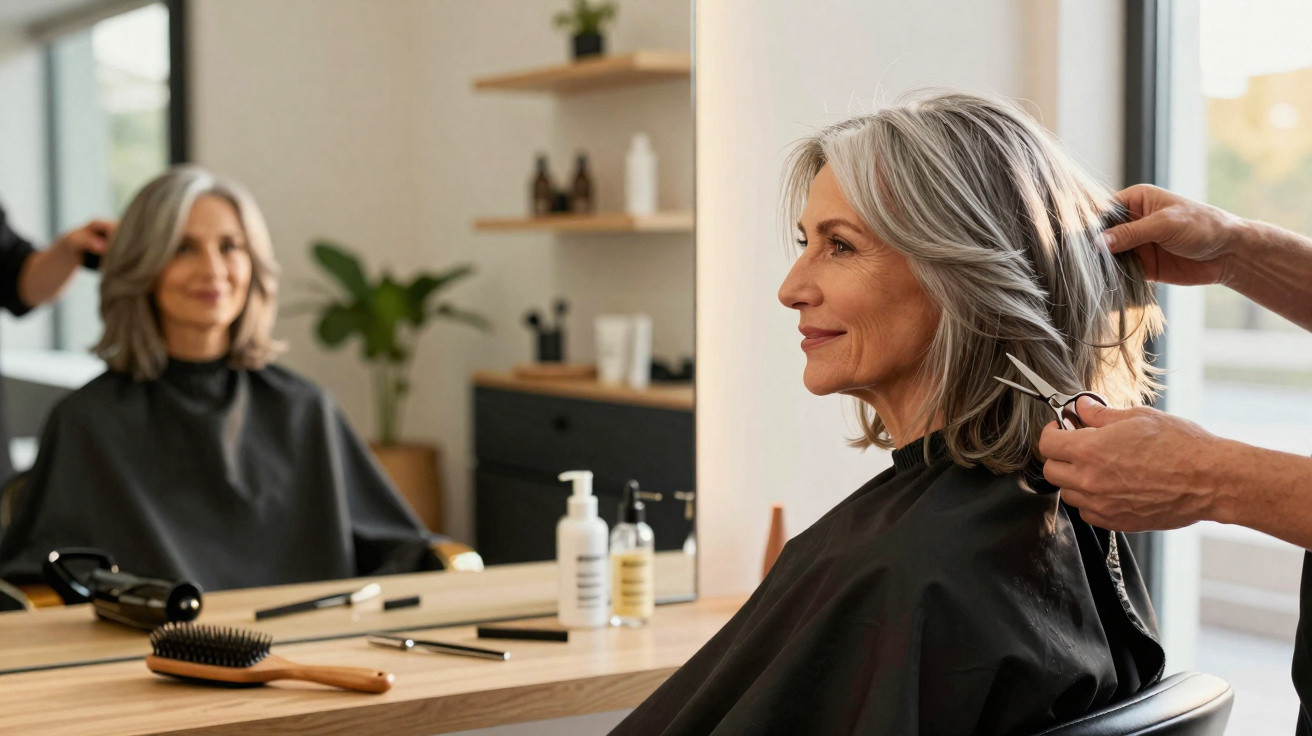
Choosing not to cover grey strands means deliberately stepping away from one of the most visible beauty routines of our time. This relaxed response to the signs of ageing often reflects an inner attitude that says much about a person’s character, values and perspective on life. That combination is precisely why grey hair has become a statement for many people today – almost a small everyday revolution.
Inner strength rather than a dye pot
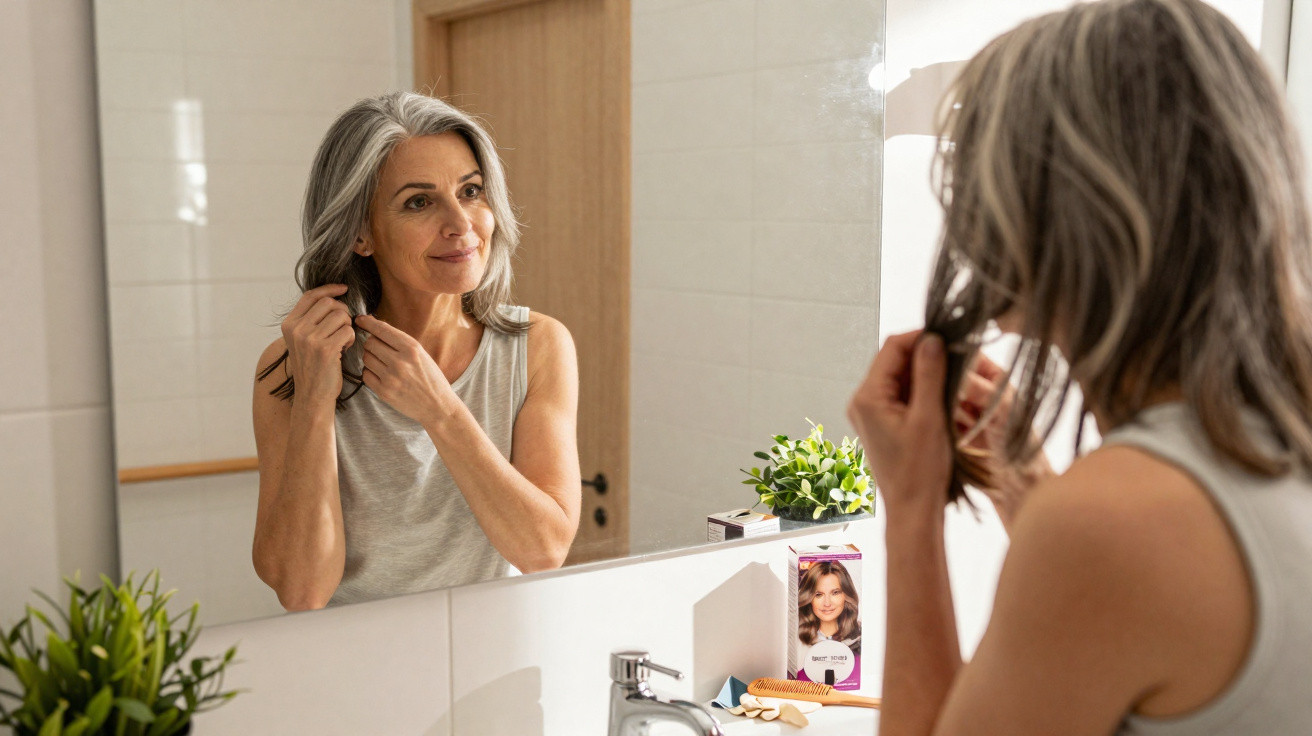
Spotting the first grey hair in the mirror is rarely an entirely neutral experience. For some, it comes as a shock; for others, it causes only a brief flicker of surprise. Deciding not to conceal the colour is a conscious choice: it is about more than convenience; it says, “I accept myself as I am.”
People who show their naturally greying hair often send a clear message: My worth does not depend on looking young.
This can make more of an impression on those around them than expected. Suddenly, there is someone who no longer wants to look 30 at any cost. That calmness conveys composure – at work, within the family and among friends.
1. Leading by example: showing grey hair encourages others
Whether at the office, in a café or at family gatherings, people who simply wear their grey or silver hair stand out – and not solely because of how they look. Many others quietly ask themselves the same thing: “Would I dare to do that too?”
At a time when looking youthful can feel almost compulsory, a natural appearance can be liberating. It demonstrates that people are allowed to grow older without having to hide.
- Younger people see that ageing is not a flaw but a natural process.
- People of the same age feel that they are not alone with their wrinkles and grey strands.
- Older people feel reassured that authenticity matters more than any hair tint.
A personal styling choice can therefore quickly become a quiet stand against unrealistic ideals of beauty.
2. Freedom from appointments, costs and constant upkeep
Anyone who has had to recolour their roots every three or four weeks knows what is involved: a hairdresser’s appointment, the journey, waiting time, products for use at home and the guilt of leaving it too late. Eventually, the diary starts revolving around hair roots.
Opting out brings back a particular kind of freedom:
| With regular colouring | With natural hair colour |
|---|---|
| Fixed appointments every few weeks | Hair appointments when desired, not because of roots |
| Long-term spending on colour and care | Budget available for other things |
| Checking the mirror: “Can you see it yet?” | A more relaxed view of one’s own hair |
The time regained is often spent on things that bring genuine pleasure: exercise, hobbies, grandchildren, friendships, travel – or simply peace and quiet.
3. Real personality instead of visual camouflage
Grey hair removes a common hiding place: using colour to create a younger-looking appearance. Once that layer is gone, the face can seem clearer and more honest. It shows the life story a person truly has rather than recreating the appearance of someone born in 1995.
Many people say this makes them feel more like themselves. The energy previously spent continually trying to alter their appearance gives way to a feeling of: “Yes, this is me – with everything that has happened.” It can also change relationships. Those who no longer pretend to be younger than they are generally form more open, honest connections.
4. Seeing every stage of life as progress
Grey hair is a daily reminder that time moves on. By not concealing it, people can turn that reminder into an anchor: instead of fighting the passing years, they acknowledge them consciously.
Many people who wear their natural grey say they view their lives differently:
- Conflicts and crises look like stages of learning in retrospect.
- Mistakes are more readily accepted instead of pushed aside.
- Achievements matter more than the question of how old someone looked at the time.
Each new grey strand can become a small badge of honour for phases survived and insights gained.
5. A visible sign of self-confidence
People who show their real hair colour at 40, 50 or 60-plus are often going against the mainstream. That takes courage, and this confidence rarely remains limited to their hair.
Those who accept their reflection are usually more willing in everyday life to say clearly what they think and what they will no longer put up with.
This may be noticeable in working life: rather than selling themselves through youthfulness, people rely on experience, expertise and composure. In relationships, they become less willing to bend themselves for approval.
6. More energy for what genuinely matters
Hair dyes, shampoos, gloss treatments and tints: the market for anti-grey products is huge. At the same time, many people complain of tiredness, stress and overloaded days. Stepping away from this care routine, even partly, saves not only time but also mental energy.
That resource is often redirected towards areas that provide greater support:
- Health: exercise, nutrition and sleep
- Relationships: conversations and shared activities
- Personal growth: further learning, new hobbies and involvement
In this way, a straightforward styling decision becomes part of a more clearly structured and consciously lived life.
7. Self-respect: the body may show what it has experienced
Liking oneself also means accepting one’s own marks. Wrinkles, pigmentation marks and grey hair are all visible chapters in a biography. People who stop fighting them often protect their sense of self-respect.
Grey hair can then symbolise something like an inner promise: “I treat myself kindly.” External standards that continually place youth at the centre, especially in advertising and social media, have less influence. This internal change of direction can noticeably strengthen self-esteem.
8. Signals of experience and composure
Grey temples have long been associated with wisdom. This is not simply a cliché but also a social effect: people showing visible signs of age are often unconsciously seen as more experienced and level-headed.
That can have positive effects, for instance:
- in teams where calmness and perspective are needed,
- in families where someone is needed to mediate,
- among friends when advice and context are sought.
Of course, hair colour alone does not make anyone wise. Yet it suggests that someone has already lived through a number of years and lessons – and that can inspire trust.
Grey hair and health: an often overlooked aspect
Not colouring hair means avoiding a range of chemicals, including oxidising agents, fragrances and colour pigments. Many people tolerate these without difficulty, while others experience an itchy scalp or irritation. A natural approach is kinder to the skin barrier and reduces contact with potentially irritating substances.
In addition, people who no longer aim for an artificial desired colour can tailor haircuts and care more closely to their true hair texture. Grey hair is often drier and responds differently to products. Accepting it makes more suitable care possible – for example, moisturising sprays, gentle brushes and less heat when styling.
Practical ways to embrace grey hair with ease
Naturally, “not colouring” does not mean “doing nothing”. Many people who proudly wear grey hair use a few simple approaches:
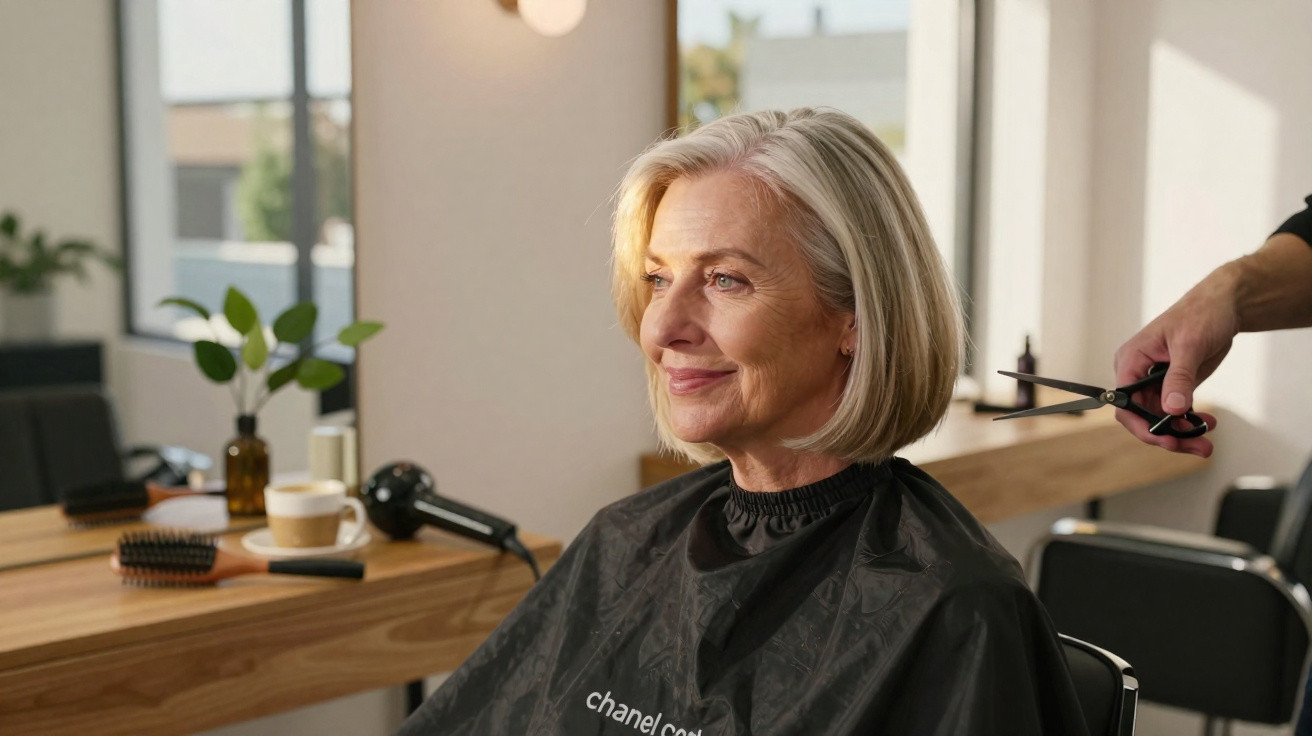
- A modern short haircut designed to highlight silver strands.
- Light tinting shampoos that refine the shade without hiding it.
- Deliberate clothing choices: colours that work well with silver, such as navy, black and berry shades.
- Care products to combat yellow tones and maintain shine.
This makes natural grey feel not like a sacrifice but like an intentionally created look – simply one without a constant battle against the calendar.
Greater ease in the mirror – and in everyday life
People who leave behind the daily or weekly checking of their roots often notice another change: the mirror loses some of its power. The question “How old do I look?” becomes less important. More often, it is replaced by “How am I actually feeling?”
That shift has lasting effects. When people stop seeing themselves primarily as a body and an outward appearance, they are more likely to pay attention to their needs, boundaries and quality of life. Grey hair is no longer a “problem”, but a visible sign that life is moving forward – and that they are moving with it, without hiding.










Comments
No comments yet. Be the first to comment!
Leave a Comment