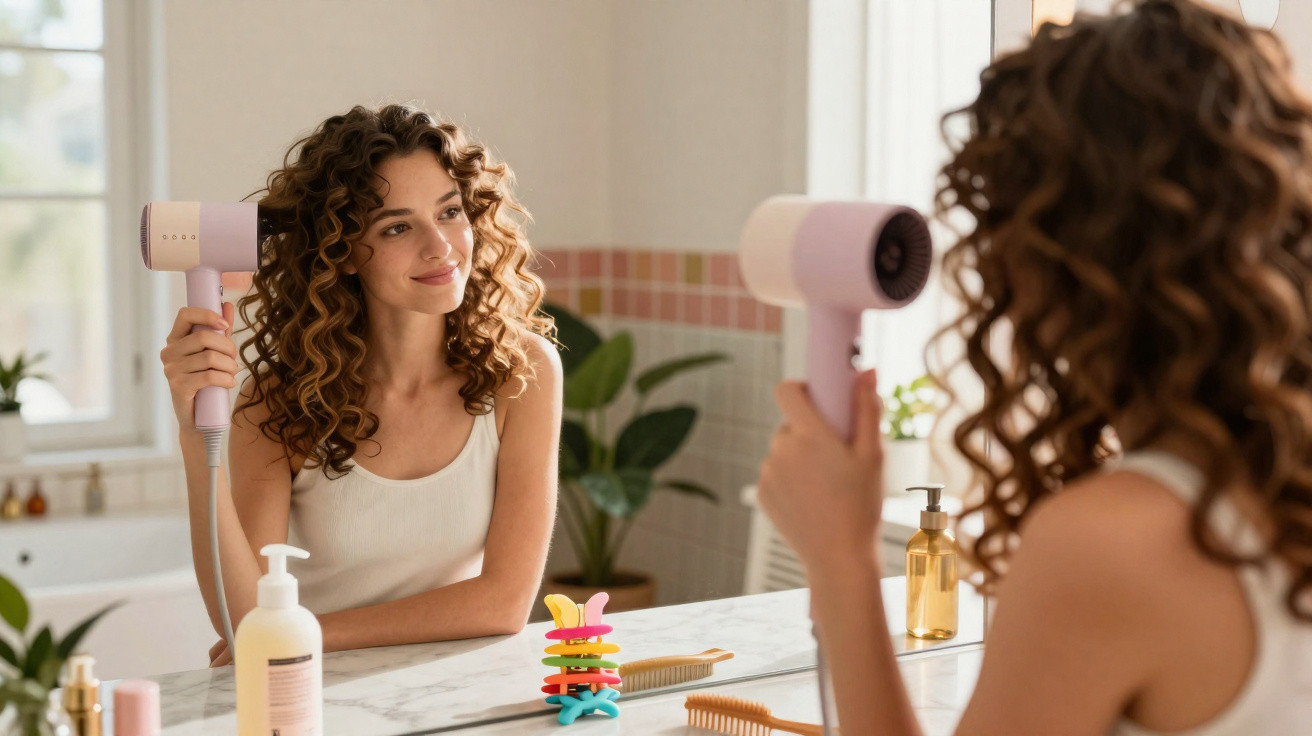
More and more stars are moving away from poker-straight lengths and embracing hair that bounces, sways and visibly “comes alive”. The legendary 1990s blow-dry, packed with large curls, is making a major comeback in 2026 - aimed at anyone tired of severely straightened strands and ultra-polished, glossy looks.
Why the 1990s curly blow-dry is suddenly everywhere again
A clear theme has emerged on the red carpets at the 2026 Grammy Awards and Golden Globes: volume is winning over perfection. Rather than flat, blow-dried lengths, there are broad waves, soft corkscrew curls and airy movement right through to the ends. Celebrities including Julia Roberts and Sarah Jessica Parker are visually referencing their iconic 1990s roles - albeit with a more contemporary finish.
The new 1990s blow-dry favours movement and fullness over rigid rows of perfectly defined curls.
At the same time, retro cuts are becoming increasingly important. Curtain bangs, updated mullets and soft layers are now almost impossible to miss on catwalks and at fashion events. The curly blow-dry fits seamlessly into this aesthetic. It conveys a relaxed, almost accidental elegance - as though the hair has barely been styled, yet is still ready for a photoshoot.
What defines the 1990s curly blow-dry in 2026
This trend is not simply about “creating curls”. The look follows a set of new principles that distinguish it from earlier versions.
Key features of the new 1990s styling
- Curl shape: soft, springy curls that sit somewhere between a wave and a corkscrew
- Volume: visible lift at the roots, followed by airy lengths rather than heavy sections
- Outline: the face is framed by soft curls, with no rigid helmet-like silhouette
- Parting: slightly off-centre or merely suggested, shaped with the fingers instead of sharply drawn
- Finish: shiny without becoming sticky; movement should remain noticeable
On very long hair, the look can resemble a cascade of curls: individual strands catch on one another while appearing frozen in motion, as if captured mid-bounce. On medium-length cuts, these hairstyles strongly recall the heroines of classic 1990s romcoms: plenty of volume, rounded outlines and, at times, ends that gently flick outwards - a clear nod to the era’s legendary blow-dry styles.
Less perfection, more character
Instead of defining every curl to look exactly the same, this style embraces irregularity. Some pieces coil more tightly, others fall in looser waves, and a few may drop slightly during the day - that is precisely where its appeal lies. The finished result is allowed to look deliberately a little “untamed”.
The new 1990s blow-dry looks best when it seems to have fallen into place all by itself.
This approach reflects the wider beauty trend of enhancing natural texture rather than hiding it. Those with naturally wavy or curly hair are no longer expected to “tame” it, but to show it off intentionally.
How different hair types can wear the 1990s blow-dry
Naturally curly and coily hair
People with curls or Afro-textured hair have a distinct advantage when it comes to this returning look. Here, the priority is nourishment and definition rather than complicated heated tools.
- Use rich hydrating masks and leave-in creams.
- Dry with a diffuser on a medium heat setting, tilting the head slightly downwards.
- Wrap only selected sections around a curling iron, especially near the face.
- Finish by loosening the hair with your fingers rather than running through it with a fine-toothed comb.
This keeps the natural texture visible while making it look intentionally shaped rather than merely “random”. The result has a luxurious yet effortless feel.
Naturally straight hair
Anyone with straight hair who wants to recreate the 1990s blow-dry will need a little more technique, but no professional kit.
- After washing, work a volumising mousse through the lengths and into the roots.
- Blow-dry section by section with a large round brush, directing the hair outwards and rolling it up.
- Leave the rolled sections to cool briefly so that they can “set” their bounce.
- If desired, reshape individual pieces with a large-barrel curling iron.
- Finally, brush through everything with a soft brush to break up overly perfect curls.
The effect is not made up of clearly defined spiral curls, but of flowing, voluminous movement. A light mist of hairspray holds it in place without making the hair stiff.
The role of the parting and the right haircut
The parting has a surprisingly important role in this hairstyle. Rather than creating a painstakingly precise line, simply push the roots into place with your fingers. It can sit nearer the centre or slightly to one side - the crucial point is that it should not look severe.
The cut itself is just as important. Without layers, the style can quickly become heavy and blocky. The ideal features are:
- long, soft layers through the top sections
- a gentle face-framing shape that highlights the cheekbones
- optional curtain bangs that blend into the curl pattern
Those with very fine hair benefit from subtle layering and from avoiding excessive length. This increases the impression of density and helps prevent the curls from falling flat straight away.
Why so many people are tired of the sleek look
The long-running trend for “Glass Hair” and super-smooth styles has shaped many styling routines - including daily use of straighteners. Over time, this can put significant strain on the hair fibre, leading to more split ends and breakage. The new curly blow-dry offers a welcome alternative.
The 1990s blow-dry represents a more relaxed beauty ideal: less control, more personality.
For anyone who no longer wants to iron away every strand of frizz, this trend provides an aesthetically appealing reason to accept their own natural texture. Even on straight hair, the styling sends a message: perfection is moving down the rankings, while enjoyment of hair is moving up.
Care, products and small mistakes that ruin the look
To stop the hairstyle collapsing after two hours, the hair fibre needs both moisture and resilience. Silicone-free shampoos, lightweight oils on the ends and heat protection before using a hairdryer or curling iron are essential building blocks.
| Do | Don’t |
|---|---|
| Use a heat-protection spray | Use straighteners every day |
| Brush curls only after they have cooled | Comb too early and destroy the bounce |
| Choose light, flexible hairsprays | Weigh the hair down with strong gel or wax |
| Have the ends trimmed regularly | Style damaged, thinning lengths |
One common mistake is using too much product. Combining mousse, oil, serum, spray and shine spray often compresses the volume completely. It is better to select one or two effective products, such as a volumising mousse and a flexible-hold spray.
Who the 1990s blow-dry is particularly suited to
This trend is especially suitable for people who:
- have been unhappy with an overly “straight” look for some time
- have natural waves that they have previously blow-dried away
- want a visual update without a dramatic haircut
- would like their face to appear softer and more youthful
Root volume makes facial features appear more open overall. Fine lines or harsh contours recede because attention is drawn first to the hair’s movement and shine. Particularly on delicate features, the style can look surprisingly grown-up without appearing severe.
How to adapt the trend for everyday life
Nobody needs to follow a full red-carpet routine every day. Many hairdressers suggest a “pared-back” everyday version: create the curly blow-dry on wash day, then refresh it for the next two or three days using a water mist, a little leave-in product and finger styling. This extends the style without applying full heat each time.
Sleep methods such as the so-called “pineapple” - a high, loose ponytail at the crown - or a satin pillowcase are also practical. They reduce friction, help prevent frizz and ensure the blow-dried style still looks presentable the following morning.
In the long term, the return of the 1990s blow-dry may even change many people’s relationship with their own hair. Anyone who stops fighting their natural texture saves time, reduces heat damage and may discover that the supposedly “imperfect” version is often the most interesting one.












Comments
No comments yet. Be the first to comment!
Leave a Comment