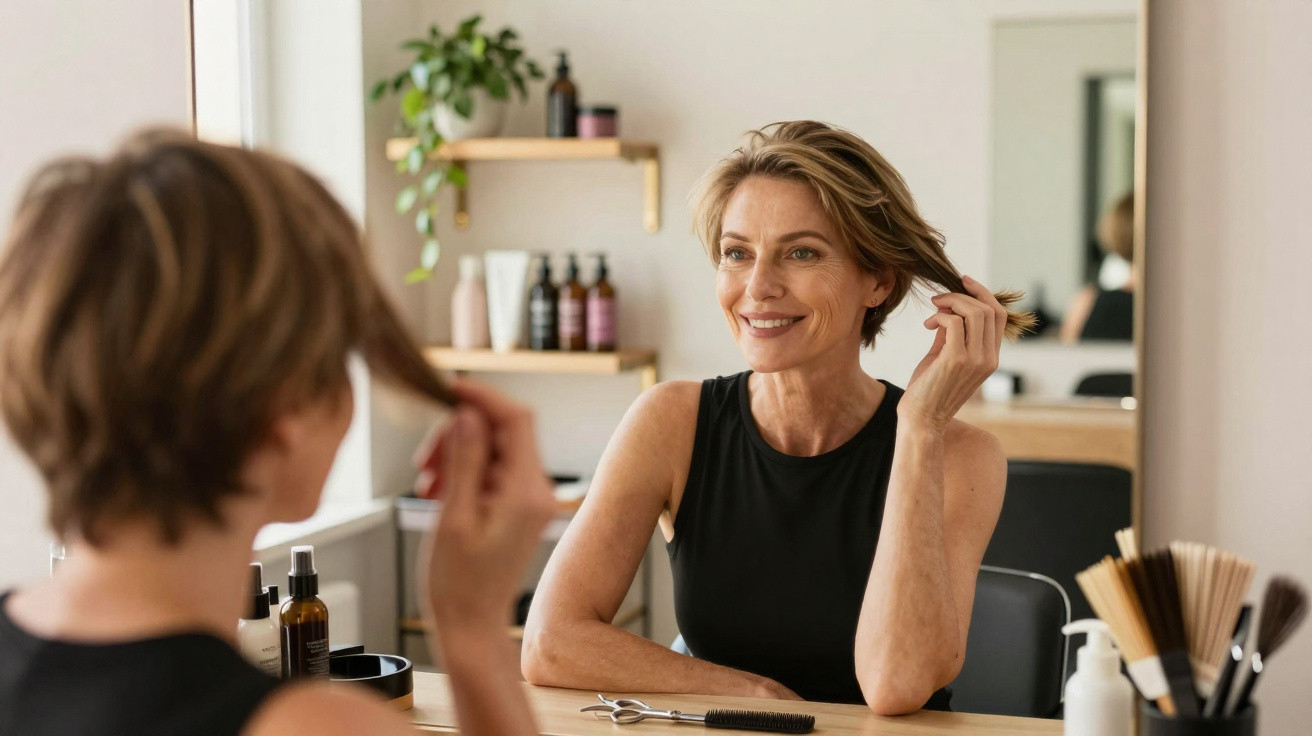
On a Saturday morning at the salon, the waiting area was packed with women flicking through their phones and studying an endless stream of pixie-cut photos. One woman, whose silver regrowth showed beneath an ageing balayage, leaned towards her friend and asked: “Do you think I’m too old for that?” The image enlarged on her screen looked current, polished and faintly rebellious. Her stylist approached, assessed her face and then the picture, before smiling: “Too old? This cut would erase ten years in ten minutes.”
She still seemed unsure. Instinctively, she reached to the back of her head, as though she were already parting with hair that remained in place.
In reality, choosing a pixie cut after 50 is about more than having shorter hair.
It is about altering the way you enter a room.
Why a pixie cut after 50 can take a decade off your face
When a woman over 50 has an excellent pixie cut, her hair is not usually the first thing you notice. Instead, her jaw suddenly appears more defined, her eyes look more luminous and her neck seems longer. Her entire face looks lifted.
Short hair reveals the elements we often attempt to conceal: facial texture, expression and bone structure. Although that may sound daunting in theory, it tends to do the reverse in practice. You appear lighter, more rested and less visually “busy”.
A carefully structured pixie also makes the overall silhouette feel lighter, particularly if you have kept the same medium-length style for years. A single cut can make the previous decade feel far less heavy on your shoulders.
Any experienced stylist will say that the women who appear “youngest” in their chair are seldom those with the longest hair. Take Claire, 57, who had spent years concealing herself behind a shoulder-length blow-dry that created width at the sides of her face. Whenever she looked in the mirror, all she could see was “roundness”.
When she finally chose a close-cropped pixie with a gentle fringe, the change was striking. Her cheekbones seemed to emerge from nowhere. Her glasses looked intentional rather than merely practical. Leaving the salon, she took out her phone and snapped a pavement selfie, like a teenager testing a TikTok filter.
She later messaged her stylist: “I haven’t had this many compliments since my wedding.”
There is a straightforward visual reason for the “10 years younger” result. Long, weighty hair can pull features downwards and make lines around the mouth and jaw appear firmer. Keeping the sides and nape short directs attention upwards, towards your eyes, complexion and smile.
A pixie opens the face, allowing more space for light and expression. Showing more skin around the neck and collarbones also gives the whole upper body a more energetic appearance.
A well-designed pixie is not really about age but about architecture: it restores balance to your proportions, making your face rather than your hair the central focus.
4 essential tips for wearing a pixie cut after 50 and “look 10 years younger”
Tip 1: Choose softness, not severity.
The most flattering, rejuvenating pixies after 50 always retain a soft feature around the face: perhaps a wispy fringe, slightly longer pieces around the ears or some movement through the top. Think feathered ends instead of sharply cut lines.
If your stylist speaks only about going “very short” or creating a “clean nape”, without referring to softness or texture, take a moment before committing. Request a pixie with lighter, layered ends and a fringe that can be swept to one side.
That small amount of softness at the eyes and forehead works like a natural filter. It softens and flatters rather than fixing your features in place.
Tip 2: Work with your texture, rather than copying the Instagram photo.
We have all experienced that moment of showing a celebrity pixie screenshot while quietly wishing to leave looking exactly like her. Yet thick, wavy hair will not behave like fine, straight hair, and battling your own texture is a quick route to looking older and feeling frustrated.
For fine hair, ask for lift at the crown and discreet layers that do not over-thin the ends. If your hair is thick, opt for controlled removal of bulk and extra length on top, so you avoid a “helmet” shape.
Honestly, nobody manages a full styling routine every day, but your pixie should still suit your low-effort mornings, needing no more than a quick tousle and a little cream.
Tip 3: Experiment with colour, while avoiding a “block” finish.
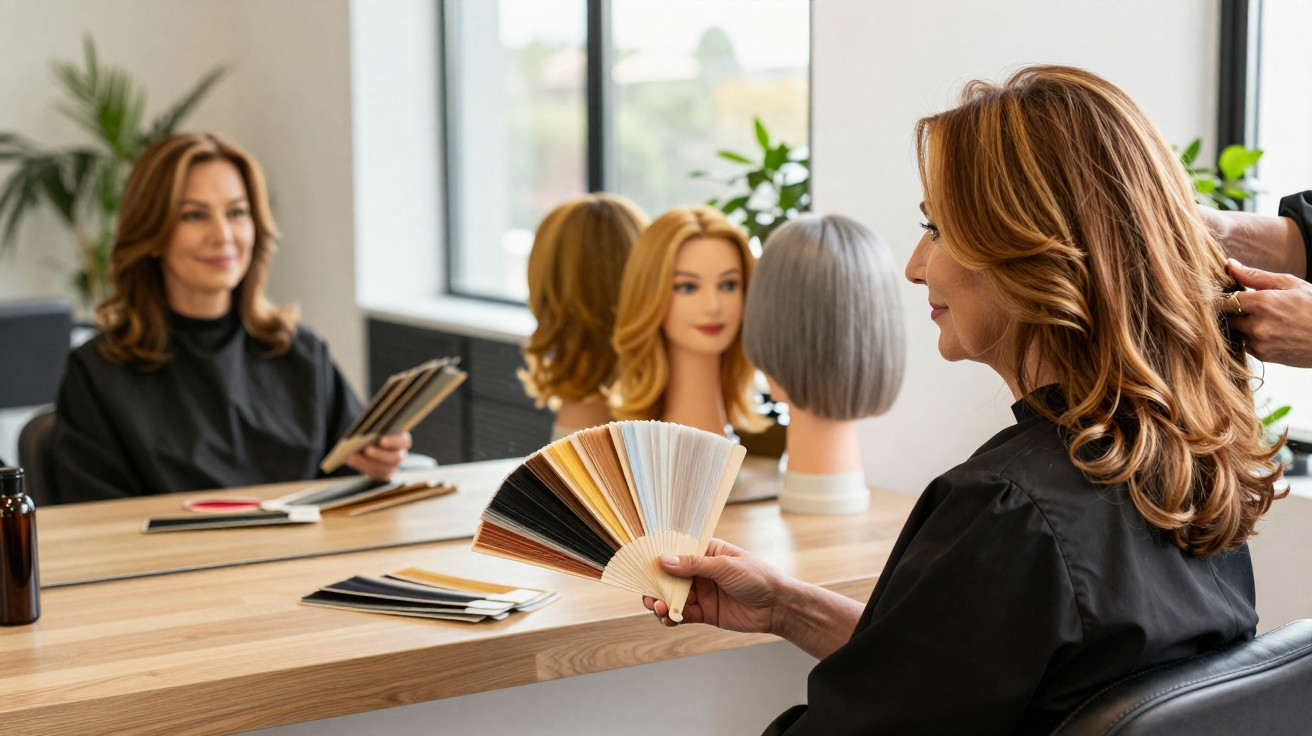
This is often where the strongest rejuvenating effect is created. A solid, very dark shade on short hair can make features look severe and draw attention to every line. Softer, multi-tonal colours provide movement and gentleness. Ask for subtle highlights or delicate contrast that reflects light around the crown and face.
“After 50, the cut and the color have to be in conversation,” says Paris-based hairstylist Léa Martin. “A pixie without dimension can look severe. Add a few lighter veils and suddenly the hair looks like skin lit from within, not a helmet sitting on top.”
- Choose soft, blended highlights rather than stark streaks.
- Keep within one to three tones of your natural shade for a convincing glow.
- Apply a shine-boosting product: short hair reveals everything, including dullness.
- Think about retaining some natural white strands for an elegant salt-and-pepper result.
- Book minor colour refreshes rather than making dramatic changes every six months.
Embracing your pixie cut: attitude, routine and the new mirror moment
The morning after a major cut always feels slightly unusual. You wake, see yourself in the bathroom lighting and, for a brief moment, do not quite recognise the reflection. Your neck is on display. Your ears are suddenly noticeable. Your earrings become important.
That is when the pixie truly begins to do its job. Styling is faster, leaving those saved minutes for skincare, a brighter lipstick or simply a little more sleep. Many women find that, once their hair is cropped, they enjoy looking at their faces again instead of continually arranging their lengths.
Every morning, a pixie poses the question: “How do you want to show up today?” And your hands provide the answer, rather than a brush.
| Key point | Detail | Value for the reader |
|---|---|---|
| Tailor the cut to your features | Soft edges, a personalised fringe, and the right length at the nape and sides | Highlights bone structure and visually lifts the face |
| Honour your natural texture | Layers and styling products suited to fine, thick, straight or curly hair | Simple everyday styling and a finish that genuinely looks like “you” |
| Add dimension with colour | Subtle highlights, multi-tonal shades and shine-enhancing care | Softens features and prevents a harsh “helmet” effect |










Comments
No comments yet. Be the first to comment!
Leave a Comment