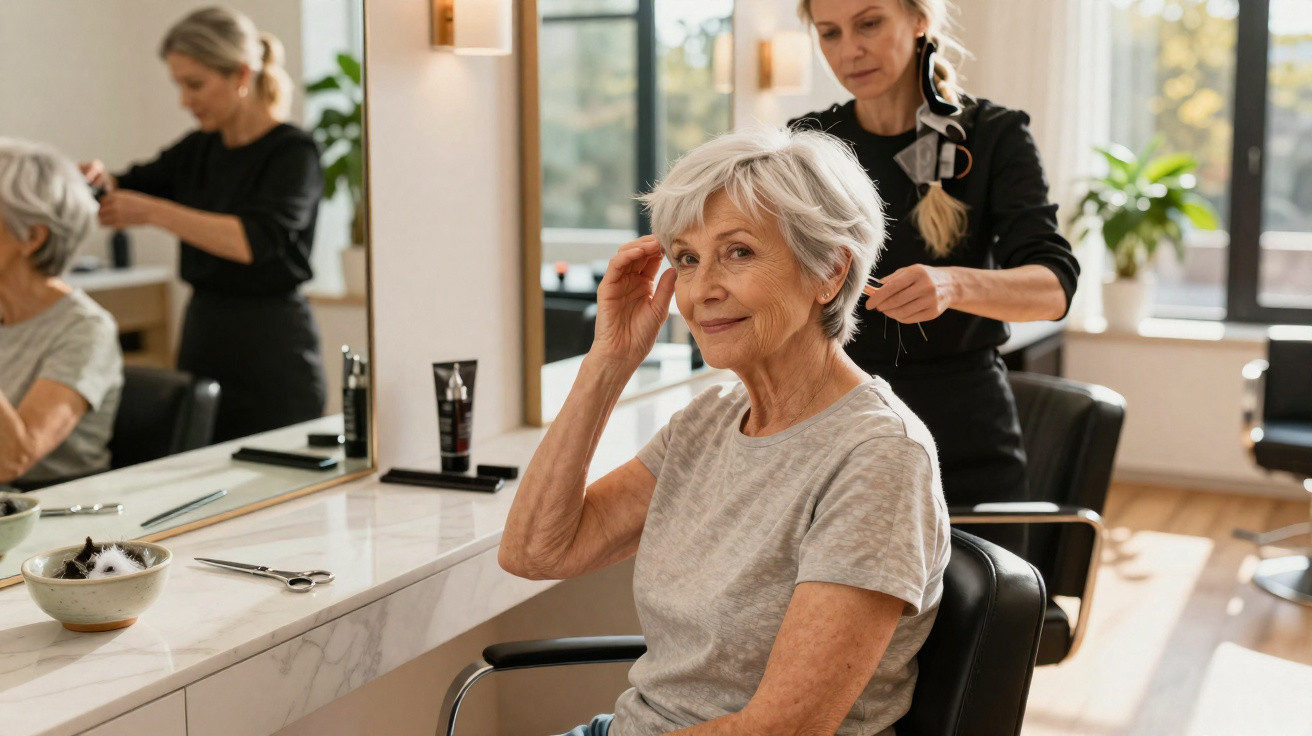
She is 74, in red lipstick and comfy trainers, with a screenshot of a haircut saved on her phone. “The Trixie cut,” she tells the hairdresser, sounding equally amused and determined. Beside her, a client in her late sixties flicks through pictures of layered wigs and face-smoothing filters, quietly saying she “doesn’t want to look old”. Two women in the same stage of life, facing opposite ways in the mirror. They share the same dilemma: resist ageing or embrace it with style. Once the cape comes off, the answer can be seen from behind.
Why the Trixie cut has become a line in the sand
The Trixie cut - a short, graphic style with gentle height at the crown and soft lines around the ears - is discreetly becoming popular in salons serving retirement-age clients. It is short, light and full of movement when you laugh. Some women describe it as “liberating”, while others dismiss it as “a grandma cut with good PR”. Beneath the hairdryer, more than a hairstyle is taking shape: it is a statement about how ageing is permitted to look. The cut poses one straightforward question: are you ready to be seen as you are?
At one London salon, the owner has a private album of “Trixies”: before-and-after images of clients aged between 70 and 85. One woman had concealed herself beneath a thick brown wig for years. Another had held on to weekly blow-dries and an immovable fringe. Both walked out with cropped sides, a delicate fringe and their natural hair colour merging into silver. There were tears in the chair, though laughter was more common. On the appointment list, the shorthand is simply “TC70+”. It has become a quiet trend, spreading not through TikTok but through waiting rooms, bridge clubs and WhatsApp groups called “Girls 1950”.
What makes this haircut so polarising is not really its silhouette, but what it communicates. The Trixie cut makes no attempt to disguise anything. It does not conceal the neck, cover the temples where white first appears, or sweep hair across thinning areas like a courteous untruth. Instead, it frames the face you have today, rather than the one in your school reunion photograph. That is why some women love it while others reject it fiercely. After 70, the cut brings a tension many women feel into focus: am I trying to pass, or am I trying to be?
Wearing the Trixie cut without feeling you have “given up”
A Trixie cut looks current rather than matronly through three key elements: the length around the ears, the texture at the crown and the way the fringe falls across the forehead. Ask your stylist for soft sides rather than shaved ones, leaving a few wisps that shift when you pass your hand through them. At the top, light layers are needed to stop the hair lying flat like a helmet. The fringe may be almost imperceptible, as if it happened by chance, or slightly longer for a gentler effect. Think “I woke up like this”, albeit with excellent scissors playing a part.
Many women over 70 arrive with a collection of long-held rules: never cut it too short, never reveal the ears, never show the neck. Those ideas came from a different time, with other expectations and different hair products. If you feel tempted to request extra length “just in case”, take a moment. Consider whether it is truly about your style or a fear of looking your age. Neither response is shameful, and a good stylist will not pressure you; they will simply advise you. Practically speaking, the Trixie cut also grows out more gracefully than most styles, so you are unlikely to wake up with an accidental bowl cut.
A Paris stylist put it plainly to a client who kept gripping the mirror:
“You’re not cutting your youth. You’re cutting the costume you wore to protect it.”
- Save a photograph of someone your own age wearing the cut, rather than a 30-year-old influencer.
- Arrange your first Trixie cut for a quiet day, so you have time to adjust to your reflection.
- Choose an uncomplicated styling routine: one product, one movement and no more than five minutes.
- Allow yourself at least two weeks before deciding what you think of the cut. Both hair - and mindset - need time to settle.
Women who accept ageing vs those who fake it: it is not really about hair
Online, discussion of the Trixie cut soon became a moral boxing match. On one side were silver-haired women proudly sharing “embracing my age” selfies. On the other were women in their seventies wearing extensions, fillers and filters, accused of “refusing reality”. The haircut came to represent a wider divide: authentic ageing versus “fake” youth. Yet when you sit beside these women in real life, drinking tea in a waiting room, the boundary is far less distinct. A Trixie cut can be a courageous choice. A carefully fitted wig can be one too.
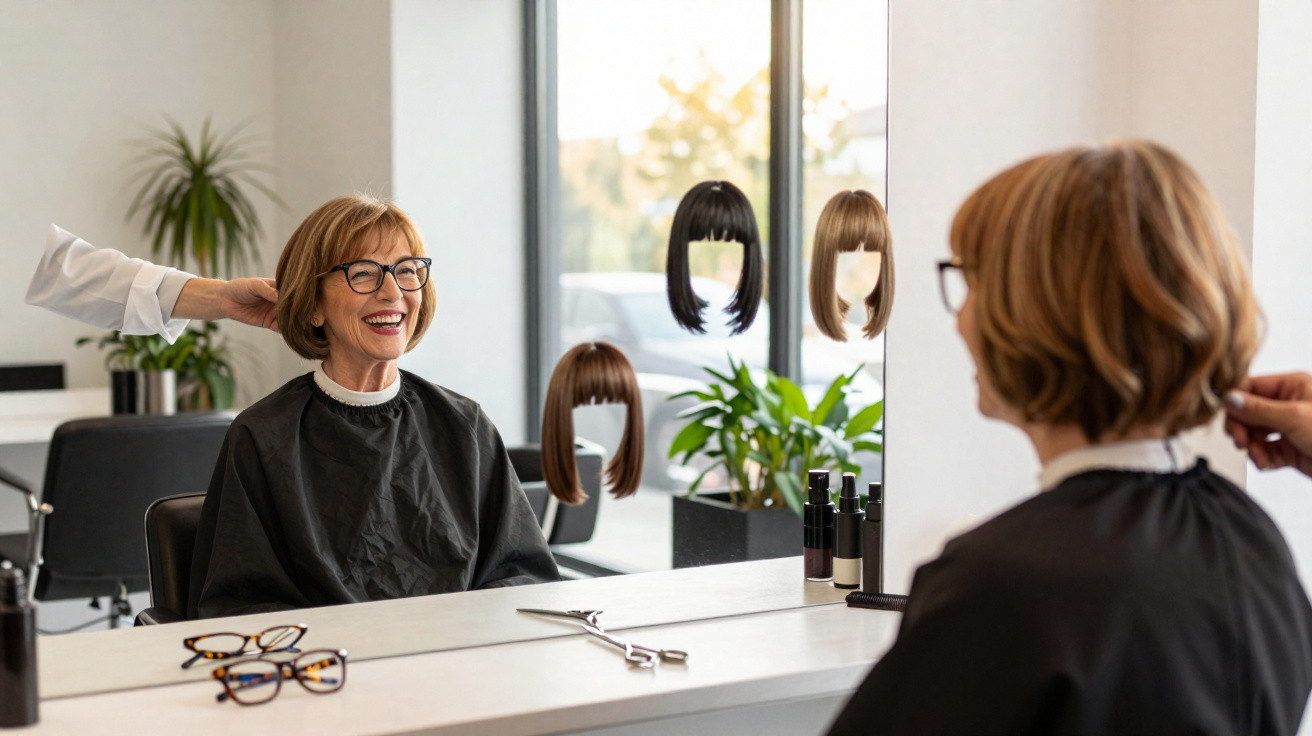
On a Tuesday morning at a small-town salon, a 72-year-old widow arrives in a baseball cap and leaves with a crisp Trixie cut, her white hair free at last. Two chairs away, a 69-year-old actress has a subtle hairpiece fitted so she can continue working on stage. Both are dealing with the same fear: fading from view. One opts to be visible as “the silver lady with the cool cut”. The other chooses the reassurance of continuity, resembling her casting photographs from a decade ago. We all know the moment when the mirror presents a version of us we do not yet recognise. The answer we choose reveals less about vanity than it does about survival.
When people discuss “faking it” after 70, they rarely acknowledge the genuine grief involved in losing your former face, hair and presence in a busy room. Hair becomes a battleground because it is the easiest thing to alter. Dye it or leave it natural, cut it or grow it, post the selfie or miss the reunion. The Trixie cut lies at that intersection: short enough to mark a change, yet soft enough not to declare “I surrender”. Women who choose it often repeat the same words: “I wanted to look like myself again.” The irony is that those who hold on most tightly to youth often end up looking like everyone else in the anti-ageing aisle.
| Key point | Detail | Why it matters to the reader |
|---|---|---|
| Trixie cut = statement | Short, textured, revealing silver hair and the neck | Helps you decide whether you are ready for a visible style change |
| Styling can remain simple | One product, light volume, five-minute routine | Makes the cut achievable in everyday life after 70 |
| Ageing vs “faking” is nuanced | Hair choices can reflect fear, identity and freedom | Helps you feel less judged, whichever option you choose |














Comments
No comments yet. Be the first to comment!
Leave a Comment