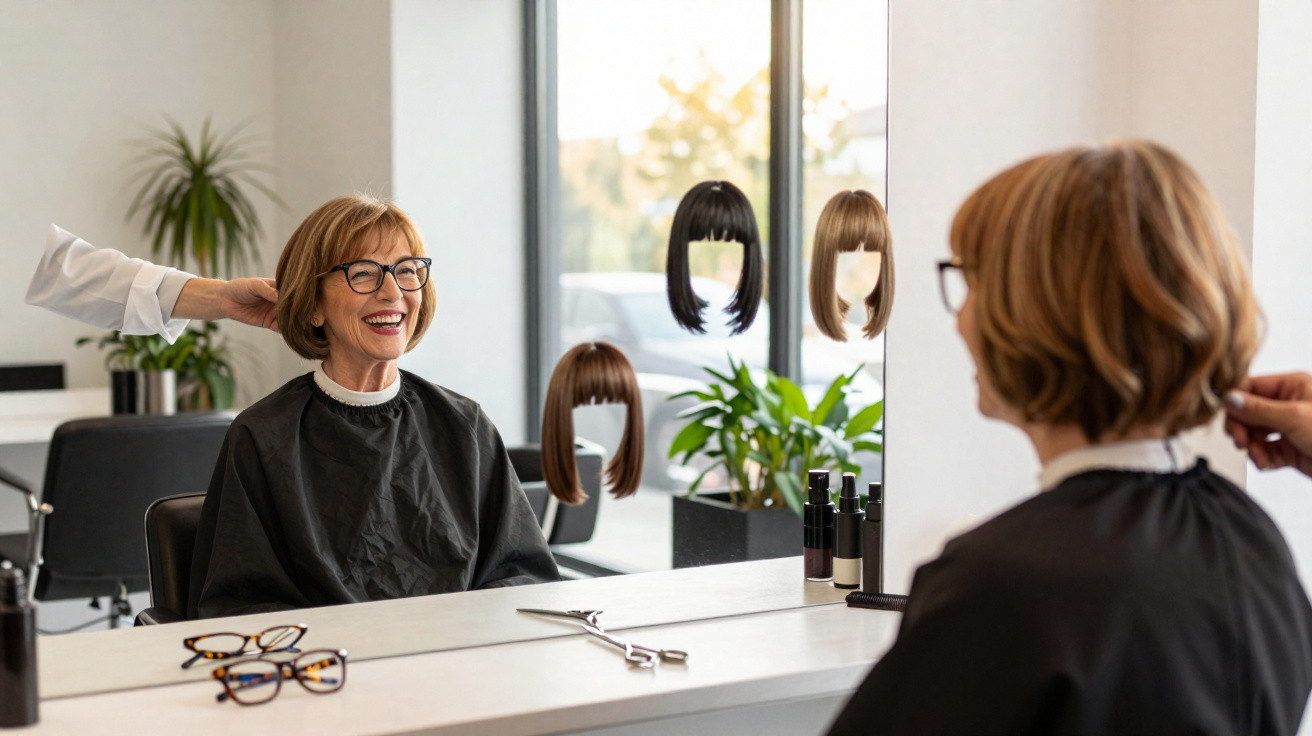
The salon was already alive with chatter when Anne came through the door. At 72, she wore her silver hair secured in a low bun, “because that’s what I’ve always done,” she said, nudging her glasses back up her nose with a faintly weary motion.
She studied her reflection, then glanced at the women around her, some wearing sleek bobs and others loose, gentle waves. “Glasses and wrinkles, that’s a lot for a face,” she said with a laugh that was not entirely cheerful.
The stylist moved closer, considered her for a moment and answered softly: “We’re not going to hide your age. We’re going to highlight your eyes.”
Twenty minutes later, Anne looked through her frames again. A softly layered cut now brushed her cheekbones, and her face appeared lighter, more lifted and noticeably more alert.
She had not become younger by concealing anything. She looked younger because, at last, her hair worked with her glasses.
The secret alliance: haircut + glasses = instant face-lift
When a woman over 70 wearing glasses settles into a stylist’s chair, the first instruction is often the same: “Let me see you without moving.” The stylist observes how the frames rest across the nose, where the arms sit at the sides of the face and how the lenses alter the appearance of the eyes. Only then do they assess the hair. Whether it is short or long, flat or full, the issue is not simply fashion. It is balance.
If glasses and hair compete, the whole face can seem fatigued. When they complement one another, the expression appears instantly more lifted.
A Paris hairdresser once described a 78-year-old client who had kept the same blunt bob for three decades. She had dense, weighty bangs, sharply cut ends and substantial tortoiseshell frames. “She told me, ‘My daughter says I look strict,’” the stylist recalled, laughing softly. The length remained at the jaw, but the fringe was opened up, soft layers were placed around the temples and the ends were thinned.
There was just one further adjustment: frames that were slightly lighter, with a rounded top edge. When the client returned a month later, she explained that strangers had begun asking whether she had been away on holiday because she looked “rested.” She was the same person and the same age; only the proportions had changed.
That is the real principle behind hairstyles after 70 with glasses: it is more about geometry than trends. The hair acts as a frame for the frames. Gentle height at the crown draws attention away from drooping eyelids. Fine layers around the cheekbones can soften pronounced lines. A fringe trimmed just above the brows may “cut” across forehead wrinkles while allowing the eyes to catch the light.
Stylists often refer to “visual weight”. Dense hair dropping straight down beside thick frames drags the face downwards. Lighter cuts with more texture can “lift” it again. The change does not need to be dramatic: a few carefully positioned snips can alter the story told by your face.
Four flattering haircuts after 70 that love your glasses
The first style stylists frequently suggest is a softly layered bob, ending just below the ears or at jaw level. This is not the severe, geometric bob associated with the 1980s, but a lighter, more contemporary interpretation. It should move as you turn your head rather than creating a hard line beneath the frames.
For women over 70, this style subtly reveals the neck and jaw while allowing glasses to look like a stylish accessory rather than an obstruction. Face-framing layers can be adjusted to suit the frames: a little shorter around the temples for thick arms, or longer when glasses are light and minimalist.
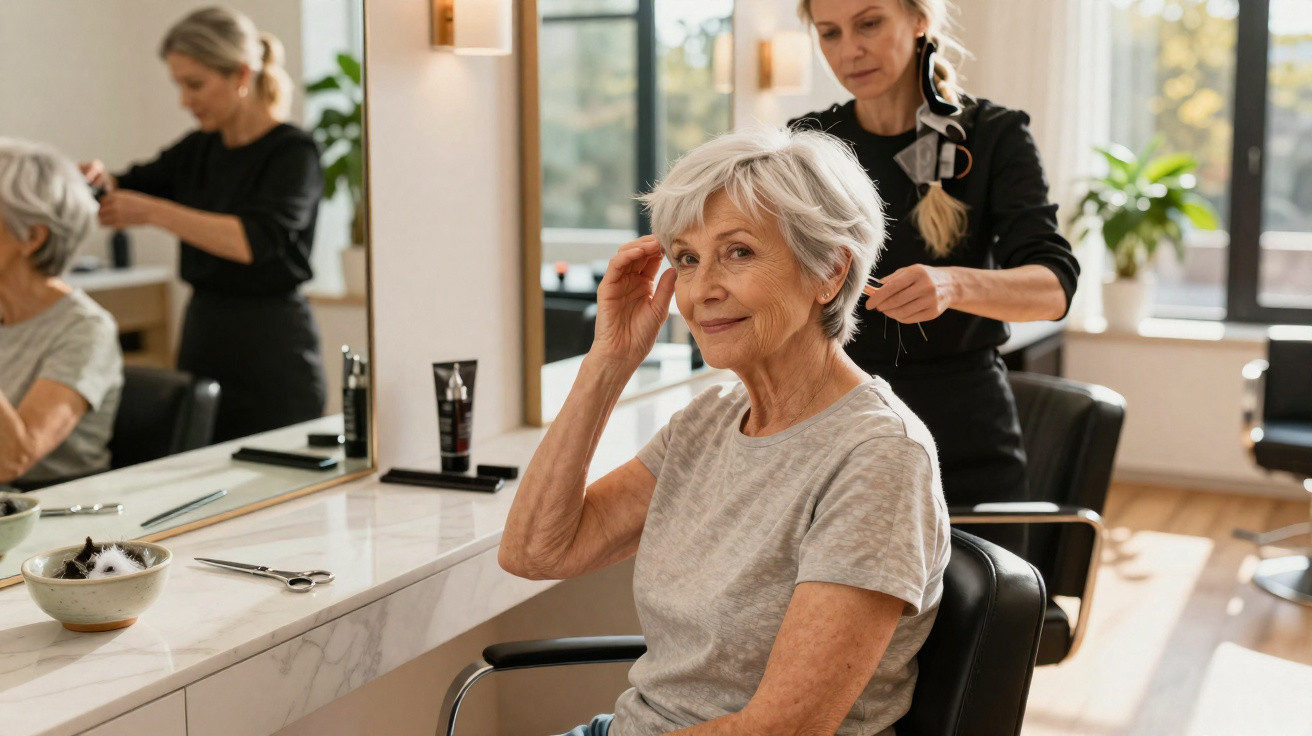
Next is the gently feathered pixie. Many women hesitate over this cut because they worry it will seem “too boyish”, but with glasses it can be among the most rejuvenating choices. Its effect comes from texture: it should not be shaved or flat, but feature fine, feather-like pieces by the ears and some lift at the crown.
Imagine a grey or white pixie following the shape of the head, with a light fringe grazing the upper edge of the frames and a few unruly strands falling at the temples. Paired with glasses, particularly colourful or statement frames, the contrast creates an artistic and self-assured effect. A pixie allows the eyes and lenses to take centre stage, while the hair forms an elegant halo rather than a curtain.
The third cut favoured by stylists is a long layered crop, sitting somewhere between the chin and the base of the neck. It suits anyone thinking, “I’m not ready to go short, but I want shape”. Kept a little longer at the nape and broken up with layers to remove excess weight, it works especially well with larger frames. Tucking the hair behind the ears can also bring focus to the temples and cheekbones.
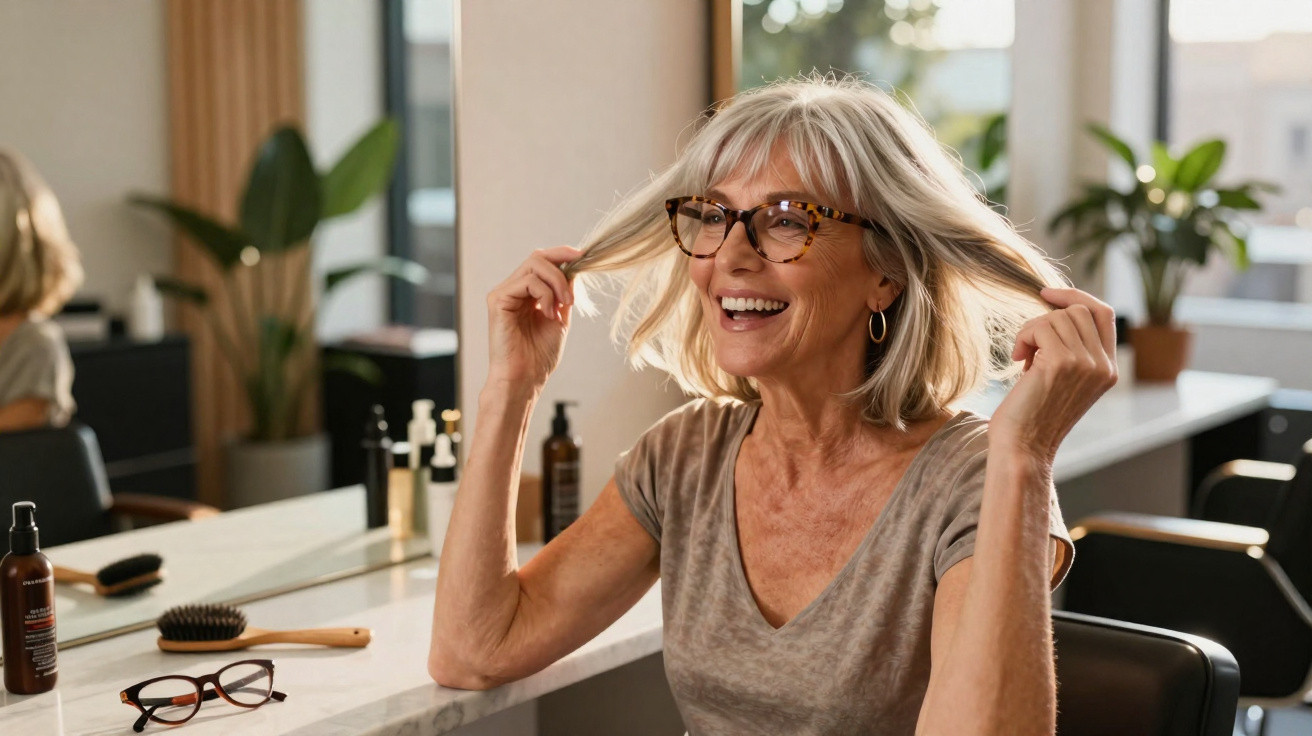
The fourth option is a medium-length style with curtain bangs and soft waves. It is particularly suitable for women who have retained some length and wear glasses with a broad bridge. The curtain fringe parts gently at the centre, shaping the lenses without covering them. Waves, whether natural or created using a round brush, mirror rounded frames and soften more angular ones. There’s a sweet spot where the fringe ends and the glasses begin, and that tiny gap can erase ten years from the expression.
How to talk to your stylist (and your mirror) after 70
Keep your glasses on when you first sit before the mirror. Rather than giving them to the stylist immediately, let them see the complete picture. The most skilled professionals will ask you to turn your head, smile, frown and look down at a magazine. They are assessing the connection between the hair, skin and frames.
One straightforward sentence can lead to a more successful cut: “I want my eyes to stand out more than my wrinkles.” It gives the stylist a precise aim. They can then tailor one of the four flattering cuts - a soft bob, feathered pixie, long crop or mid-length style with curtain bangs - to your bone structure and the shape of your glasses. Even minor changes to where layers begin or a fringe falls can transform the final effect.
After 70, one of the most frequent mistakes is holding on to length “for femininity’s sake” once the hair itself has changed. Finer, drier hair often clings around the face, especially near glasses, emphasising shadows and under-eye circles. Another common problem is the helmet-style blow-dry, which fixes everything in place: the hair, frames and expression alike.
The aim is not to cut all the hair off, but to reduce whatever weighs down the face. This may involve taking away bulk at the sides, where it clashes with the arms of your glasses, while introducing soft height at the crown to lengthen the silhouette. Realistically, no one manages this every day. A good cut must therefore look presentable when air-dried with very little effort, rather than only after an hour spent with a round brush.
“After 70, I don’t cut for trends, I cut for the eyes,” explains Italian stylist Marta L., who sees dozens of women with glasses every week. “If I can get the eyes to sparkle, the hair and the frames are doing their job together. The year of birth doesn’t matter anymore.”
- Ask for softness around the frames: Light thinning or texturising where the arms of the glasses meet the hair prevents bulk and severe lines.
- Choose one focal point: pair bold frames with a quieter haircut, or a striking cut with more understated glasses. Allow one element to lead.
- Lighten the colour around the face: A few delicate highlights or a paler shade around the fringe area can soften the shadows cast by frames and brighten the expression.
- Keep the fringe mobile: Whether you choose wispy bangs or a curtain fringe, it should move rather than sit as a rigid bar above the glasses.
- Plan a low-effort routine: A cut that takes 30 minutes to style around your glasses is not helping you. Ask the stylist to demonstrate a 5-minute version.
A new face, without changing your face
A quiet shift is taking place in salons. Increasingly, women over 70 bring in photographs of women their own age, rather than women two decades younger. They are no longer trying to escape the mirror; they want to see themselves in it, simply looking fresher. The partnership between hair and glasses has become one of the most effective yet overlooked ways to achieve this.
A layered bob can lift the jaw, a feathered pixie can clear the temples, a long crop can refine the neck and a curtain fringe can soften the forehead. None of these styles removes years. Instead, they soften contours, rebalance volume and allow the gaze to come forward instead of vanishing behind locks and lenses. Most of us know that moment of catching our reflection in a shop window and wondering, “When did I start looking so tired?” The right cut and suitable frames can turn it into a small, welcome surprise.
This is not about trying to pass for 50 again. It is about treating everything worn on the face - wrinkles, glasses and hair - as allies rather than adversaries. Sometimes, simply changing the way a fringe falls across the frames is enough to reveal the woman who was there all along, waiting only for more flattering light.
| Key point | Detail | Value for the reader |
|---|---|---|
| Balance hair and frames | Adapt length, layers and volume around the temples, cheeks and forehead so they complement glasses | The face appears more lifted and harmonious without dramatic changes |
| Choose one visual focal point | Choose either statement glasses with a simple cut, or a strong haircut with subtler frames | Prevents an overcrowded look while drawing attention to the eyes and expression |
| Opt for soft, textured cuts | Soft bob, feathered pixie, long crop or medium cut with curtain bangs | Creates an instantly rejuvenating result suited to ageing hair and everyday routines |








Comments
No comments yet. Be the first to comment!
Leave a Comment