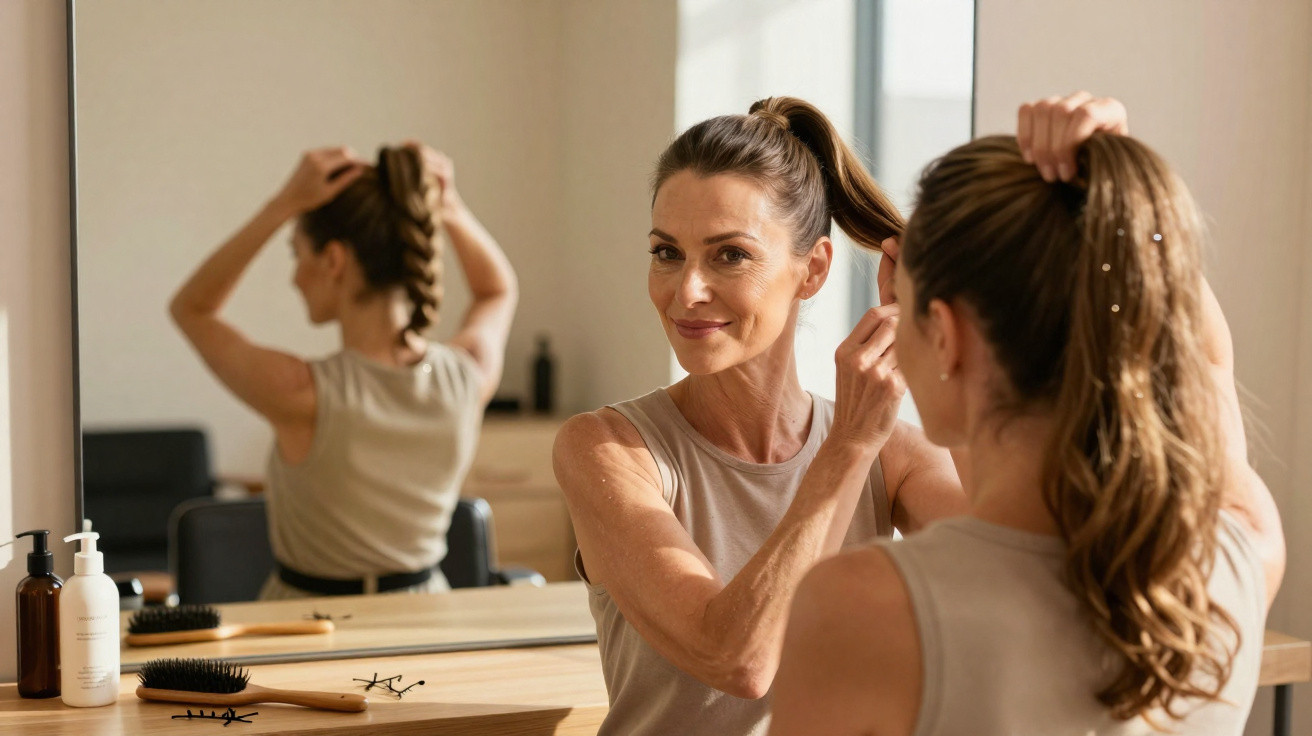
Many people over 50 reach first for creams, treatments or even a cosmetic doctor when their facial contours begin to lose definition. Yet hairdressers have been saying the same thing for years: the right updos and ponytail styles can create a visible lifting effect, without injections or a scalpel. Three hairstyles stand out in particular – each is quick to create, suitable for everyday wear and remarkably effective.
Why certain hairstyles visibly tighten the face
There is nothing magical about this effect; it follows a straightforward mechanical principle. When hair is drawn back and upwards in a controlled way, it creates tension in the temple area and around the outer corners of the eyes. Fine lines appear smoother, the eyes look more open and the face seems visually lifted.
A second factor also plays a role: exposing the forehead and adding emphasis at the crown directs more light towards the upper part of the face. Shadows beneath the eyes and in hollows become less noticeable, while the lower facial area recedes visually. This trick can make a surprisingly big difference after 50, when the skin and contours can begin to shift subtly downwards.
“As volume and tension move towards the crown, they create the illusion of a lifted, slimmer face – for a few hours, entirely without a procedure.”
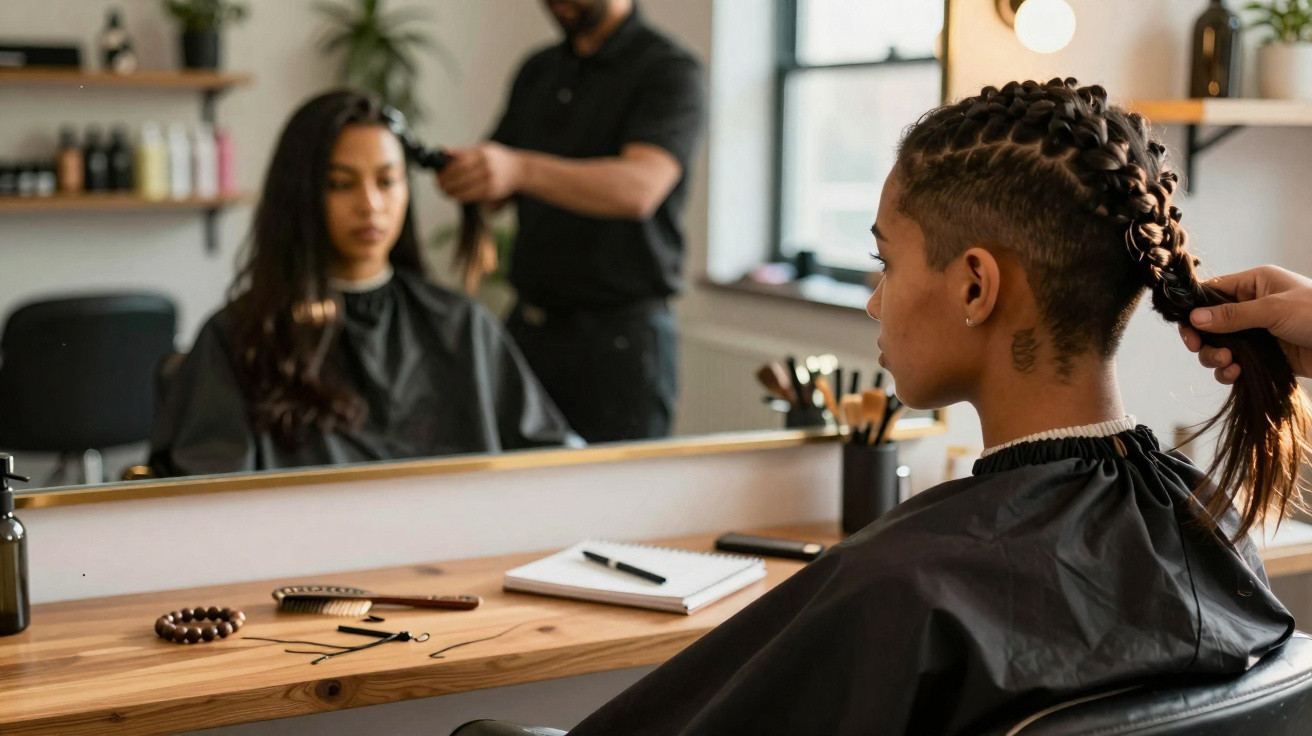
Many hairdressers place these looks within the trend known as the “Croydon facelift”: tightly secured ponytails and chignons that effectively sculpt the face. One detail is crucial: the hairline, especially at the temples, should be styled as smoothly and closely to the head as possible. Professionals often use a natural-bristle brush with a small amount of light gel or wax, finishing with hairspray for hold.
Three hairstyles with a lifting effect after 50
1. A high ponytail for an instantly fresher appearance
The high ponytail is considered the quickest hairstyle for combating a tired-looking appearance. It draws the features upwards and looks sporty yet elegant – making it ideal for the office, a trip into town or dinner out.
A professional tip for getting the placement right: position the hair tie where an imaginary line runs from the chin, past the outer corner of the eye, to the upper back of the head. This diagonal axis creates the characteristic “lift” by visually pulling the face upwards.
- Brush the hair thoroughly and largely remove the parting.
- Use a brush to comb the sides and temples firmly backwards.
- Gather the hair along the imaginary chin-eye-head line.
- Secure it using a soft, fabric-covered hair tie.
- Finally, smooth the roots with a little gel and set the style with hairspray.
This look works particularly well for medium-length to long hair and round or oval face shapes. One point matters: the ponytail must not sit too low. A low placement can quickly make the face appear heavy and tired – the exact opposite of the intended result.
The hair at the temples is deliberately kept taut. This makes crow’s feet less prominent and gives the eye area the slightly “foxy”, upward-drawn expression that many social media followers admire on celebrities.
2. A high twisted chignon as an “anchor” for defined contours
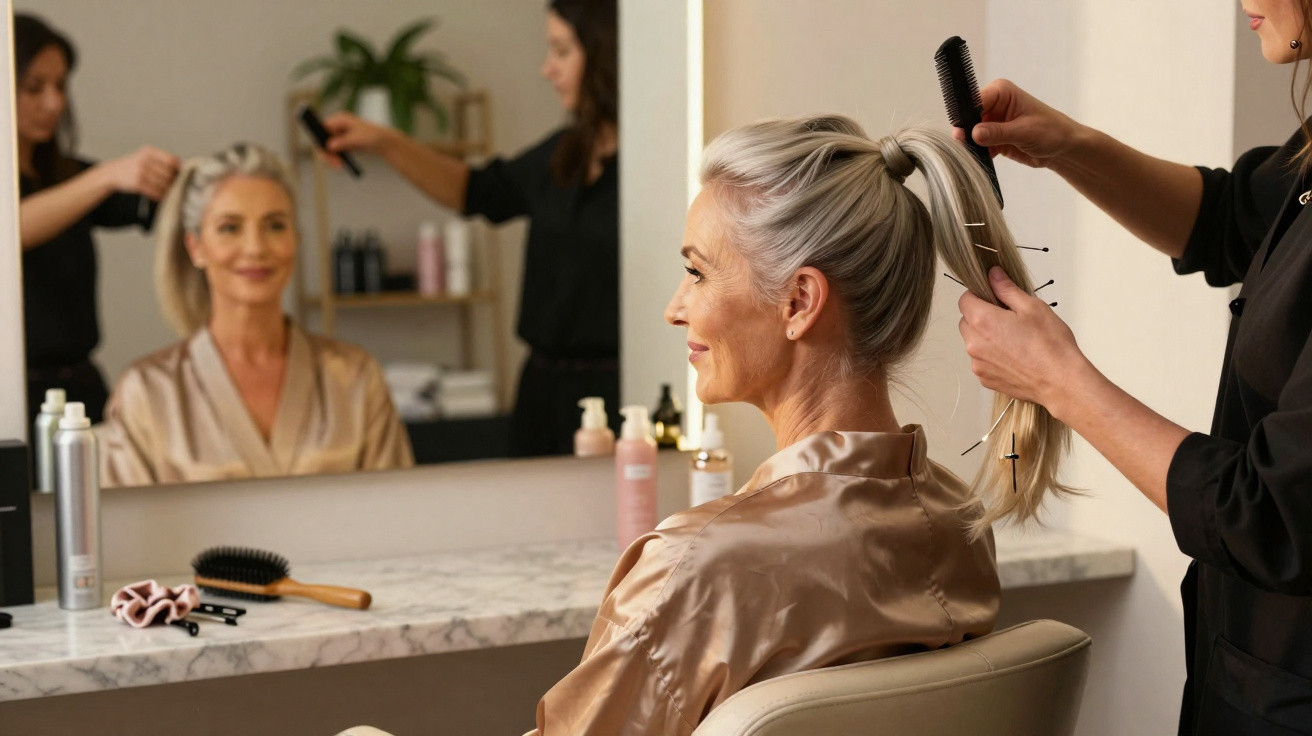
Anyone who finds a simple ponytail too plain can turn it into a high twisted chignon. The starting point is again a ponytail positioned very high on the head. The lengths are then twisted tightly, wrapped around the hair tie and secured with hairpins.
This bun acts as a small anchor point at the crown: the tension remains steady for hours, while the concentrated volume on top lengthens the face. The cheeks and jawline in particular benefit, appearing slimmer and more defined.
“A high, twisted chignon can alter the proportions of the face so that a full, slightly sagging lower jaw appears noticeably lighter and more refined.”
There is an added advantage: the nape of the neck is completely exposed. Anyone concerned about fine lines or a slightly softer neck area automatically directs attention upwards, towards the cheekbones, eyes and forehead.
The chignon is especially suitable for formal occasions, meetings, a visit to the theatre or celebrations. Add a silk scarf, a subtle clip or elegant hairpins and it is immediately suitable for the evening.
3. A high half-up hairstyle for a softer lifting trick
For those who find tightly pulled-back ponytails too severe or uncomfortable, a high half-up hairstyle is the better choice. Only the top section is pulled upwards and backwards, while the remaining hair falls loosely over the shoulders or neck.
To create it, section off the hair from above the ears to the back of the head, then tie it into a small high ponytail or mini bun. The pull is focused on the upper half of the face: brows and eyelids appear slightly lifted, without making the contours look too harsh.
The loose lengths offer several benefits:
- They frame the jawline and make it appear softer.
- They can disguise a slightly loosened neck or nape area.
- They give the style a youthful, feminine feel.
This half-up option can work wonders on fine or lightly layered hair, as it builds volume at the crown without pulling the ends too tightly.
How to create a lifting look without stressing hair and scalp
As helpful as a taut ponytail can be, creating maximum pull on the hair roots every day risks scalp pressure, tension headaches and, over time, even hair loss around the temples (traction alopecia). Hairdressers therefore recommend moderation and variety.
- Distribute pressure: Use fabric-covered or spiral hair ties and avoid metal fasteners.
- Vary the tension: Do not wear hair pulled as tightly as possible every day; alternate with looser buns or plaits.
- Change the height: Wear it high, central or to one side on different days to relieve individual sections of hair.
- Care for the scalp: Take out the hair tie in the evening and massage the scalp with your fingertips to stimulate circulation.
Lightweight styling products that provide hold without making hair sticky are useful. A small amount of wax or gel keeps the hair at the temples lying smoothly against the head, while hairspray fixes the finished style. Those with a sensitive scalp should choose products with as little alcohol as possible and use them sparingly.
Which hairstyle suits which hair type?
Not every option works equally well for every type of hair. This general guide can help when choosing:
| Hair type | Suitable hairstyle | Hairdresser’s tip |
|---|---|---|
| Fine, straight hair | High half-up hairstyle or high ponytail with lightly backcombed roots | A little volumising spray at the roots stops the style from looking flat. |
| Thick, straight hair | High twisted chignon | Distribute the weight of the hair well and use sturdy hairpins. |
| Wavy or curly hair | High ponytail or loose half-bun | Highlight the texture rather than pulling it completely smooth – this looks more modern. |
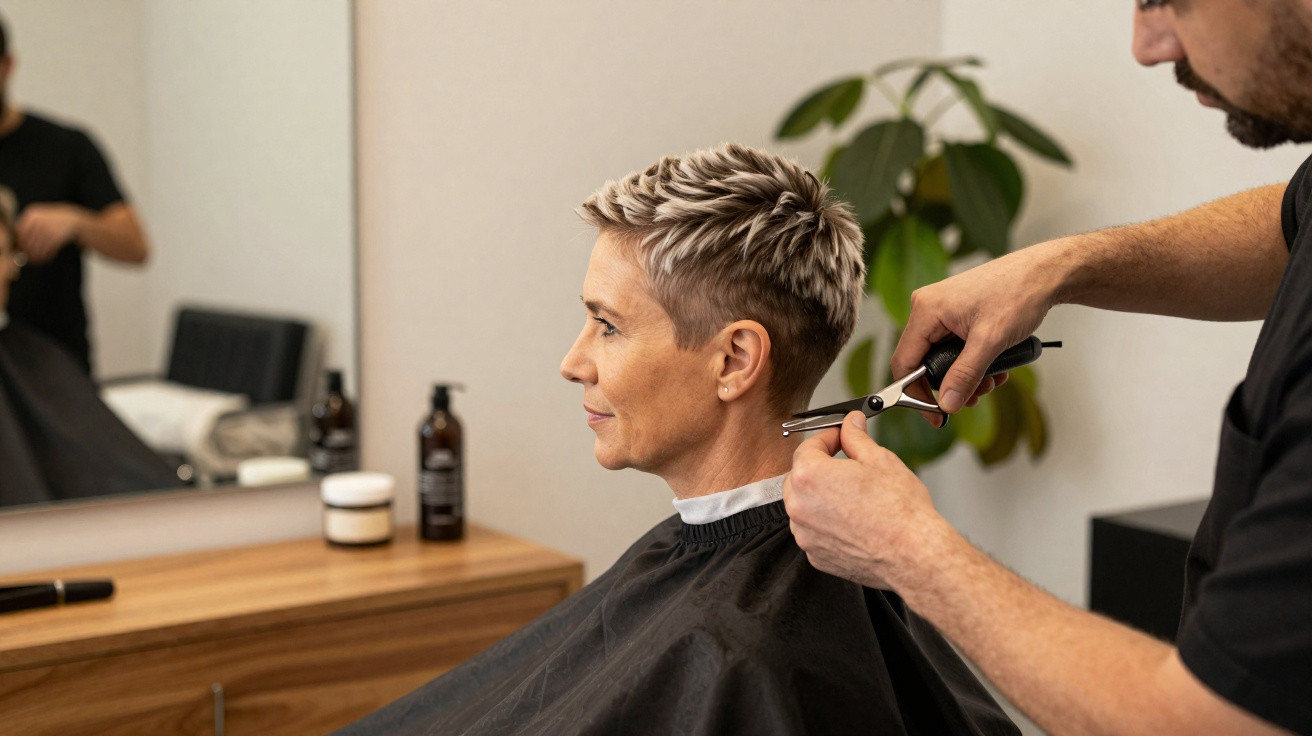
| Very short hair | No classic ponytail possible; focus on volume at the crown | Create height with a hairdryer and round brush or styling paste. |
What really lies behind the “optical lifting” effect
Of course, no hairstyle replaces medical treatment. The result is purely visual and lasts only as long as the hair stays in place. Even so, many women over 50 report that these looks make them automatically hold themselves more upright, stand taller and appear more confident, simply because their reflection looks fresher.
There is also a psychological element: anyone who spends a few minutes on their appearance in the morning moves through the day differently. A high ponytail or chignon can therefore be more than a styling trick – it sends a message to yourself: “I show myself, I am present.”
Anyone wishing to enhance the effect can use subtle make-up: a little highlighter on the cheekbones, eyeliner drawn gently outwards and well-defined eyebrows further support the visual “lift” of the face.
It is worth experimenting with all three hairstyles in front of the mirror, trying different heights, parting options and textures. Even minor adjustments – a few pulled-out strands, light backcombing at the crown or a different angle for the ponytail placement – can noticeably strengthen or soften the lifting effect.










Comments
No comments yet. Be the first to comment!
Leave a Comment