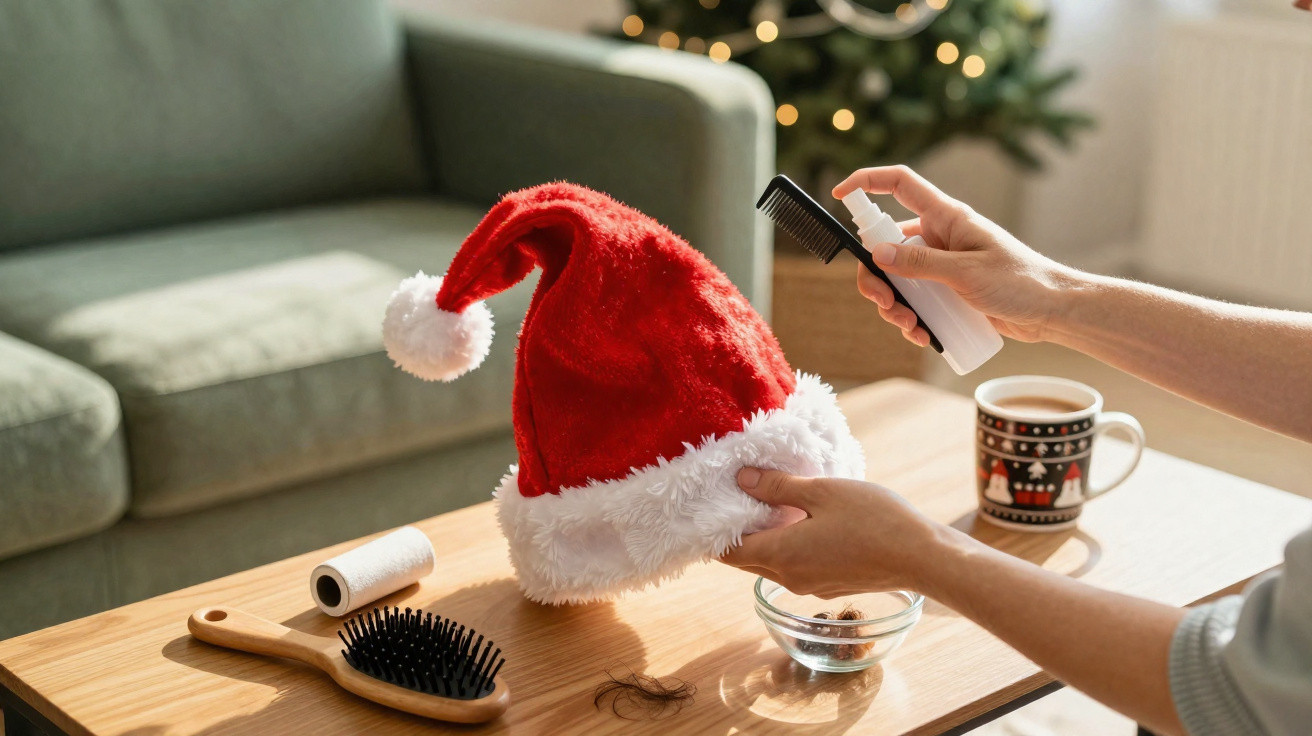
From the uncle with terrible jokes and the teenager recording TikToks to the aunt who only wanted a “nice photo for Facebook”, everybody had a turn. There was laughter, posing and complaints that it felt slightly itchy - then it was forgotten. A week later, someone stood in front of the bathroom mirror scratching their scalp and noticing a small red area at the hairline. They assumed it was a coincidence: winter weather, perhaps, or dry skin.
By New Year’s Eve, that itch had become fine flakes and then a few worrying sparse patches. The same borrowed hat appeared at another party and was passed around once more because it looked “so festive in pictures”. No one considered that, alongside the Christmas cheer, it could be discreetly passing on something far less pleasant.
Specialists warn that this seemingly harmless tradition may carry a hidden cost.
Can a Christmas hat really make your hair fall out?
Initially, it may sound overdramatic. Whether it is a fluffy Santa hat, a sparkly reindeer beanie or a traditional knitted cap with a pom-pom, these accessories look harmless in photographs. They get passed from head to head in the living room while people half-watch a Christmas film, without anyone giving it much thought. The material feels soft, there is no restrictive elastic and nothing appears obviously risky.
A dermatologist may view the same situation rather differently. They see warm, mildly sweaty scalps in close contact, possibly with old make-up and hair-product residue inside the lining. Combine that with an enclosed room, central heating and several children recovering from colds, and the cheerful red hat may become a shared breeding ground for microbes. Hair loss does not happen straight away, but the underlying process can begin at that point.
A London trichologist I spoke to described a post-Christmas rise in appointments that appears to follow a familiar pattern. Each year, shortly after the festive period, they see more people - often women in their 20s and 30s - concerned about patchy hair loss and sore, inflamed scalps. Many casually refer to festive headbands, office Secret Santa hats or novelty caps that were handed round at parties “for fun”. Patients do not arrive saying, “The hat did this.” Instead, they are confused and can feel a little embarrassed about being so concerned by “just hair”.
Some show photographs from Christmas Eve in which they wear the same branded Santa hat as five work colleagues. One nursery teacher realised that half of her class had worn the same costume hat during a school play. Two months afterwards, several children and a teaching assistant developed scalp ringworm. Nobody wished to voice the possibility, but the sequence of events was difficult to dismiss.
The biological explanation is plausible. Fungal infections such as tinea capitis, a form of scalp ringworm, flourish in warm and damp conditions. A hat shared between people can hold sweat, natural oil and dead skin cells before transferring infectious spores from one scalp to another. When these fungi reach a new scalp, they can trigger inflammation in the hair follicles. Inflamed follicles shed more hair. Certain bacterial infections can have a similar effect, irritating the scalp sufficiently for hair to fall out in the affected areas. Snug hats and friction can add further strain to roots that are already irritated.
How to enjoy festive hats without the hair drama
Experts are not suggesting that Christmas hats should be banned altogether. Their advice centres on who wears them and how they are used. The clearest and most effective measure is simple: do not share items that sit directly against your scalp. This includes Santa hats, knitted beanies, novelty antlers with fabric bands and even fluffy headbands with flashing lights. Each person should have their own hat. If your household wants matching accessories, a low-cost multipack is preferable to taking turns with one “lucky hat”.
If you keep costume boxes or work in a school, treat hats as you would gym towels. Wash them, then allow them to dry fully before they are used again. A hot wash with suitable detergent helps remove the combination of sweat, sebum and microbes that accumulates in the lining. When a hat cannot be washed, leave it to air properly in a dry place rather than putting it on a radiator, where moisture can remain trapped inside.
Many people dismiss the issue until they encounter a problem. During a packed December, there are presents, journeys, children’s performances and office parties to manage. Who interrupts a photograph to say, “Wait, that hat’s been on five heads already”? It can feel awkward and a little like spoiling the fun. So people join in, laugh and ignore the small concern suggesting it may not be ideal for their scalp. At a deeper level, we are inclined to prioritise belonging over minor health risks. Passing a silly hat around the room can feel like an act of togetherness.
Trouble begins when subtle warning signs develop: ongoing itching, a flaky patch that does not resemble ordinary dandruff, or a small area where hair seems less dense beneath your fingers. At that point, most people think, I’ll deal with it in January. Few associate it with the shared hat from a fortnight earlier. By the time they make the connection, the infection - or irritation - may have had time to become established.
One trichologist I spoke with put it bluntly:
“We see a very similar story every year: shared headwear, a bit of scalp irritation, then a lot of panic in front of the mirror by February. The good news is, most of it is preventable.”
To make prevention more manageable, think in small, practical actions rather than as a strict health lesson:
- Give every person at home one personal Christmas hat, with a discreet mark on the inside.
- Wash fabric hats after a busy gathering, particularly when children have worn them while playing energetically.
- If you work with children, use washable hats in rotation and dispose of any that cannot be cleaned.
- At parties, propose festive headbands or paper crowns that make minimal contact with hair.
- If your scalp becomes irritated, stop wearing hats for a while and clean your brushes, pillowcases and caps.
Let’s be honest: nobody genuinely does all of this every day. Even so, small and imperfect precautions around the hats most often shared can substantially reduce the risk.
Should you worry about your hair this Christmas?
There is a narrow boundary between being aware and becoming obsessive, and concerns about hair often sit directly on it. Nobody wants to spend the festive season monitoring every accessory, yet losing hair after a supposedly light-hearted tradition can affect appearance, identity and confidence. On a difficult day, a bald patch can feel more noticeable than any Christmas playlist.
Most specialists agree that borrowing a hat once does not automatically lead to disaster. Your immune system, the natural protective barrier of your scalp and simple luck all influence the outcome. The greater concern comes from repeated habits: the unwashed novelty hat taken from storage year after year, the office prop left on a shelf before landing on dozens of heads, or the school costume cupboard that no one really inspects. Over time, those patterns can matter.
There is an emotional element as well. In an already stressful December, seeing increased hair shedding can feel like the final straw. People blame winter, hormones, shampoo or ageing - anything other than the soft red hat in their selfie. Discussing the possible link openly does not take away the enjoyment; it helps people keep the fun without waking up in March and searching “sudden bald patch what now”. It is also the sort of experience you may later share with others, not to frighten them, but as a quiet gesture of care.
| Key point | Detail | Why it matters to the reader |
|---|---|---|
| Shared hats can spread scalp infections | Warm, damp fabric may transfer fungi and bacteria between scalps. | It explains why a “harmless” Santa hat could contribute to hair shedding. |
| Straightforward hygiene can make a major difference | Personal hats, routine washing and thorough drying greatly lower the risk. | It provides simple, realistic ways to remain festive without putting your hair at risk. |
| Look out for early warning signs | Persistent itching, red areas or sudden thinning after the holidays warrant attention. | It enables you to act sooner, protect your scalp and prevent long-term damage. |








Comments
No comments yet. Be the first to comment!
Leave a Comment