Birthday.
Many people notice it in the mirror each morning: facial features look more tired, the chin appears less defined and the upper eyelids seem heavier. Professional hairdressers point out that expensive treatments are not always required. Strategically placed ponytails and buns can create a visual lift for the face – a small lifting trick using nothing more than a hair tie and a brush.
Why the right hairstyles visually “lift” the face
The principle behind the effect is straightforward: when hair is drawn back and upwards in a controlled way, tension is created around the temples and eye area. The skin is subtly smoothed, making fine lines appear less noticeable. The eyes look more open and the expression seems more alert.
“As the visual focus moves upwards, the whole face looks fresher – particularly when the lower third has already begun to lose firmness.”
From around the age of 50, the skin loses elasticity and facial contours become softer. Concentrating volume and tension at the crown draws attention away from the jawline and neck. The upper face appears more defined, while the overall face looks more elongated.
Hairdressers associate these looks with a trend for very sleek ponytails and updos that almost sculpt the contours of the face. A flawlessly smooth hairline is essential, especially at the temples. A natural-bristle brush, a little gel or wax, and hairspray as a finishing touch provide hold and smooth away flyaways.
Important: Firm, but never painful
You should be able to feel the tension, but it should never be uncomfortable. Pulling too tightly can quickly cause headaches or, over time, lead to traction alopecia – hair loss in repeatedly stressed areas, usually around the temples.
- Never tie wet hair extremely tightly.
- Alternate regularly between different heights and styles.
- Gently massage the scalp after taking the hairstyle down.
- Choose soft, covered hair ties rather than ones with metal parts.
Following these points allows you to enjoy the lifting effect without causing long-term damage to the hair roots.
The three most effective lifting hairstyles over 50
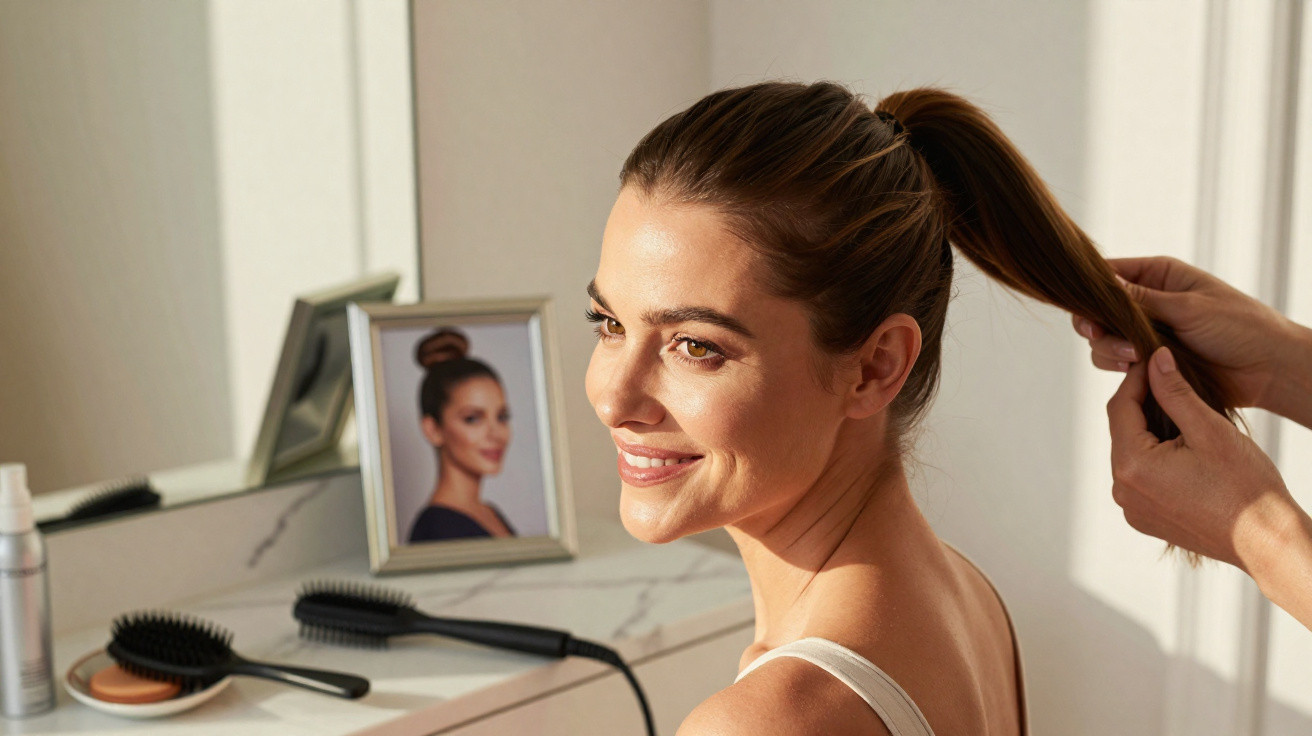
1. High ponytail for a more awake appearance
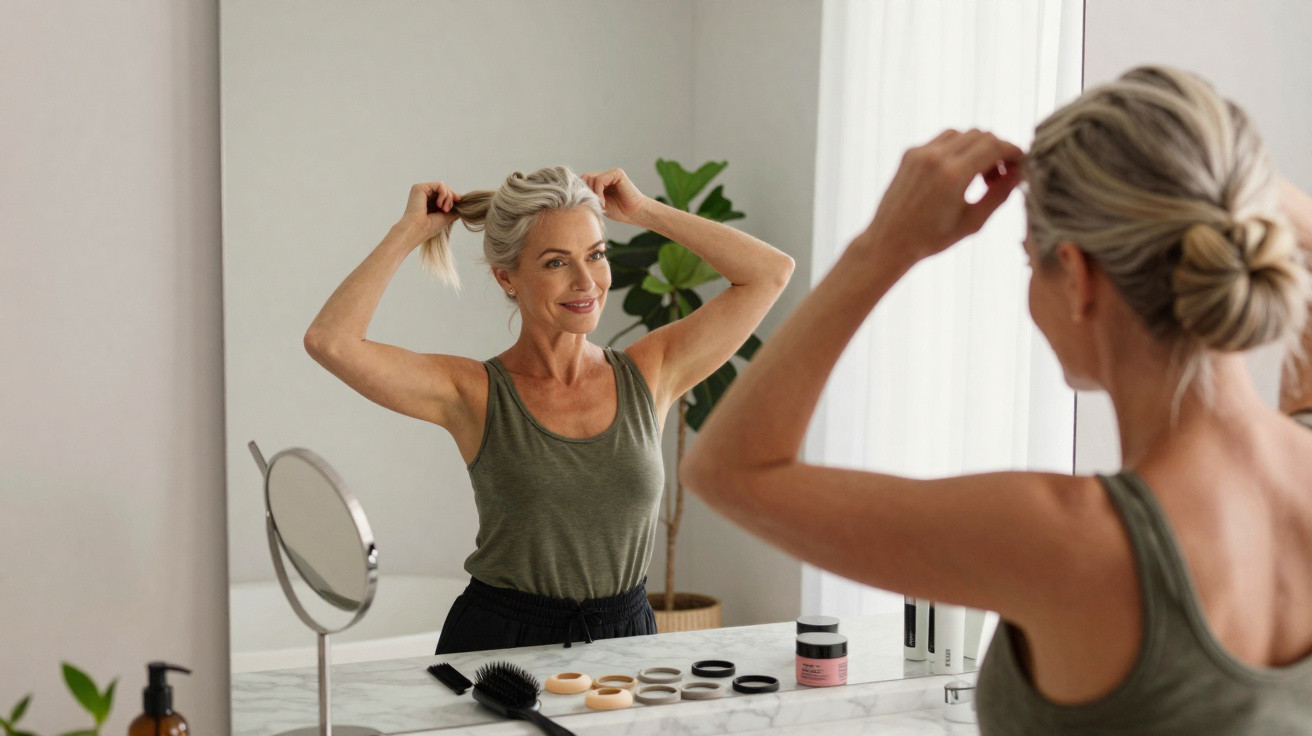
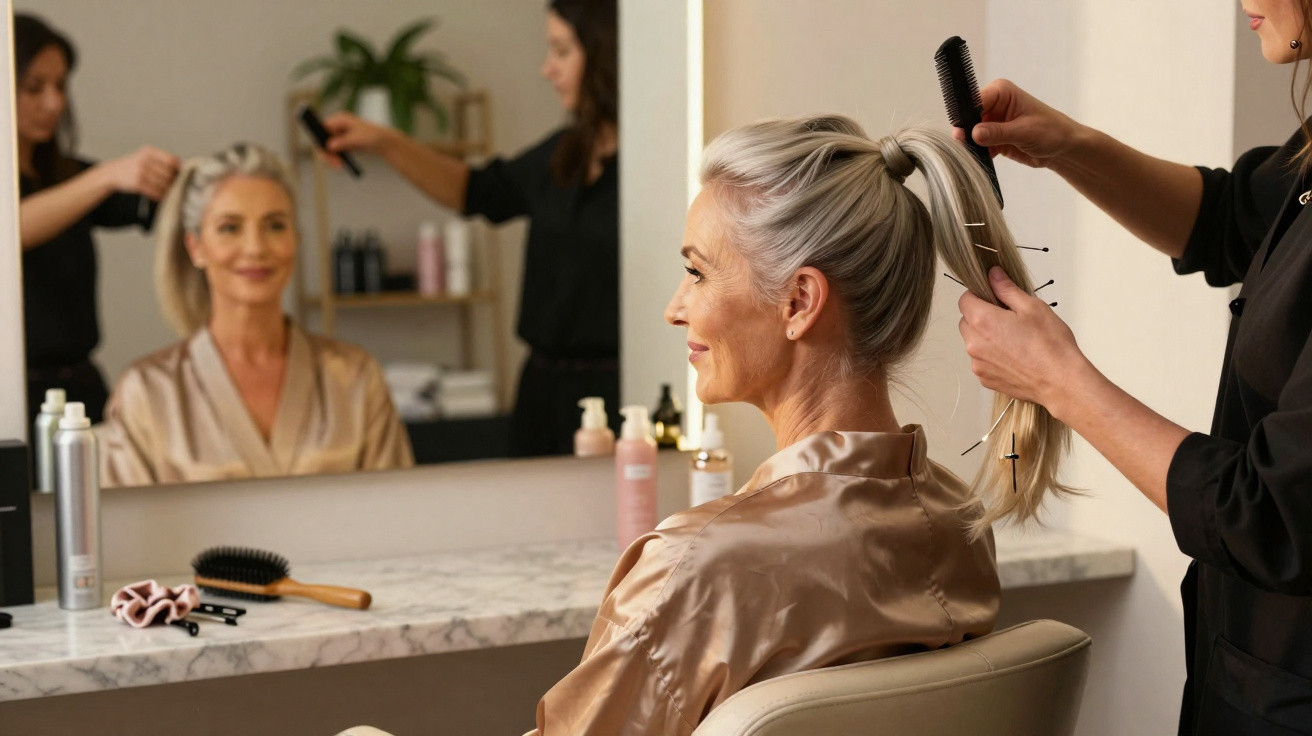
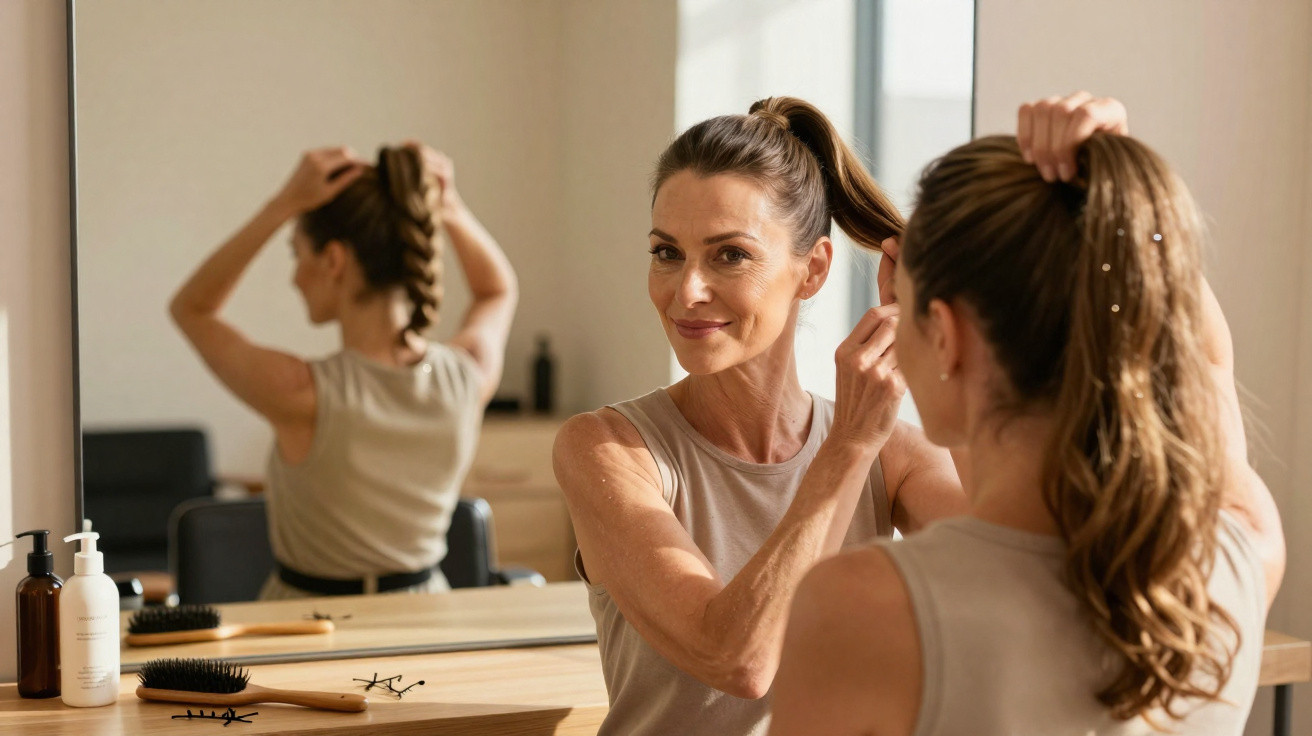
A high ponytail is the quickest way to achieve a noticeable tightening effect. The hair tie should not be placed at a random point; instead, it should follow a clear line running from the chin, past the outer corner of the eye and up to the highest point at the back of the head. This diagonal creates an upward visual movement that lengthens the face.
Most importantly, the hair at the temples should be brushed smoothly upwards and secured firmly into the ponytail. This makes the area around laughter lines look smoother and gently pulls the gaze outwards – an effect many stylists call “Foxy Eyes”.
A high ponytail is particularly suitable for:
- medium-length to long hair
- round or oval faces
- women looking for quick styling for the office or an evening out
Tying the hair too low at the nape is less suitable. It tends to emphasise the lower third of the face and can look tiring, especially if the chin area has already become a little softer.
2. Twisted high bun for defined contours
The twisted high bun works like a more powerful version of the high ponytail. First, tie the hair very high, then twist the lengths and wrap them around the hair tie. The resulting bun acts as a firm anchor that maintains the tension for hours.
“The bun concentrates volume at the crown – cheeks appear slimmer and the jawline more defined.”
As the neck is completely exposed, the entire look appears more upright. Especially when the neck already shows fine lines, an uncovered nape can look elegant and confident – provided you feel comfortable with it.
For this style, you will often need only:
- Brush the hair thoroughly.
- Tie a very high ponytail.
- Twist the lengths tightly.
- Wrap them around the base and secure with hairpins.
- Smooth the hairline with a brush and gel, then apply hairspray.
The twisted high bun looks especially polished with blazers, evening dresses or polo-neck jumpers, and works for both fine and thicker hair.
3. High half-up hairstyle for a gentle lifting effect
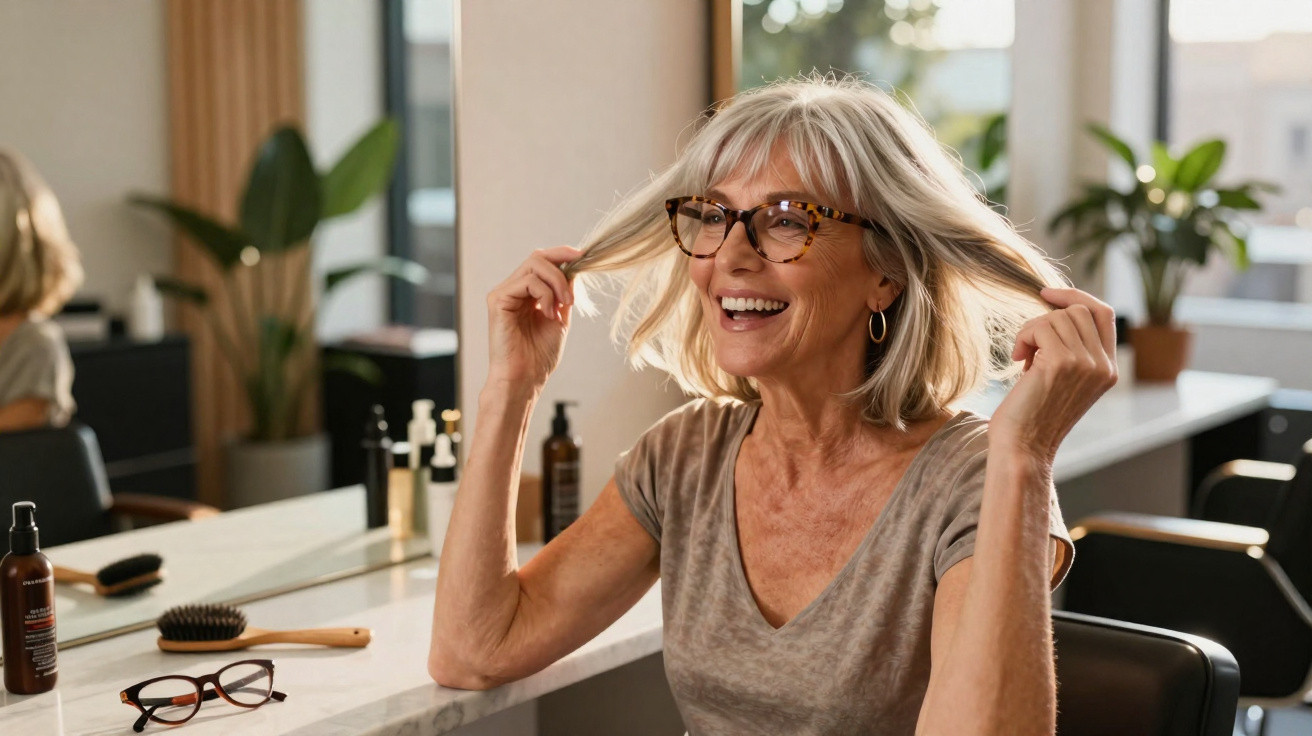
Anyone who is sensitive to tightly tied hair or prefers a softer appearance can opt for a high half-up hairstyle. Only the top section is drawn back. Create a line from roughly ear to ear across the back of the head, gather the upper section and leave the remaining hair loose.
This gently lifts the eyebrows and upper eyelids, while the loose lengths frame the lower part of the face. As a result, the chin area appears softer and a less firm neck can be effectively disguised.
This creates a particularly flattering combination for medium-length, softly wavy or layered hair: lifting at the top, with softness and framing below. If desired, lightly backcomb the front section before taking it back to add extra height at the crown.
Which lifting hairstyle suits which face shape?
| Face shape | Recommended lifting hairstyle | Tip |
|---|---|---|
| Round | High ponytail, high bun | Height lengthens the face and makes cheeks appear slimmer |
| Oval | All three options | Switch between sleek and soft styles according to the occasion |
| Heart-shaped | High half-up hairstyle | Create tension at the top while retaining width below |
| Square | High half-up hairstyle, loosely twisted bun | Leave soft strands around the sides |
Products and tools that enhance the effect
The lifting look depends on a neat hairline. Professional tips for even better results include:
- Natural-bristle brush: Smooths the hairline without placing too much tension on individual strands.
- Light gel or wax: Holds fine hairs at the temples in place without looking overly stiff.
- Hairspray: Spray from a short distance at the end so the shape lasts while remaining flexible.
- Padded hair ties: Distribute pressure and help prevent breakage.
If you have a sensitive scalp, use two or three smaller clips positioned higher up instead of creating a sleek ponytail. The direction of the tension remains the same, but the strain is more evenly distributed.
How often to wear these hairstyles – and what the scalp needs
Keeping hair tightly tied for prolonged periods can place stress on the scalp. Hairdressers recommend wearing these hairstyles no more than every other day, choosing loose buns or hair-down styles in between.
A short care ritual after taking the hairstyle down can support circulation:
- Release all of the hair completely.
- Move your fingertips in circular motions across the entire scalp.
- Massage the temples and crown for a few seconds longer.
Anyone with very fine or already thinning hair should take extra care and favour the softer half-up hairstyle rather than wearing extremely tight updos every day.
Visual lifting effect: More than just the hairstyle
The hair-tie lifting trick works best when paired with a few simple styling habits. Slightly lighter roots or fine highlights at the crown draw the eye upwards even further. Well-groomed eyebrows brushed subtly upwards reinforce the fresh-looking expression.
Those prone to under-eye shadows can benefit from a light concealer that is not too drying. Combined with an elevated hairstyle, the eyes often look noticeably more awake, without anyone being able to pinpoint exactly why.
Ultimately, the most important rule remains this: even the best lifting effect is of no use if the hairstyle does not feel like you. If a high bun makes you feel overdressed, choose a half-up style or a slightly looser ponytail instead – a confident presence is what makes any “visual lifting” truly convincing.








Comments
No comments yet. Be the first to comment!
Leave a Comment