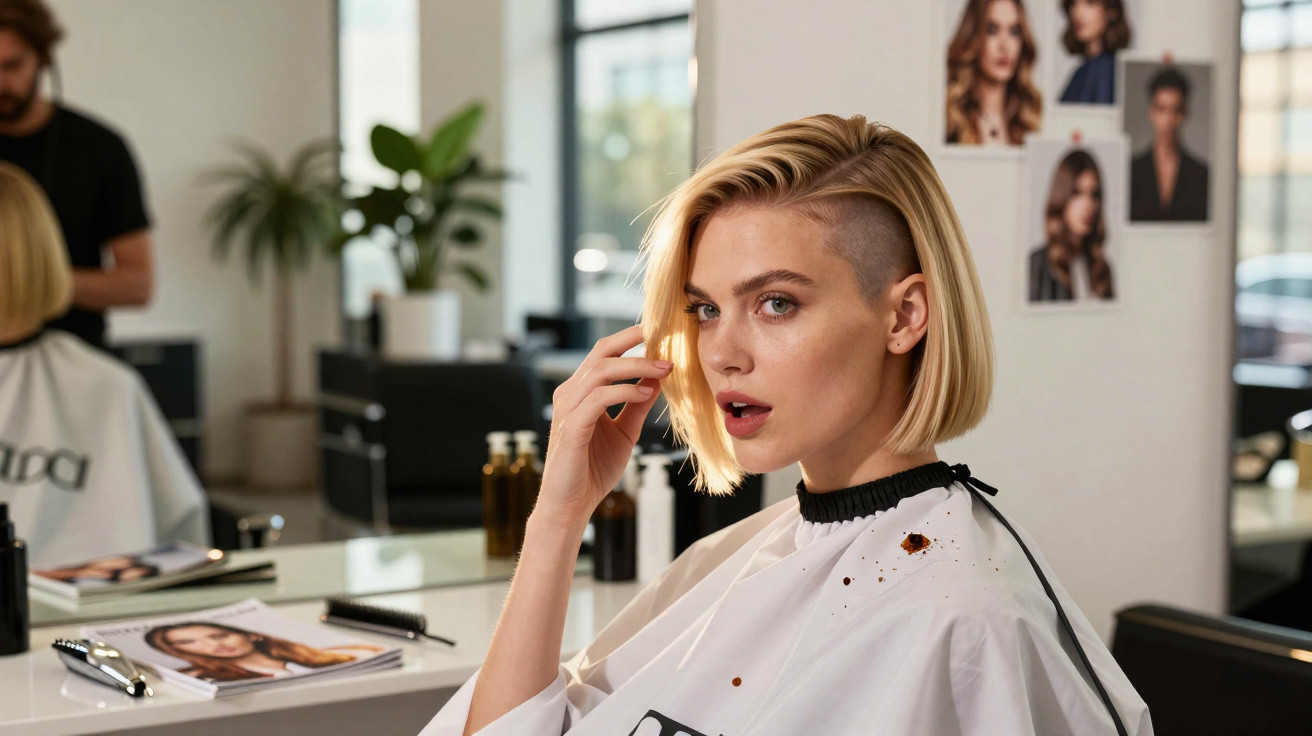
No loose beachy waves. No predictable mid-length blow-dry. Only scalp, texture and attitude. For a moment, you may need to look twice to confirm that it really is her.
The comments section practically echoes with a shared intake of breath. While some followers call her a “goddess”, others murmur “too far”. Several even ask: “Is she going through something?” That is what happens with dramatic hair transformations: people interpret your life through the way you wear your hair.
On camera, Adriana appears relaxed and even slightly mischievous, as though she has just shed a private burden. A long, glossy burden.
Her boyish cut and partially shaved head communicate more than any caption could.
A supermodel face with one side buzzed close
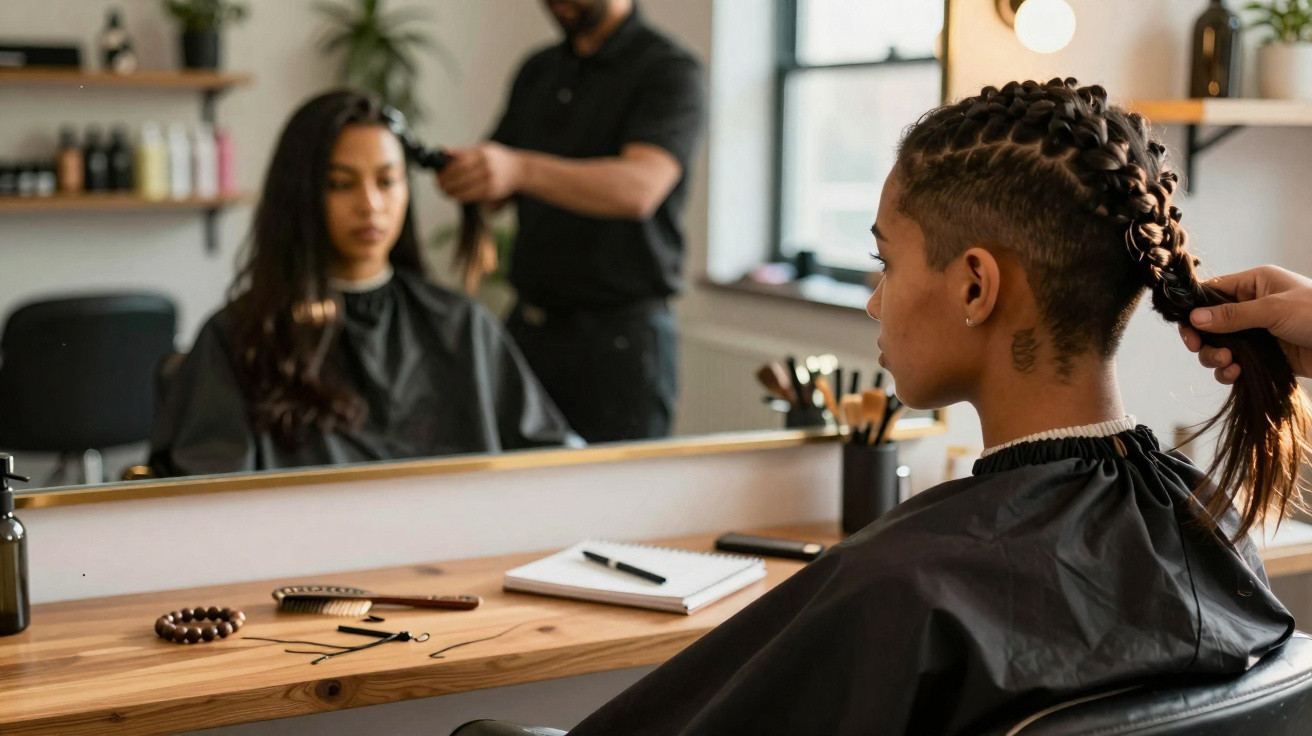
From the front, Adriana Karembeu’s new hairstyle looks almost misleadingly understated. The short, soft layers sweep across to one side with an undone finish, as if she has used her hands rather than a comb. Then her profile comes into view: one side cropped close to the scalp, sharply defined lines and an uncovered neck. Suddenly, it feels personal, as if you have spotted something you were not previously meant to see.
The difference from the Adriana we believe we know is striking. For years, she represented an untouchable version of glamour: endless legs, immaculate blow-dries and intensely feminine gowns. This time, the energy has shifted. It is more powerful. Less “goddess on a pedestal”, more “woman fully in control of her story”. A boyish cut on someone so closely associated with femininity unsettles the codes we are used to.
On social media, hairstyles like this take on a life of their own. There is a close-cropped screenshot, a reposted story, a short salon reel. Yet what remains is the emotion behind it. Here, that message is unmistakable: she is not seeking anyone’s approval.
We have watched this pattern unfold before. Think of Charlize Theron’s buzzcut for Mad Max, Kristen Stewart leaving her long hair behind, or Natalie Portman having her head shaved on screen. Each time, the internet follows the same path: surprise, argument, then the quiet acknowledgement that “actually, it looks incredible”. Adriana fits naturally into that same line of transformations.
The figures underline the force of this image. Searches for “boyish cut woman 40+” and “half shaved head hairstyle” rise whenever a celebrity makes this kind of move. It is about more than curiosity; it is projection. People see a familiar face take the leap and start wondering what their own reflection might reveal. For a model linked with perfection, the signal is even stronger: if she can cut it all off, what might be stopping me from changing something in my own life?
Fashion commentators often describe hair as the quickest and cheapest way to rebrand yourself. That is not completely accurate: a cut like this is not merely a trend, but a risk taken on how the world will view you the next day. Adriana’s decision arrives as many women over 40 quietly reject the expectation of “discreet aging”. One pass of the clippers through the shaved side disrupts that expectation.
There is a generational resonance here too. TikTok has helped younger women make undercuts, fades and mullets feel mainstream. When someone shaped by an earlier era of beauty standards adopts that same visual language, it creates a connection. It shows women caught between “classic elegance” and contemporary edge that they need not fit into either category. They can embrace both. Or neither. Or something completely different.
Should you recreate Adriana Karembeu’s daring boyish cut?
If this image has stayed with you and you feel tempted, begin with something practical: gather references from real life, not only polished celebrity photographs. Save images of Adriana’s cut from several angles, then include pictures of women with a similar face shape, hair texture and age wearing related styles. Print them out or create a small album on your phone.
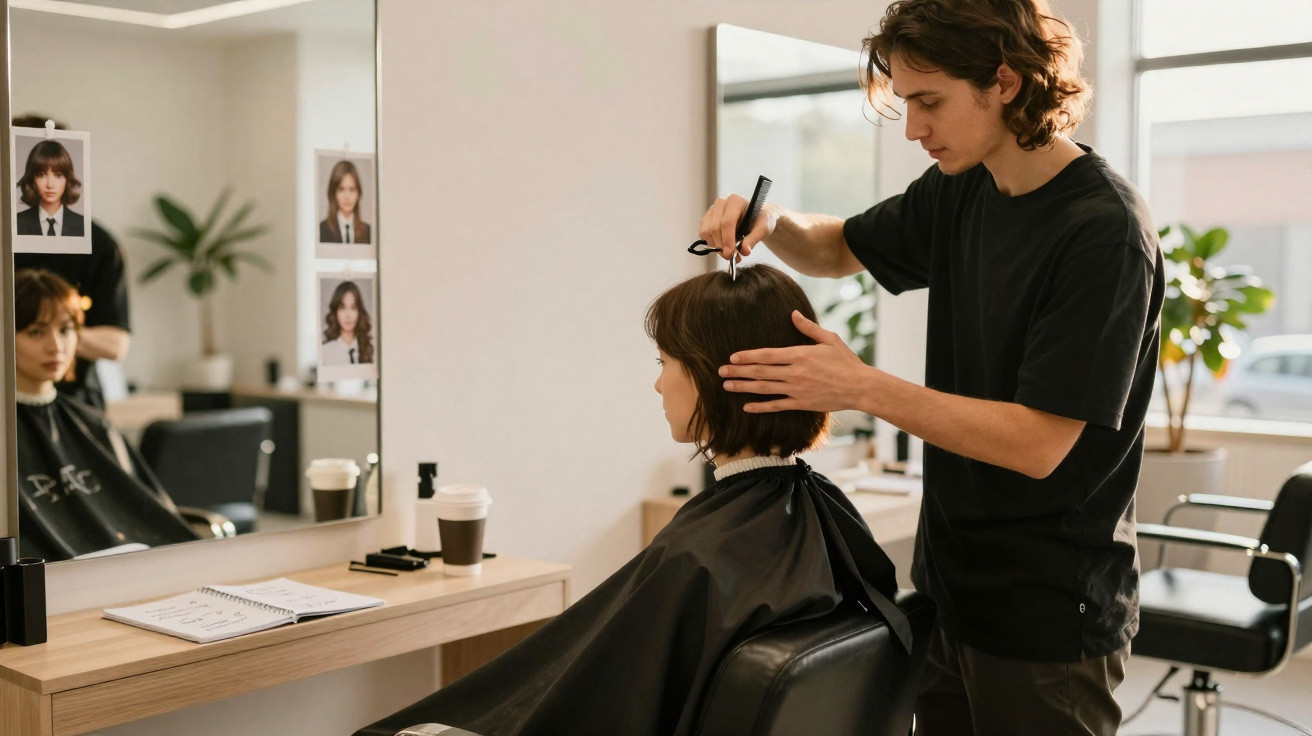
Go to the salon with that compact moodboard and speak quietly, as though you are admitting something private. Explain how you want to feel, rather than only how you hope to look. “I want to feel lighter.” “I want something that doesn’t look ‘nice’ all the time.” A skilled stylist can turn those feelings into precise lengths and lines. Ask exactly how short the shaved section will be, which clipper guard will be used and where the fade will begin. Shut your eyes and touch the area behind your ear where the hair will disappear. If your stomach flutters, you know the idea has become real.
After that, consider everyday life rather than only the selfie moment. A short boyish cut with one shaved side may be easy to style, but its regrowth can be unforgiving. Would you be comfortable booking a quick trim every three or four weeks? Or might a gentler undercut, which can be concealed when the hair is worn down, suit you better? Let’s be honest: nobody really follows those flawless styling routines we see online every day.
Many people worry that this style will make them look “too masculine” or “too hard”. In reality, the result is more nuanced. It comes down to the details: the length left on top, how seamlessly the shaved area is blended and how much lift remains at the crown. Retain softness somewhere, whether through a fringe, a loose side-sweep or the texture itself. This is what keeps Adriana’s cut from becoming a caricature, placing it instead in that appealing space where glamour and strength coexist.
Most of us know the moment when the hairdresser turns the chair, you catch sight of yourself and your mind says, “What have I done?” A major haircut can awaken old beliefs about your value, femininity or age. That is why it is useful to talk it through before the scissors come out. Not endlessly, but enough to understand whether you are simply cutting your hair or trying to remove a problem.
One genuinely reliable approach is to try the feeling before you commit. For a day, pin or tightly braid one side of your hair and slick it back, or use a temporary clipper attachment on the lowest layer at the nape. Look at yourself in bad lighting, with no makeup, in your oldest sweatshirt. If you still love the overall effect, you are probably ready.
When I asked a Paris hairstylist about Adriana’s new look, they said:
“A half-shaved head isn’t a cry for attention anymore. It’s like saying: I’m done negotiating who I’m allowed to be.”
A hairstyle of this kind reveals more than your neckline. It exposes your jawline, ears and sometimes the small asymmetries you usually conceal. Instead of resisting them, make them part of your look. That could mean choosing more statement earrings on the shaved side, wearing a more tailored collar or trying a lipstick shade you had never dared to wear. The hair becomes a frame rather than the entire picture.
- Request a clear regrowth plan, showing how the haircut will develop after 2, 4 and 6 months.
- Work out what feels more like you: crisp razor-sharp lines or a softer, fuzzy clipper finish.
- Book your first maintenance trim on the day of the main cut, so it does not get delayed indefinitely.
Why Adriana Karembeu’s haircut means more than “just hair”
For a woman such as Adriana Karembeu, hair is not simply hair. It forms part of her public identity. Her long blonde waves helped establish a career, appearing across magazine covers, campaigns and television programmes. Removing them is rather like repainting a logo everyone recognises, without first requesting permission. It is a quiet act of rebellion, but also a release.
Many women talk about radical haircuts as a way to reclaim their face after significant changes in life: divorce, childbirth, burnout or a move. Outwardly, the act is small; internally, it can be explosive. Sometimes, the change has simply been waiting too long. You outgrow the “good girl” hairstyle, the “model” hairstyle or the “wife” hairstyle. You carry it around for years until, one day, you sit down and say without making a drama of it, “Let’s do something else.”
When someone with Adriana’s background chooses a boyish cut with a partially shaved head, it unsettles the shared idea of what feminine power can look like at her age. You can almost sense the reaction moving through comment sections, with women over 40 and 50 writing, “Maybe I’m not done reinventing myself either.” That is the understated magic of striking hair transformations on Google Discover and social feeds: you scroll automatically, then stop and ask, “What if I stopped playing safe?”
This version of Adriana is not a different woman. She is the same person, only edited, like a photograph from which somebody has finally removed an overused filter. Her cheekbones remain. So does her charisma. The haircut does not wipe away her previous image; it challenges it. Within this short, buzzed and asymmetrical outline, her face seems less like an icon and more like that of a person you could genuinely sit beside and talk to.
The next time a celebrity appears with a shaved side or a dramatic chop, pay attention to your immediate response. Surprise, admiration, judgement, envy. Within that instant reaction, there is often an unspoken question about your own life. That is why people continue clicking and zooming in on the details of a haircut that, technically, has nothing to do with them. Hair is never only about hair.
| Key point | Detail | Why it matters to the reader |
|---|---|---|
| Adriana’s bold boyish cut | A short top with one side partially shaved, overturning her long-haired image | Helps you picture how such a dramatic change could look and feel in everyday life |
| How to test the style first | Try tight pinning, undercut tests and a stylist moodboard before cutting | Reduces the chance of regret and turns an impulse into a considered, empowering choice |
| The deeper significance of a drastic cut | A hair transformation often reflects life changes and shifts in identity | Encourages readers to consider what their own hair may be quietly expressing |










Comments
No comments yet. Be the first to comment!
Leave a Comment