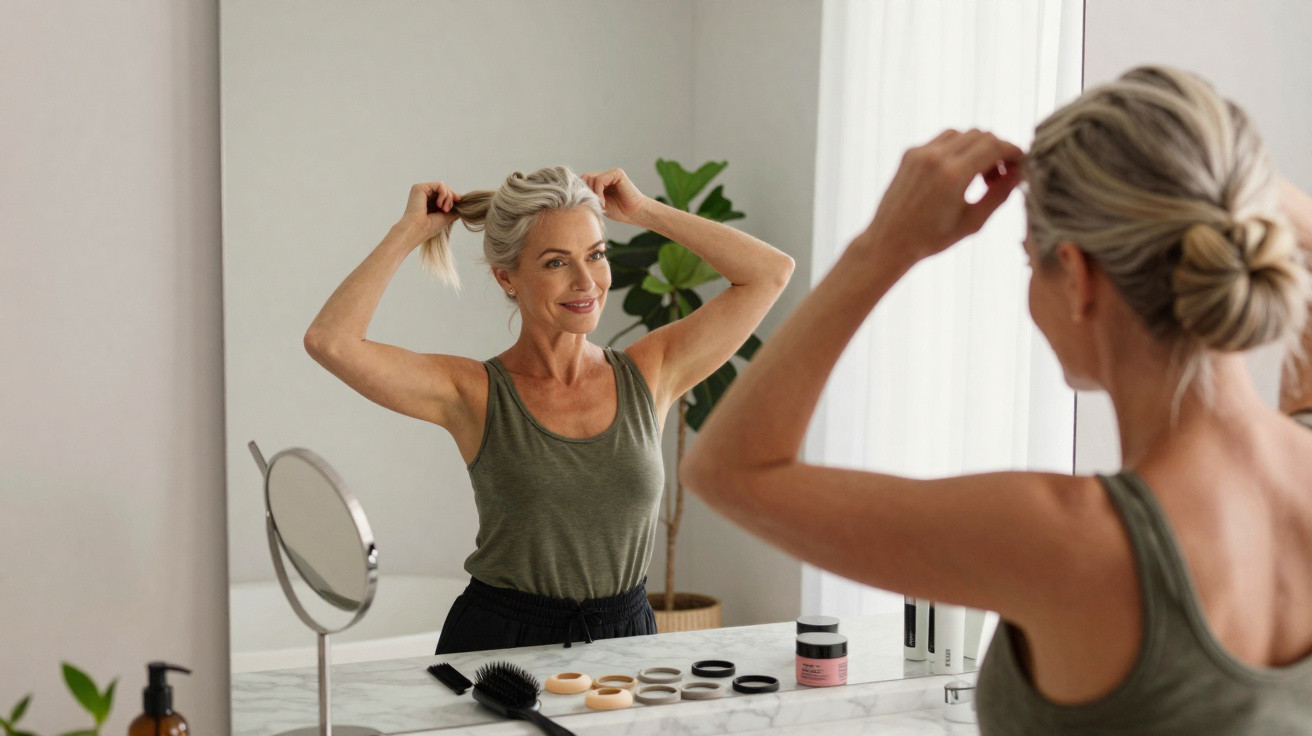
These on-trend hairstyles are exactly what this is about.
Many women look in the mirror in the morning and notice that their face appears different from before: the chin is a little softer, the eyes look more tired and the cheeks have less definition. Before injections or surgery even enter the equation, it is worth looking at the roots – the hairline. Hairdressers swear by a handful of specific updo styles that visibly tighten facial features and create a mini-lifting effect, without anything needing to be injected.
Why certain hairstyles visibly tighten the face after 50
The explanation is surprisingly straightforward and essentially comes down to mechanics. Pulling the hair deliberately upwards and backwards creates gentle tension around the temples, forehead and upper cheeks. This slightly lifts the skin in precisely the areas where fine lines and a tired expression tend to be most noticeable.
“Targeted tension at the hairline makes the eyes appear more open, the face look slimmer and the chin more defined – at least for a few hours.”
There is also the effect of open space. Once the forehead is no longer covered by a fringe or loose strands, more light reaches the upper third of the face. Under-eye shadows appear less pronounced, while the whole face looks fresher. At the same time, visual focus shifts upwards, away from a softer chin or a neck area that has become slightly less firm.
Hairdressers draw on a trend that has long been established internationally: tightly secured ponytails and chignons that shape the contours of the face. The key is for the hair to lie truly smooth at the roots. A firm natural-bristle brush, a light layer of gel or wax, and a final mist of hairspray are often used to stop any strands from lifting away.
How tight is too tight?
Although the lifting effect is effective, excessive tension can cause harm. Anyone who wears a brutally tight ponytail every day risks tension headaches and, over time, even hair loss around the temples. Professionals therefore recommend:
- not wearing tension-heavy styles every day
- regularly changing the height of the ponytail or bun
- gently massaging the scalp after taking the hairstyle down
- using soft, fabric-covered hair ties
This keeps the practical lifting trick a useful beauty aid rather than allowing it to become a problem for the hair roots and scalp.
The 3 most effective lifting hairstyles after 50
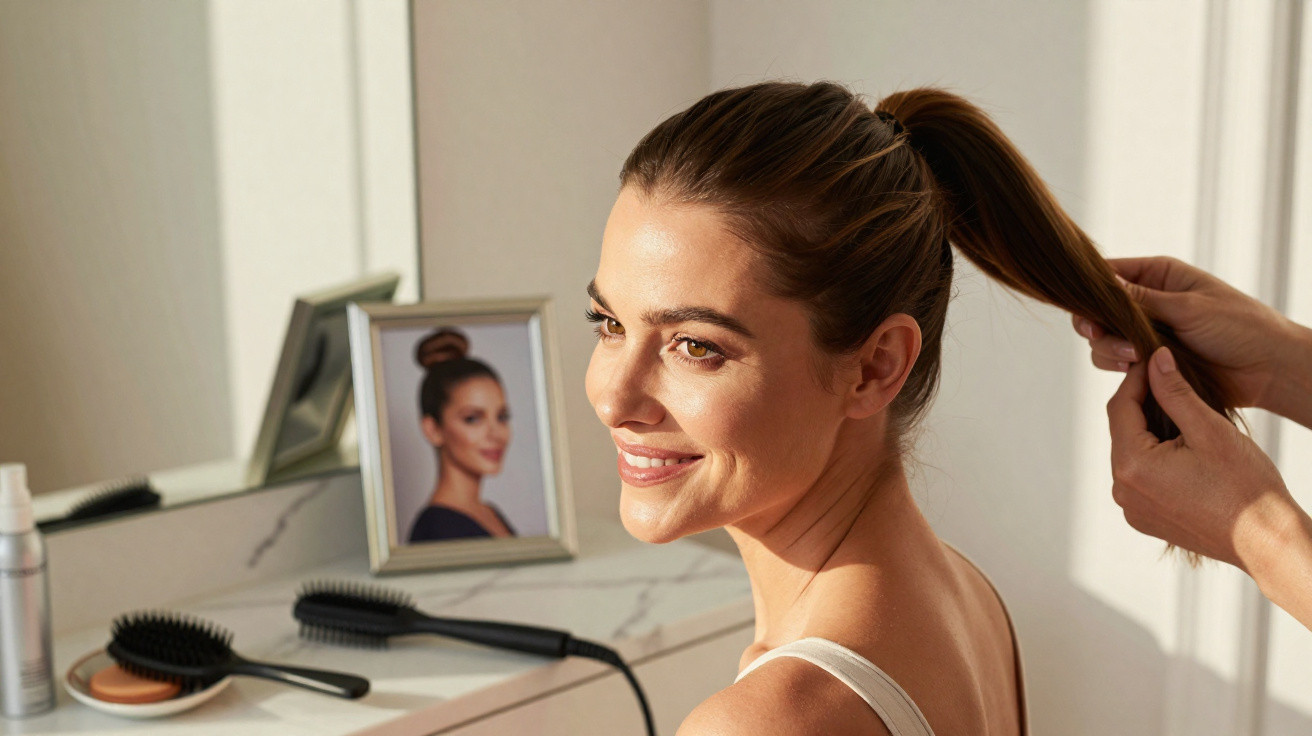
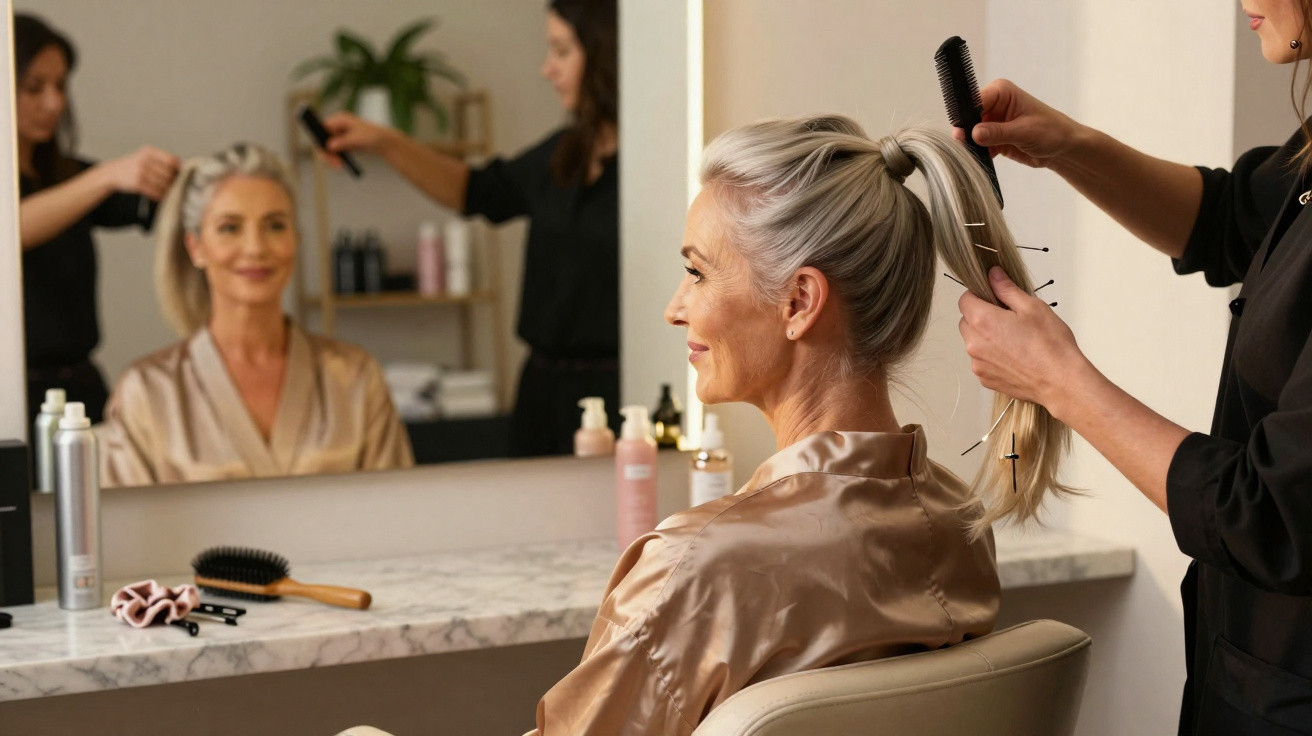
1. A high ponytail for sharper contours
A high ponytail is the quickest option, especially for medium-length or long hair. The secret lies in where the hair tie sits. Professionals use an imaginary line running from the chin, past the outer corner of the eye, to the highest point at the back of the head. The ponytail should ideally sit where this line meets the top of the head.
What does this achieve?
- Facial contours appear to be pulled upwards.
- The area around the eyes is gently tightened, making crow’s feet less noticeable.
- Round faces look narrower, while oval faces appear longer.
It is important that the temple area is combed smoothly back. A fine-bristle brush works well here, allowing you to pull the hair towards the hair tie section by section. If you wish, tiny baby hairs along the forehead can be smoothed down with a touch of gel – this looks modern and offers extra hold.
A common mistake is positioning the ponytail too low. In that case, the weight of the hair pulls downwards and visually highlights exactly what the style is meant to disguise: a softer chin and slight jowls.
2. A high twisted bun for a longer-lasting lifting effect
The second style is a tightly twisted bun placed on top of the head. It begins as a very high ponytail, which is then firmly twisted into a rope and wound around itself. Secure the bun with hairpins or a sturdy hair tie.
“The high bun acts like an anchor point, pulling the facial features upwards for hours while concentrating volume at the crown.”
This anchor creates consistent upward tension towards the crown area. As a result, the cheeks appear slimmer and the jawline more pronounced. There is an attractive additional benefit: the neck is left uncovered, making the overall look seem more elegant – particularly useful when highlighting the décolletage or when the neck area would otherwise be covered.
This hairstyle works particularly well for:
- women with medium-length to long hair
- outfits with collars, polo necks or statement jewellery
- occasions where the look needs to last for several hours
Those who prefer a softer finish can release a few very fine, intentionally placed baby hairs around the forehead and style them gently. This reduces the severity of the look and gives the face a lighter feel.
3. A high half-up ponytail for a softer lifting effect
The third option is for anyone who prefers a less severe look or is generally sensitive to tension. The upper section of the hair is secured tightly backwards, while the lower lengths remain loose. Again, the placement follows a line from the ears to the top of the head: everything above this line goes into the ponytail.
This mainly produces a slight lift around the eyebrows and upper eyelids. The loose lengths frame the jaw and neck and can fall casually forwards. This can cleverly disguise a slightly softer neck or fine crêpey lines on the décolletage.
“The half-up style combines a visible lifting effect with soft, flattering hair lengths – ideal for everyday wear.”
The look suits straight, wavy or lightly curly hair and feels just as appropriate in the office as it does at dinner. Anyone with heavily layered hair should use small clips or extra hair grips to secure shorter pieces around the roots.
The right technique: getting the most from lifting hairstyles
To make the desired effect genuinely visible, it is worth taking care with preparation. Hairdressers generally work in three steps:
- Smooth the roots: Brush the hair in the direction of the planned ponytail position until every section lies close to the head.
- Apply product: Work a small amount of gel, wax or styling cream through the temples and crown to distribute the tension evenly.
- Set the style: Once the hair is tied, mist the roots with hairspray so the shape stays in place.
For a sensitive scalp, choose an elastic hair tie covered in fabric. Metal components or overly thin elastics can dig in and concentrate pressure on a small area – something you will quickly feel as pulling.
How often do “lifting hairstyles” make sense?
Tying the hair very tightly every day puts the roots under continual stress. Hair that is already becoming finer can quickly respond with breakage or shedding. A sensible approach is to alternate between looser and tighter days: a high ponytail one day, followed by loose hair or a relaxed low bun the next.
A small care ritual can help, too: after undoing the style, use your fingertips to make circular movements across the scalp. This releases tension, stimulates circulation and also feels like a mini wellness treatment.
Who are lifting hairstyles suitable for – and what are their limits?
In principle, any woman over 50 with medium-length or long hair can benefit from these looks. Those with a very narrow, angular face should combine particularly sleek versions with softer elements, such as lightly curled ends or a few deliberately loosened strands around the face.
Anyone with a very sensitive scalp, a tendency towards migraines or already visible thinning at the temples should take a cautious approach. In these cases, the soft half-up ponytail is particularly suitable, as it creates less tension and the loose lengths take much of the weight.
More impact with little effort
These three hairstyles are not a replacement for medical treatment, but they work surprisingly reliably as an everyday visual refresh. A clearly defined ponytail placement, carefully smoothed roots and evenly distributed tension make the difference between hair that is simply tied back rather severely and a look that genuinely makes the face appear younger.
Paying attention to details can enhance the lifting effect further: well-kept ends, an interesting parting and perhaps a few strategically placed highlights through the top layer. Light, line and proportion work together perfectly here. A simple hair tie can therefore become a rather clever beauty tool for anyone wanting to lift their facial features visually with minimal effort.










Comments
No comments yet. Be the first to comment!
Leave a Comment