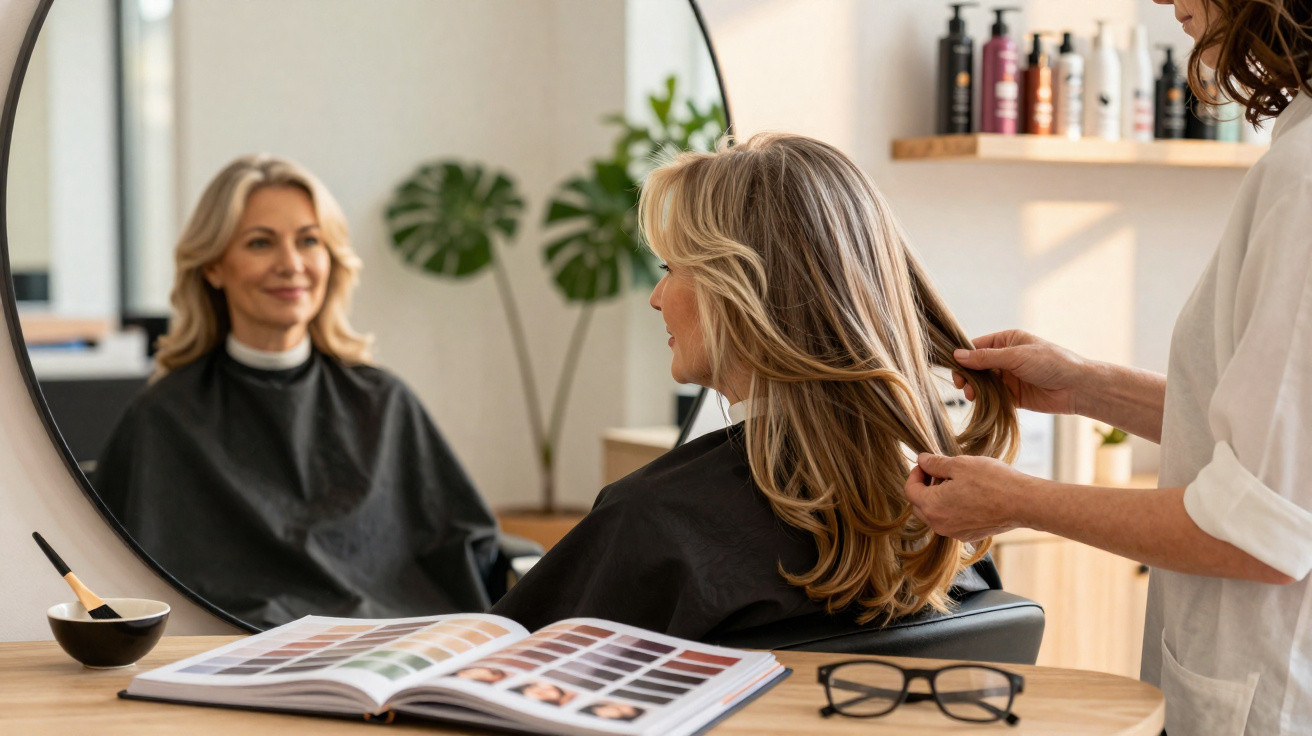
Many women eventually turn to hair colour to disguise grey roots. Yet it is not unusual to leave the salon – or the bathroom – with a shade that makes them look harsher, more tired and genuinely much older. Professional hairdressers repeatedly see the same mistakes. Three colouring choices stand out in particular because they can almost automatically create the classic “granny effect”.
Why hair colour after 60 is so delicate
Over time, it is not only the hair that changes; the skin changes too. Complexions lose radiance, often becoming slightly yellower and sometimes more uneven. At this stage, the colour on your head has an enormous impact. It can visually soften fine lines – or make every crease more noticeable.
“An unsuitable colour intensifies shadows, wrinkles and tiredness – whereas a well-chosen shade brings light to the face.”
For this reason, professional colourists focus less on fashion trends and much more on:
- skin undertone (cool, warm or neutral)
- the hair’s natural base colour
- hair density and texture
- make-up habits (lots, little or none)
Even so, uncertainty or habit leads many women towards shades that visibly add years. These are the three biggest pitfalls:
Mistake 1: Colours that are too dark – the “helmet effect”
Choosing very dark brown or even deep black can initially seem tempting: white hairs disappear, the contrast is strong and the colour provides dependable coverage. After 60, however, this choice almost always backfires.
Dark shades can make the complexion appear paler, drawing attention to dark circles and every small wrinkle. This is particularly problematic when skin has already lost firmness and luminosity. The face looks more severe, and sometimes even stern or miserable, although that is not how you feel at all.
“In everyday life, very dark colours can quickly look like a heavy colour helmet – nothing moves, nothing reflects light.”
Many people also fail to notice that at-home dyes often become darker and darker with repeated colouring. Anyone who leaves the product on slightly too long each time or uses more product “just to be safe” can soon end up two or three levels darker than intended.
How to avoid the dark-colour trap
- Always choose a shade one level lighter than you first had in mind.
- Opt for slightly translucent tones rather than opaque black-brown.
- Keep the roots a little darker and the lengths softer for a more lively result.
- Ask your hairdresser regularly to check whether the colour is “slipping darker”.
Warm, soft brown shades with subtle reflections reminiscent of hazelnut, caramel or coffee with milk are ideal. They add depth without closing in the face.
Mistake 2: Extreme blonde – from yellow tones to a washed-out look
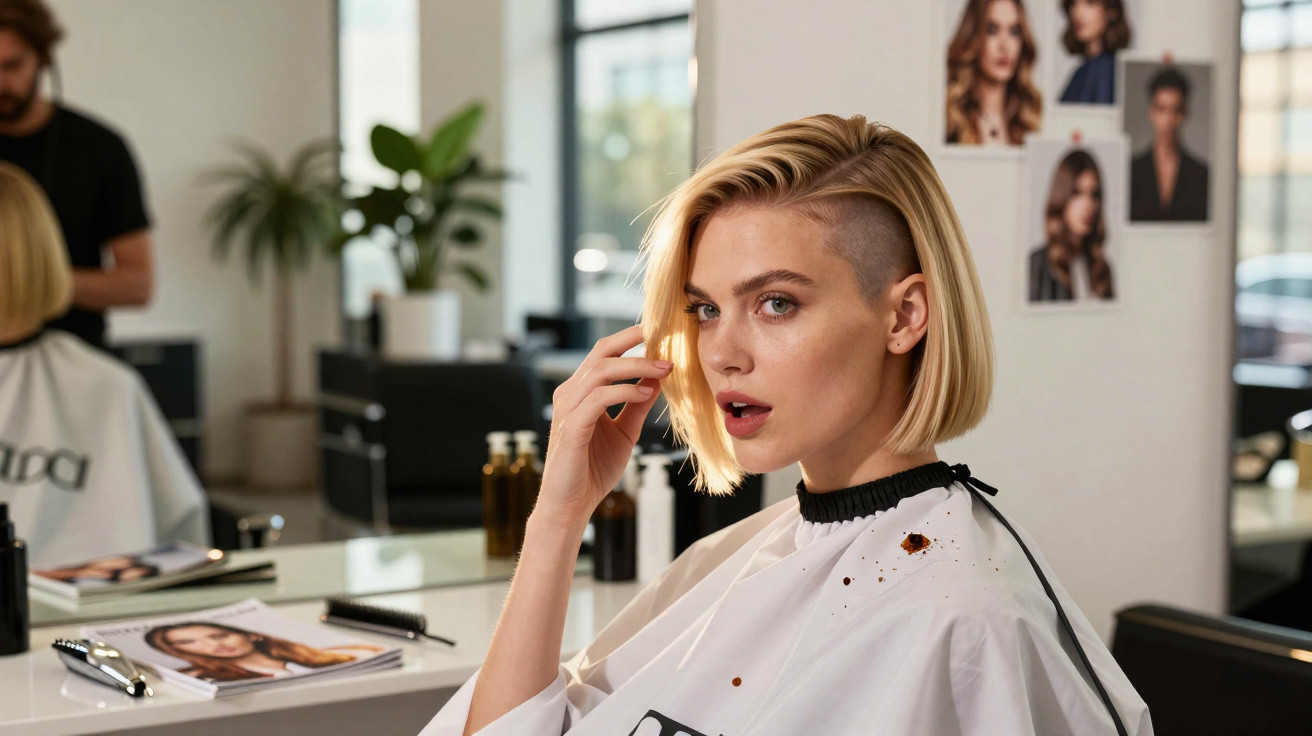
Going in the opposite direction is just as risky: switching to a very light, extreme blonde. Many women hope it will make them look younger and fresher. That only works when both the shade and technique suit the individual perfectly. In reality, the reverse often happens.
Two recurring problems are especially common:
- A strong yellow cast – hair looks dull, uneven and poorly cared for.
- Icy, pale blonde – skin appears sallow and the complexion loses all warmth.
“Blonde that is too light may cover grey hair, but it can also visually grey out the entire face.”
Very cool, almost white blonde in particular makes visible veins, redness and pigmentation marks stand out more strongly. Anyone who wears little make-up anyway can quickly look unwell or drained.
How to tell when blonde does not suit you
There is a simple everyday test: if you find that you need considerably more make-up, blusher or lipstick for your hairstyle to work with your face, the colour is often not quite right. A harmonious shade still looks good on a “no-make-up day”.
Rather than making dramatic changes, hairdressers generally recommend a more moderate approach:
- Go only one or two levels lighter than your natural colour.
- Choose golden, creamy or honey-toned reflections that add warmth.
- Use highlights and soft transitions instead of bleaching all of the hair blonde.
This keeps blonde refined and fresh without looking artificial or “painted on”.
Mistake 3: One flat block colour – no movement, no depth
The third colouring trap is less obvious but just as ageing: a completely uniform shade from roots to ends. Whether it is medium brown, red or blonde, a colour with no reflections to catch the light creates a flat, overly constructed appearance.
“One continuous colour removes all vitality from the hair and can quickly look more like a wig than natural hair.”
This effect is especially apparent as hair becomes thinner. The overall surface looks pressed flat, making the hair seem to have less volume than it really does. Lines at the temples and around the eye area become more visible because there is no play of light to soften them.
Why hair reflections matter so much after 60
Fine highlights, gentle shading or a subtle graduation from darker roots to slightly lighter ends give the hairstyle movement. Light catches on the brighter areas, while shadows disguise harsh contours. The result also looks more contemporary – and considerably more expensive, even when the technique itself is simple.
Popular salon techniques include:
- Balayage: hand-painted highlights that look sun-kissed.
- Soft ombré transitions: roots are slightly darker, while the lengths are gently lightened.
- Contour colouring: light accents are placed strategically around the face and forehead.
Well-maintained grey or silver hair worn deliberately can also look exceptionally modern – provided the tone is clear, lightly glossy and not yellowish. Many hairdressers combine this with a cool glossing treatment that neutralises yellow tones and adds shine.
A better strategy: subtle adjustments rather than radical changes
Anyone over 60 who wants fresh, flattering hair colour does not need to chase every trend. Small corrections are often entirely enough. A little lightening around the face, several soft highlights or a warmer reflection can be enough to take years off your appearance.
| Problem | Unflattering choice | Smarter alternative |
|---|---|---|
| Lots of grey roots | Deep black or very dark brown | Soft brown with fine lighter highlights |
| Pale complexion | Icy-cool, almost white blonde | Creamy blonde with a slight golden tone |
| Fine hair | Completely uniform colour | Soft transitions and reflections for visual volume |
What a professional always asks before colouring
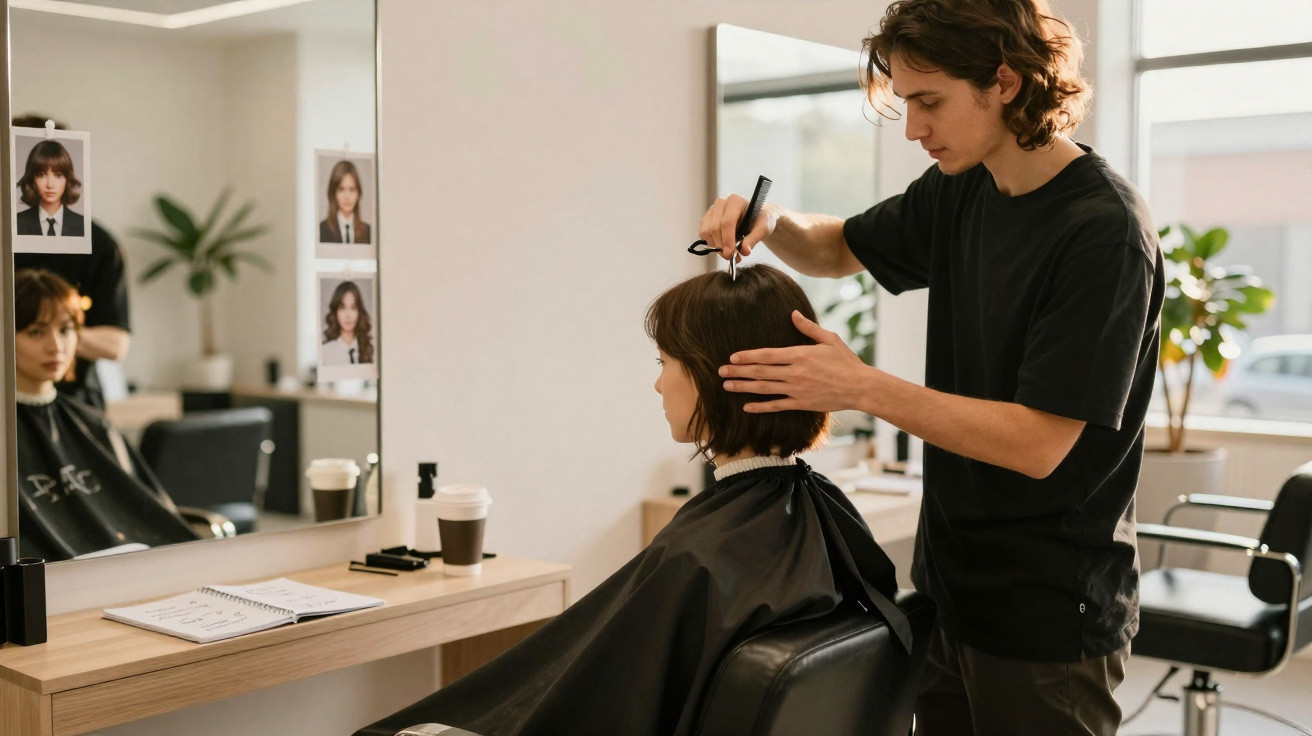
A good hairdresser rarely begins straight away with the colour bowl. Questions come first: How much time do you want to spend on care and colour refreshes? How often do you wear make-up? Do you prefer muted, warm or cooler clothing? All of this affects which tones genuinely work in everyday life.
An honest assessment of hair texture is equally important: badly damaged, porous hair absorbs pigments unevenly and can make shades appear darker or patchier. In these cases, a care routine with masks, bonding products and less heat styling often has a greater rejuvenating effect than another round of colouring.
Embrace grey hair – or disguise it skilfully
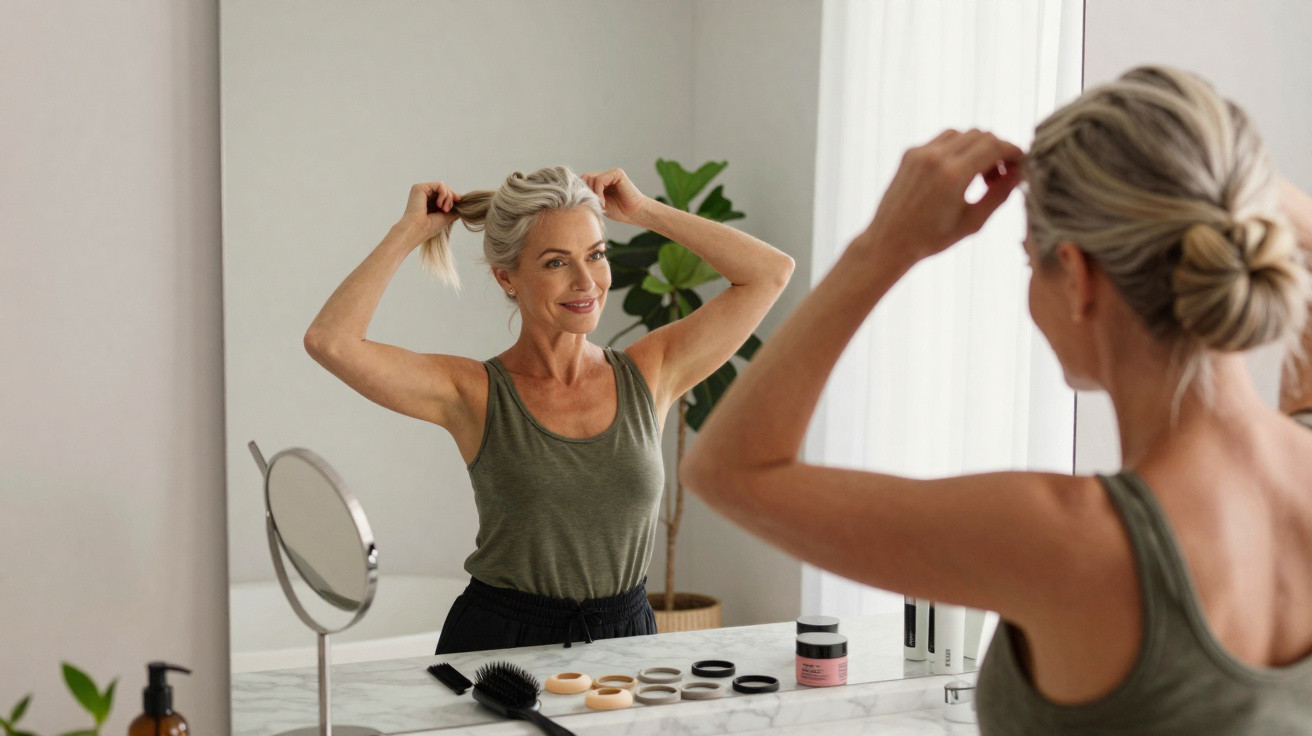
Those who like their grey or white hair do not necessarily need to colour over it. Modern short and mid-length cuts, clean contours and a neatly maintained silver shade can look highly stylish. A gentle silver shampoo, shine sprays and regular trims are often all that is needed.
If you cannot yet make peace with grey, transitional solutions are usually best: tints that grow out softly, subtle highlights that break up the roots, or glossing treatments that provide shine and a slight tone without completely changing the look.
Ultimately, it does not matter whether hair is dark, blonde or grey – what matters is that the shade, technique and care suit the person. Anyone who avoids the three major traps will not look “dressed up” by their hair colour, but natural, alert and full of life.








Comments
No comments yet. Be the first to comment!
Leave a Comment