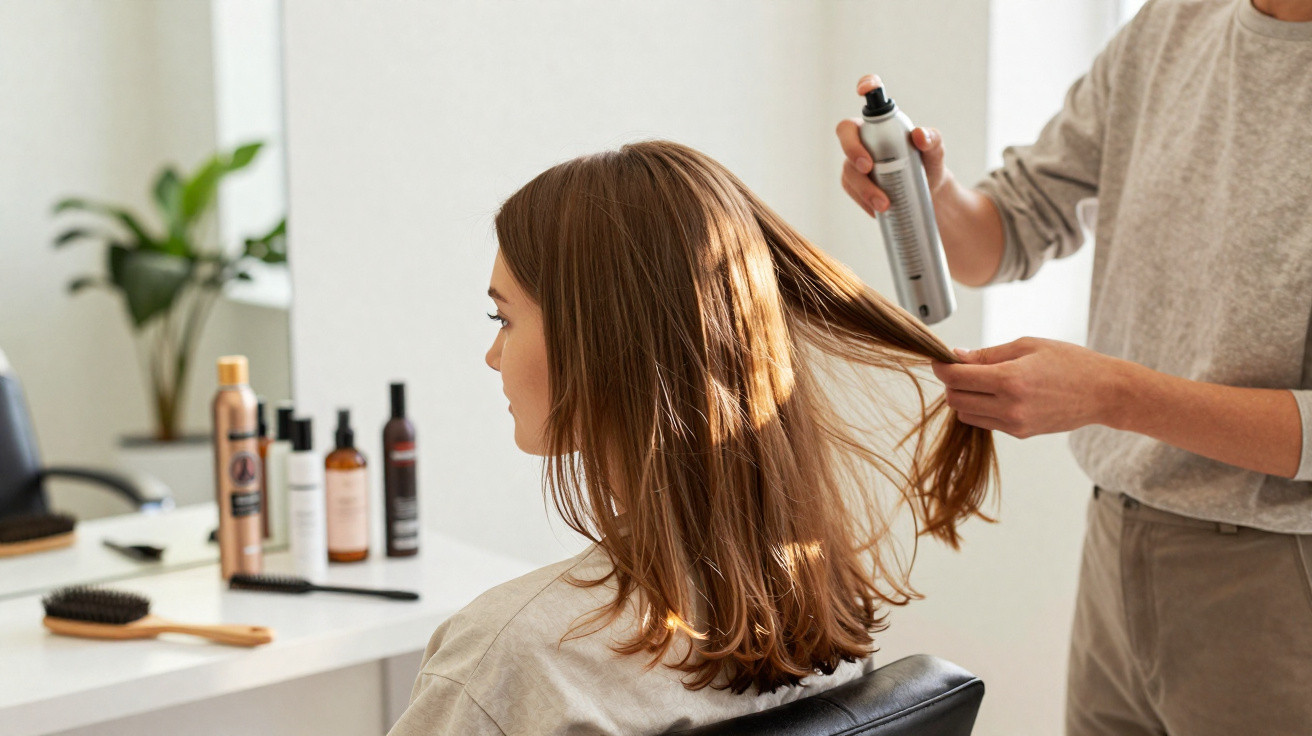
“I only wanted more volume,” she says quietly, looking at hair that resembles a tired curtain instead. It is stuck to her head, has no shine and does not move an inch. Beside her sits an arsenal of sprays, creams and oils, all of which promised the opposite. The hairdresser sighs, kindly. She sees this scene every day. We all know that moment when the mirror fails to live up to the product advertising. Then comes the quiet question: is it me – or the items on the bathroom shelf?
Why fine hair looks “tired” so quickly
Fine hair is like delicate silk: beautiful, yet sensitive. Use even slightly too much product and the strands lose all their lightness. Many people describe a “slippery”, weighed-down sensation, as though their hair has already collapsed by mid-morning. Rather than natural fullness, they are left with flat roots that make any hairstyle look dated. This is a familiar drama, particularly for people with very straight, thin hair. The products promise hold and volume – but deliver limp strands.
A hairdresser in Berlin recalls a client arriving at the salon with three different styling creams in her hair. She had wanted to define her fine waves, but had created a sticky trap for herself. Her hair looked greasy despite having been freshly washed that morning. The ends were dull, while the roots appeared glued to her scalp. During the consultation, the cause became clear: heat protection, smoothing cream and anti-frizz serum – all used at once. Each layer was rich on its own. Together, they became a burden in the most literal sense.
From a physical perspective, it is not particularly mysterious. Fine hairs have a smaller diameter and less internal structure, so they cannot “carry” as much product. Active-rich styling products coat every individual hair like a jacket, while some even penetrate the cuticle. On thicker hair, this can have a stabilising effect. On very fine hair, however, the same amount causes excess weight: gravity wins. The result is flattened roots, lost bounce and that classic stringy feeling. Ultimately, the hair is not failing – it is simply overloaded.
Styling products that weigh fine hair down especially quickly
Hairdressers are remarkably united on one point: heavy hair oils are among fine hair’s greatest enemies. Argan, coconut and avocado oils sound tempting, especially because they are meant to be so nourishing. Yet they are often too rich for fine strands. Just two drops too many can make freshly washed hair look as if it has not been cleaned for days. Leave-in oils containing silicones are particularly tricky. They form a film around every hair – and often remain there through several washes.
A second issue is smoothing creams and anti-frizz balms formulated for thick, unruly hair. Many people buy them hoping for “silky shine” and “controlled lengths”. With fine hair, the outcome is usually the opposite of what the packaging promises. Instead of softly defined sections, the hair becomes sluggish. One client from Cologne said she had spent months believing her hair was “getting thinner and thinner”. In the end, the reason was a creamy leave-in treatment for “dense, rebellious hair”, which she applied generously every day from roots to ends. Once she changed products, her hair suddenly looked lively again – without a single extra hair having appeared.
Certain styling mousses can also be secret volume killers. This applies particularly to those promising strong hold while also being rich in conditioning oils and waxes. Their texture often feels luxuriously soft, almost like a lotion. On the head, though, they can behave like an invisible gel cushion. Hairdressers advise that the finer the hair, the lighter the mousse should be – and the smaller the amount. A walnut-sized dollop rather than a full palmful can make the difference between bouncy volume and pressed-down roots.
How to style fine hair without “suffocating” it
The most important step starts before styling itself: cut back. People with fine hair are better served by a pared-down routine. Choose a lightweight volumising shampoo, use a well-rinsed conditioner very sparingly through the lengths, then select only one styling product with a specific purpose. Many hairdressers recommend a volume spray or a lightweight styling mousse applied directly at the roots. The lengths are deliberately left almost product-free so their natural movement is not held back.
A common mistake that almost everyone makes is applying products far too close to the scalp. Out of fear of frizz, oils, creams and sprays often make their way right up to the parting. There, they build up, make fine hairs stick together and remove every trace of airiness. A better approach is to apply anything rich only to the final five to ten centimetres of the lengths. Always test a tiny amount first. Let’s be honest: nobody really does this every day, but the “start with less, then add more” approach saves many hairstyles. Anyone unsure can rub the product between their hands before applying it to their hair, helping the treatment distribute more finely.
“Fine hair does not need sympathy; it needs strategy,” says Hamburg hairdresser Jana L., who specialises in thin, limp hair. “Most problems do not arise because the hair is ‘bad’, but because it is treated with products intended for an entirely different hair structure.”
- It is better to use one lightweight volume product than combine three different “miracle solutions”.
- Apply rich oils only to the ends as a finishing touch – never at the roots.
- Measure styling mousse carefully: it is better to add a little later than apply too much from the outset.
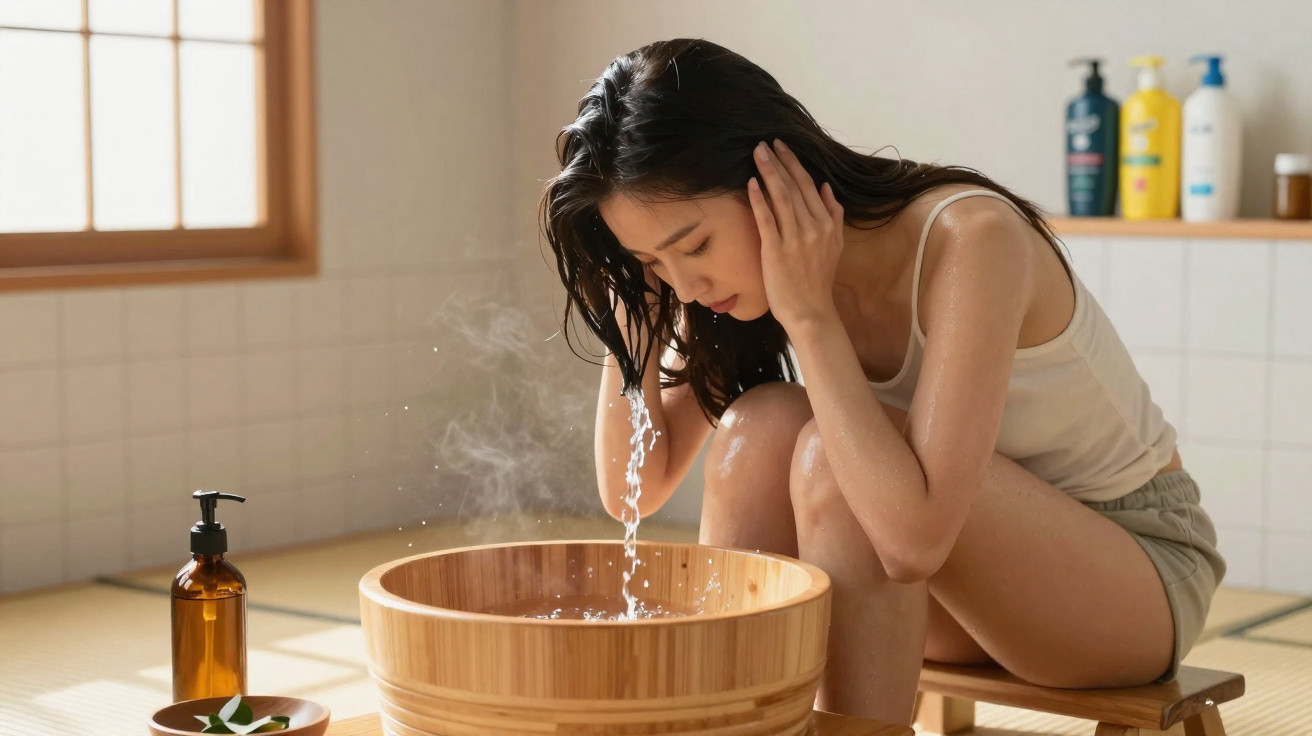
- Use a clarifying shampoo once a week to remove product residue.
- When blow-drying, lift the roots and set them with the cool setting rather than applying more product for hold.
When less product suddenly means hair feels fuller
Anyone who has felt fine hair without the burden of product starts to question their entire routine. Many say they can suddenly feel the wind in their hair again, with strands separating from one another rather than falling into tired-looking clumps. There is an emotional aspect too: fine hair is often equated with weakness, with the belief that “nothing can be done with it”. The moment the right lightness returns, the image in the mirror changes as well. The hair has not become stronger – but it looks more confident. And so do we.
| Key point | Detail | Reader benefit |
|---|---|---|
| Avoid heavy products | Hair oils, rich smoothing creams and dense styling mousses quickly weigh down fine hair | Readers can identify volume killers in the bathroom and remove them selectively |
| Apply products selectively and sparingly | Use very little product, especially at the roots; apply conditioning care only to the ends | More lightness and hold, with less of a stringy feeling |
| Regular product detox | Clarifying shampoo, a pared-down routine and no more than one main styling product | Hair looks fresher, develops less build-up and is easier to style |









Comments
No comments yet. Be the first to comment!
Leave a Comment