
The young woman in the salon chair studies her reflection as though it belongs to somebody else. What began as “just a little trim” has become a jagged, uneven, shoulder-length catastrophe, kicking out in three separate directions. The stylist has already suggested smoothing serums and demonstrated a round-brush technique, yet her expression makes one thing obvious: this cut cannot be revived.
Two chairs along, another woman loosens her soft, bouncy bob and checks her phone. She looks relaxed, composed and effortlessly well put together.
Ten minutes later, the hesitant discussion about how to repair it has finished. The cape is fastened once more, the scissors come up, and the verdict is delivered: “We’ll turn it into a bob.”
There is a reason this is so often the solution.
The haircut that rescues a hair disaster
The moment someone agrees to a bob, an unusual sense of calm tends to settle over the salon. Until then, there has been panic and bargaining: “Can we save the length?” “Could layers disguise it?” “What if we just… leave it?” But once the word “bob” is spoken, the atmosphere changes.
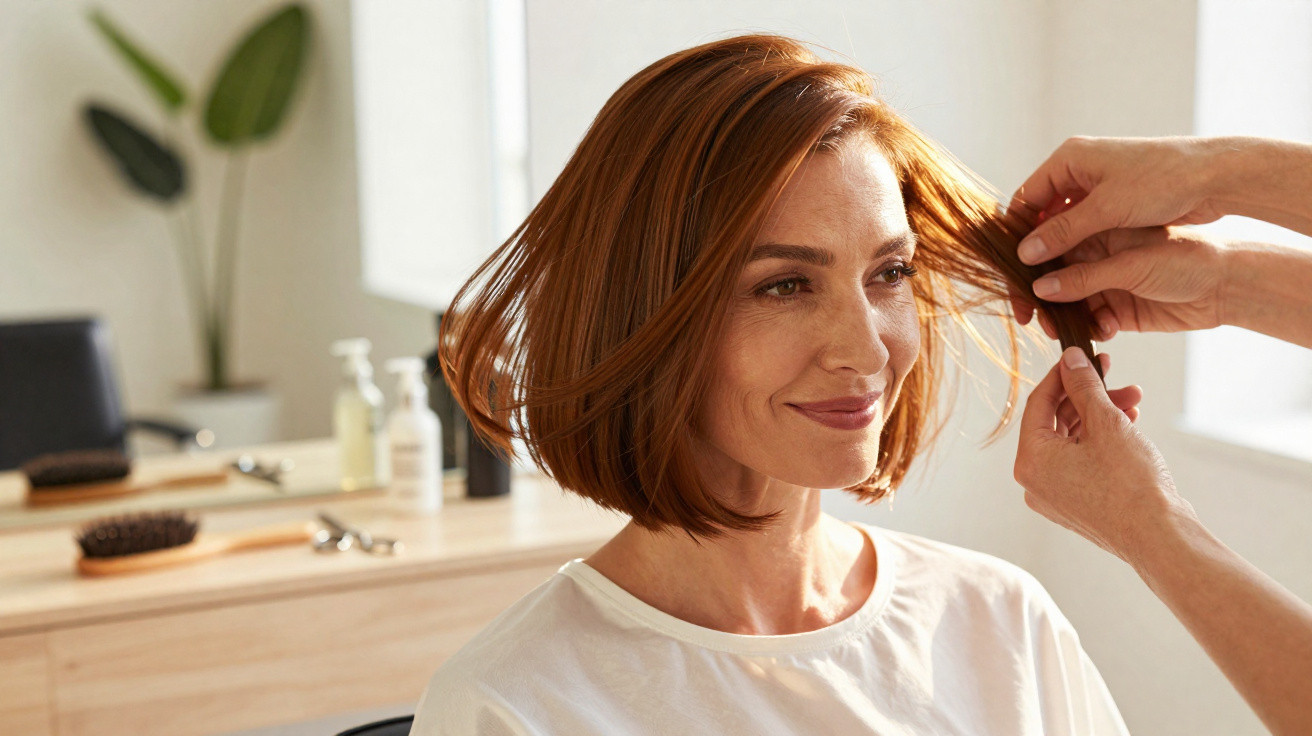
Everyone recognises this hairstyle. It is short without being as dramatic as a pixie cut, and shaped without losing its femininity. It feels both polished and cool, as if it had been the plan from the beginning. The bob is a reset button that does not announce, “I made a mistake.”
Any hairdresser will have a version of this story. A stylist in Paris recalls a client arriving with waist-length hair and leaving with hair that looked as though it had gone several rounds with kitchen scissors. Her flatmate had “helped” her cut curtain bangs at 2 a.m.
The unevenness was so severe that cutting it to jaw length was the only way to create something resembling a proper style. The client nearly cried as the first large section dropped away. Fifteen minutes later, however, she was taking selfies and saying, “Honestly, I look like I did this on purpose.” That could easily serve as the bob’s official tagline.
There is a straightforward reason this haircut is chosen after hair chaos. A bob relies on geometry: crisp lines and a defined silhouette. When hair has been randomly hacked shorter in places, you need a cut that is not reliant on delicate length or feathery ends.
A bob removes the evidence of a bad haircut and replaces it with a deliberate-looking shape. Stylists appreciate it because it restores control through a clear outline, even volume and simpler styling. Clients love its instant polish and vaguely Parisian feel, without needing to try. It is the haircut that changes “oh no” into “actually, this is rather chic.”
How a bob subtly fixes a bad haircut - and your mood
When a haircut has gone wrong, the first meaningful decision is not about scissors. It is about deciding how much length you are prepared to lose. Many stylists use a practical approach called the “pin-up test”. They loosely gather the hair to bob length, clip it underneath and let you assess the result in the mirror.
This temporary bob lets you see the effect without making a commitment. You move your head, tuck the imagined ends behind your ear and angle your chin. The stylist pays closer attention to your reaction than to your hair. If your shoulders relax and your eyes soften, they know the bob is the right choice. If you wince, they can alter the length - chin, jaw or collarbone - until it feels right.
After a hair disaster, denial is often the biggest pitfall. Attempting to “work around” a truly poor cut usually creates increasingly odd compromises. You might request tiny layers to merge the uneven sections, thick fringe to conceal the front, or extensions that do not quite suit your natural texture. The outcome looks concealed rather than styled.
This is why so many stylists carefully steer clients towards a bob. It is not a punishment for wanting a change; it is a way to establish a clean starting point. You walk out with one defined shape instead of five partial fixes competing on your head. Losing length can bring grief, certainly, but it also brings relief when you no longer have to account for your hair every morning.
“People think they’re attached to long hair,” says London-based hairdresser Maria Santos. “What they’re really attached to is feeling attractive. Once they see themselves in a sharp, healthy bob, they realise it wasn’t the length that made them feel pretty. It was the confidence.”
- Blunt bob – A straight, precise edge that often skims the jawline. It creates a distinctly modern, fashion-editorial feel.
- Textured bob – Softer ends, subtle layers and waves that can be air-dried. Ideal if you prefer movement and a less styled appearance.
- Long bob (lob) – Falls around the collarbone. It is a strong option if going very short feels daunting but your hair needs a proper reset.
- French bob – Shorter in length, often sitting just beneath the cheekbones and sometimes paired with a fringe. It feels artistic, confident and deliberately different.
- Asymmetrical bob – Kept slightly longer on one side. A great option when you want to embrace an edgy, “I meant this” story after a mistake.
What a “post-mistake” bob really communicates
Once the first shock has passed, wearing a bob after a hair disaster can feel unexpectedly freeing. Your hair dries more quickly, you use less product and you begin to notice your jawline, neck and earrings. The sense of lightness extends beyond simply losing a few centimetres of hair.
At bob length, many people encounter their genuine texture for the first time. Waves spring up rather than being weighed down, curls take on real definition and straight hair begins to swing instead of lying flat. The bob strips things back so your natural pattern can emerge and do what it does.
One frequent concern is: “What if I can’t style it like they did at the salon?” The honest response is that most people cannot. In truth, nobody manages that every day. This is why discussing your lifestyle with your stylist matters more than searching for a Pinterest image.
Say so if you air-dry your hair. Admit it if you own straighteners but have not switched them on since 2020. The right bob after a hair mistake should look acceptable on low-effort days, not only after a 40-minute blow-dry. For instance, a slightly longer bob with concealed internal layers can settle into shape with a little leave-in cream and a scrunch.
The understated reality is that choosing a bob after a hair disaster is less about hair and more about taking back control.
Rather than spending weeks trying to grow out a bad cut, you make a decision. You say, “Fine. Let’s start over, but let’s do it on my terms.” That change in outlook can extend beyond the salon. Some people begin updating their wardrobe, decluttering the bathroom shelf or finally arranging the appointment they have been delaying.
The bob becomes the visible sign of that choice: not “I messed up”, but “I moved on.” It is a subtle, wearable reminder that you can turn disorder into a style and a mistake into a story you are genuinely happy to tell.
| Key point | Detail | Value for the reader |
|---|---|---|
| Bob = reset button | Turns uneven or excessively layered hair into a crisp, purposeful shape | Provides a realistic, stylish escape from a bad cut without waiting months |
| Length can be negotiated | Options range from a chin-length French bob to a longer lob | Lets you decide how dramatic the change feels while still repairing the damage |
| Works with real-life habits | Can be tailored to air-drying, minimal styling or low-maintenance routines | Eases daily stress and styling time after an already emotional hair mistake |













Comments
No comments yet. Be the first to comment!
Leave a Comment