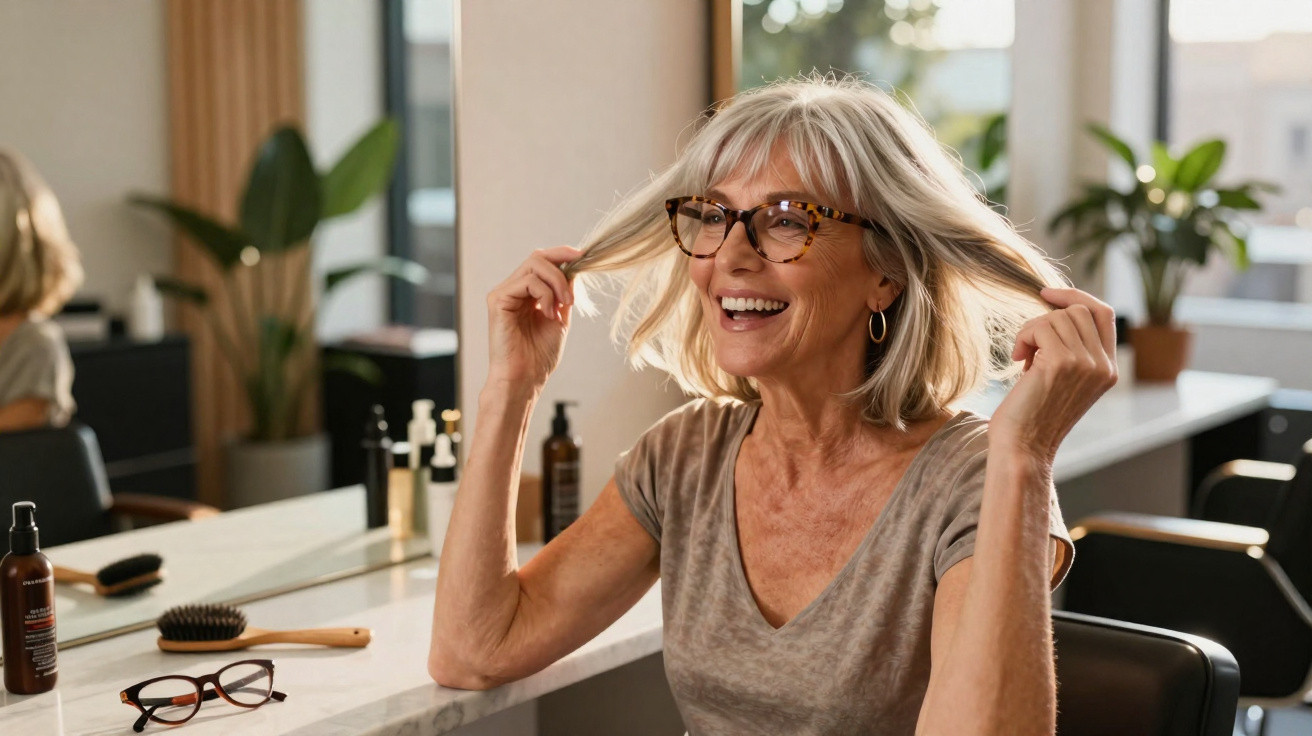
The first time I noticed it returning was in a café on a wet Tuesday. A woman in her early sixties came through the door wearing jeans, a white shirt, silver earrings… and that haircut. Neat and rounded, slightly rebellious at the tips, it rested just above her shoulders. For a moment, every head turned. It was not that she looked “young”; she simply looked polished, alert and completely present.
At the next table, a stylist murmured to her friend: “That flip is back. And she’s nailing it.”
There it was: the 60s flipped bob, brought back, made softer and embraced by women over 50 with absolutely no desire to blend into the background.
Something is changing with our hair.
The 60s flipped bob: an unexpected return
Spend time in any major city in 2026 and the same feature begins to stand out. On the Tube, in offices and while queuing at the chemist, you see short-to-mid-length hair that curves in at the nape, with ends that flick upwards just enough to suggest, “I’m not done having fun.”
This is the contemporary flipped bob: descended from 1960s icons, yet adapted to everyday life. There is less hairspray and more movement; less of a flawless helmet effect and more bounce and softness.
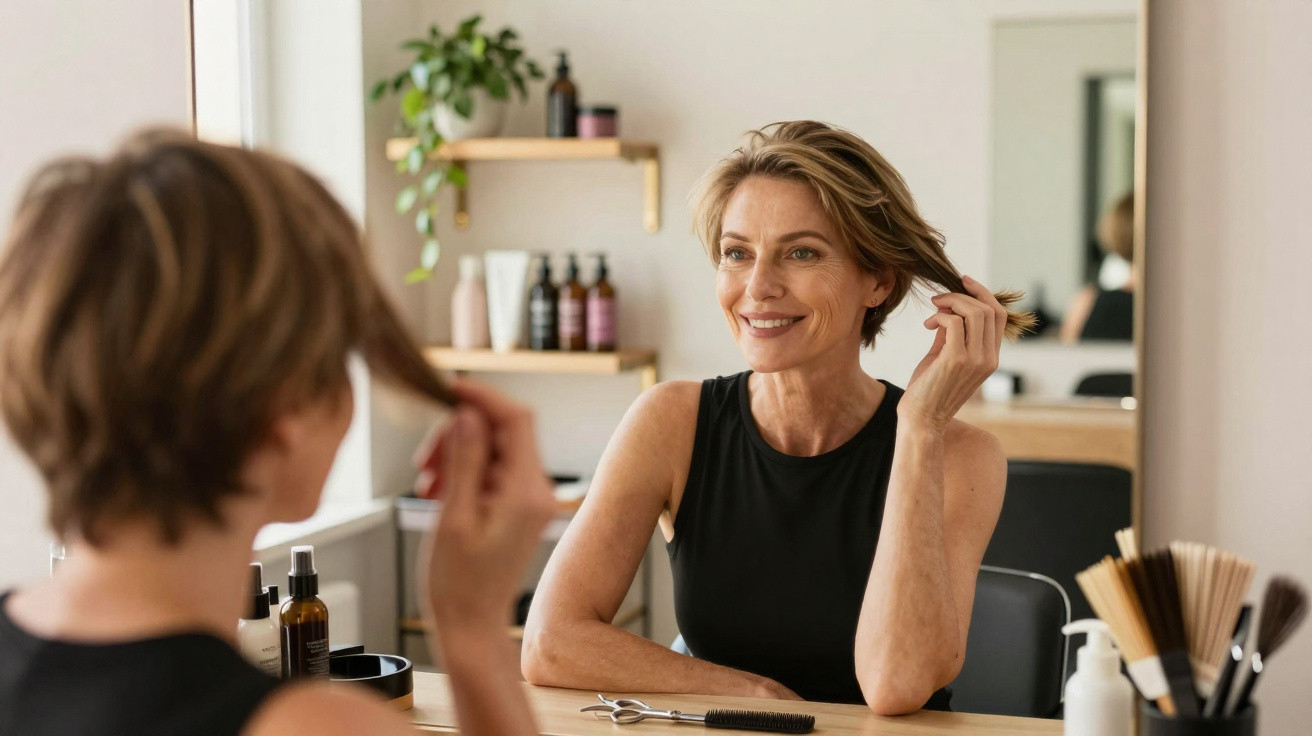
For women over 50, it has a particularly striking effect. It reveals the neck, opens up the face and delivers an immediate sense of “lift” without attempting to hide age.
Speak to any hairdresser who works with women aged 50+ and you are likely to hear a familiar account. For years, the standard advice was: “You should go shorter, it’s easier.” Countless women left with the same layered style: useful, but somewhat anonymous.
Then social media filled with images of celebrities over 50 embracing the flipped bob once more. Picture defined jawlines, glasses, a red lip and hair that moves as they step onto a stage or walk into a television studio. Salon requests changed almost overnight.
A stylist in Paris told me that, in 2025, requests for a 60s-inspired flip rose by nearly 40% among women aged 52 to 67. It was not nostalgia. It was strategy.
What makes this haircut especially compelling after 50 is how it works with facial lines. As the face becomes softer over time, straight hair hanging flat can pull everything downwards. Very short pixie cuts, meanwhile, are not flattering for everyone and may feel too drastic.
The flipped bob occupies the ideal middle ground. Its gently rounded outline echoes the cheekbones. The upturned ends pull the gaze outwards rather than down, while the neck remains visible without being fully exposed.
It also works well with different textures. Fine hair gains an impression of added volume, while thicker hair is guided into a chic, controlled shape. It acts like an inbuilt frame, enhancing what the years have sculpted rather than trying to fight it.
How to request and wear a flipped bob after 50
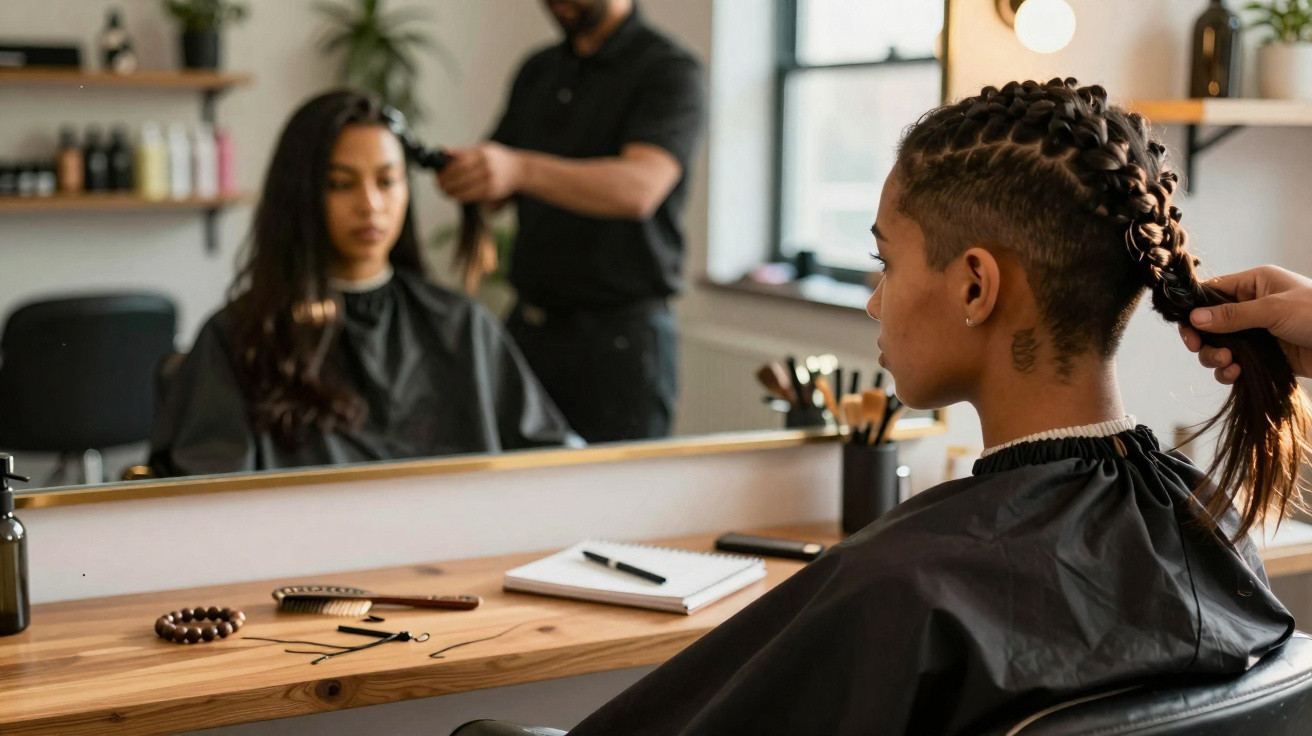
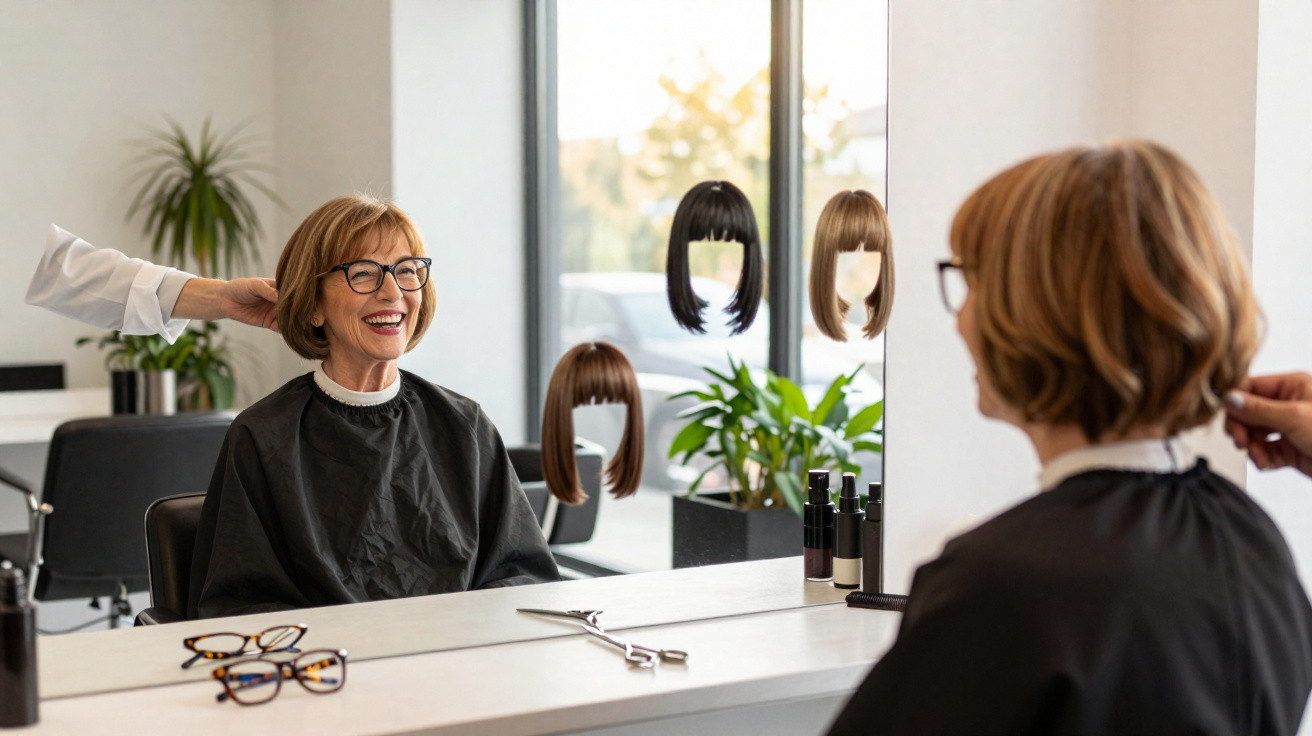
The key begins in the salon chair, with how you describe what you want. Instead of only asking for “a bob with the ends flipped”, discuss the length with your stylist. Indicate the base of your neck, your jawline and your collarbones. The finishing point of the cut changes everything.
For most faces over 50, the sweet spot sits between the middle of the neck and just beneath the jawline. It is long enough to tuck behind the ear, but short enough to create that lively swing.
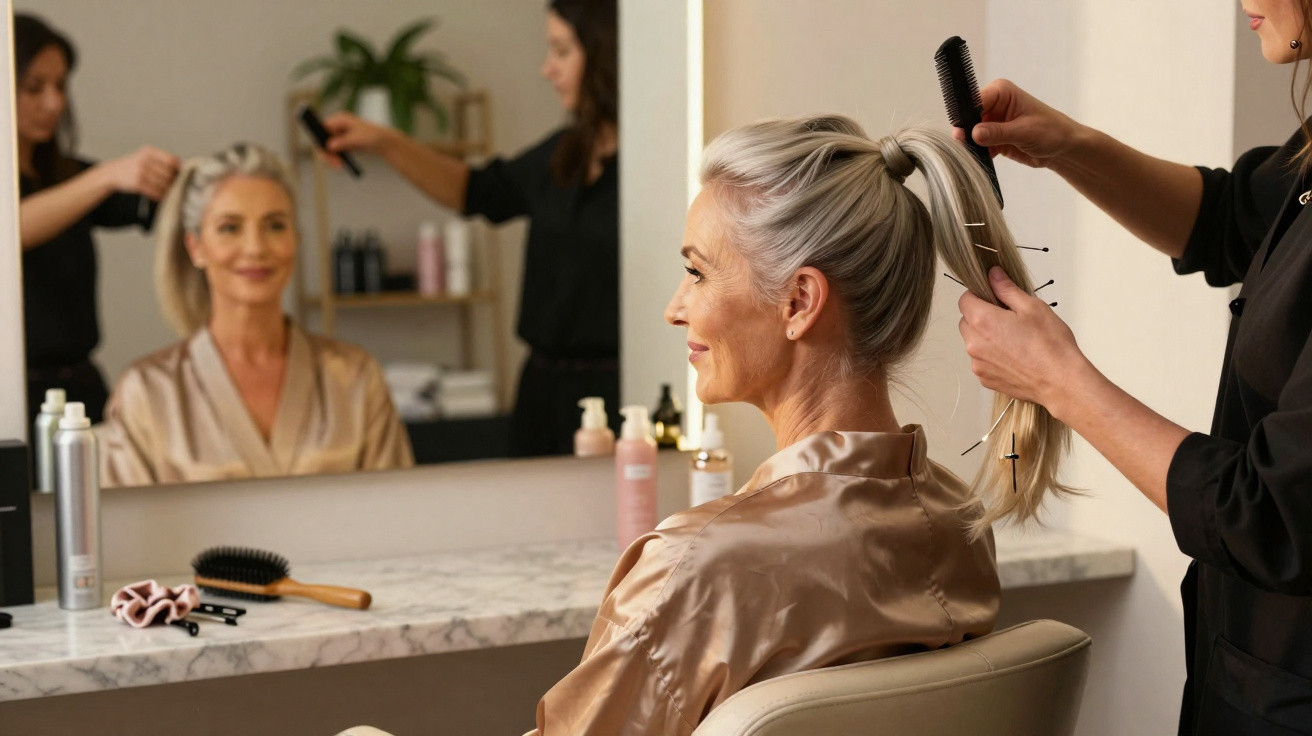
Request a gently rounded bob, with soft graduation at the back and subtle texturing through the ends. The flick should be created by the cut and blow-dry, rather than through an exhausting session with a curling iron.
There is, of course, the everyday reality. We all know the experience: you leave the salon looking as though you belong on a magazine cover, then three days later wonder, “What happened to my hair?”
A flipped bob can be low-maintenance, although it is not entirely maintenance-free. For most hair types, it requires a brief brush-and-hairdryer routine: tip your head slightly, direct the air from roots to ends, then turn the brush outwards at the very last moment.
Honestly, no one does that every day. On some mornings, you will simply work in a little styling cream, let your natural texture take over and embrace a softer, less exact flick. That is part of its appeal in 2026: it does not have to resemble a 1964 advertisement.
A colourist in Madrid captured it perfectly:
“Women over 50 don’t come asking to look younger anymore. They ask to look awake. This cut, with a good color, is like turning the light on in a room that was already beautiful.”
To get the best from a flipped bob after 50, the smaller decisions count. That is why stylists so often return to the same checklist:
- Length calibration – Have the cut finish where your neck and jaw look most balanced, rather than where a photograph tells you it should end.
- Texture, not thinning – Request gentle texturing instead of harsh thinning, which can leave mature hair looking frayed.
- Gentle styling products – Choose a lightweight mousse or cream that is kind to grey or coloured hair, and avoid formulas that feel crunchy or drying.
- Colour that supports the shape – Consider subtle highlights or lowlights that follow the bob’s curve and brighten the area around the face.
- Review every 6–8 weeks – Book a quick reshaping appointment to maintain a clean line without removing unnecessary length.
What the 60s flip represents for women over 50 in 2026
There is something more profound behind this revival than a passing trend. This generation of women over 50 is rewriting the script. They are working, dating, travelling, launching businesses, becoming grandmothers and running marathons-sometimes all within the same year.
The flipped bob suits that pace. It is refined enough for a meeting, fun enough for the weekend and current enough for a selfie with a 20-year-old niece.
It also avoids two opposing traps: trying to look 30 or vanishing behind supposedly “age-appropriate” invisibility. It stands confidently between the two and says: I’m here, I’ve lived, and I still like myself in the mirror.
For certain women, choosing this shape becomes a quiet statement of independence. Following a divorce, burnout or health scare, they sit in the chair and say: “I want a real change, but I still want to recognize myself.”
The 60s flip allows space for precisely that. It is noticeable without being startling. Colleagues will certainly remark on it, but the reflection looking back will still feel like you-just refined.
Old photographs of mothers and grandmothers with similar cuts begin to appear in family group chats. There is a peculiar pleasure in watching that silhouette move through generations: refreshed, relaxed and reclaimed. It becomes a shared code across different eras, worn without irony.
| Key point | Detail | Value for the reader |
|---|---|---|
| Choosing the right length | Aim between mid-neck and just below the jaw for most faces over 50 | Maximises the “lifting” effect and avoids a heavy, dragging appearance |
| Cut and texture | Rounded bob with soft graduation and light texturing at the ends | Delivers movement, an easy daily flick and a modern silhouette |
| Living with the cut | Quick blow-dry with a brush, light products, 6–8 week maintenance | Offers a realistic routine that keeps the style wearable without much effort |









Comments
No comments yet. Be the first to comment!
Leave a Comment