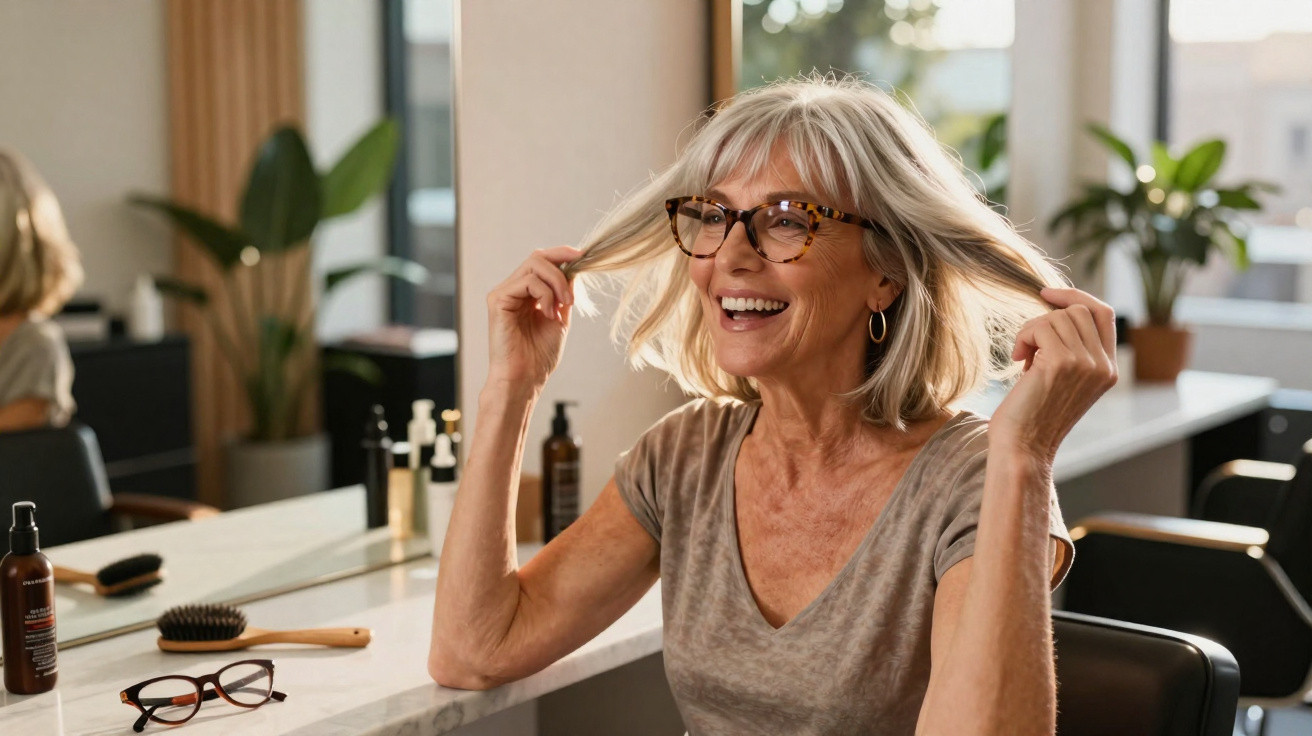
The client in my chair was 67, with her glasses balanced at the end of her nose and her fingers twisting the tips of her hair as she frowned slightly.
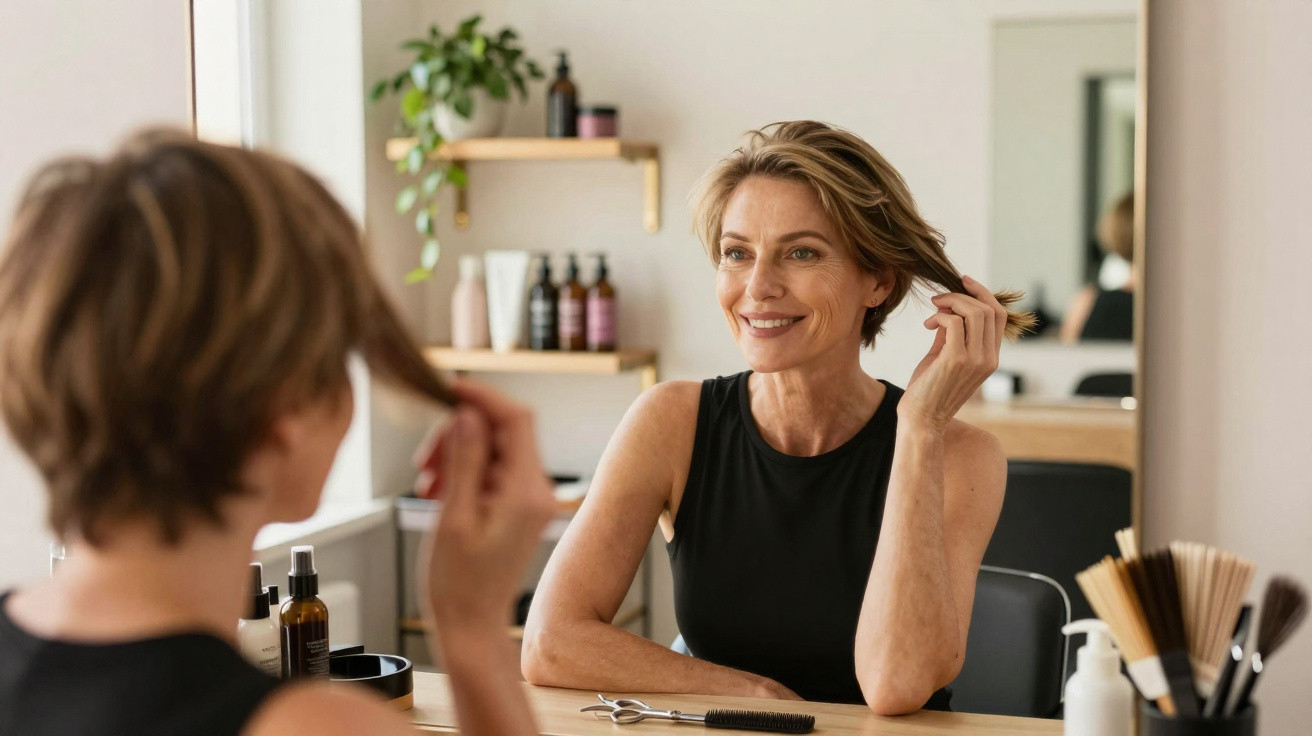
“It’s just… thinner. Flatter. I don’t recognize myself,” she whispered, half laughing, half apologizing. The salon carried on around us as it would on any Tuesday morning: the kettle whistled out back, hairdryers thundered, and somebody burst into laughter at a joke I had missed. Her phone held a dozen screenshots of celebrities with dense, seemingly impossible hair. They did not resemble her, and they did not have to. As I passed my comb over her crown, I felt a texture I knew well: fine hair with softly diminishing volume, but still carrying a lifetime of stories. She wanted something straightforward and current, rather than “old lady short.” I already knew the direction we would take, though I kept that to myself. The mirror would reveal it soon enough.
The cropped cut that gives fine hair a second life
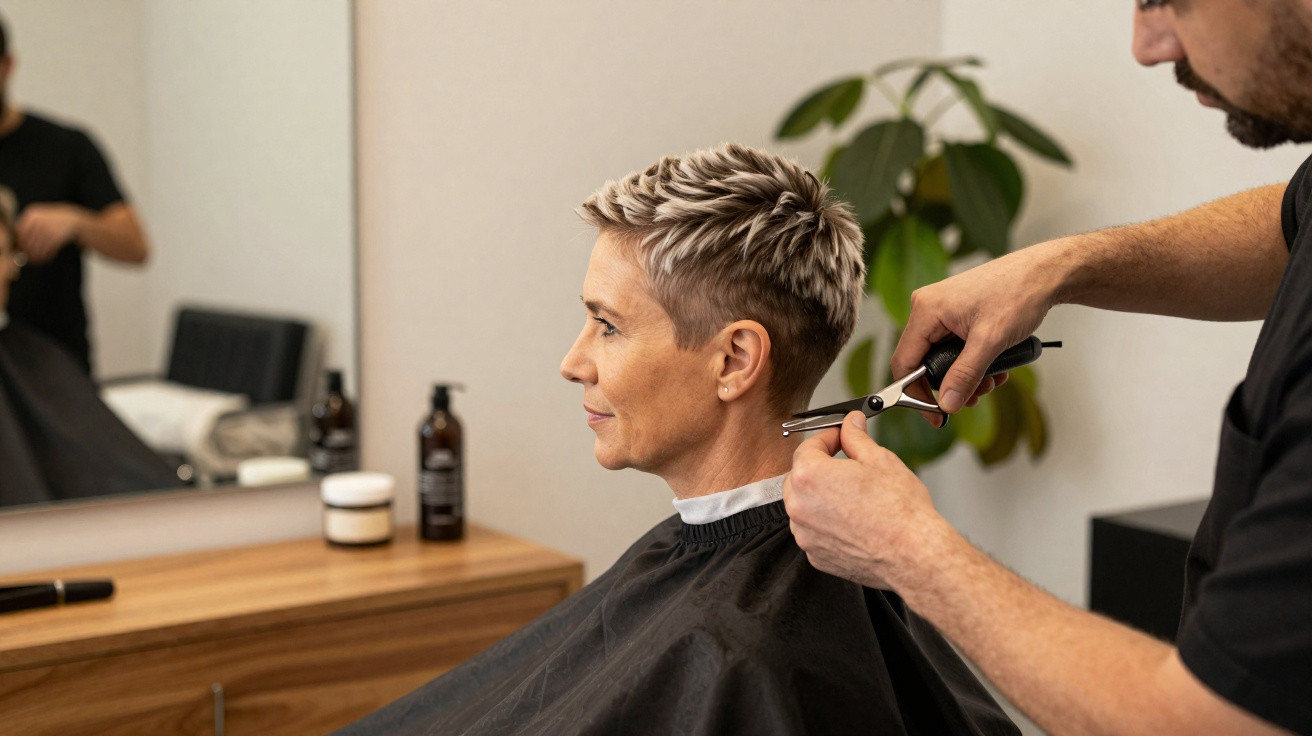
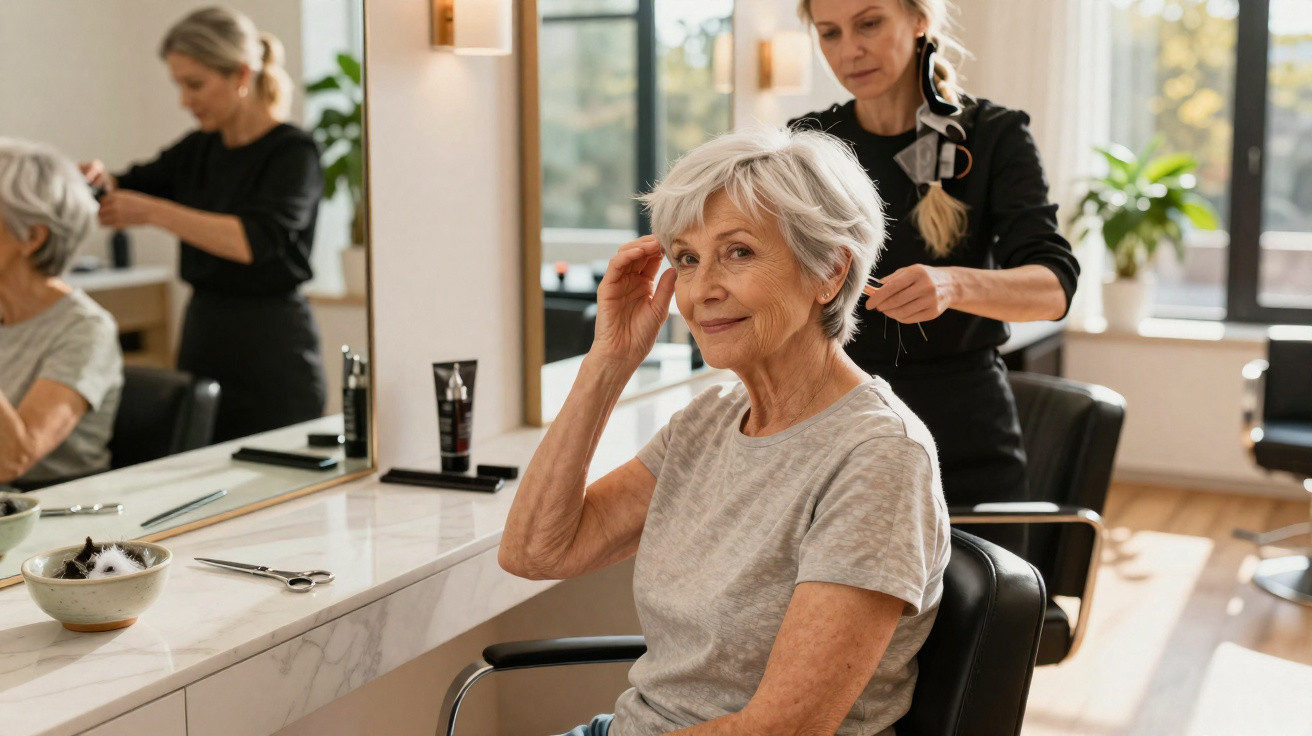
Having cut hair for more than 20 years, I know that fine hair after 60 has a character all of its own. It falls flat, slips free of sectioning clips and reacts badly to weighty layers or rich products. Occasionally it cooperates, but more often it has other plans. One particular cropped cut changed everything for me as a barber: a short nape, subtle graduation across the back and a soft top with light texture. It is neither a buzz cut nor a pixie. Instead, it is a neat, precisely shaped crop that follows the head while raising the crown. It may sound uncomplicated in theory, but on a real woman with real hair, it can create a subtle transformation.
A retired teacher came in a few months ago with hair extending beyond her jaw that she habitually wore tied back. “I look tired,” she said, “even when I’m not.” Her hair was fine and flyaway, without the fullness she remembered having in her forties. We chose my dependable cropped cut: scissor-cut closely around the ears, with gentle weight retained through the crown and a softened fringe brushing her eyebrows. Once I had dried it, her jaw genuinely dropped. She repeatedly turned her head from one side to the other, watching the understated volume move with her. Her words: “I look awake again.” Not younger, simply more like herself.
This cropped haircut is especially effective for fine hair after 60 for a clear reason. Fine strands cannot support weight in the same way, so longer styles pull the entire shape downwards. With shorter lengths, the hair can lift slightly from the scalp, immediately giving the impression of more volume. A tailored crop enables me to create structure where thickness has reduced, from the crown and sides to the fringe. It also reveals the neck and jawline, defining the features and drawing attention towards the eyes. You’re not hiding behind hair anymore; you’re framed by it. That in itself can feel like a quiet revolution.
How I cut and style it so it works in real life
When a woman over 60 with fine hair sits in my chair and asks for something “Short, but not severe,” this is the approach I take. I begin with a tidy, reasonably short nape that follows her natural hairline rather than imposing a stark outline. Next comes gentle graduation up the back, layering the hair only enough for it to support its own shape. I leave the top a little longer, particularly over the crown, to allow movement and fine micro-layers. The fringe is my key detail: it is cut feathered rather than blunt, allowing it to sweep sideways or sit forwards without becoming heavy.
My styling approach remains extremely simple. I apply a pea-sized amount of lightweight mousse or volumising spray at the roots, without weighing down the ends. I dry it with my fingers first, raising the crown and directing the hair against its intended finish to build natural lift. If necessary, I then use a small round brush at the front for only a couple of passes. The result should always be soft enough to touch: perhaps a light mist of dry texture spray or the tiniest amount of light paste warmed between the fingers and pressed onto the ends. Let’s be honest: nobody really does all that every day, so the cut needs to carry most of the load itself.
The most common errors I encounter are cutting the top too short or creating severe, choppy layers. Fine hair does not tolerate excessive texturising; two careless snips can take it from “airy” to “patchy”. Another familiar mistake is requesting “just a trim” for years out of anxiety, then being left with a weary shape that appears older than the face itself. I understand why. Hair is emotional and closely connected to identity. On a difficult day, seeing limp, flat strands in the mirror can make everything else seem more burdensome. On a better day, however, a fresh cropped shape can make you stand taller at the supermarket till, even when nobody else can pinpoint the reason.
“At 72, I finally cut my hair the way I actually live,” one of my clients told me recently. “Quick to wash, dries in minutes, and when I catch my reflection in a shop window, I don’t flinch anymore.”
If you are thinking about this type of cut, these principles can help shape the decision:
- Keep the nape tidy rather than shaved: softness is more flattering than severity.
- Request light graduation through the back to prevent a flat profile.
- Retain a little length at the crown for lift and movement.
- Opt for a soft side-swept or wispy fringe to frame the eyes.
- Select products described as “lightweight” or “volumizing”, rather than “smoothing”.
Facing the mirror after 60 with a new kind of confidence
We have all experienced times when the mirror seems to offer a stranger’s judgement. Those occasions may arise more frequently after 60: the skin changes, the hair changes, and the face reflects every year you have genuinely lived. Hair cannot fix everything, but it sits at the centre of how you present yourself to the world. When clients select this cropped cut, I see a small but meaningful act of courage. They are choosing convenience without abandoning style. They are choosing to be seen rather than to disappear. Sometimes, they are merely choosing not to battle a hairbrush every morning.
I also notice another effect. This haircut often starts conversations. In the waiting area, one woman may touch another woman’s crop and ask who cut it. Daughters photograph their mothers “for reference.” Friends send messages saying, “You look amazing, what did you change?” That is the beauty of a subtle, expertly cut crop: it does not shout. It makes a suggestion. It conveys ease and the sense of someone who understands what suits her today, rather than what worked 20 years ago. That feeling spreads.
From my position behind the chair, scissors in hand, the cropped cut for fine hair after 60 is not a passing trend. It is a practical tool. It offers a way to accept changing texture, thinning hair and the reality that routines become shorter as patience wears thinner. It is refreshingly low-maintenance, too: let it grow a little, adjust the fringe or move the parting, and it turns into a fresh version of itself without requiring a complete restart. The woman who arrived concerned about looking “old lady short” generally leaves stroking the back of her head, slightly surprised by how light it feels. Mirrors do not lie, but they can be kinder than we anticipate once the haircut finally fits the life we truly lead.
| Key point | Detail | Benefit for the reader |
|---|---|---|
| Cropping the nape and back | A clean nape with soft graduation and a layered back to provide structure | Produces immediate lift and prevents the effect of a “flat back of the head” |
| Longer, textured crown | A slightly longer top with delicate micro-layers | Creates the appearance of thicker hair and effortless everyday volume |
| Soft, versatile fringe | A feathered fringe that can be swept aside or worn forwards | Frames the eyes, softens features and keeps the style contemporary |









Comments
No comments yet. Be the first to comment!
Leave a Comment